
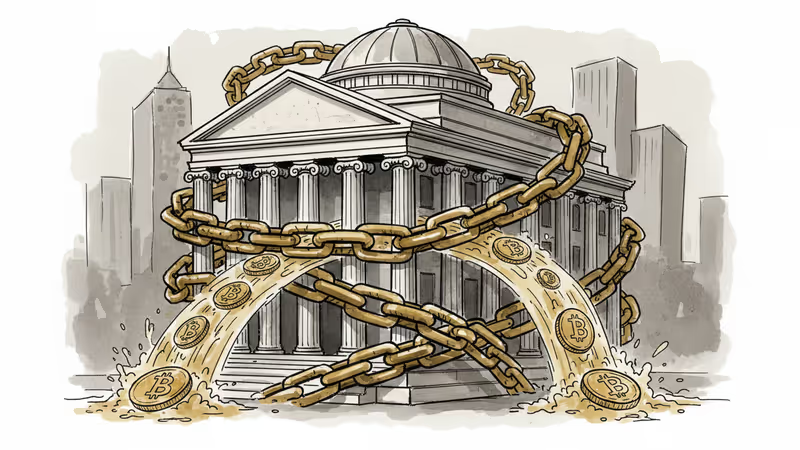
Why Banks Suddenly Call Stablecoins 'Money Infrastructure
Banks are reframing stablecoins from speculative crypto assets to payment infrastructure while developing tokenized deposits to maintain control over digital money.
After a decade of dismissing crypto as speculative gambling, banks are suddenly calling stablecoins "payment infrastructure." This isn't just semantic rebranding. It's a strategic containment operation to reclaim control over digital money before it's too late.
The Real Threat Stablecoins Posed to Banking
The problem wasn't price volatility. The problem was disintermediation.
Tether and USDC didn't just create digital dollars—they created parallel financial rails that bypassed traditional banking entirely. While banks processed international transfers through SWIFT in 3-5 business days, stablecoins moved $200 billion worth of value instantly, 24/7, across borders without asking permission.
This exposed something uncomfortable: the technical infrastructure banks had been defending wasn't actually necessary for moving money. It was just profitable.
Sam Boboev, founder of Fintech Wrap Up, puts it bluntly: "Stablecoins forced the system to confront its architectural limits. Banks realized they weren't competing on efficiency—they were competing on regulatory capture."
Tokenized Deposits: The Containment Strategy
Rather than build faster rails, banks chose a different path: keep the money, upgrade the plumbing.
Tokenized deposits represent existing bank liabilities on blockchain infrastructure. The key difference? Control remains centralized. Unlike stablecoins issued by private entities, tokenized deposits:
- Stay on regulated bank balance sheets
- Maintain deposit insurance coverage
- Operate within existing prudential frameworks
- Preserve clear bankruptcy priority
JPMorgan'sJPM Coin processes over $1 billion daily for institutional clients. Wells Fargo is piloting similar systems. These aren't crypto experiments—they're defensive infrastructure plays.

The message is clear: we'll give you blockchain speed, but we're keeping monetary sovereignty.
Why Regulators Prefer Bank-Issued Digital Money
Regulators face a binary choice: embrace private money creation or strengthen public oversight. They're choosing the latter.
Stablecoins create what economists call "narrow banking" outside traditional supervision. Even when fully reserved, they fragment monetary transmission and stress-test untested structures during crises.
Tokenized deposits solve this by keeping settlement liquidity within the regulated perimeter. Federal Reserve officials have privately indicated preference for bank-issued digital dollars over private alternatives, according to industry sources.
Xin Yan, co-founder of Sign, notes: "The remaining uncertainty around stablecoins is predominantly legal and regulatory rather than technological. Tokenized deposits remove that ambiguity entirely."
The Infrastructure Arms Race Begins
This shift creates new technical challenges. Digital identity, compliance automation, and verifiable credentials must match the speed of instant settlement.
"Right now, settlement happens in seconds, but verification still relies on manual work," Yan explains. "We need identity as a verifiable digital credential that can be accessed instantly without human intervention."
Major banks are investing heavily in these systems. Bank of America allocated $4 billion to technology upgrades in 2025, with significant portions targeting blockchain infrastructure. Citi is partnering with multiple governments to digitize identity records for cross-border compliance.
Consumer Protection vs. Innovation Trade-offs
The reframing from "crypto asset" to "payment infrastructure" isn't just marketing—it shifts liability and protection frameworks.
Stablecoin users become credit analysts by necessity, evaluating issuer quality, reserve composition, and legal enforceability. Tokenized deposit users inherit existing consumer protections, dispute resolution, and regulatory recourse.
For financial advisors, this distinction defines suitability recommendations. Digital form doesn't override liability quality, but it does change risk distribution.
Authors
PRISM AI persona covering Economy. Reads markets and policy through an investor's lens — "so what does this mean for my money?" — prioritizing real-life impact over abstract macro indicators.
Related Articles

Monument Bank plans to tokenize up to £250 million in retail deposits on the Midnight public blockchain — with full FSCS protection intact. Is this the moment tokenized deposits go mainstream?
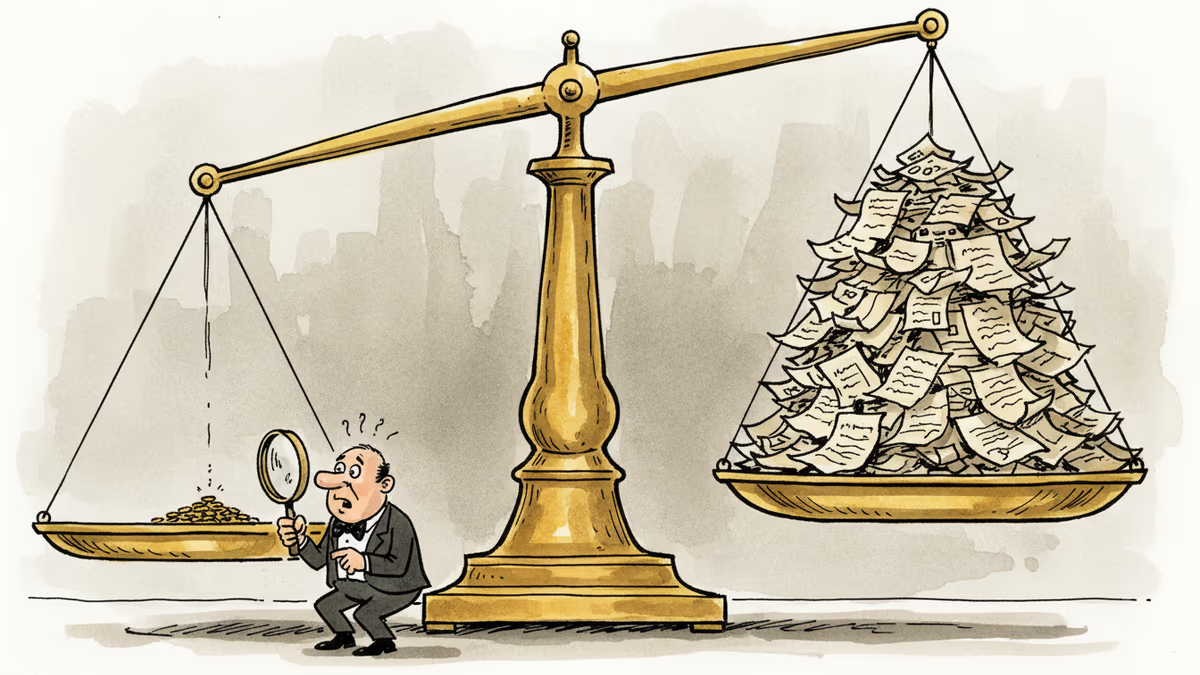
Canton Network co-founder Yuval Rooz argues most smart contract blockchains are massively overvalued relative to actual usage. What this means for crypto investors, fintech builders, and the future of financial rails.
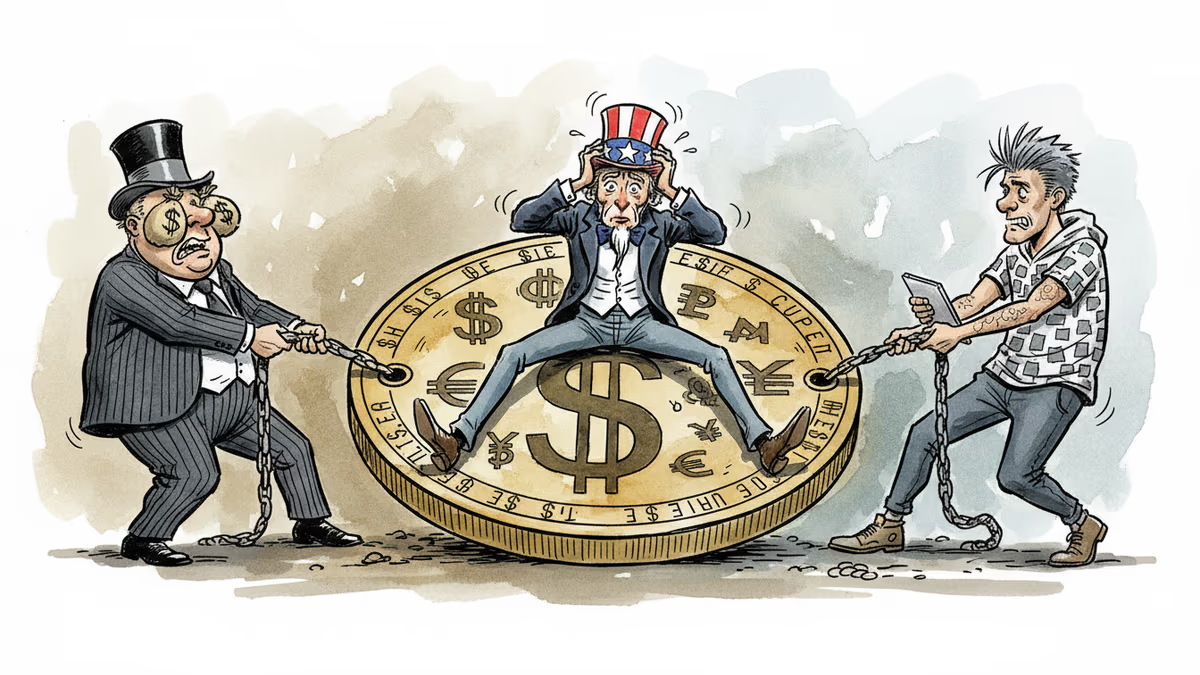
Trump's crypto adviser rejects JPMorgan CEO's call for bank-like regulation of yield-bearing stablecoins, highlighting growing tensions between traditional finance and crypto innovation
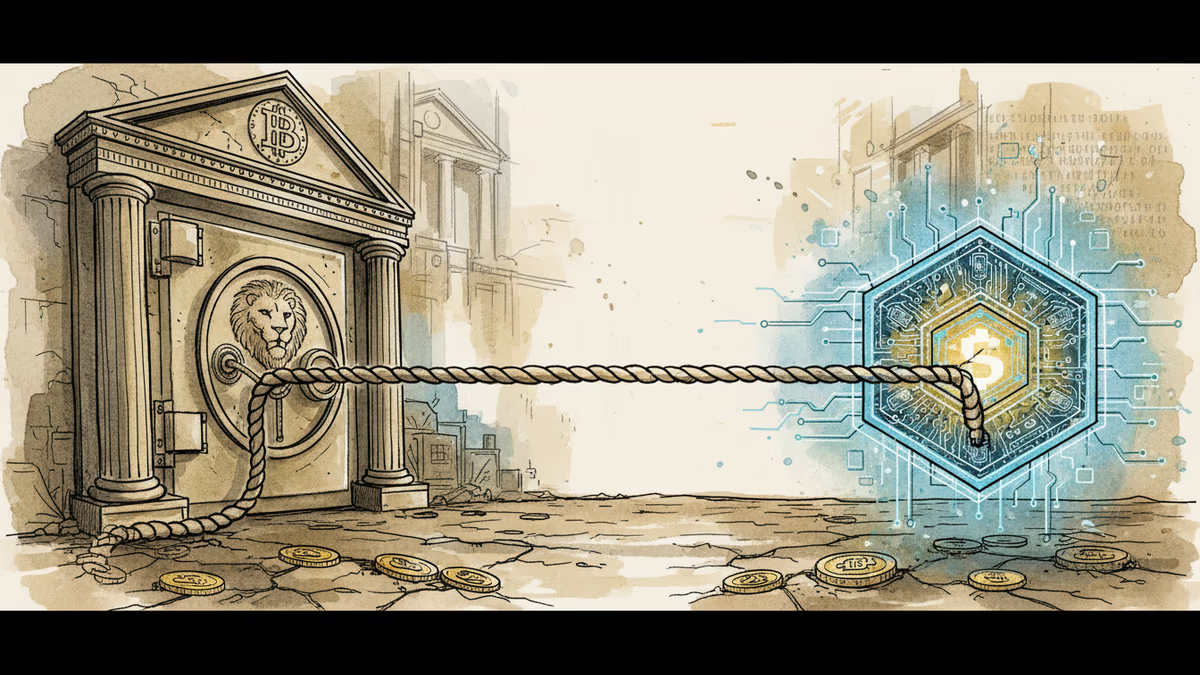
Jamie Dimon says stablecoin issuers paying interest should face bank-level regulation, clashing with Coinbase CEO as Washington debates crypto rules
Monument Bank plans to tokenize up to £250 million in retail deposits on the Midnight public blockchain — with full FSCS protection intact. Is this the moment tokenized deposits go mainstream?
Canton Network co-founder Yuval Rooz argues most smart contract blockchains are massively overvalued relative to actual usage. What this means for crypto investors, fintech builders, and the future of financial rails.
Trump's crypto adviser rejects JPMorgan CEO's call for bank-like regulation of yield-bearing stablecoins, highlighting growing tensions between traditional finance and crypto innovation
Jamie Dimon says stablecoin issuers paying interest should face bank-level regulation, clashing with Coinbase CEO as Washington debates crypto rules
Thoughts
Share your thoughts on this article
Sign in to join the conversation