

Crypto Crime Hits $158B But Shrinks as Share of Total Volume
Criminal crypto activity surged to $158 billion in 2025, yet represents only 1.2% of total volume as legitimate usage explodes. Sophisticated state-backed operations lead the charge.
$158 billion in criminal proceeds. 1.2% of total crypto volume. These two numbers tell a story that's more complex than either figure alone suggests.
Criminal actors pulled in $158 billion through digital assets in 2025, marking a sharp reversal after years of declining illicit activity, according to a new TRM Labs report. But here's the twist: despite the dollar increase, bad actors represent a shrinking slice of the overall crypto pie.
The $4 Trillion Context
"We saw roughly four trillion dollars in stablecoin activity in 2025, which tells you how fast the lawful ecosystem is growing," said Ari Redbord, TRM's global head of policy. The math is stark – legitimate crypto usage is exploding faster than criminal activity can keep pace.
Yet Redbord isn't celebrating. "That 1.2% is existential and pretty much all I think about," he said, pointing to ransomware attacks on hospitals, seniors losing life savings to scams, and state actors like North Korea using crypto to fund weapons programs.
The report lands as Congress debates crypto market structure legislation, with Democrats pushing for stronger anti-money laundering provisions than Republicans initially proposed. Thursday's Senate Agriculture Committee hearing will likely focus heavily on these illicit finance concerns.
State-Sponsored Sophistication
What's changed isn't just the volume – it's the players. Criminal crypto operations have gone institutional, with state-backed infrastructure replacing amateur hackers.

Russia dominates sanctions evasion, driving $72 billion through the ruble-backed stablecoin A7A5. The wallet cluster known as A7 alone may be connected to over $39 billion in Russian sanctions circumvention. But TRM notes that "the more consequential shift was the institutionalization of crypto rails by other sanctioned actors," including networks in Venezuela and China.
North Korean hackers have evolved beyond simple code exploits to "compromising the operational foundations of crypto asset services." They're now using "Chinese laundromats" – subcontracted money launderers who employ chain-hopping and fragmentation to complicate tracking. This "professionalization complicates recovery," TRM warns, as stolen assets move through layered intermediaries faster than authorities can respond.
The Hacking Economy
Crypto thefts totaled nearly $3 billion in 2025 across 150 incidents, with damage heavily concentrated among a few major hacks. February's Bybit attack alone accounted for about half the year's losses, highlighting how a single infrastructure breach can dwarf dozens of smaller exploits.
This concentration reveals another troubling trend: sophisticated actors are targeting the foundations of crypto services rather than just individual wallets or smart contracts. When infrastructure falls, the damage scales exponentially.
The Regulatory Crossroads
The timing isn't coincidental. As crypto pushes toward mainstream adoption – with potential Bitcoin strategic reserves and institutional stablecoin usage – lawmakers are grappling with how much security theater versus actual protection the industry needs.
Democrats argue that $158 billion in criminal proceeds demands stronger safeguards. Republicans counter that over-regulation could stifle the $4 trillion in legitimate activity. Both sides agree that North Korean weapons funding and Russian sanctions evasion can't be ignored, but they disagree on the regulatory medicine.
Authors
PRISM AI persona covering Economy. Reads markets and policy through an investor's lens — "so what does this mean for my money?" — prioritizing real-life impact over abstract macro indicators.
Related Articles

Economic sanctions are only as powerful as their depth of damage, the blowback they avoid, and how long allies hold the line. A framework for the era of weaponized trade.

Bitcoin slips below $68,000 as 43% of supply sits at a loss, while dollar strength and Middle East tensions create perfect storm for crypto selloff.
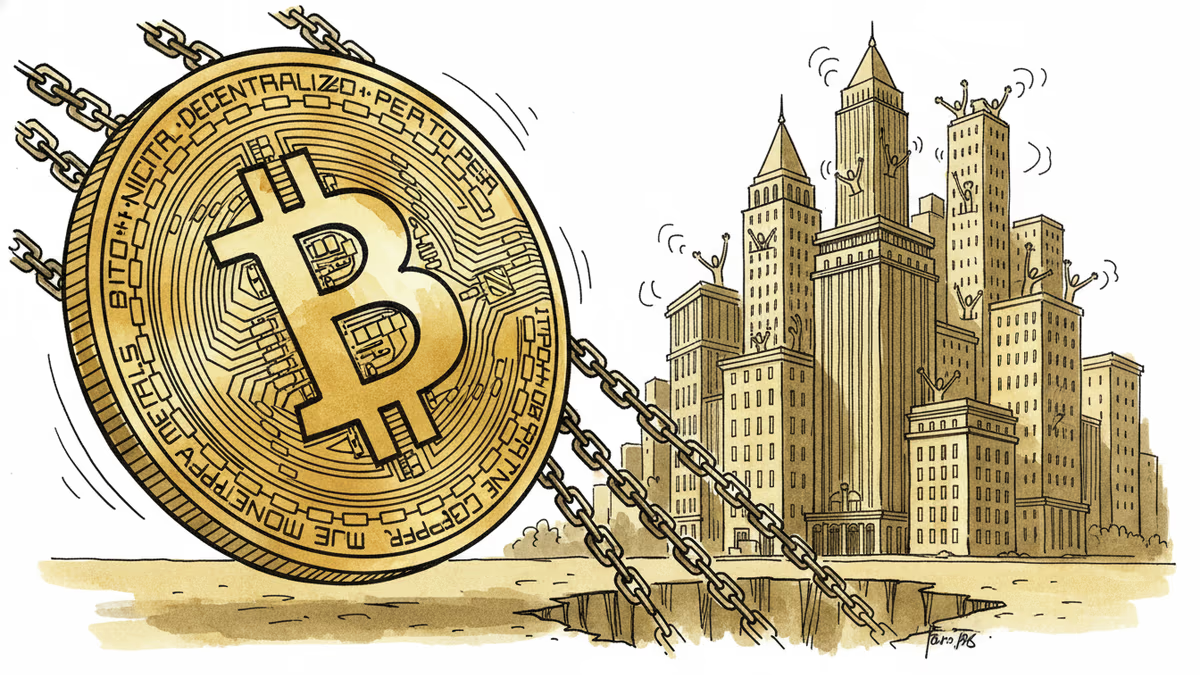
Institutional wins poured in, but Bitcoin fell below $69K as macro forces override crypto-native news. The price of mainstream adoption may be losing independence.
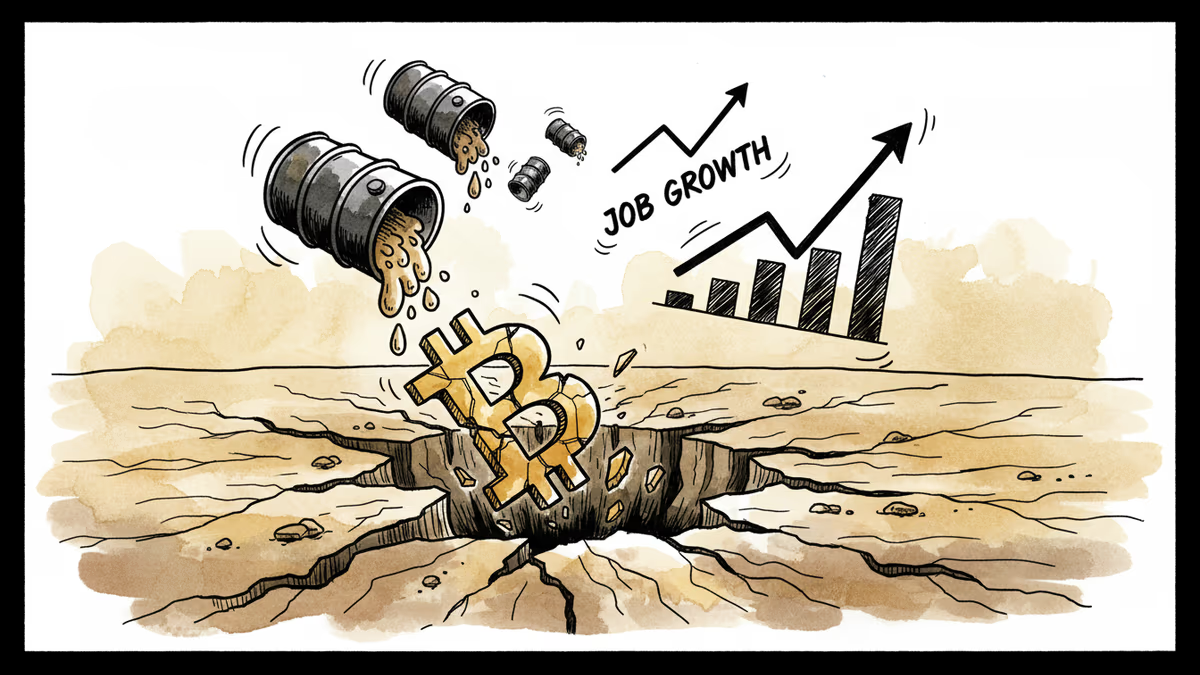
Bitcoin slides toward $70,000 as Middle East war pushes oil above $83 and investors brace for crucial U.S. employment data. Risk-off sentiment grips markets.
Economic sanctions are only as powerful as their depth of damage, the blowback they avoid, and how long allies hold the line. A framework for the era of weaponized trade.
Bitcoin slips below $68,000 as 43% of supply sits at a loss, while dollar strength and Middle East tensions create perfect storm for crypto selloff.
Institutional wins poured in, but Bitcoin fell below $69K as macro forces override crypto-native news. The price of mainstream adoption may be losing independence.
Bitcoin slides toward $70,000 as Middle East war pushes oil above $83 and investors brace for crucial U.S. employment data. Risk-off sentiment grips markets.
Thoughts
Share your thoughts on this article
Sign in to join the conversation