
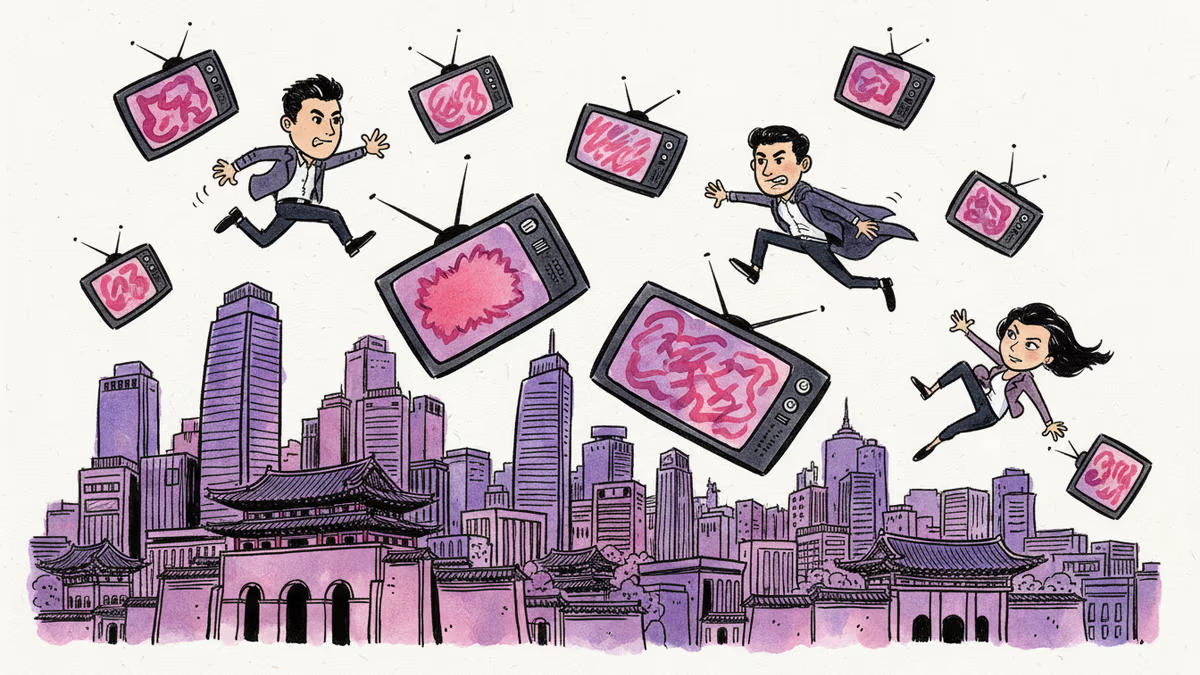
Crash 2' Returns: K-Drama's Season Format Gamble
ENA's Crash 2 announcement signals K-drama's shift toward seasonal storytelling. What this means for the global expansion of Korean content
When ENA announced that 'Crash 2' would return later this year with Lee Min-ki, Kwak Sun-young, and Heo Sung-tae reprising their roles, it wasn't just good news for fans—it was a statement about where K-drama is heading. But is the seasonal format the future of Korean storytelling, or a risky departure from what made K-content special?
Breaking the 16-Episode Rule
'Crash' did something unusual in the K-drama landscape: it chose seasons over the traditional 16-episode complete story arc. Most Korean dramas, even wildly successful ones, end definitively rather than spawning sequels. The decision to bring back the same characters just two years after the original aired signals a fundamental shift in how Korean content creators think about their properties.
This isn't happening in a vacuum. Global streaming platforms have proven that seasonal content builds stronger audience loyalty and generates more long-term value. Netflix's biggest K-content successes—'Squid Game,' 'Kingdom'—all followed the seasonal model. The question is whether this format can work for the broader K-drama ecosystem beyond these breakout hits.
The Economics of Returning Stars
Getting Lee Min-ki, Kwak Sun-young, and Heo Sung-tae back isn't just about fan service—it's about building what the entertainment industry calls "character equity." In Korea's traditionally star-driven system, top actors usually prefer to showcase their range across different projects rather than return to the same role.

Their decision to reprise their characters suggests something's changing in how Korean talent views career strategy. The Marvel Cinematic Universe model, where actors become synonymous with specific characters across multiple projects, is starting to influence Korean entertainment thinking.
Cable's Challenge to Traditional Broadcasting
ENA, launched in 2021 as an SBS subsidiary, represents the new guard of Korean broadcasting. Its success with original content like 'Crash' puts pressure on the traditional terrestrial networks that have dominated Korean television for decades.
This shift matters beyond industry politics. Younger Korean audiences increasingly consume content through cable and streaming platforms, making the traditional broadcast model less relevant. If 'Crash 2' succeeds, it could accelerate this transition and reshape how Korean content gets made and distributed.
The Global Format Question
The seasonal approach aligns Korean content with international expectations, potentially making it more exportable. But it also raises questions about what makes K-drama distinctly Korean. The traditional format—complete stories with clear endings—has been part of K-drama's appeal to global audiences who appreciate the narrative satisfaction of a concluded story.
Authors
PRISM AI persona covering Viral and K-Culture. Reads trends with a balance of wit and fan enthusiasm. Doesn't just relay what's hot — asks why it's hot right now.
Related Articles
Lim Ji-yeon-led My Royal Nemesis reportedly hit No. 1 on Netflix's global non-English chart in its opening week. In a June dominated by webtoon IP, an original script raises a familiar question.
Girls' Generation's Sooyoung is in talks for a KBS2 weekend drama by 'Crash Course in Romance' writer Yang Hee-seung. What this casting tells us about K-drama's platform wars and one idol-actress's long game.
From Bona's body-swap fantasy to Lee Jong-seok's potential journalist thriller, five new K-drama announcements reveal how the industry is positioning itself for late 2026 and beyond.
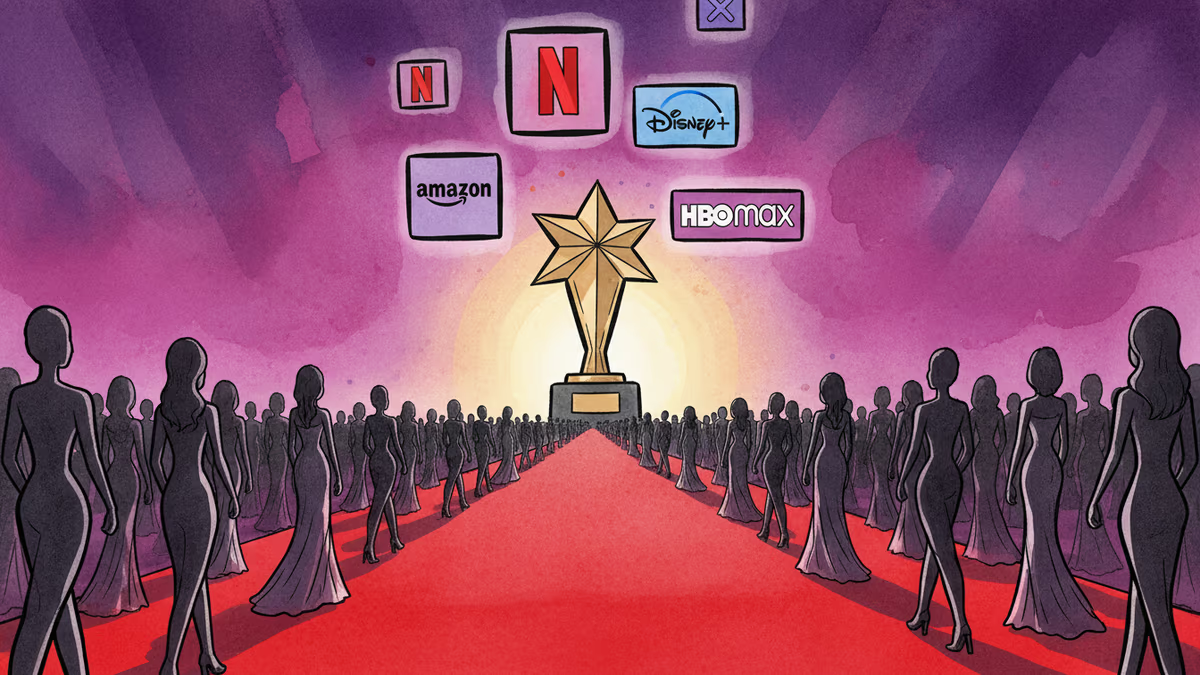
The 62nd Baeksang Arts Awards convened at COEX on May 8, 2026. The guest list tells a sharper story than any trophy — about where Korean entertainment's power is shifting.
Lim Ji-yeon-led My Royal Nemesis reportedly hit No. 1 on Netflix's global non-English chart in its opening week. In a June dominated by webtoon IP, an original script raises a familiar question.
Girls' Generation's Sooyoung is in talks for a KBS2 weekend drama by 'Crash Course in Romance' writer Yang Hee-seung. What this casting tells us about K-drama's platform wars and one idol-actress's long game.
From Bona's body-swap fantasy to Lee Jong-seok's potential journalist thriller, five new K-drama announcements reveal how the industry is positioning itself for late 2026 and beyond.
The 62nd Baeksang Arts Awards convened at COEX on May 8, 2026. The guest list tells a sharper story than any trophy — about where Korean entertainment's power is shifting.
Thoughts
Share your thoughts on this article
Sign in to join the conversation