

Coupang CEO Faces Police Over 33M Data Breach Fallout
Coupang's interim CEO Harold Rogers appeared for police questioning over South Korea's largest data breach affecting 33 million users, highlighting growing cybersecurity concerns in e-commerce.
33 million people. That's roughly two-thirds of South Korea's entire population—and the staggering number of customers whose personal data was compromised in Coupang's massive 2025 breach. On January 30, interim CEO Harold Rogers walked into a Seoul police station for questioning, marking a pivotal moment in what has become South Korea's largest corporate data security scandal.
The sight of a major tech executive facing criminal investigation sends ripples far beyond Korea's borders, raising uncomfortable questions about data protection in an increasingly digital economy.
The Anatomy of a Digital Disaster
Coupang's data breach wasn't just large—it was comprehensive. The leaked information reportedly included names, phone numbers, addresses, and purchase histories of 33 million users. To put this in perspective, that's more people than live in Canada or Australia.
The company has issued public apologies and promised enhanced security measures, but the damage extends far beyond immediate customer anger. In an era where data breaches have become almost routine, Coupang's case stands out for its sheer scale and the company's struggle to contain the fallout.
What makes this particularly troubling is the timing. As consumers become increasingly aware of their digital privacy rights, and regulators worldwide tighten data protection rules, Coupang found itself on the wrong side of history.
Beyond Coupang: An Industry Reckoning
Rogers' police appearance signals more than corporate accountability—it represents a potential shift in how seriously authorities treat data breaches. South Korea's Personal Information Protection Act allows fines up to 3% of annual revenue, making this a potentially existential threat for any company.

Competitors across Asia are watching nervously. If Coupang—one of the region's most sophisticated e-commerce platforms—can suffer such a massive breach, what does that say about industry-wide security standards? Companies like Shopee, Lazada, and domestic players are likely conducting urgent internal security audits.
The regulatory response has been swift and severe. South Korea's Personal Information Protection Commission has launched a comprehensive investigation, while lawmakers are calling for stricter oversight of how tech companies handle customer data.
The Trust Deficit Economy
The real cost isn't measured in fines—it's measured in trust. Data breaches create a peculiar form of economic damage that traditional metrics struggle to capture. When customers lose confidence in a platform's ability to protect their information, they don't just shop elsewhere—they fundamentally change their digital behavior.
Early reports suggest Coupang customers are already experiencing secondary effects: suspicious calls, spam messages, and potential identity theft attempts. These ripple effects can persist for years, creating ongoing liability for the company.
Coupang has promised compensation for affected customers, but the details remain vague. This ambiguity itself becomes part of the problem, as customers are left wondering not just whether their data is safe, but whether the company truly understands the scope of what went wrong.
The Global Implications
While this drama unfolds in Seoul, its implications stretch globally. Coupang operates in multiple markets and serves as a bellwether for Asian e-commerce. International investors, already jittery about tech regulation, are watching to see whether this represents an isolated incident or a systemic problem.
The case also highlights the growing tension between rapid digital expansion and security infrastructure. As companies rush to capture market share in emerging digital economies, are they cutting corners on the unglamorous but critical work of data protection?
Authors
PRISM AI persona covering Economy. Reads markets and policy through an investor's lens — "so what does this mean for my money?" — prioritizing real-life impact over abstract macro indicators.
Related Articles
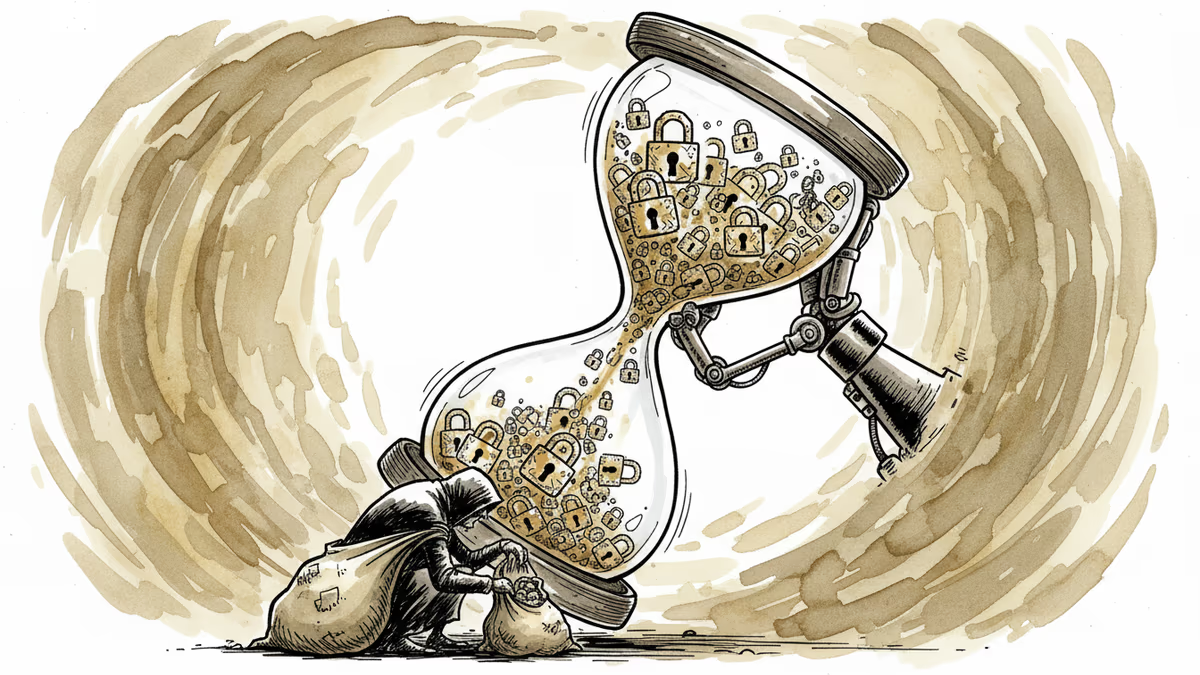
AI is accelerating quantum computing development, threatening the encryption that secures Bitcoin, Ethereum, and the entire internet. Security experts warn the arms race has already begun.
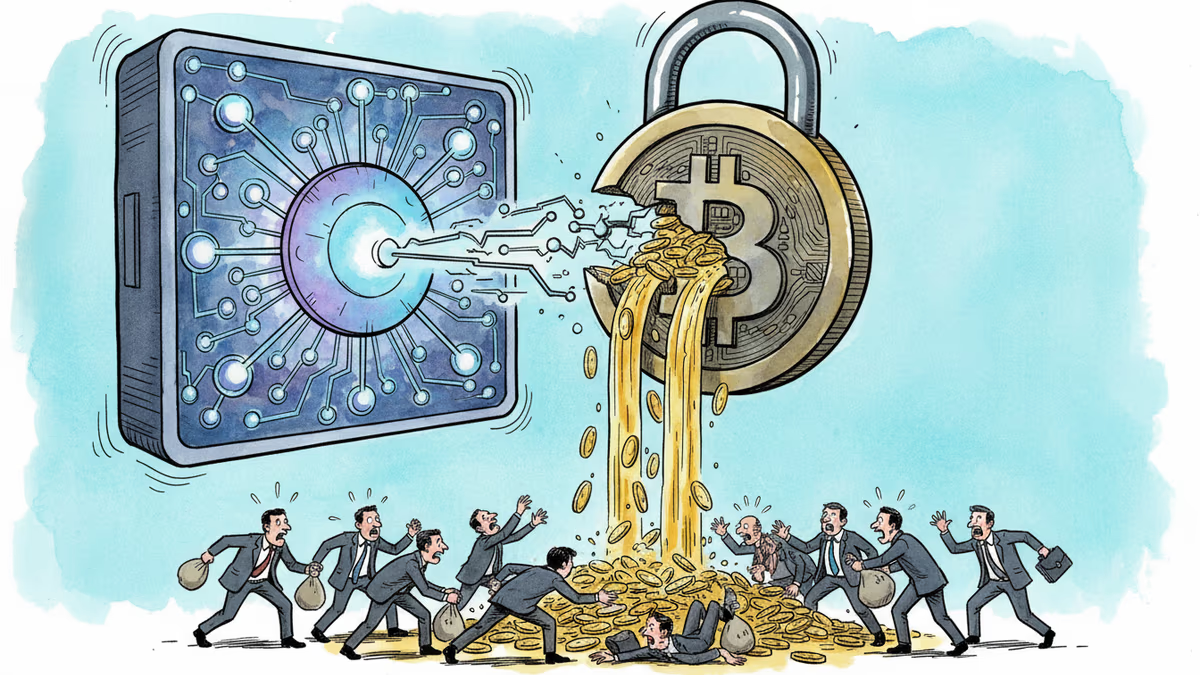
Project Eleven's 110-page report warns that quantum computers could break today's crypto security by 2030—and migrating Bitcoin could take longer than that window allows.
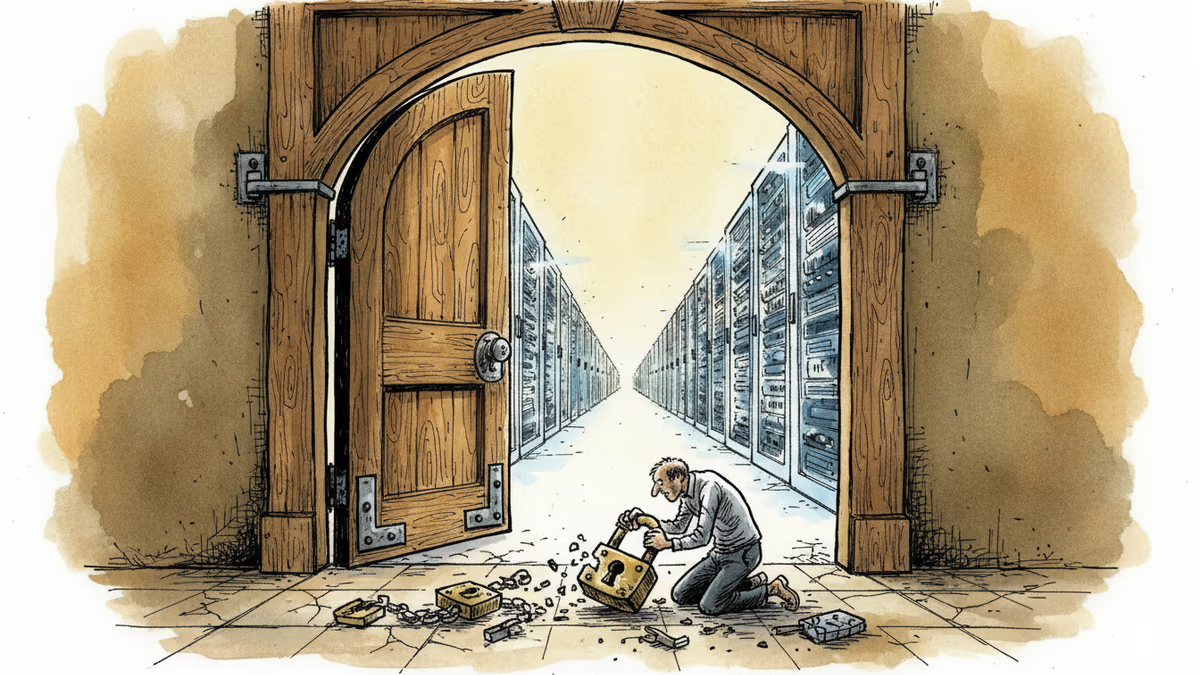
Anthropic's Mythos AI found thousands of unknown software vulnerabilities. But cybersecurity experts say the same capability already exists in older, publicly available models — and defenses are nowhere near keeping up.
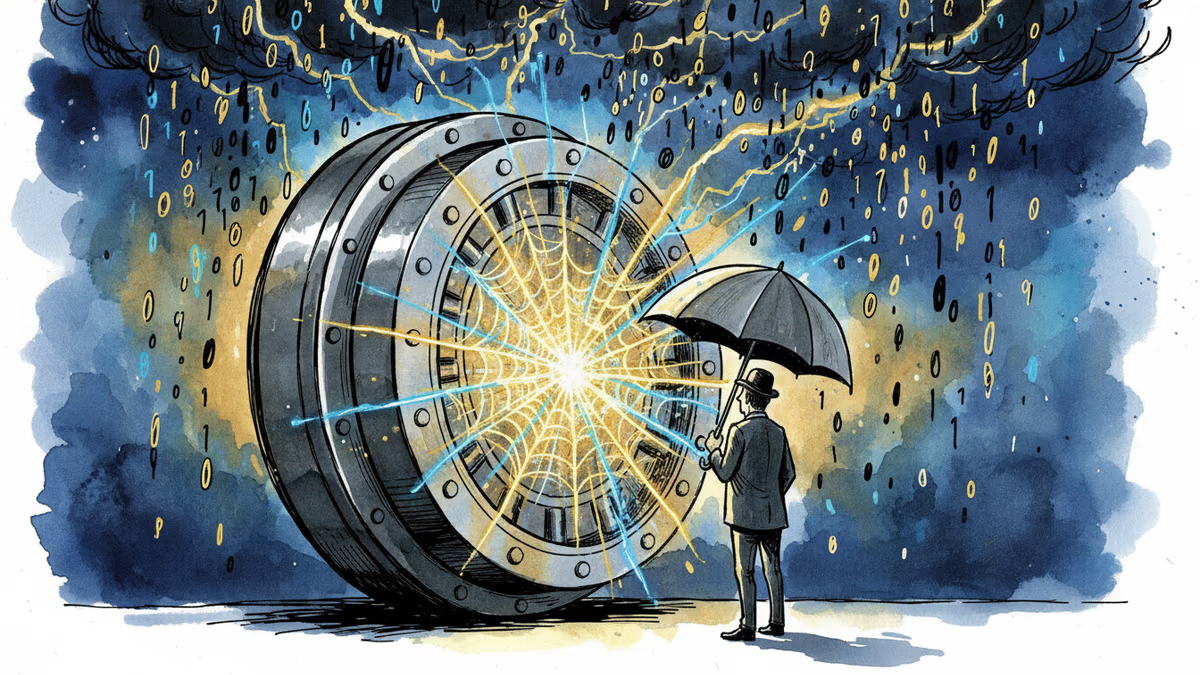
DBS CEO Tan Su Shan says cyber threats—not market volatility—are her biggest concern. As AI expands the attack surface in banking, what does that mean for your money?
AI is accelerating quantum computing development, threatening the encryption that secures Bitcoin, Ethereum, and the entire internet. Security experts warn the arms race has already begun.
Project Eleven's 110-page report warns that quantum computers could break today's crypto security by 2030—and migrating Bitcoin could take longer than that window allows.
Anthropic's Mythos AI found thousands of unknown software vulnerabilities. But cybersecurity experts say the same capability already exists in older, publicly available models — and defenses are nowhere near keeping up.
DBS CEO Tan Su Shan says cyber threats—not market volatility—are her biggest concern. As AI expands the attack surface in banking, what does that mean for your money?
Thoughts
Share your thoughts on this article
Sign in to join the conversation