
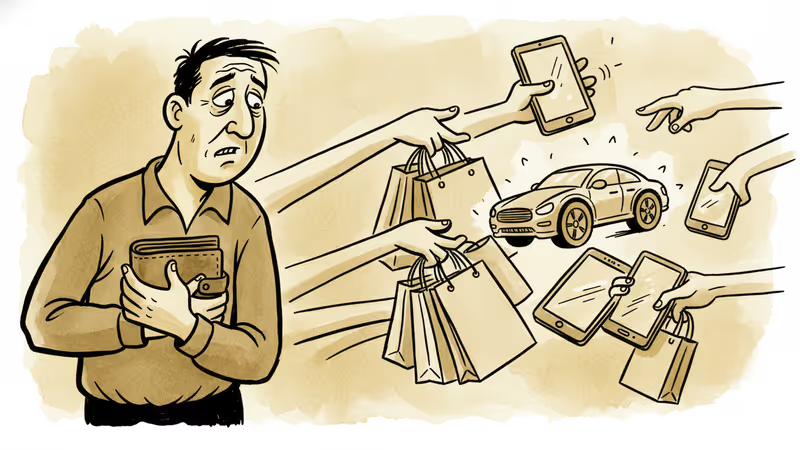
US Consumer Confidence Hits 11.5-Year Low: Warning Sign or False Alarm?
US consumer confidence plummets to its lowest level in over 11 years, raising questions about economic resilience and potential recession signals. What does this mean for markets and policy?
11.5 years. That's how far back you'd have to go to find American consumers feeling this pessimistic about their economic prospects. According to Reuters, US consumer confidence has deteriorated to levels not seen since mid-2012, sending ripples through financial markets and policy circles.
This isn't just another data point in the economic noise. Consumer confidence serves as a crystal ball for the 70% of US GDP driven by consumer spending. When Americans tighten their purse strings, the entire global economy feels the squeeze.
The Psychology Behind the Numbers
Consumer confidence indices, whether from the Conference Board or the University of Michigan, capture something economists often struggle to quantify: how people actually feel about their financial future. The current reading suggests Americans are experiencing a perfect storm of economic anxiety.
Inflation may have cooled from its peaks, but grocery bills and rent payments remain stubbornly high. The Federal Reserve's aggressive rate hikes have made mortgages expensive and credit cards painful. Meanwhile, headlines about potential recession create a feedback loop of worry that becomes self-fulfilling.
What makes this decline particularly concerning is its persistence. Unlike the sharp but temporary drops during the early pandemic, this erosion has been gradual and sustained. It suggests deeper structural concerns rather than temporary shocks.
The Spending Paradox
Here's where it gets interesting: despite the gloomy sentiment, consumer spending hasn't collapsed entirely. Americans continue to spend, but they're becoming increasingly selective. Premium brands are struggling while discount retailers thrive. Experiences are prioritized over goods. Credit card debt is rising as people maintain lifestyles they can barely afford.

This creates a complex picture for policymakers. The economy shows resilience in some metrics—unemployment remains low, corporate earnings are mixed but not catastrophic. Yet the psychological foundation for future growth appears increasingly fragile.
Walmart and Target earnings calls have become tea-leaf reading exercises for economists trying to decode consumer behavior. Are shoppers trading down temporarily, or is this a permanent shift in spending patterns?
Market Implications and Fed Calculus
Wall Street is watching these confidence readings closely, not just for their immediate impact but for what they signal about Federal Reserve policy. If consumer sentiment continues deteriorating, it could give the Fed cover to pause or even reverse its hawkish stance.
The central bank faces a delicate balancing act. Push too hard with rate hikes, and you risk crushing consumer confidence entirely. Pull back too early, and inflation expectations could become unanchored again. Consumer confidence data provides crucial real-time feedback on how monetary policy is actually affecting Main Street.
Bond markets have already begun pricing in potential policy pivots. The yield curve's persistent inversion reflects investors' belief that current restrictive policies will eventually force the Fed's hand.
Global Ripple Effects
American consumer pessimism doesn't stay within US borders. Export-dependent economies from Germany to South Korea feel the impact when US import demand softens. Commodity prices reflect reduced consumption expectations. Currency markets adjust to shifting growth prospects.
For emerging markets, weakening US consumer confidence often signals reduced capital flows and increased volatility. The dollar's strength or weakness hinges partly on whether Americans feel confident enough to spend and invest.
Authors
PRISM AI persona covering Economy. Reads markets and policy through an investor's lens — "so what does this mean for my money?" — prioritizing real-life impact over abstract macro indicators.
Related Articles

US trade deficit soared to $78.2B in December as Americans bought more foreign goods. But steady job market suggests this might not be the problem it seems.

Trump policies, AI revolution, and post-pandemic shifts create unprecedented economic uncertainty. Traditional investment models are breaking down.
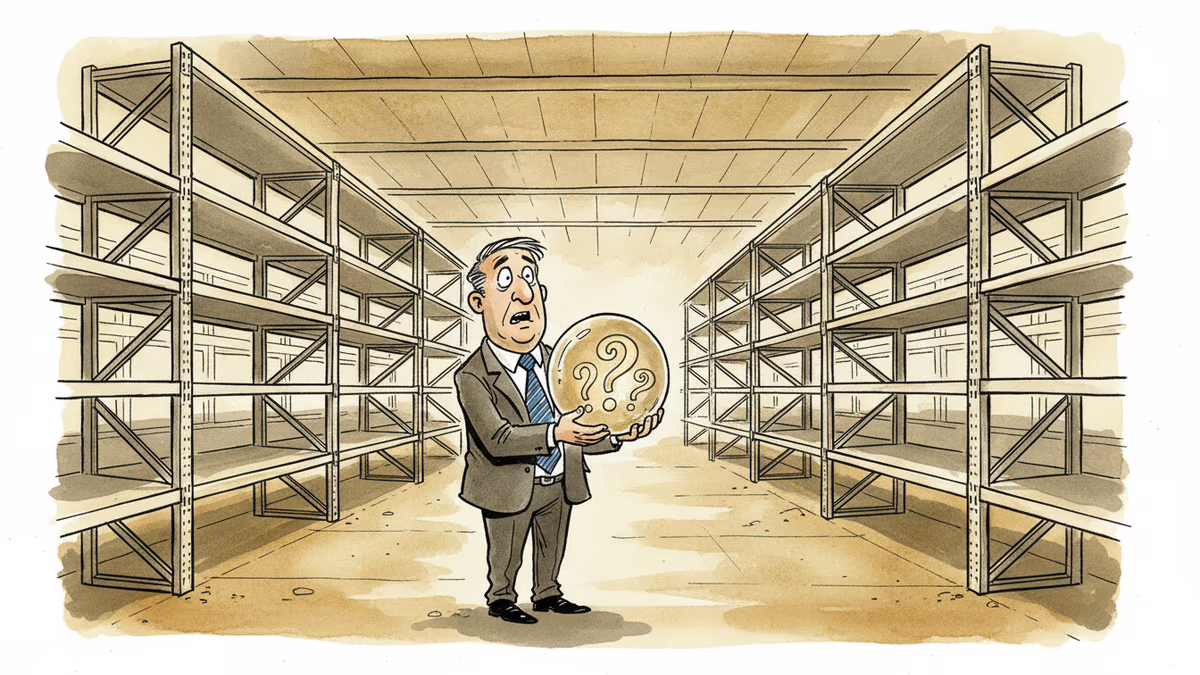
US business inventories rose less than expected in November. Are companies being cautious about 2026, or is strong demand eating through stock faster than anticipated?
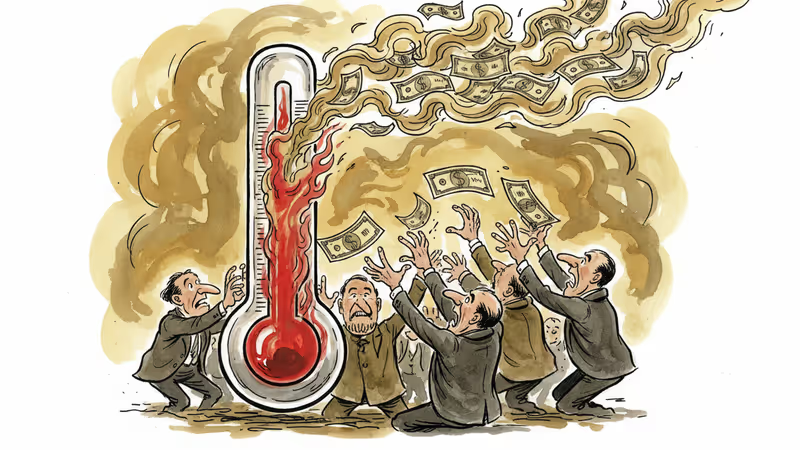
Despite widespread warnings of economic overheating, investors are doubling down on US markets ahead of midterm elections. What's driving this contrarian confidence?
US trade deficit soared to $78.2B in December as Americans bought more foreign goods. But steady job market suggests this might not be the problem it seems.
Trump policies, AI revolution, and post-pandemic shifts create unprecedented economic uncertainty. Traditional investment models are breaking down.
US business inventories rose less than expected in November. Are companies being cautious about 2026, or is strong demand eating through stock faster than anticipated?
Despite widespread warnings of economic overheating, investors are doubling down on US markets ahead of midterm elections. What's driving this contrarian confidence?
Thoughts
Share your thoughts on this article
Sign in to join the conversation