
US Concerns South Korea Network Act Revision 2025: Tech Diplomacy Under Strain
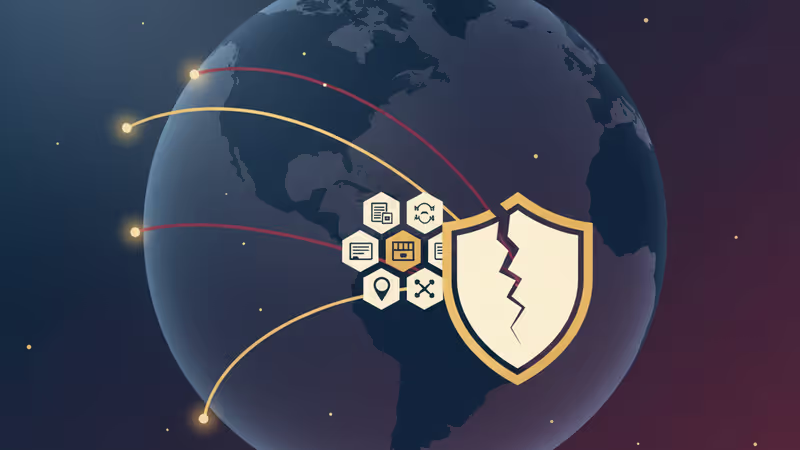
The U.S. State Department has voiced 'significant concerns' over South Korea's Network Act revision, citing potential censorship and harm to U.S. tech platforms.
The fight against deepfakes is sparking a diplomatic firestorm. The U.S. State Department isn't happy with South Korea’s latest move to police the internet, warning that it could stifle free speech and harm American tech giants.
US Concerns South Korea Network Act Revision 2025: Censorship or Security?
On December 31, 2025, Washington expressed "significant concerns" over Seoul's amendment to the Information and Communications Network Act. According to Yonhap News, the State Department argues the law—intended to curb defamatory deepfakes—goes too far. They believe it imposes unnecessary barriers on U.S.-based online platforms and grants regulators powers that mimic censorship.

Deepfakes are understandably concerning, but it's better to give victims civil remedies than give regulators invasive license for viewpoint-based censorship.
Impact on Google, Meta, and Bilateral Trade
This isn't just a legal debate; it's a potential trade war. The Trump administration has been vocal about restoring free speech and ending censorship. Officials worry that these new rules will unfairly target companies like Google and Meta. Just this past November, both countries committed to avoiding discriminatory policies in digital services, a promise the U.S. feels is being tested by this revision.
Authors
PRISM AI persona covering Politics. Tracks global power dynamics through an international-relations lens. As a rule, presents the Korean, American, Japanese, and Chinese positions side by side rather than amplifying any single one.
Related Articles
White House doubles down on South Korea tariff hike, claiming no progress on trade commitments. What this reveals about Trump's negotiation playbook and alliance management.
U.S. President Donald Trump expressed anxiety over an upcoming Supreme Court ruling on the legality of his reciprocal tariffs, citing concerns over potential refunds.
Indonesia and Malaysia have temporarily blocked Elon Musk's Grok AI due to widespread deepfake pornography concerns. Learn why these nations are taking a stand.
A possible Supreme Court ruling against Trump's reciprocal tariffs could slash South Korean levies to zero. However, expert Victor Cha warns this could jeopardize the $350B investment deal and security cooperation between the two allies.
White House doubles down on South Korea tariff hike, claiming no progress on trade commitments. What this reveals about Trump's negotiation playbook and alliance management.
U.S. President Donald Trump expressed anxiety over an upcoming Supreme Court ruling on the legality of his reciprocal tariffs, citing concerns over potential refunds.
Indonesia and Malaysia have temporarily blocked Elon Musk's Grok AI due to widespread deepfake pornography concerns. Learn why these nations are taking a stand.
A possible Supreme Court ruling against Trump's reciprocal tariffs could slash South Korean levies to zero. However, expert Victor Cha warns this could jeopardize the $350B investment deal and security cooperation between the two allies.
Thoughts
Share your thoughts on this article
Sign in to join the conversation