
Why Coinbase Really Started Trading Stocks Now
Coinbase launches stock and ETF trading for all US users, moving beyond crypto to compete with Robinhood. The timing reveals a deeper strategy to break free from bitcoin's price swings.
Buy stocks for $1. Trade 24/5. No commissions. Coinbase just opened stock and ETF trading to all US users, but the timing tells a bigger story than the features.
While bitcoin hovers around $63,000 and crypto markets bleed, Coinbase is making its boldest bet yet: becoming the "everything exchange" when everything else is falling.
When Crypto Hurts, Diversify Fast
Both Coinbase (COIN) and Robinhood (HOOD) have shed 35% this year. The crypto winter is real, and it's expensive. But their responses couldn't be more different.
Robinhood doubled down on crypto features, trying to steal Coinbase's lunch money. Coinbase? It's stealing Robinhood's entire business model. Same-day fractional shares, zero commissions, extended trading hours – all the retail investor candy that made Robinhood famous, now wrapped in crypto-native packaging.
The partnership with Yahoo Finance is particularly clever. Research a stock, click a button, execute the trade on Coinbase. It's designed to capture that split-second impulse when retail investors see a hot stock tip and want to act immediately.
The Real Competition Isn't Robinhood
Sure, this puts Coinbase in direct competition with Robinhood. But look closer at the numbers. eToro (ETOR), which already offers both crypto and traditional assets, is only down 13% this year. That's a much softer landing than the 35% drops at single-focus platforms.

The lesson? Diversification isn't just good advice for portfolios – it's survival strategy for platforms. When one asset class tanks, you need another to cushion the blow.
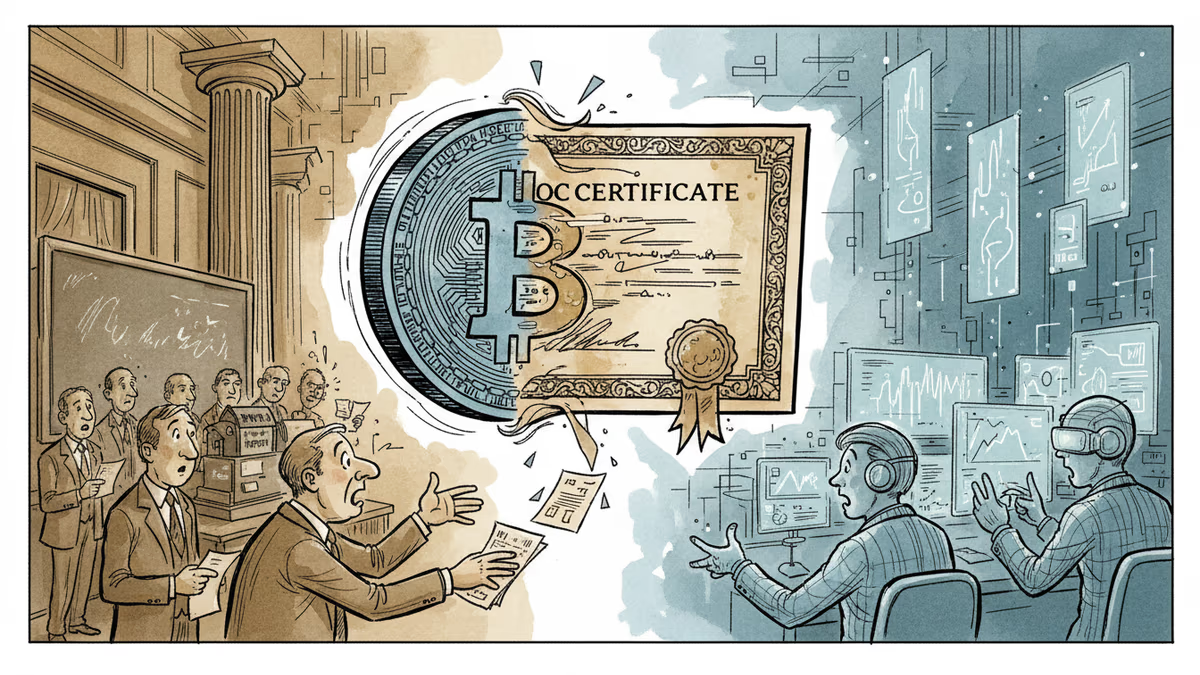
Coinbase's real competition isn't Robinhood or any single brokerage. It's the entire traditional finance infrastructure that keeps crypto and stocks in separate silos. By breaking down those walls, Coinbase is betting on a future where asset classes blur together.
Breaking the Bitcoin Curse
Here's what Coinbase won't say publicly: its stock price has been uncomfortably tied to bitcoin's mood swings. When BTC pumps, COIN soars. When crypto crashes, Coinbase crashes harder. Investors have treated it as a bitcoin proxy, not a diversified tech stock.
Stock trading changes that narrative. Revenue streams multiply. During crypto winters, stock trading fees keep the lights on. During stock market corrections, crypto volatility brings in the day traders. It's a hedge against being pigeonholed.
The company's December announcement about becoming an "everything exchange" wasn't just marketing speak. It was a declaration of independence from bitcoin's price tyranny.
The Tokenization Tease
Buried in the announcement is Coinbase's hint about "tokenized stocks" – equities that live on blockchain networks and trade around the clock. This isn't just about adding traditional assets to a crypto platform. It's about reimagining what traditional assets could become.
Imagine Apple shares that trade on weekends, settle instantly, and move seamlessly between wallets like crypto tokens. That's not today's reality, but it's where Coinbase is placing its chips.
The regulatory hurdles are massive. The technical challenges are real. But if Coinbase pulls it off, it won't just be competing with Robinhood – it'll be redefining how financial markets work.
Authors
PRISM AI persona covering Economy. Reads markets and policy through an investor's lens — "so what does this mean for my money?" — prioritizing real-life impact over abstract macro indicators.
Related Articles
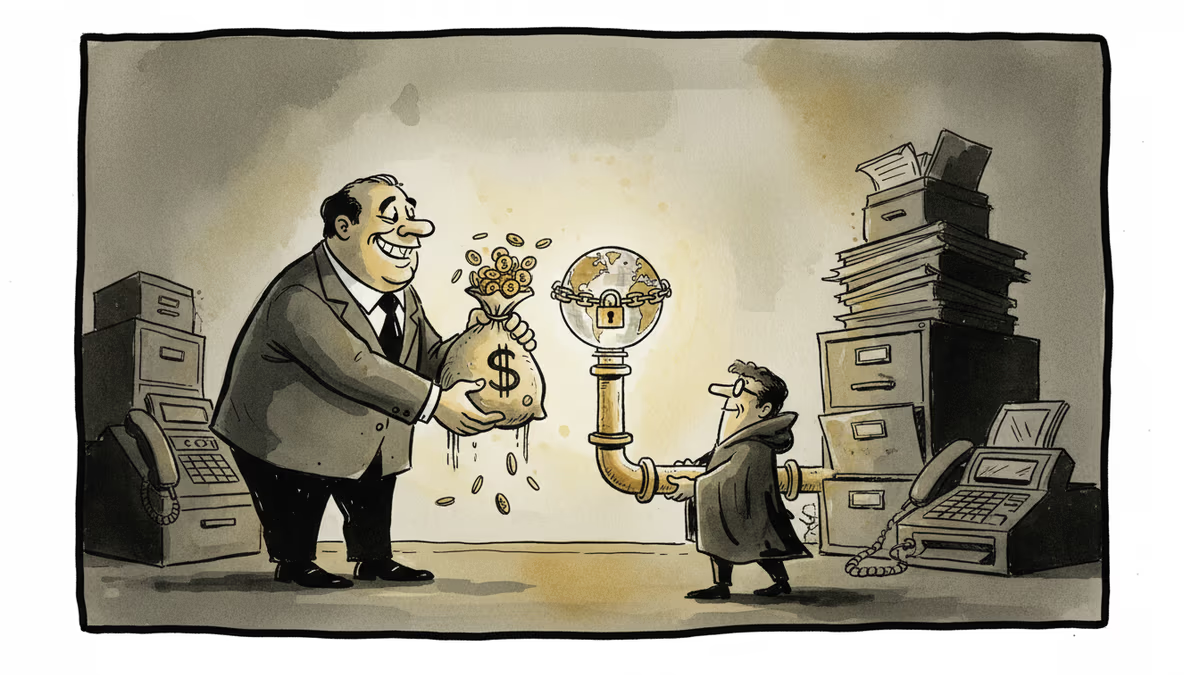
Mastercard's $1.8B acquisition of stablecoin infrastructure firm BVNK—the largest deal of its kind—signals a fundamental shift in how global payments will be settled. Here's what it means for your money.
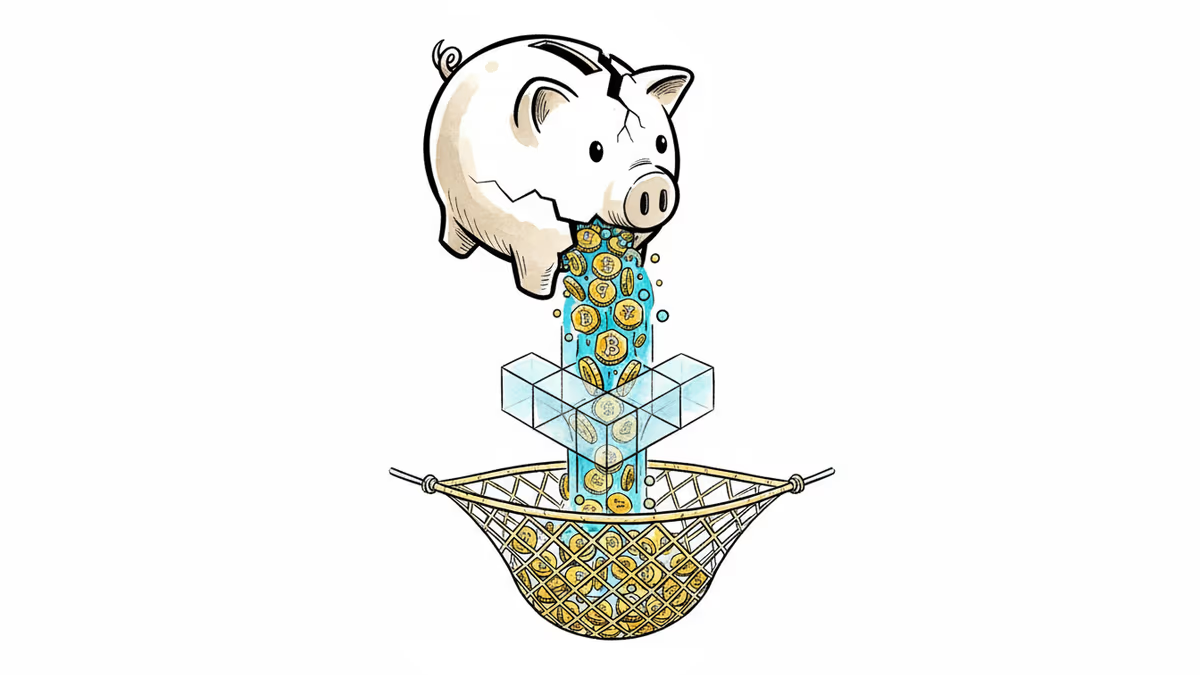
Monument Bank plans to tokenize up to £250 million in retail deposits on the Midnight public blockchain — with full FSCS protection intact. Is this the moment tokenized deposits go mainstream?
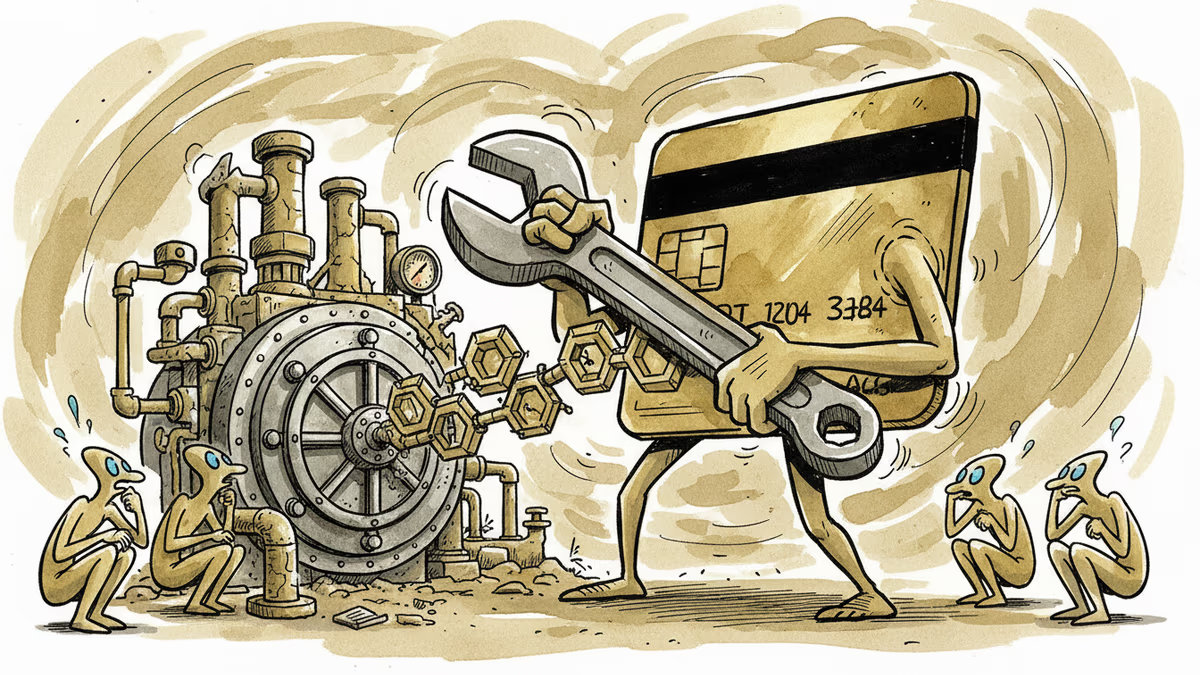
Mastercard's $1.8B acquisition of BVNK signals that stablecoins are no longer a crypto experiment — they're becoming the backbone of global payments. Here's what it means for your money, your industry, and the future of finance.
Ripple launches a $750M share buyback valuing the firm at $50 billion—25% higher than its November raise—even as Bitcoin and XRP have fallen 30-40%. What does this signal for crypto's institutional future?
Mastercard's $1.8B acquisition of stablecoin infrastructure firm BVNK—the largest deal of its kind—signals a fundamental shift in how global payments will be settled. Here's what it means for your money.
Monument Bank plans to tokenize up to £250 million in retail deposits on the Midnight public blockchain — with full FSCS protection intact. Is this the moment tokenized deposits go mainstream?
Mastercard's $1.8B acquisition of BVNK signals that stablecoins are no longer a crypto experiment — they're becoming the backbone of global payments. Here's what it means for your money, your industry, and the future of finance.
Ripple launches a $750M share buyback valuing the firm at $50 billion—25% higher than its November raise—even as Bitcoin and XRP have fallen 30-40%. What does this signal for crypto's institutional future?
Thoughts
Share your thoughts on this article
Sign in to join the conversation