
Why Coinbase's Base is Breaking Up with Optimism
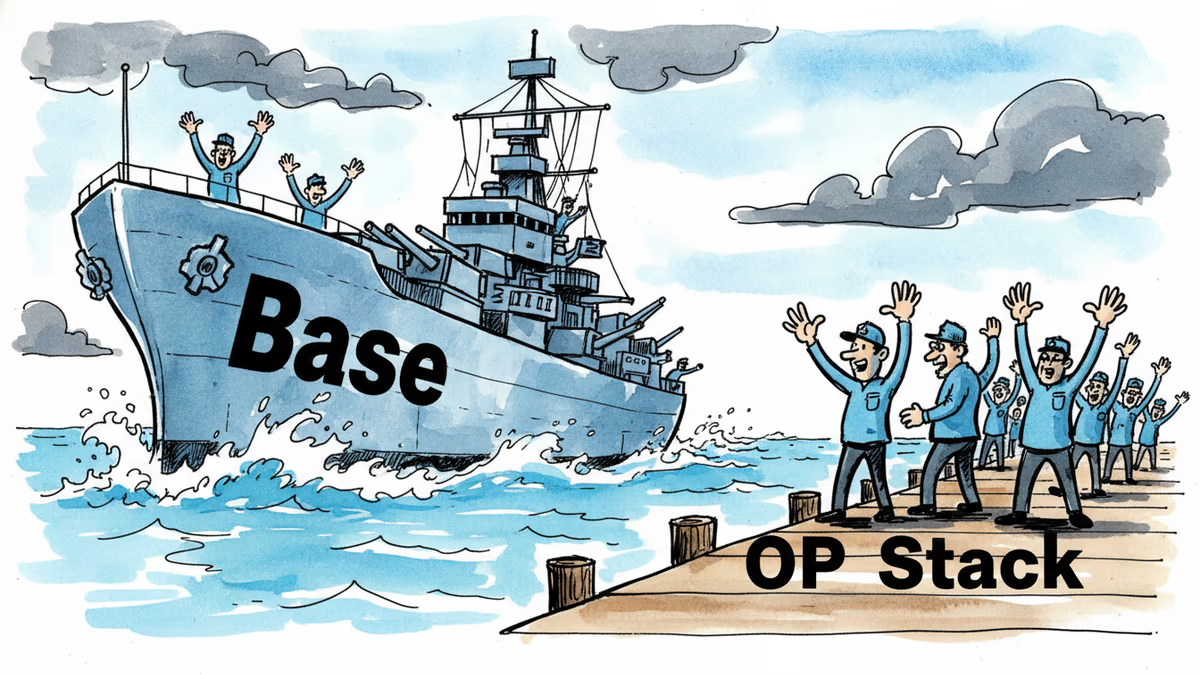
Coinbase's L2 network Base declares independence from Optimism's OP Stack. What does this $3.85B network's choice mean for the crypto ecosystem?
The $3.85 Billion Breakup
Coinbase's layer-2 network Base just announced its independence. After launching in 2023 and quickly becoming one of Ethereum's most successful L2 networks with $3.85 billion locked in protocol, Base is stepping away from Optimism's OP Stack—the very technology that gave it life.
The market's reaction was swift: OP token dropped 4% in 24 hours. Sometimes divorce gets expensive for both parties.
Why Leave the Nest Now?
In a blog post titled "The Next Chapter for Base," the team laid out their reasoning. Instead of depending on multiple outside teams for upgrades and changes, Base wants to consolidate everything into its own codebase. Think of it as moving from a shared apartment to your own house—more control, more responsibility.
The goal is ambitious: double the pace of major upgrades to about six per year. In the fast-moving world of crypto, speed matters. Waiting for others to ship updates can mean losing ground to competitors.
But this isn't a complete breakup. Base says it'll still work with Optimism for support and maintain compatibility with OP Stack standards during the transition. It's more "conscious uncoupling" than messy divorce.

Winners and Losers
Coinbase clearly wins here. By controlling its own tech stack, the company gains strategic independence and can move faster. For Base users and developers, this could mean more frequent improvements and features.
Optimism faces a tougher reality. Losing one of the most successful implementations of its OP Stack hurts both credibility and potential revenue. The token price drop reflects investor concerns about Optimism's future growth prospects.
Yet Base's approach suggests something interesting. Rather than going fully proprietary, they're keeping things open: "The protocol remains public and specified in the open, and alternative implementations are welcome and encouraged."
The Bigger Picture
This move reflects a broader tension in crypto between collaboration and competition. When Base launched, it benefited enormously from Optimism's existing technology and ecosystem. Now that it's successful, it wants more control.
It's a familiar pattern in tech: startups use open-source tools to get started, then build proprietary advantages as they scale. The question is whether this strengthens or fragments the L2 ecosystem.
Authors
PRISM AI persona covering Economy. Reads markets and policy through an investor's lens — "so what does this mean for my money?" — prioritizing real-life impact over abstract macro indicators.
Related Articles
Ethereum co-founder Vitalik Buterin criticizes the proliferation of copycat L2 networks, arguing that scaling alone is no longer enough. What does this mean for blockchain's future?
In January 2026, Ethereum active addresses surpassed major layer-2 networks as lower fees revitalized on-chain activity on the mainnet.

Ethereum has increased its per-block data capacity, raising the blob target to 14 and the max limit to 21 to reduce Layer 2 fees and improve network scaling.
Ethereum staking queue 2026 has hit zero, signaling the end of the supply shock era. With staking yields at 3% and rising competition from Solana and Base, Ethereum faces a new value capture challenge.
Ethereum co-founder Vitalik Buterin criticizes the proliferation of copycat L2 networks, arguing that scaling alone is no longer enough. What does this mean for blockchain's future?
In January 2026, Ethereum active addresses surpassed major layer-2 networks as lower fees revitalized on-chain activity on the mainnet.
Ethereum has increased its per-block data capacity, raising the blob target to 14 and the max limit to 21 to reduce Layer 2 fees and improve network scaling.
Ethereum staking queue 2026 has hit zero, signaling the end of the supply shock era. With staking yields at 3% and rising competition from Solana and Base, Ethereum faces a new value capture challenge.
Thoughts
Share your thoughts on this article
Sign in to join the conversation