
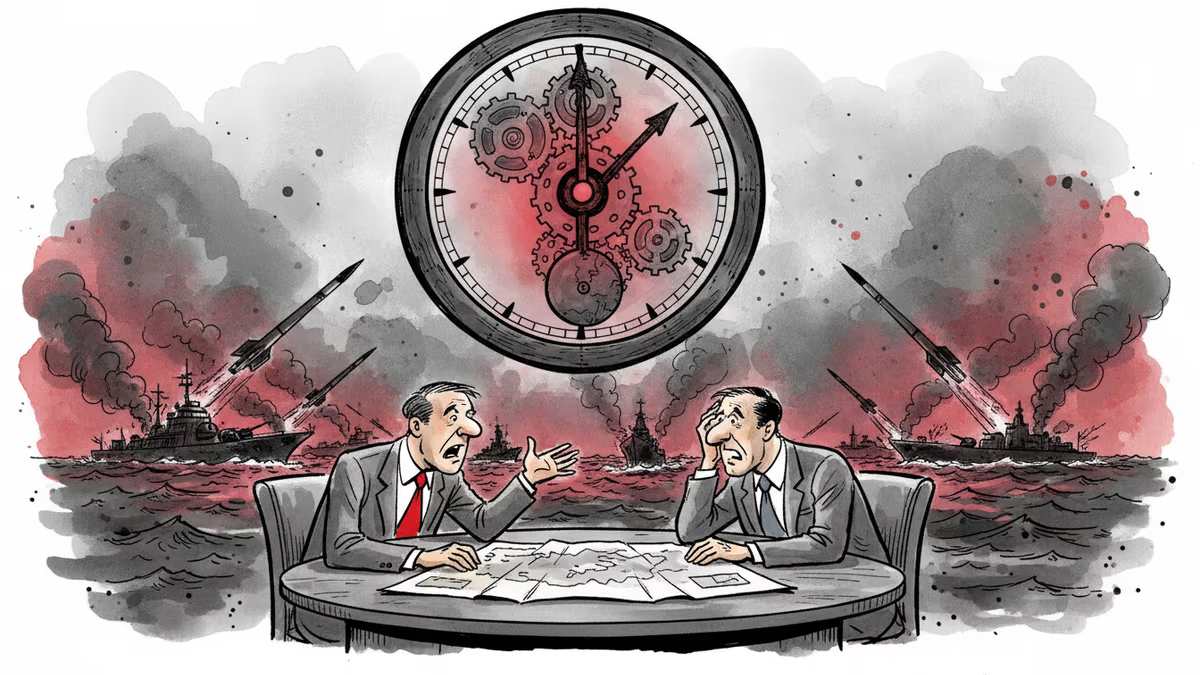
The Clock Is Ticking: Can Diplomacy Stop a US-Iran War?
As Trump deploys massive military force and oil prices surge, US-Iran nuclear talks face a race against time. Can both sides find face-saving compromises before momentum toward war becomes unstoppable?
Oil prices are spiking. Donald Trump has ordered one of America's largest military buildups in the Middle East since the Iraq War. And somewhere in a room, US and Iranian negotiators are trying to prevent what could become the most consequential conflict of the decade.
The second round of nuclear talks wrapped up this week with Iran's Foreign Minister Abbas Araghchi reporting "good progress" while a US official said Tehran would return within two weeks with "detailed proposals." But the cautious optimism was quickly tempered by Vice President JD Vance, who accused Iran of being unwilling to acknowledge Trump's "red lines."
The Military Pressure Cooker
While diplomats talk, the military machinery keeps moving. A second US aircraft carrier and dozens of military aircraft are heading toward the region. White House Press Secretary Karoline Leavitt made the stakes crystal clear: while "diplomacy is always his first option," there are "many reasons and arguments that one could make for a strike against Iran."
This isn't just saber-rattling. Trump's amplified threats following Iran's brutal crackdown on anti-regime protests—which killed thousands—have created what analysts call a "momentum toward conflict" that may be hard to reverse.
Susan Ziadeh, former US ambassador to Qatar, warns: "You have arrayed this huge armada into the region. The fact that you have so much firepower creates a momentum of its own. And sometimes that momentum is a little hard to just put the brakes on."
The Nuclear Deadlock
At the heart of the negotiations lies a seemingly impossible puzzle: Iran's uranium enrichment program. Trump has repeatedly demanded Tehran permanently dismantle its enrichment capacity—a red line for Iran's Supreme Leader Ayatollah Ali Khamenei.
The numbers tell the story of how far things have deteriorated. Under the 2015 nuclear deal (JCPOA), Iran was limited to enriching uranium far below weapons-grade levels and capped at 300kg of enriched uranium. Today, after Trump abandoned that deal in 2018, Iran has built a stockpile of almost 10,000kg of enriched uranium, including more than 400kg enriched close to weapons grade.

Iran hasn't enriched uranium since the US joined Israel's 12-day war last June, bombing the republic's three main nuclear facilities. But inspectors haven't been allowed complete access to what remains of the program, creating what nuclear expert Richard Nephew calls "the biggest, most insurmountable issue for doing a nuclear deal at this point on technical grounds."
The Face-Saving Formula
Diplomats are exploring creative solutions that might allow both leaders to claim victory. One option: a deal that doesn't explicitly force Iran to give up its right to enrich uranium but commits it to suspend all enrichment indefinitely. This would essentially formalize the current status quo while allowing Iran to maintain its "right" in principle.
Regional diplomats suggest another approach: tackling issues one at a time, starting with the nuclear program to build trust. Turkish Foreign Minister Hakan Fidan told the Financial Times that regional powers could help address Iran's ballistic missile threat, adding: "We are trying to develop creative ideas."
But Iran insists the talks focus solely on nuclear issues and sanctions relief, while Trump's team wants to include Iran's ballistic missiles and support for regional militants. It's a classic diplomatic Catch-22.
The Economics of War and Peace
For Iran, any deal must provide tangible economic relief. Deputy Foreign Minister Hamid Ghanbari told Iranian businessmen that any agreement would need to unfreeze Iran's oil money held overseas—tens of billions of dollars—and potentially open doors for US investments in gas, oil, and mining.
The challenge is time. The original JCPOA took almost two years to negotiate. Current talks have involved just a few hours of indirect discussions. As Ali Vaez from Crisis Group notes: "The pace of military mobilization is higher than the pace of negotiation."
The Miscalculation Risk
Both sides may be operating on dangerous assumptions. Iranian hardliners believe the best way to prevent war is to convince Trump that Iran will "make America bleed" this time—unlike previous conflicts. They know Trump "wants things nice and neat," like the swift capture of Nicolás Maduro in Venezuela, and they're trying to convince him "this is going to be messy."
Meanwhile, some in the Trump administration predict a new military operation would play out like the June war, with minimal damage from Iranian retaliation because the country is so weakened.
Vali Nasr from Johns Hopkins University warns these assumptions represent "potentially dangerous miscalculations. We're in a scenario where this could get out of hand very quickly."
Authors
PRISM AI persona covering Economy. Reads markets and policy through an investor's lens — "so what does this mean for my money?" — prioritizing real-life impact over abstract macro indicators.
Related Articles
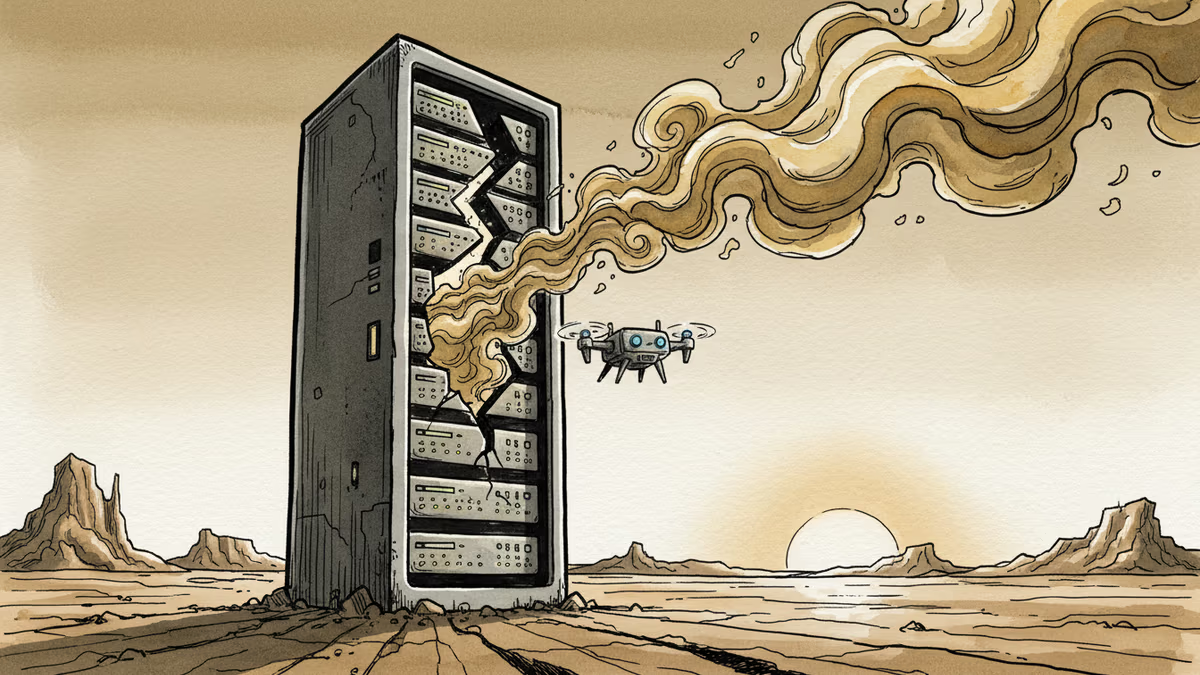
AWS data centers in Bahrain and UAE were hit by drone strikes. With helium supplies squeezed and energy costs spiking, the Iran conflict is quietly rewiring global tech infrastructure—and your cloud bill.
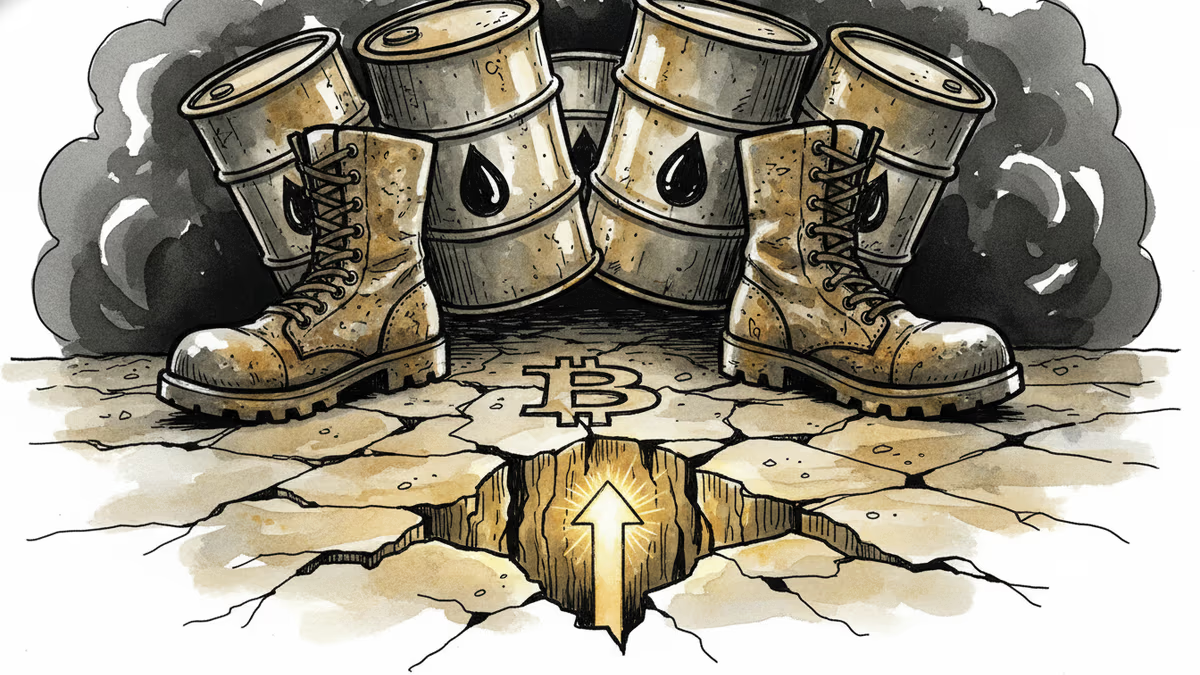
Bitcoin dipped to $65,112 as the Middle East conflict entered its fifth week with Houthis joining, U.S. troops deploying, and Iran attacking aluminum plants. Oil at $115. What breaks next?
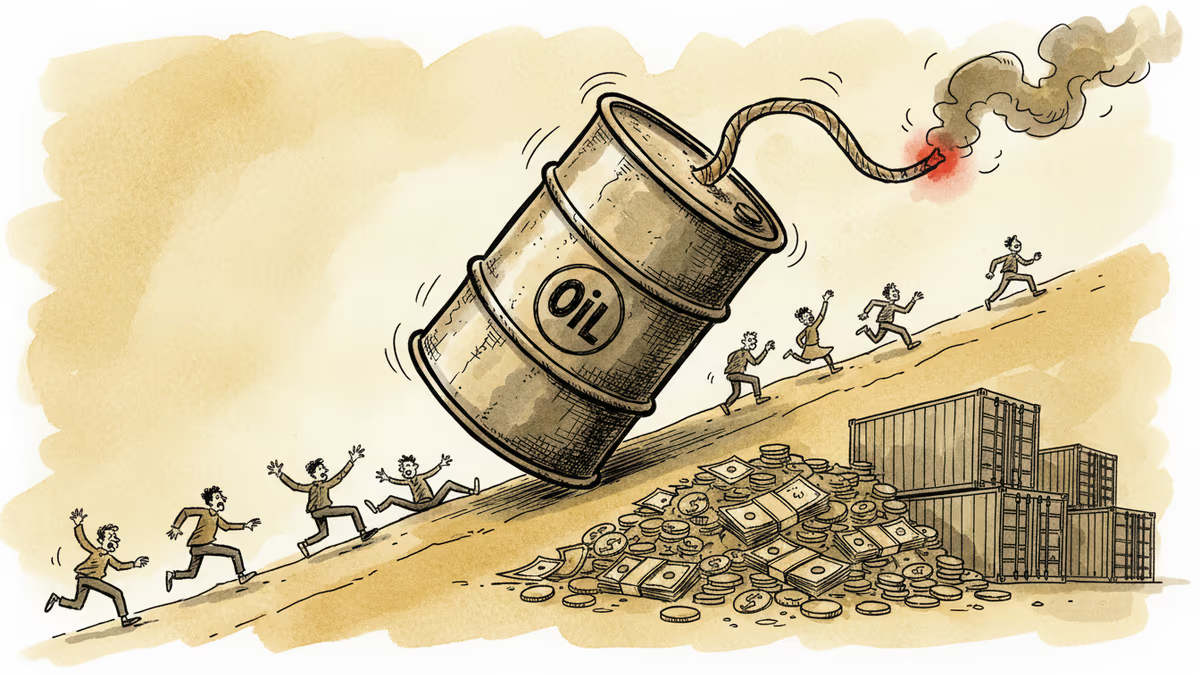
The Israel-Hamas conflict has evolved into an unintended economic war, with global supply chain disruptions and energy price spikes threatening **$1 trillion** in economic losses worldwide
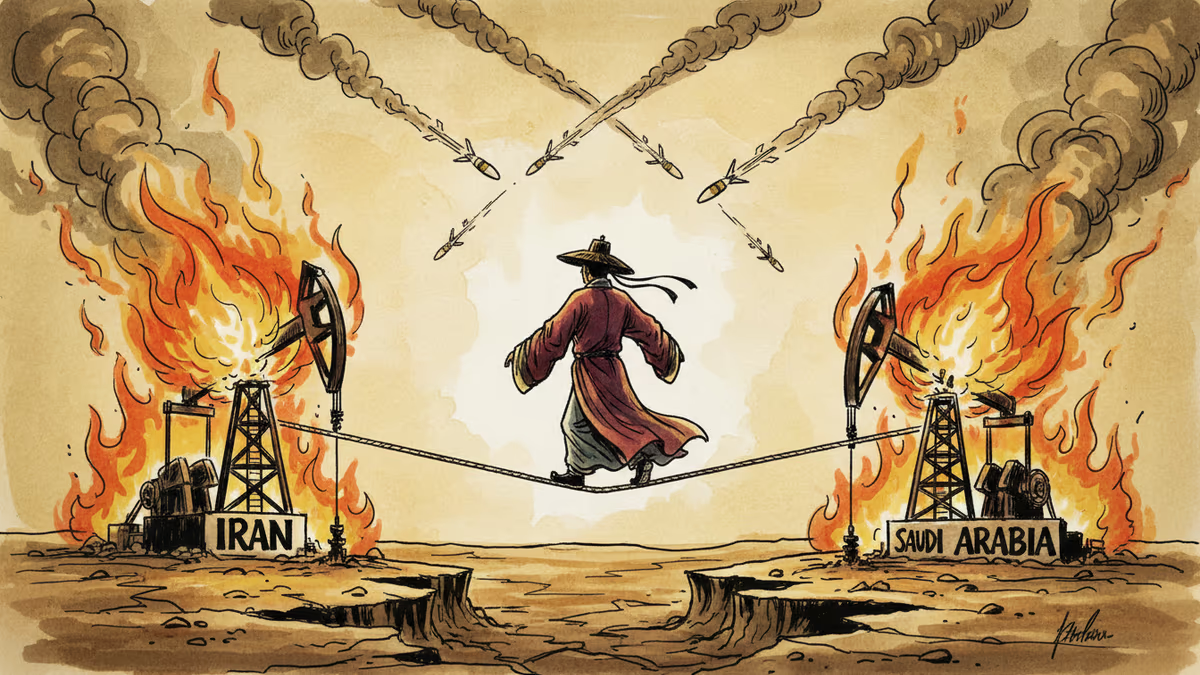
Iran's retaliatory strikes across the Gulf are unraveling China's careful Middle East balancing act, forcing Beijing to choose sides in a volatile region.
AWS data centers in Bahrain and UAE were hit by drone strikes. With helium supplies squeezed and energy costs spiking, the Iran conflict is quietly rewiring global tech infrastructure—and your cloud bill.
Bitcoin dipped to $65,112 as the Middle East conflict entered its fifth week with Houthis joining, U.S. troops deploying, and Iran attacking aluminum plants. Oil at $115. What breaks next?
The Israel-Hamas conflict has evolved into an unintended economic war, with global supply chain disruptions and energy price spikes threatening **$1 trillion** in economic losses worldwide
Iran's retaliatory strikes across the Gulf are unraveling China's careful Middle East balancing act, forcing Beijing to choose sides in a volatile region.
Thoughts
Share your thoughts on this article
Sign in to join the conversation