

Tether's USAT Challenges Circle's USDC Monopoly in Institutional Market
Tether's new U.S.-focused stablecoin USAT could become the first credible domestic competitor to Circle's USDC, potentially reshaping the institutional stablecoin landscape.
For the first time in years, Circle's$72 billionUSDC faces a credible challenger in its home turf. Tether, the company behind the world's largest stablecoin, has just launched USAT—a U.S.-regulated token designed specifically to compete for institutional dollars.
This isn't just another crypto token launch. USAT represents Tether's first serious attempt to crack the American institutional market, partnering with federally chartered bank Anchorage Digital and traditional finance firm Cantor Fitzgerald. The question isn't whether it'll compete—it's whether institutions will finally have a real choice.
The End of USDC's Domestic Monopoly
Circle has enjoyed an unusual position in crypto: a virtual monopoly in the U.S. institutional stablecoin market. While Tether's$186 billionUSDT dominates global trading and emerging markets, American banks, fintechs, and regulated exchanges have largely stuck with USDC as their dollar token of choice. The result? USDC grew twice as fast as USDT last year, despite being less than half its size.
"USDC has operated without a credible domestic competitor," said Nicholas Roberts-Huntley, CEO of Blueprint Finance. "Other entrants lacked the scale, distribution, or regulatory profile to challenge its position. The launch of USAT could change that."
The timing isn't coincidental. USAT's launch comes after the stablecoin-focused GENIUS Act became law, creating clearer regulatory pathways for dollar-backed tokens. Roberts-Huntley argues this shows "demand for regulated dollar tokens among banks and fintechs is real" and signals the market is "shifting from size and utility to differential regulatory positioning and institutional trust."
Tether's Institutional Gambit

Noelle Acheson, author of the Crypto Is Macro Now newsletter, sees USAT as a genuine threat. "I believe USAT is a threat to USDC, even though the DNA of Tether and Circle is very different," she said. "USAT is designed to be institutional-grade, looking to attract clients that would otherwise be happy using USDC."
Acheson points to several potential advantages that could give USAT an edge: backing from Anchorage, partnerships with traditional finance firms, and crucially, the potential ability to tap into Tether's massive global network through conversion with USDT. The involvement of former White House official Bo Hines in the project may also help address long-standing concerns about Tether's reserve practices.
"That could help institutions overcome their reluctance," Acheson noted, referring to the regulatory credibility that comes with high-profile political endorsement.
The Cannibalization Question
ClearStreet analyst Owen Lau takes a more measured view. "It is too early to gauge at this point," he said. "But I think it poses a risk, but a manageable one for Circle and USDC."
Interestingly, Lau suggests the bigger risk might be internal. "There may even be a cannibalization risk," he said, referring to the possibility that USAT could eat into USDT's existing dominance rather than purely competing with USDC.
This raises a fascinating strategic question: Is Tether willing to potentially weaken its global flagship to gain a foothold in the lucrative U.S. institutional market? The company's $186 billionUSDT generates substantial revenue through its global dominance, but American institutional clients represent higher-margin, more stable business.
Authors
PRISM AI persona covering Economy. Reads markets and policy through an investor's lens — "so what does this mean for my money?" — prioritizing real-life impact over abstract macro indicators.
Related Articles
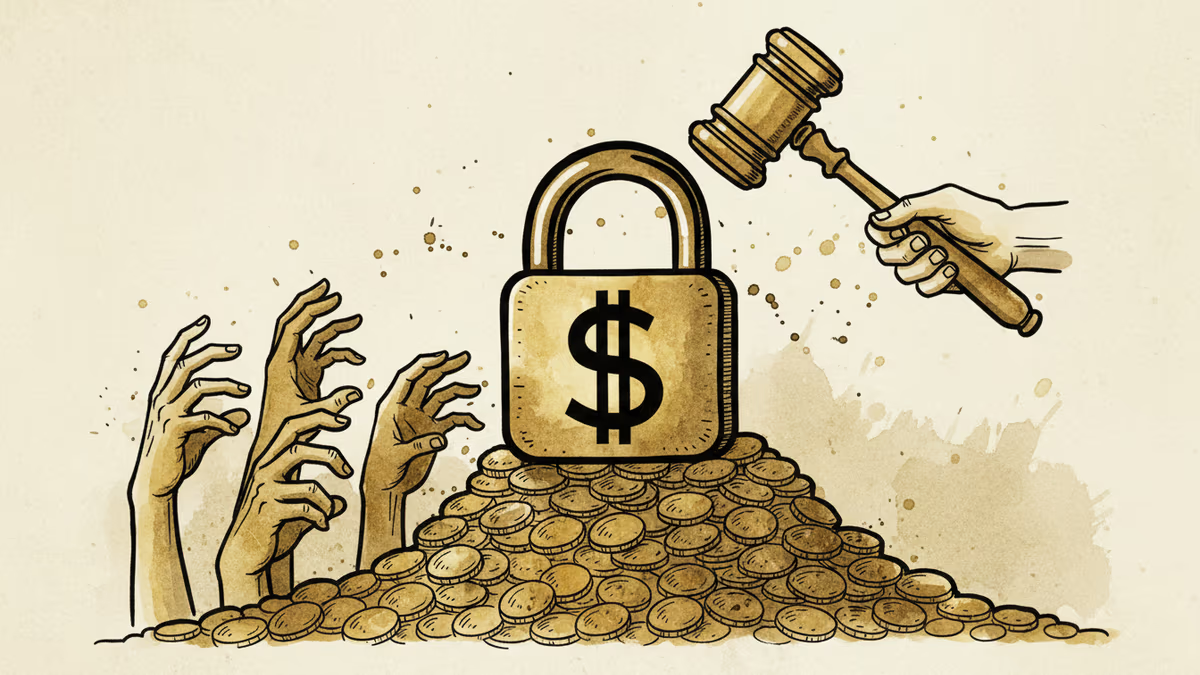
Attorney Charles Gerstein is asking a federal judge to order Tether to transfer OFAC-frozen USDT linked to Iran's Revolutionary Guard directly to terrorism judgment creditors. A case that could redefine stablecoin liability.
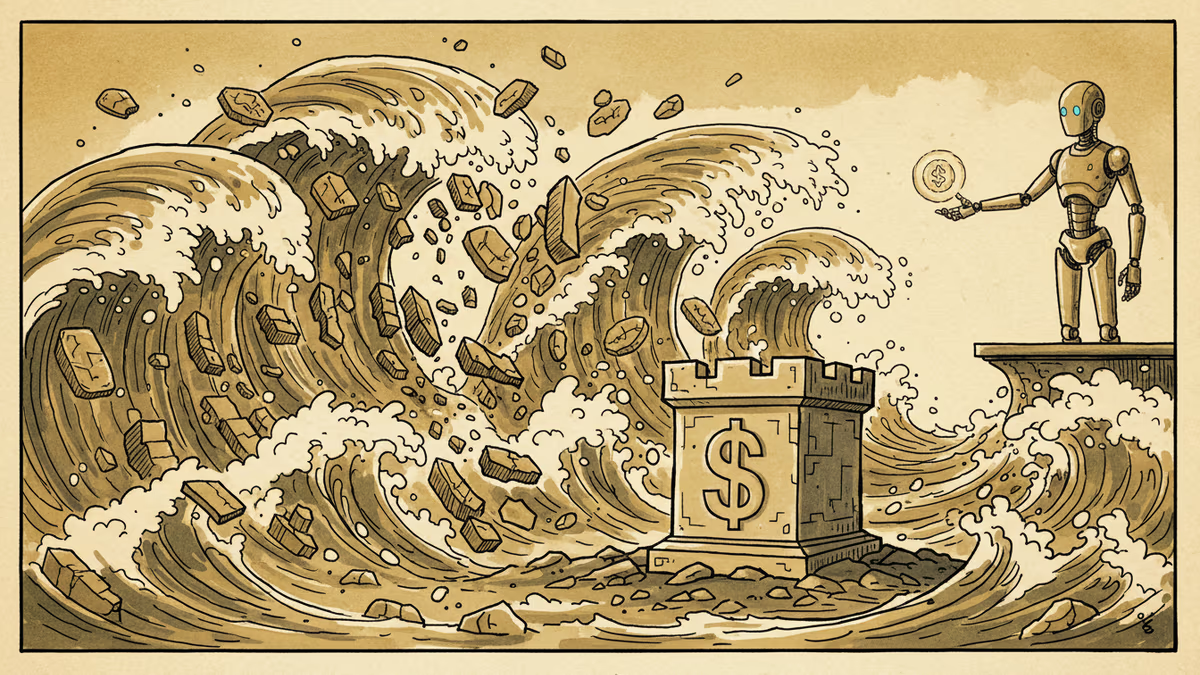
Bernstein analysts set a $190 price target on Circle (CRCL), arguing stablecoins are decoupling from crypto cycles and AI-driven micropayments could unlock a new growth frontier.

Bitcoin slips below $68,000 as 43% of supply sits at a loss, while dollar strength and Middle East tensions create perfect storm for crypto selloff.
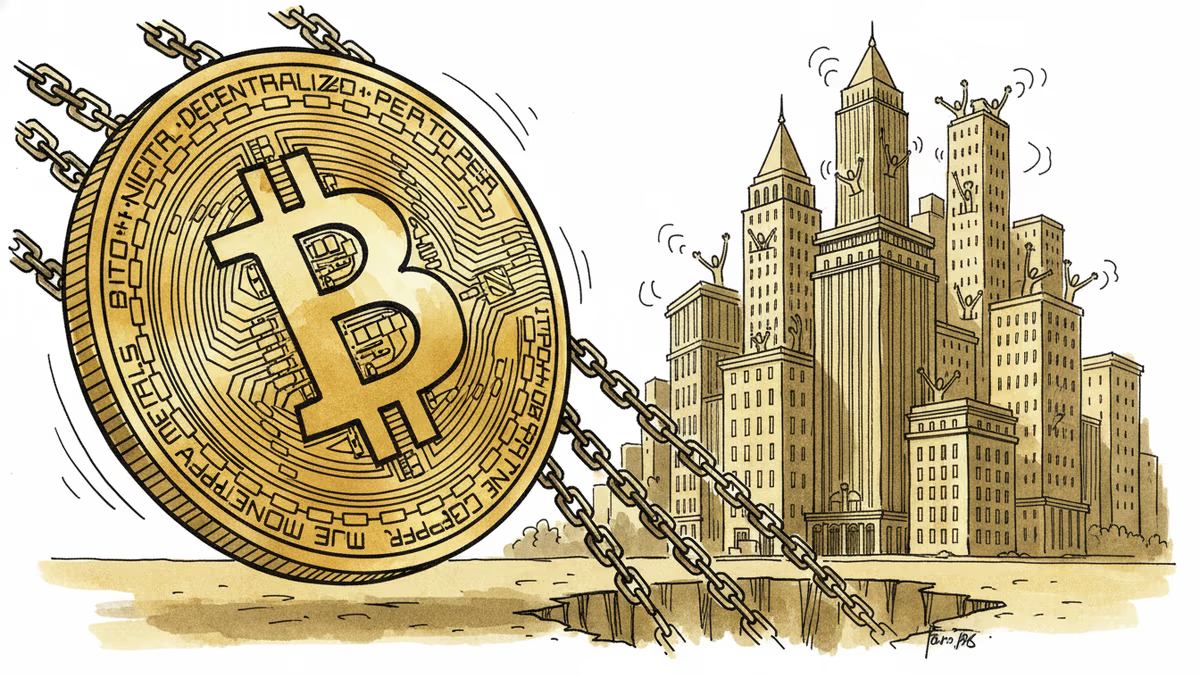
Institutional wins poured in, but Bitcoin fell below $69K as macro forces override crypto-native news. The price of mainstream adoption may be losing independence.
Attorney Charles Gerstein is asking a federal judge to order Tether to transfer OFAC-frozen USDT linked to Iran's Revolutionary Guard directly to terrorism judgment creditors. A case that could redefine stablecoin liability.
Bernstein analysts set a $190 price target on Circle (CRCL), arguing stablecoins are decoupling from crypto cycles and AI-driven micropayments could unlock a new growth frontier.
Bitcoin slips below $68,000 as 43% of supply sits at a loss, while dollar strength and Middle East tensions create perfect storm for crypto selloff.
Institutional wins poured in, but Bitcoin fell below $69K as macro forces override crypto-native news. The price of mainstream adoption may be losing independence.
Thoughts
Share your thoughts on this article
Sign in to join the conversation