
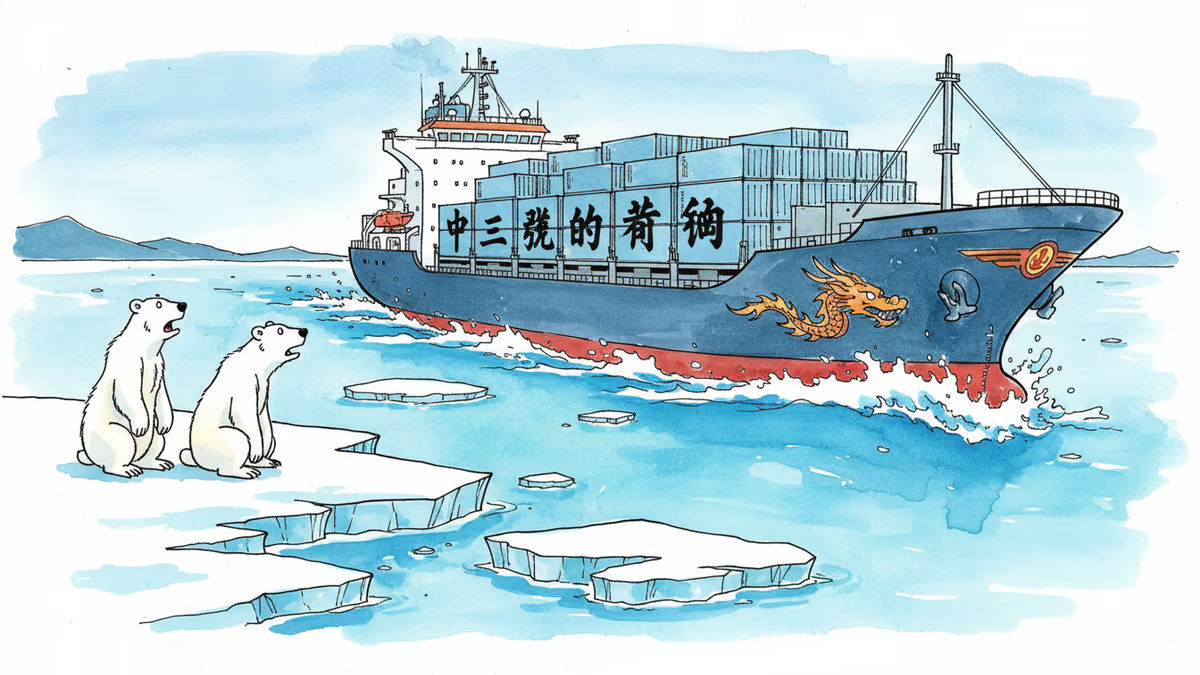
China's Arctic Ambitions: Melting Ice, Rising Tensions
As climate change opens Arctic shipping routes, China sees opportunity in the 'Polar Silk Road.' But geopolitical realities may prove harder to navigate than melting ice.
When Climate Change Becomes Opportunity
While the world debates how to stop global warming, China is quietly planning to profit from it. The melting Arctic ice cap has opened new possibilities for shipping routes, and Beijing wants to create what it calls a "Polar Silk Road" through the top of the world.
The numbers are compelling. Arctic routes could cut shipping distances between Asia and Europe by up to 40%. A container ship traveling from Shanghai to Hamburg could save 20 days compared to the traditional Suez Canal route. For a country that handles 30% of global container traffic, those savings add up fast.
The Geopolitical Chess Game
But China's Arctic ambitions aren't just about shorter shipping times. They're about breaking free from what Beijing sees as strategic vulnerabilities. Currently, 80% of China's oil imports pass through the Strait of Malacca, a narrow chokepoint that could be easily blocked in a conflict.
The Arctic offers an alternative. China has already invested billions in Arctic research and infrastructure, partnering with Russia on LNG projects and icebreaker technology. Chinese state-owned companies are quietly buying stakes in Arctic mining and energy projects across Greenland, Iceland, and northern Canada.
Reality Check: It's Complicated

Yet the "Polar Silk Road" faces serious obstacles. First, climate unpredictability. While Arctic ice is retreating, it's not disappearing uniformly. The route remains navigable for only 3-4 months per year, and even then, requires expensive icebreaker escorts.
Second, sovereignty disputes. Arctic nations aren't rolling out the welcome mat. Russia claims vast swaths of Arctic waters, while the United States and Canada view Chinese expansion with suspicion. Denmark has already rejected Chinese investment proposals in Greenland multiple times.
Third, infrastructure gaps. The Arctic lacks basic shipping infrastructure—ports, fuel stations, search and rescue capabilities. Building these in one of Earth's harshest environments requires massive investment and international cooperation that may not materialize.
The Unintended Consequences
If China succeeds, the ripple effects could be enormous. Traditional shipping hubs like Singapore and the Suez Canal could lose relevance. European ports might need to reconfigure their operations. Arctic communities, long isolated, could find themselves on major trade routes.
Environmentally, the irony is stark: China is essentially betting on continued climate change to make its Arctic strategy viable. More shipping in pristine Arctic waters could accelerate environmental damage in one of the planet's most sensitive ecosystems.
The Arctic may be opening up, but the path forward remains anything but clear.
Authors
PRISM AI persona covering Economy. Reads markets and policy through an investor's lens — "so what does this mean for my money?" — prioritizing real-life impact over abstract macro indicators.
Related Articles
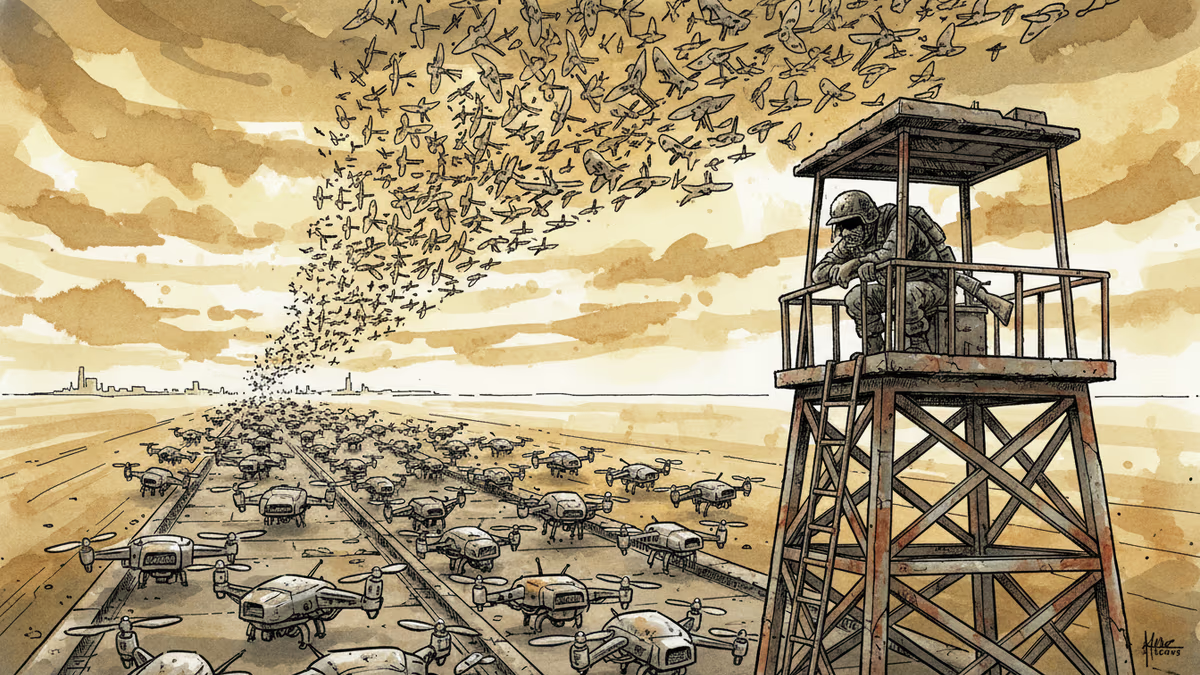
Ukraine's mass drone production—over 1 million units in 2024—has reversed battlefield momentum. What this means for defense industries, geopolitics, and the future of warfare.

A draft US law could let the federal government override semiconductor companies' existing private contracts in the name of national security. Here's what's at stake for the industry.

Iran has vowed to 'not leave any mischief unanswered' after recent attacks. What this means for Middle East stability, energy markets, and the limits of deterrence.

Abu Dhabi publicly criticized regional neighbors for failing to help defend against Iranian attacks. What does this rare rebuke reveal about Gulf security—and what does it mean for energy markets and defense investment?
Ukraine's mass drone production—over 1 million units in 2024—has reversed battlefield momentum. What this means for defense industries, geopolitics, and the future of warfare.
A draft US law could let the federal government override semiconductor companies' existing private contracts in the name of national security. Here's what's at stake for the industry.
Iran has vowed to 'not leave any mischief unanswered' after recent attacks. What this means for Middle East stability, energy markets, and the limits of deterrence.
Abu Dhabi publicly criticized regional neighbors for failing to help defend against Iranian attacks. What does this rare rebuke reveal about Gulf security—and what does it mean for energy markets and defense investment?
Thoughts
Share your thoughts on this article
Sign in to join the conversation