

China's Oceanic Holdings Defaults on $1.5 Billion Bond, Testing Beijing's Resolve
Chinese developer Oceanic Holdings has defaulted on a $1.5 billion bond, raising fears of contagion. With Beijing showing little sign of a bailout, we analyze the impact on global markets, commodities, and investor portfolios.
China's third-largest developer, , has defaulted on a U.S. dollar bond payment, escalating concerns over the health of the country's massive property sector and signaling a potential hands-off approach from Beijing.
A Widening Crack in the Foundation
In a filing to the Hong Kong Stock Exchange, the company confirmed it missed the payment due on December 22, 2025, citing "unprecedented liquidity challenges." This isn't just an isolated event; the default could trigger cross-default clauses on the company's other in offshore debt, creating a potential domino effect.
Markets reacted swiftly to the news. The , a key benchmark for international investors, in pre-market trading, reflecting heightened anxiety about contagion risk.
Beijing's Calculated Silence
Unlike in previous crises, the People's Bank of China () has remained silent. Sources within the government suggest that a "market-based approach" will be prioritized, a stark departure from the era of implicit state guarantees for firms once considered too big to fail.
"This is a test of Beijing's resolve," noted an analyst report from . "The lack of an immediate bailout signals a significant policy shift away from moral hazard."
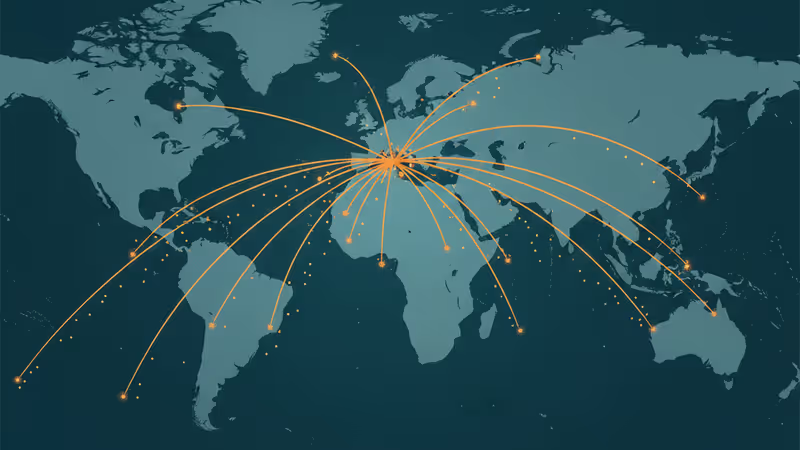
Global Ripple Effects: From Stocks to Steel
The fallout extends beyond financial markets. The price of on the news. This reflects deep-seated fears that a prolonged slump in Chinese construction will curb global demand for industrial commodities, impacting everyone from Australian miners to German equipment manufacturers.
Beijing's inaction isn't a sign of weakness but a calculated policy reset. It's attempting to force financial discipline and deleverage its economy, even if it means sacrificing high-profile companies. For investors, this marks the end of the 'growth at all costs' era, demanding a new playbook that prices risk in China far more accurately.
This content is AI-generated based on source articles. While we strive for accuracy, errors may occur. We recommend verifying with the original source.
Related Articles

The Bank of England holds its key interest rate at 5.25%, a 16-year high. But a 7-2 split vote signals a rate cut is likely coming in August, despite high services inflation.

OPEC+ announced a surprise 2.5 million bpd oil production cut, 1 million more than expected, sending Brent crude up 5%. The move fuels $100 oil forecasts and global inflation fears.
The Bank of Japan's historic rate hike ends the global era of free money. Our analysis breaks down the impact on the Yen carry trade, global markets, and investors.

China's massive undersea gold discovery is a strategic move in its de-dollarization efforts, signaling new deep-sea tech dominance and resource independence.