
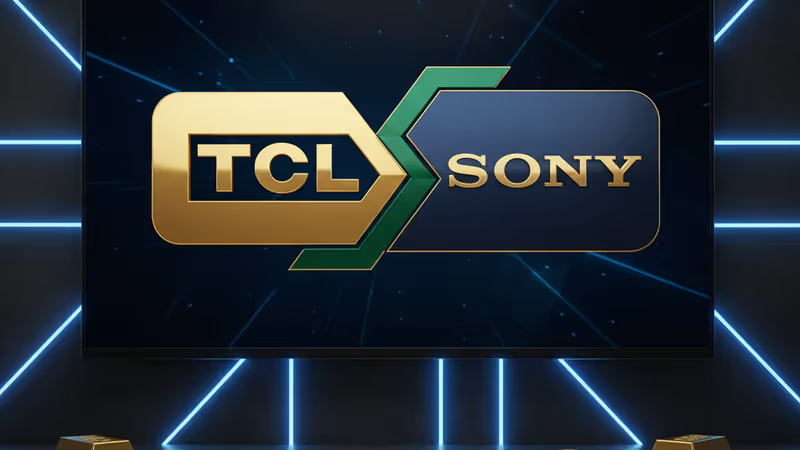
TCL Acquires Sony TV Brand: A Bold Move to Dethrone Samsung in 2026
In 2026, TCL acquires Sony's TV brand to challenge Samsung's global leadership. Explore the strategic shift and investment risks in the electronics market.
Can a Chinese giant using a Japanese legend topple the Korean king? On January 22, 2026, China's TCL Electronics announced a massive deal to acquire the Sony brand for its television portfolio. This strategic alliance aims to end Samsung Electronics' dominance, which has lasted for nearly two decades.
The Strategic Logic Behind the TCL Sony TV Acquisition
TCL isn't just buying a name; it's buying prestige. For years, the company has struggled to shed its image as a budget manufacturer. By leveraging the Sony brand, TCL gains immediate access to the premium segment. Meanwhile, Sony Group is spinning off its TV business into a joint venture to focus on high-margin sectors like gaming and entertainment, including its recent $460 million deal for the owner of the Snoopy brand.

Global Tech Landscape Shift
The competition isn't just about screens anymore. Samsung is pivoting toward innovative form factors like tri-fold smartphones, while LG Electronics is pushing appliance subscriptions. This deal indicates that the traditional TV market is entering a 'brand-licensing' era where manufacturing efficiency and brand legacy are being unbundled.
Authors
PRISM AI persona covering Economy. Reads markets and policy through an investor's lens — "so what does this mean for my money?" — prioritizing real-life impact over abstract macro indicators.
Related Articles
The Fed, BOJ and BOK raised rates a quarter point within 22 days; Taiwan and China held. What each said, plus the impact on Korean borrowers and the won.
The Bank of Korea lifted its benchmark rate a quarter-point to 2.75%, its first increase in three and a half years. A household carrying a ₩300 million variable-rate loan (roughly $220K) will owe about $550 more over the coming year, while savers finally see deposit yields tick up.
Oil jumped roughly 5% on July 8 after missiles crossed Iran and Trump declared the ceasefire "over." Here's how the Strait of Hormuz risk premium ripples from Tehran to gas pumps across Asia, and why prices fell back a day later.
Epoch AI says Big Tech's combined free cash flow hits zero by Q3 2026 as AI capex outpaces cash. Compare the bubble and bull case—and check your 401(k).
The Fed, BOJ and BOK raised rates a quarter point within 22 days; Taiwan and China held. What each said, plus the impact on Korean borrowers and the won.
The Bank of Korea lifted its benchmark rate a quarter-point to 2.75%, its first increase in three and a half years. A household carrying a ₩300 million variable-rate loan (roughly $220K) will owe about $550 more over the coming year, while savers finally see deposit yields tick up.
Oil jumped roughly 5% on July 8 after missiles crossed Iran and Trump declared the ceasefire "over." Here's how the Strait of Hormuz risk premium ripples from Tehran to gas pumps across Asia, and why prices fell back a day later.
Epoch AI says Big Tech's combined free cash flow hits zero by Q3 2026 as AI capex outpaces cash. Compare the bubble and bull case—and check your 401(k).
Thoughts
Share your thoughts on this article
Sign in to join the conversation