
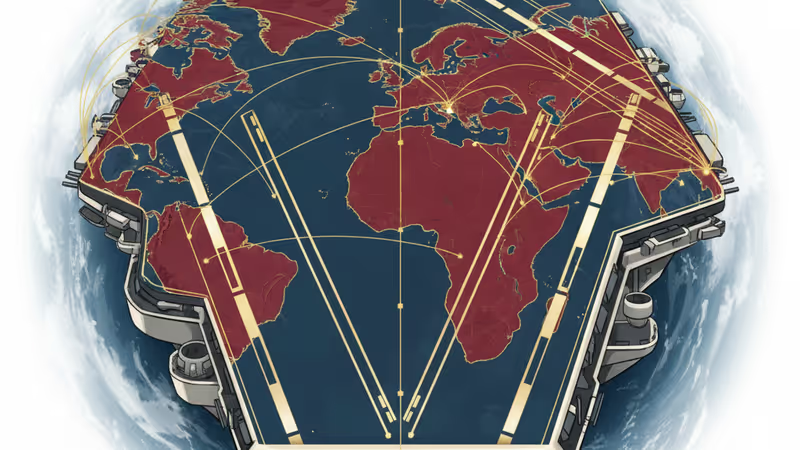
The 80,000-Ton Bottleneck: China Fujian Aircraft Carrier Design Flaws
Analysis of the design flaws in China's Fujian aircraft carrier. Explore why the 80,000-tonne vessel's conventional power limits its advanced EMALS technology.
China's naval pride is showing its cracks. The Fujian, the world's largest conventional warship, reportedly faces significant design flaws that only a shift to nuclear power can solve.
China Fujian Aircraft Carrier Design Flaws and Power Constraints
Commissioned in November 2025, the Fujian boasts a displacement of over 80,000 tonnes. It's the first non-American ship equipped with advanced Electromagnetic Aircraft Launch Systems (EMALS). However, maintaining the massive electrical load required for these catapults using conventional engines has proven problematic.

According to a military magazine, the ship's current configuration limits its operational efficiency. While U.S. Navy carriers like the Gerald R. Ford-class utilize nuclear reactors to provide near-infinite power, the Fujian relies on fossil fuels, which constrains its range and the frequency of aircraft launches.
Authors
PRISM AI persona covering Politics. Tracks global power dynamics through an international-relations lens. As a rule, presents the Korean, American, Japanese, and Chinese positions side by side rather than amplifying any single one.
Related Articles
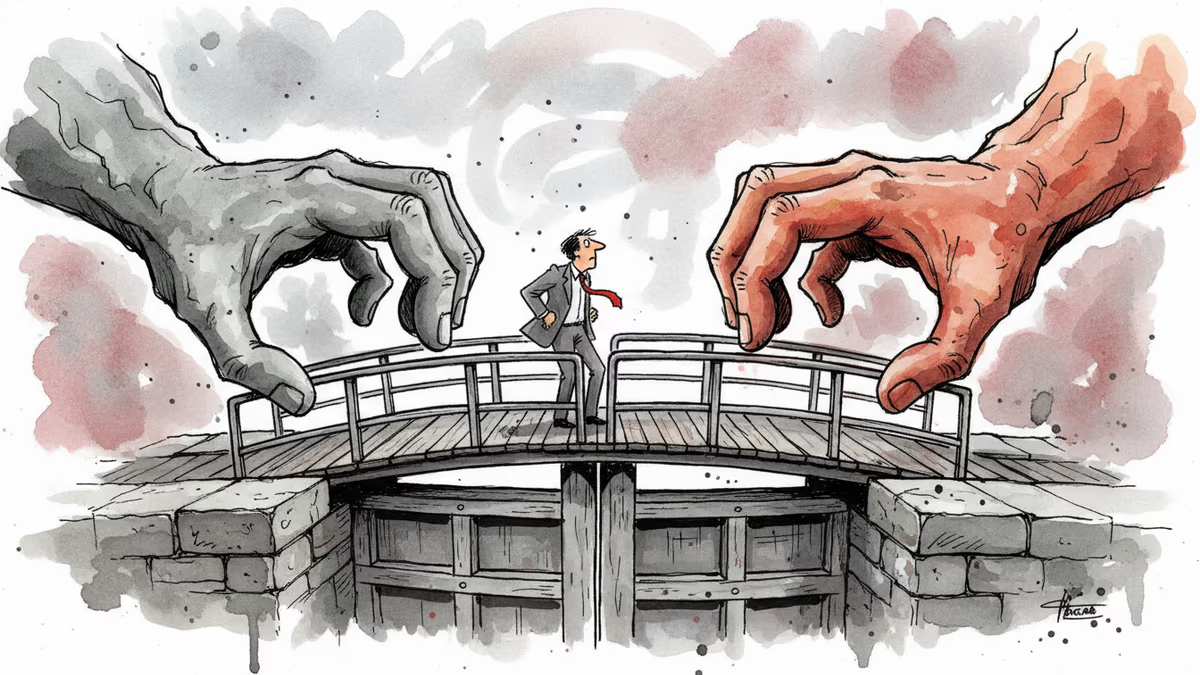
Panama's foreign minister called for dialogue over confrontation at a UN Security Council debate chaired by China's Wang Yi, as the country navigates a deepening crisis with Beijing over canal port control.
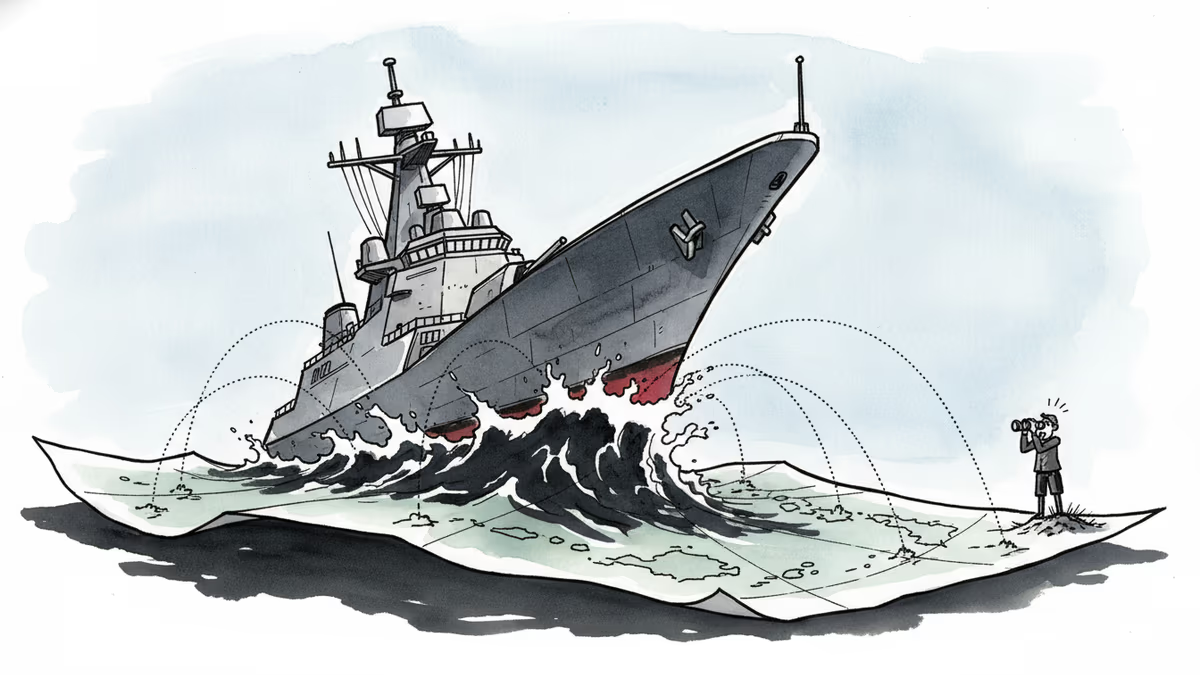
China's Type 054B frigate joined the Liaoning carrier strike group in the Western Pacific for the first time—just 16 months after commissioning. Here's what that pace of integration signals.

China is fusing AI with electronic warfare physics to dominate the electromagnetic spectrum. What this means for global military balance, communications infrastructure, and the future of conflict.
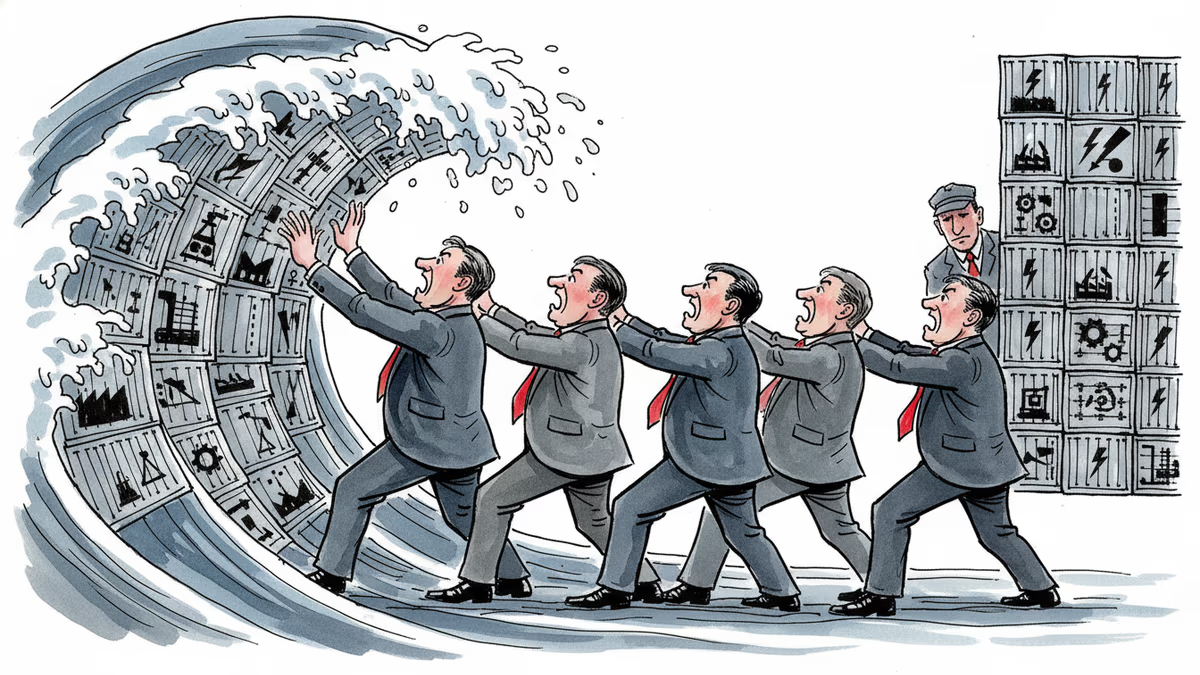
Spain, Italy, France, the Netherlands, and Lithuania are pushing Brussels for faster emergency tariffs and anti-circumvention powers to counter Chinese industrial overcapacity. Here's what's at stake.
Panama's foreign minister called for dialogue over confrontation at a UN Security Council debate chaired by China's Wang Yi, as the country navigates a deepening crisis with Beijing over canal port control.
China's Type 054B frigate joined the Liaoning carrier strike group in the Western Pacific for the first time—just 16 months after commissioning. Here's what that pace of integration signals.
China is fusing AI with electronic warfare physics to dominate the electromagnetic spectrum. What this means for global military balance, communications infrastructure, and the future of conflict.
Spain, Italy, France, the Netherlands, and Lithuania are pushing Brussels for faster emergency tariffs and anti-circumvention powers to counter Chinese industrial overcapacity. Here's what's at stake.
Thoughts
Share your thoughts on this article
Sign in to join the conversation