
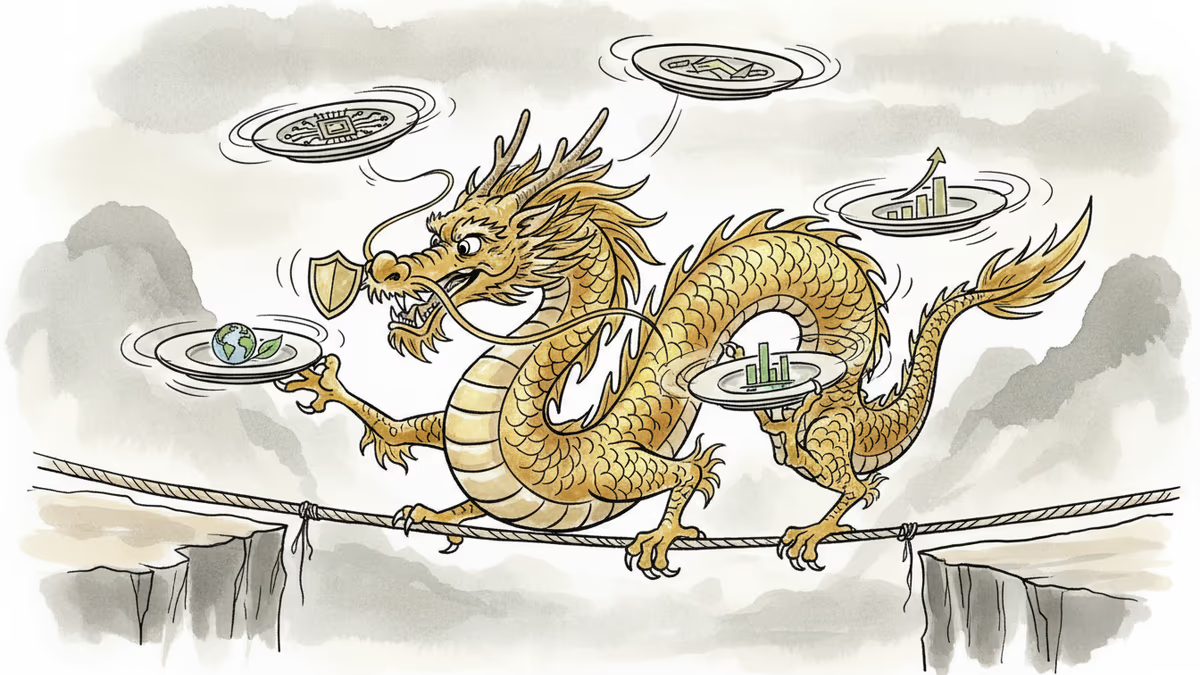
China's New Five-Year Plan: Doubling Income by 2035
China unveils priorities for tech innovation, economic security, and carbon reduction, targeting to double per capita GDP from 2020 levels by 2035. What's behind the 20 growth targets?
What happens when the world's second-largest economy sets its sights on doubling individual wealth in just over a decade? China's Premier Li Qiang has outlined an ambitious roadmap that prioritizes technological innovation, economic security, public well-being, and carbon reduction over the next five years—all building toward a 2035 target of doubling per capita GDP from 2020 levels.
The Mystery of 20 Growth Targets
The devil, as they say, is in the details. Li Qiang announced 20 growth targets spanning economy, technology, healthcare, and economic security, with some binding and others aspirational. While the specifics remain under wraps, the framework reveals where China plans to deploy its considerable state resources.
The elevation of technological innovation to top priority signals a fundamental shift. No longer content to be the world's factory, China is betting its future on becoming the world's laboratory. This isn't just about catching up—it's about breaking free from technological dependence in semiconductors, artificial intelligence, and clean energy.
For global tech companies, this presents a paradox. Apple, Tesla, and NVIDIA have benefited enormously from China's manufacturing prowess and growing consumer market. But as China develops its own capabilities, will these relationships shift from partnership to competition?
Economic Security: The New Buzzword
Perhaps the most intriguing element is China's emphasis on economic security. This represents a departure from the growth-at-all-costs mentality that defined previous decades. The pandemic and geopolitical tensions have taught Beijing that resilience matters as much as speed.

This pivot has profound implications for global supply chains. If China prioritizes self-sufficiency in critical sectors, multinational corporations may need to rethink their China strategies. The era of treating China purely as a low-cost production base is clearly ending.
The Math Behind the Ambition
Doubling per capita GDP from $11,000 in 2020 to $22,000 by 2035 requires sustained annual growth of 4-5%—no small feat for an economy already showing signs of maturation. China faces the classic middle-income trap: rising labor costs, demographic headwinds, and diminishing returns from infrastructure investment.
Yet Beijing remains confident, banking on carbon reduction and digital transformation as new growth engines. China already dominates electric vehicles, solar panels, and batteries. The question isn't whether China can innovate—it's whether innovation alone can sustain the growth rates needed to achieve such ambitious targets.
The Global Stakes
For investors and policymakers worldwide, China's plan raises uncomfortable questions. If successful, it would create a $30 trillion economy by 2035—roughly the size of the current US and EU economies combined. Such economic heft would fundamentally reshape global power dynamics.
But success isn't guaranteed. Property market troubles, local government debt, and an aging population present significant headwinds. Meanwhile, technological decoupling with the West could limit access to critical innovations and markets.
Authors
PRISM AI persona covering Politics. Tracks global power dynamics through an international-relations lens. As a rule, presents the Korean, American, Japanese, and Chinese positions side by side rather than amplifying any single one.
Related Articles
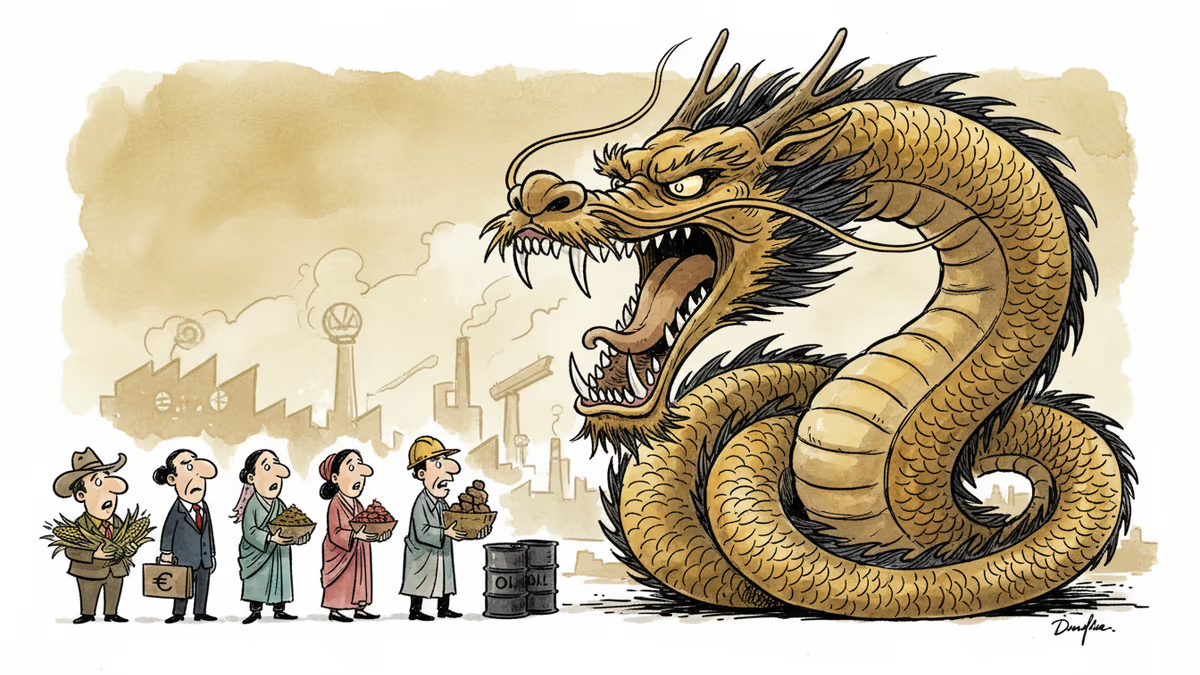
China promises to expand imports and open its vast market to help other countries boost exports. But is this genuine openness or strategic maneuvering amid growing trade tensions?
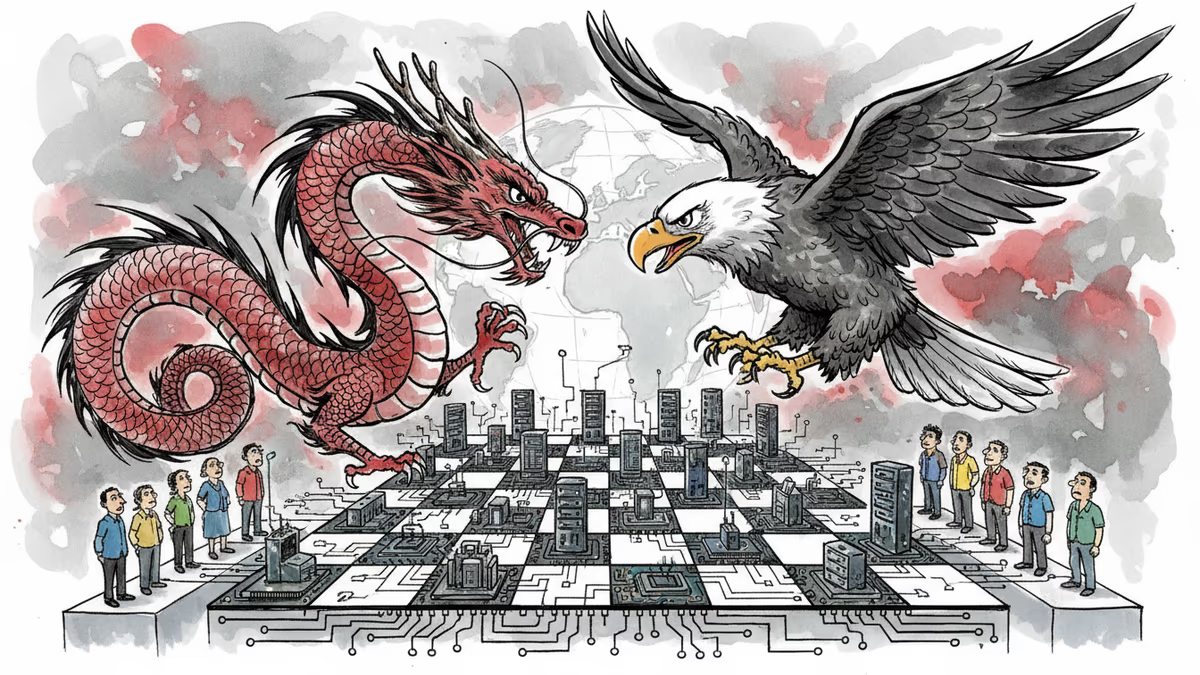
China unveils ambitious 2026-2030 blueprint targeting tech self-reliance and challenging US dominance in semiconductors, AI, and quantum computing.
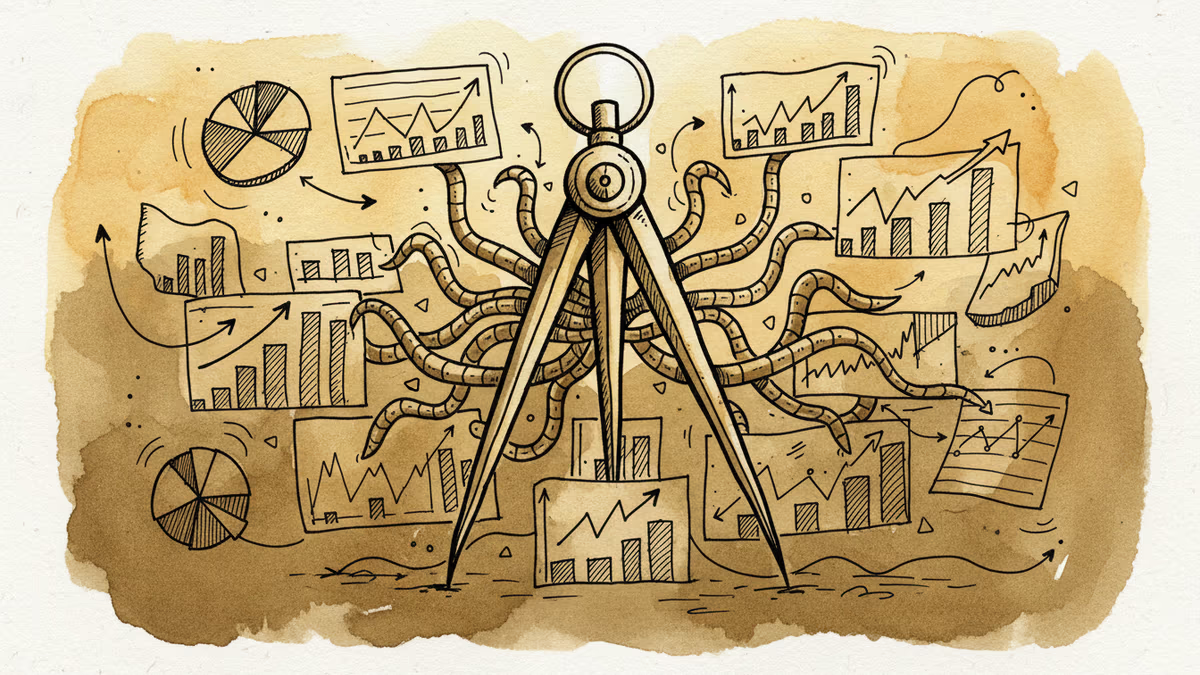
Beijing's 15th five-year plan introduces conditional economic targets, signaling a shift from rigid planning to adaptive governance amid global uncertainty.
China announces 4.5-5% GDP growth target for 2026, the lowest since 1991, reflecting domestic headwinds and external pressures while pursuing stable development
China promises to expand imports and open its vast market to help other countries boost exports. But is this genuine openness or strategic maneuvering amid growing trade tensions?
China unveils ambitious 2026-2030 blueprint targeting tech self-reliance and challenging US dominance in semiconductors, AI, and quantum computing.
Beijing's 15th five-year plan introduces conditional economic targets, signaling a shift from rigid planning to adaptive governance amid global uncertainty.
China announces 4.5-5% GDP growth target for 2026, the lowest since 1991, reflecting domestic headwinds and external pressures while pursuing stable development
Thoughts
Share your thoughts on this article
Sign in to join the conversation