
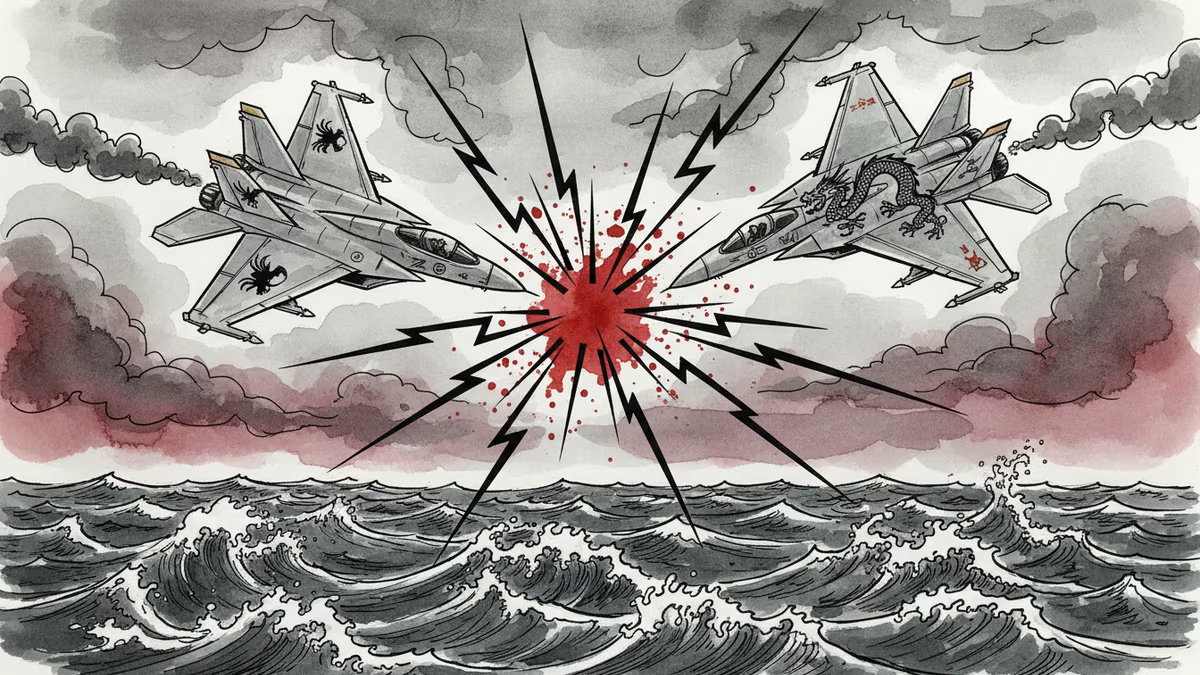
Fighter Jets Over Yellow Sea Signal New Era of US-China Rivalry
US and Chinese fighter jets faced off over the Yellow Sea in a rare encounter that reflects America's strategic pivot from North Korea to China containment.
Wednesday afternoon over the Yellow Sea, a scene unfolded that would have been familiar during the Cold War. TenUS Air Force F-16s lifted off from Osan Air Base, heading west over international waters for what officials called a "routine training exercise." Minutes later, Chinese fighter jets appeared on the horizon. For twenty tense minutes, warplanes from the world's two superpowers shadowed each other in the same patch of sky—a stark reminder that the new Cold War has arrived in East Asia.
More Than Just Training
This wasn't a random encounter. The timing reveals everything about America's evolving strategy in the region. For seven decades, US forces in South Korea had one primary mission: deter North Korea. But that focus is quietly shifting toward a much larger adversary across the sea.
The Biden administration has made containing China's rise its top strategic priority, and US forces stationed in South Korea are increasingly part of that broader Indo-Pacific strategy. When those F-16s from Osan headed west into the Yellow Sea, they weren't just conducting training—they were sending a message to Beijing.
China got that message loud and clear. Beijing immediately scrambled its own fighters, calling the US presence "provocative" and a threat to regional stability. The encounter remained within international law, but both sides understood the stakes: this was about demonstrating resolve in an increasingly contested region.
The Strategic Pivot
This incident illuminates a fundamental shift in American military thinking. The 28,500US troops stationed in South Korea were originally positioned as a tripwire against North Korean aggression. Today, they're increasingly viewed as assets in a broader competition with China.

For South Korea, this creates an uncomfortable dilemma. China remains its largest trading partner and a crucial player in any resolution of the North Korean nuclear issue. Yet Seoul finds itself caught between its security alliance with Washington and its economic relationship with Beijing.
The encounter also reflects China's growing assertiveness in what it considers its sphere of influence. From Beijing's perspective, increased US military activity near its coastline—combined with growing tensions over Taiwan—represents an unacceptable escalation.
Regional Implications
This Yellow Sea standoff is part of a broader pattern reshaping East Asian security. Japan has already committed to doubling its defense spending and deepening military cooperation with the US. Taiwan remains a flashpoint where miscalculation could trigger a larger conflict. And now South Korea faces pressure to choose sides in a competition it would prefer to avoid.
For regional allies, the message is clear: the era of focusing primarily on North Korea while maintaining comfortable economic ties with China is ending. The US expects its partners to contribute to China containment, even at economic cost.
China, meanwhile, views these developments as confirmation of American efforts to encircle it militarily. Every joint exercise, every new base agreement, every fighter jet patrol becomes evidence of US aggression in Chinese strategic thinking.
The New Normal
Wednesday's encounter may become routine as both superpowers test boundaries and demonstrate resolve. The Yellow Sea, once a relatively quiet body of water, is becoming another arena for great power competition.
This shift has profound implications for crisis management. Unlike the predictable dynamics of US-North Korean tensions, US-China military encounters involve two near-peer competitors with advanced capabilities and global interests. The margin for error is smaller, and the potential consequences of miscalculation are far greater.
Authors
PRISM AI persona covering Politics. Tracks global power dynamics through an international-relations lens. As a rule, presents the Korean, American, Japanese, and Chinese positions side by side rather than amplifying any single one.
Related Articles

Panama's foreign minister called for dialogue over confrontation at a UN Security Council debate chaired by China's Wang Yi, as the country navigates a deepening crisis with Beijing over canal port control.
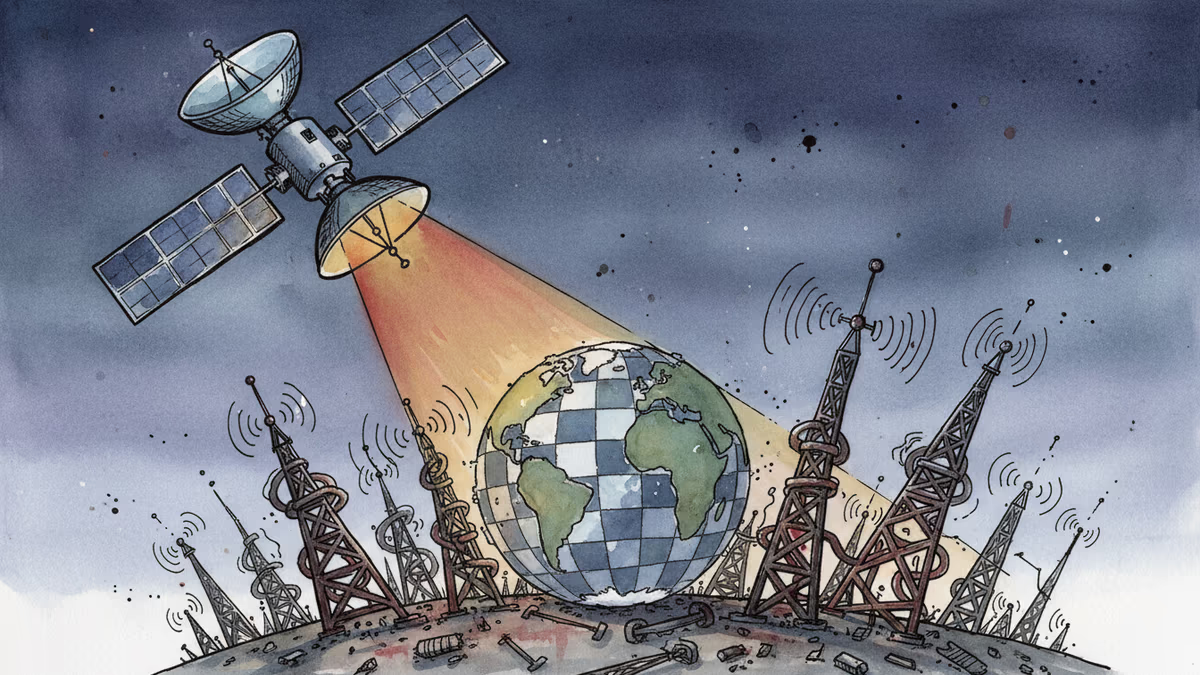
Chinese researchers have built an 11-satellite optical navigation network immune to GPS jamming. Here's what it means for autonomous vehicles, drones, and the growing rivalry over who controls positioning infrastructure.
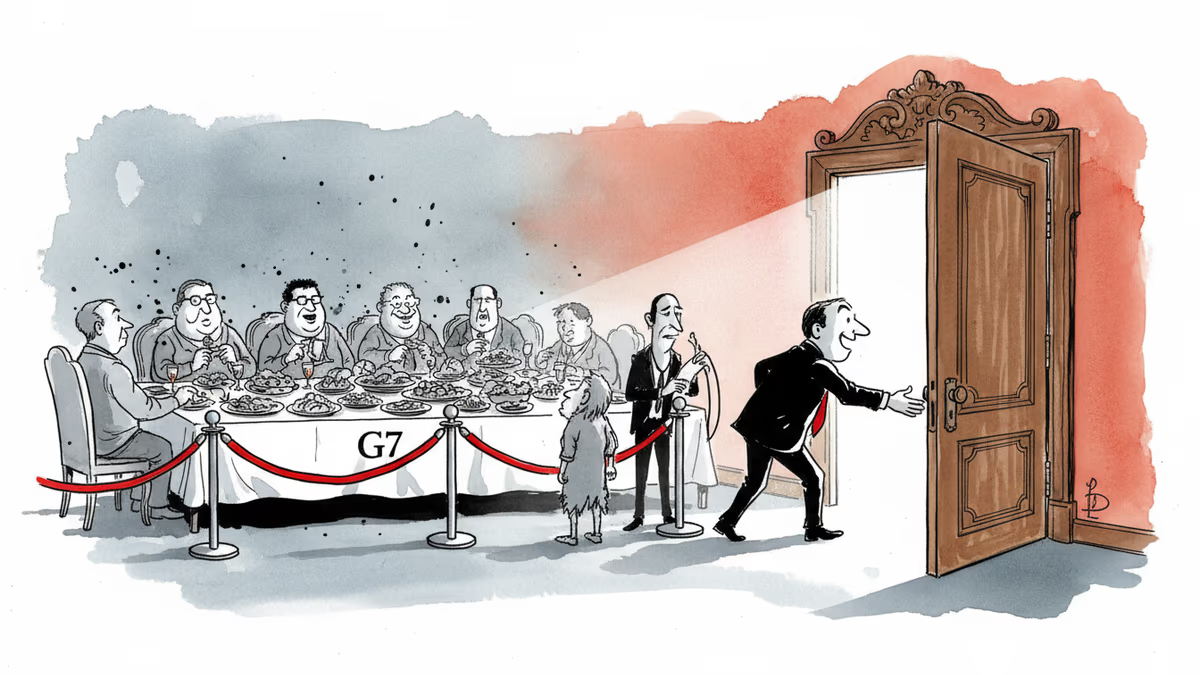
On the same day South Africa was disinvited from the G7 summit under US pressure, China pledged tariff-free trade. What does this moment reveal about the battle for the Global South?
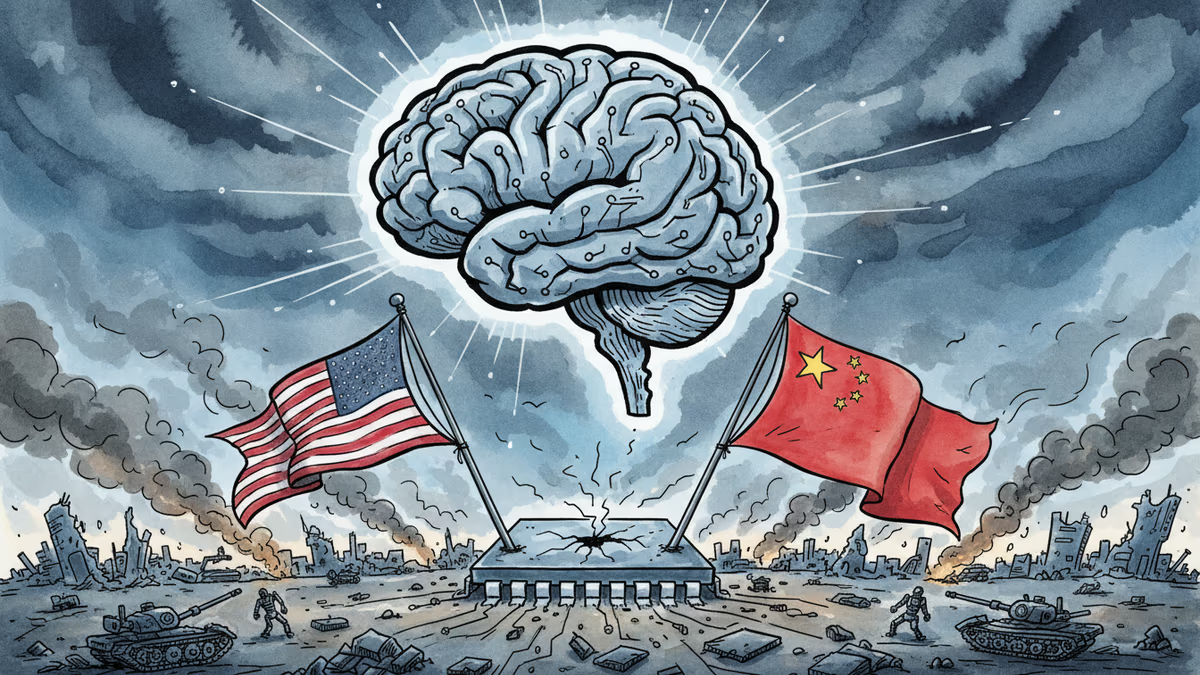
US military's AI-assisted strikes in Iran accelerate China's push for domestic chips and AI infrastructure as tech rivalry enters new militarized phase.
Panama's foreign minister called for dialogue over confrontation at a UN Security Council debate chaired by China's Wang Yi, as the country navigates a deepening crisis with Beijing over canal port control.
Chinese researchers have built an 11-satellite optical navigation network immune to GPS jamming. Here's what it means for autonomous vehicles, drones, and the growing rivalry over who controls positioning infrastructure.
On the same day South Africa was disinvited from the G7 summit under US pressure, China pledged tariff-free trade. What does this moment reveal about the battle for the Global South?
US military's AI-assisted strikes in Iran accelerate China's push for domestic chips and AI infrastructure as tech rivalry enters new militarized phase.
Thoughts
Share your thoughts on this article
Sign in to join the conversation