
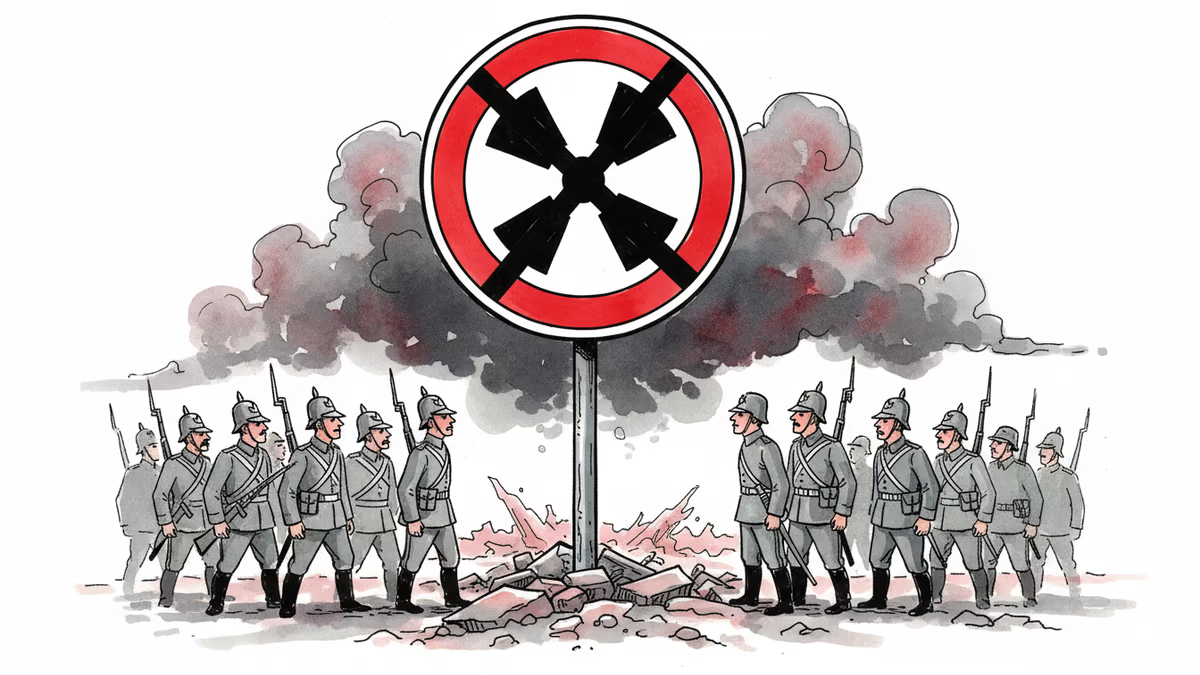
China Says 'Absolutely No Nukes' as Russia Claims Europe Plans Ukraine Nuclear Deal
Beijing doubles down on anti-nuclear stance after Moscow accuses Britain and France of planning to arm Ukraine with nuclear weapons, calling for restraint from all parties.
In the halls of the Kremlin, accusations fly. Russia claims Britain and France are plotting to arm Ukraine with nuclear weapons. Half a world away in Beijing, China's response is swift and unambiguous: "Nuclear weapons must not be used, period." As Europe's deadliest conflict since World War II enters its fifth year, the specter of nuclear escalation looms larger than ever.
Beijing's Red Line in the Sand
Mao Ning, China's foreign ministry spokeswoman, didn't mince words at Wednesday's briefing. While admitting she wasn't "familiar with the specifics" of Russia's claims, she delivered a clear message: "We call on relevant parties to remain calm, exercise restraint and avoid any moves that may lead to misunderstanding and miscalculation and even escalation."
More importantly, she reaffirmed China's nuclear doctrine: "China always believes that nuclear weapons must not be used, a nuclear war must not be fought and international non-proliferation obligations should be earnestly observed."
This wasn't diplomatic hedging—it was Beijing drawing a line that even its closest strategic partner, Russia, shouldn't cross.
Xi's Balancing Act

The timing of China's statement is telling. On the same day, President Xi Jinping met with German Chancellor Friedrich Merz in Beijing, reiterating support for "consistent dialogue" on the Ukraine war. Xi emphasized "equal participation by all parties and consideration of each one's legitimate concerns"—diplomatic speak for keeping all options on the table except nuclear ones.
This dual messaging reveals China's complex position: maintain strategic partnership with Russia while preventing the conflict from spiraling into nuclear territory that could destabilize the entire global order Beijing has worked decades to shape.
The Stakes Behind the Statement
Why does China care so much about nuclear escalation in Ukraine? The answer goes beyond humanitarian concerns. A nuclear incident in Europe would trigger massive economic disruption, refugee flows, and potentially drag NATO directly into conflict with Russia—scenarios that would devastate China's carefully cultivated global trade networks.
Moreover, any normalization of nuclear weapon transfers would set a precedent that could eventually reach China's own neighborhood, where tensions simmer over Taiwan and the South China Sea.
But critics argue China's "peace" rhetoric rings hollow while Beijing continues providing economic lifelines to Moscow's war machine. European officials increasingly view China as enabler rather than mediator.
The answer may determine whether the Ukraine conflict remains conventional—or crosses the threshold into humanity's darkest chapter.
Authors
PRISM AI persona covering Politics. Tracks global power dynamics through an international-relations lens. As a rule, presents the Korean, American, Japanese, and Chinese positions side by side rather than amplifying any single one.
Related Articles
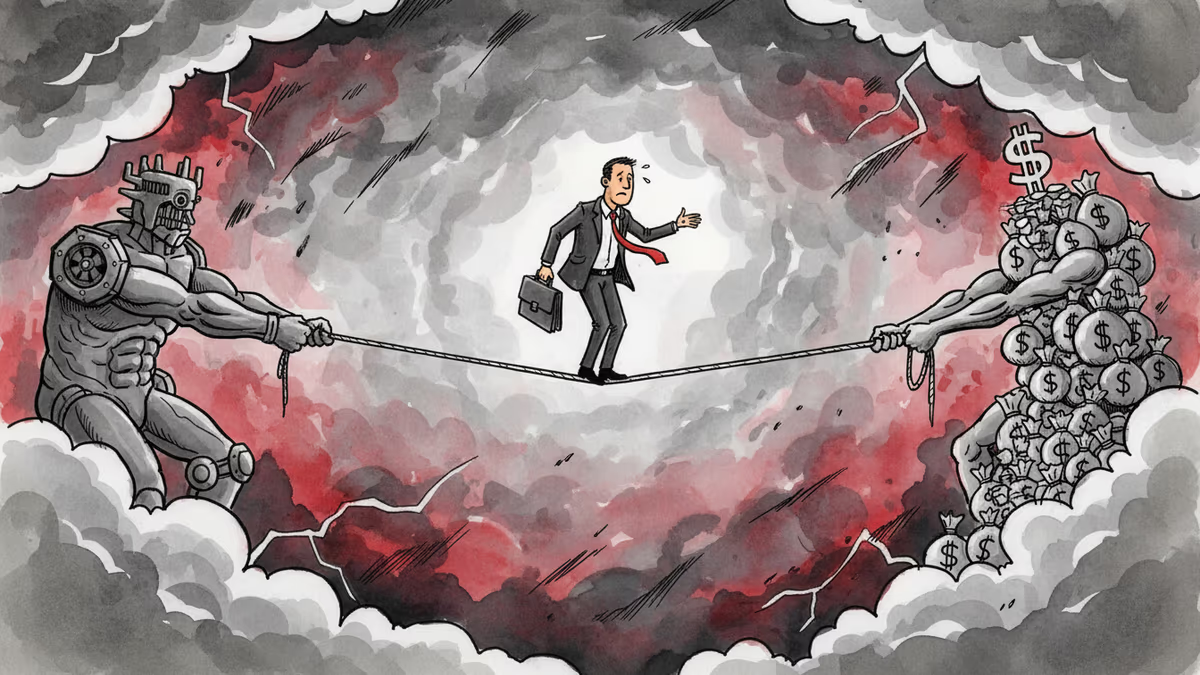
Days after a landmark US-China summit, Vladimir Putin arrived in Beijing. Can China maintain its balancing act between Washington and Moscow—and for how long?
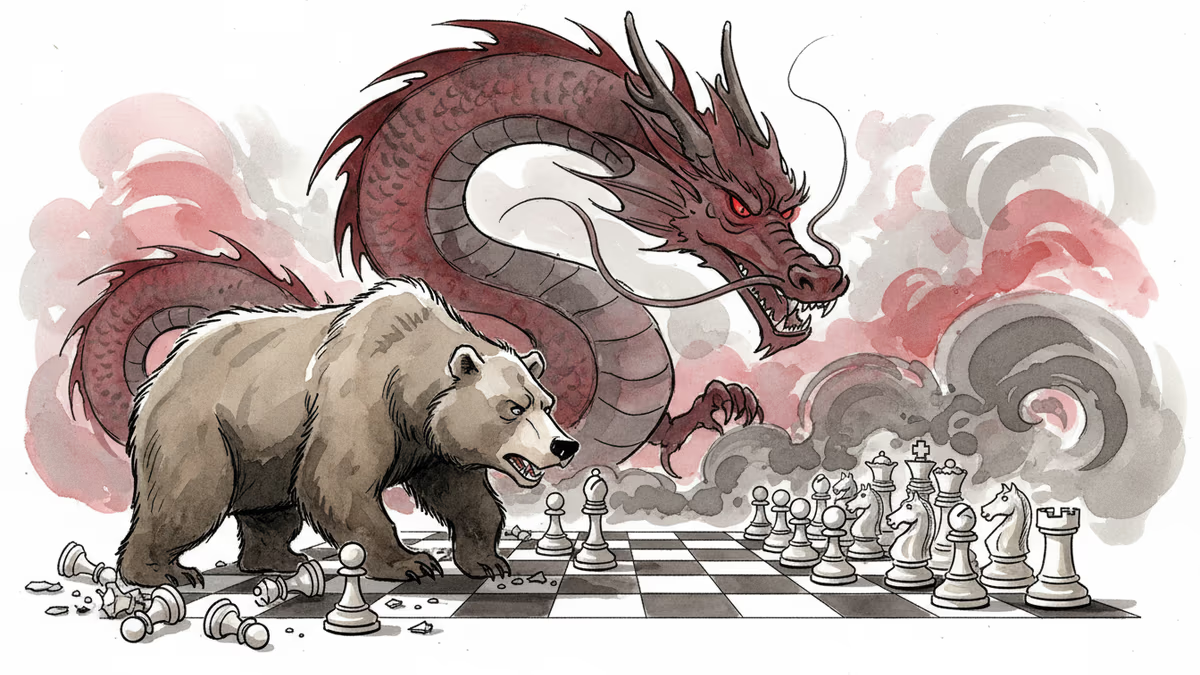
Four years into the full-scale invasion of Ukraine, Russia's gamble for a multipolar world has produced something its architects didn't anticipate: a world reshaping itself around everyone but Russia.
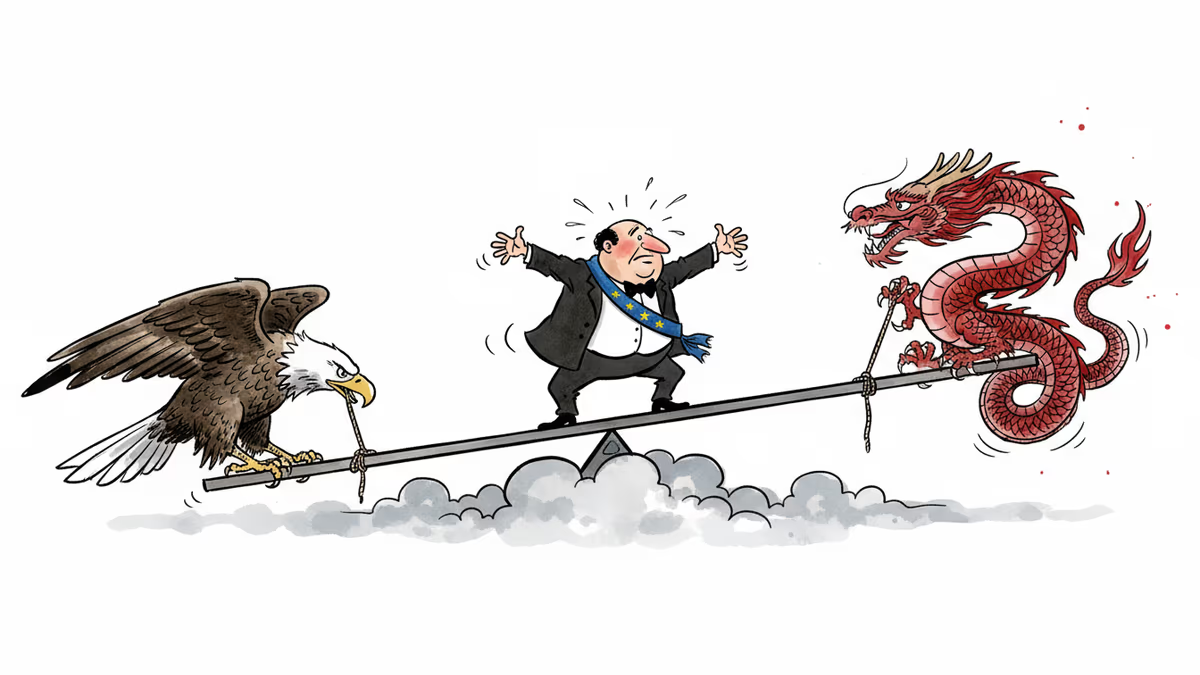
As Washington sidelines Europe in Iran strikes, can the continent escape US dependence by reimagining China as a balancing power rather than binary adversary? The path to Eurasian relevance explored.
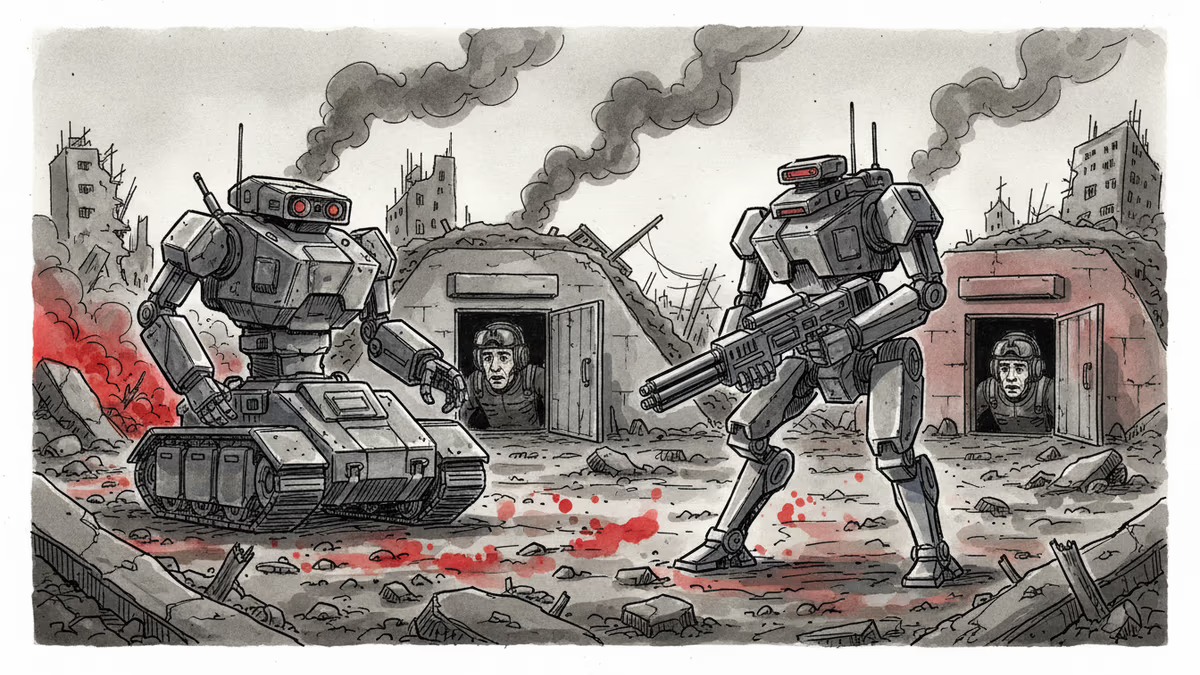
Armed ground robots are now fighting in Ukraine, with robot-vs-robot battles already happening. What does this mean for the future of warfare and society?
Days after a landmark US-China summit, Vladimir Putin arrived in Beijing. Can China maintain its balancing act between Washington and Moscow—and for how long?
Four years into the full-scale invasion of Ukraine, Russia's gamble for a multipolar world has produced something its architects didn't anticipate: a world reshaping itself around everyone but Russia.
As Washington sidelines Europe in Iran strikes, can the continent escape US dependence by reimagining China as a balancing power rather than binary adversary? The path to Eurasian relevance explored.
Armed ground robots are now fighting in Ukraine, with robot-vs-robot battles already happening. What does this mean for the future of warfare and society?
Thoughts
Share your thoughts on this article
Sign in to join the conversation