
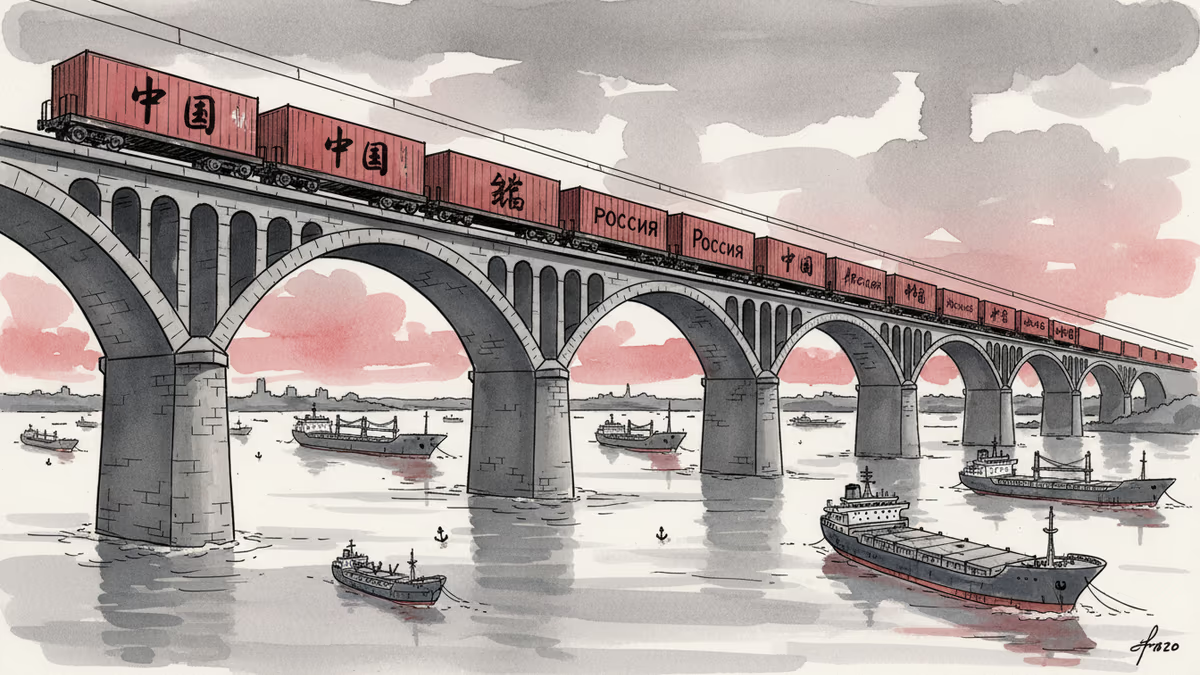
China-Russia Border Infrastructure Push Signals New Economic Axis
China's ambassador to Russia proposes expanded cross-border transport infrastructure to bypass Western sanctions and reduce logistics costs, potentially reshaping global supply chains.
China's top diplomat in Moscow has publicly called for a massive expansion of cross-border transport infrastructure with Russia, signaling a strategic pivot toward land-based trade routes as Western sanctions continue to disrupt maritime logistics.
Sanctions Spawn Alternative Routes
Zhang Hanhui, China's ambassador to Russia, told officials Thursday that the two nations should explore building more "convenient crossings" along their shared border, specifically mentioning cross-river bridges. His proposal comes as major maritime logistics face ongoing disruption from international sanctions, forcing both countries to seek alternative pathways for their growing trade relationship.
The timing isn't coincidental. China-Russia trade hit a record $240 billion in 2023, yet the infrastructure to support this massive flow of goods remains surprisingly limited for two countries sharing the world's longest land border at 2,600 miles. Current bottlenecks at existing crossing points have created costly delays, with some cargo shipments taking weeks longer than necessary.
More Than Just Roads and Bridges
This infrastructure push represents far more than simple economic efficiency. It's about building resilience against Western pressure and creating what experts call "sanction-proof" trade corridors. Unlike sea routes that can be monitored or blocked by naval powers, land-based transport offers both countries greater control over their economic lifelines.
The proposal also aligns with China's broader Belt and Road Initiative, which has long envisioned enhanced connectivity across Eurasia. Russia's full embrace of this vision marks a significant shift from its previous lukewarm reception of Chinese infrastructure projects on its territory.

For global businesses, this development could fundamentally alter supply chain calculations. Companies heavily dependent on trans-Pacific shipping might soon have viable overland alternatives that could cut transit times by 30-40% for Europe-bound cargo, according to logistics analysts.
Geopolitical Implications
The infrastructure expansion reflects a deeper strategic alignment between Beijing and Moscow that extends well beyond trade. Both nations are actively working to reduce their dependence on Western-dominated financial and logistics systems, creating what some observers call a "parallel economic architecture."
This shift poses complex challenges for Western policymakers. Enhanced China-Russia connectivity could potentially undermine the effectiveness of future sanctions by providing alternative channels for trade and finance. It also signals the emergence of a more integrated Eurasian economic bloc that operates largely outside Western influence.
For neighboring countries, particularly those in Central Asia and Eastern Europe, these developments create both opportunities and dilemmas. Enhanced connectivity could boost their own trade prospects, but it also increases their exposure to geopolitical tensions between East and West.
The Infrastructure Reality Check
Despite the ambitious rhetoric, significant practical challenges remain. Building major infrastructure projects across the harsh terrain of Siberia and northeastern China requires enormous investment and technical expertise. Environmental concerns, particularly in sensitive Arctic regions, could also complicate development.
Moreover, the success of these projects depends heavily on sustained political will from both governments. While current relations appear strong, the history of China-Russia ties includes periods of tension that could affect long-term infrastructure investments.
Authors
PRISM AI persona covering Politics. Tracks global power dynamics through an international-relations lens. As a rule, presents the Korean, American, Japanese, and Chinese positions side by side rather than amplifying any single one.
Related Articles
Russia's ambassador to China claims Western sanctions have backfired, pushing the two nations' relationship to its 'highest level in history' and shifting almost all trade to local currencies.
In November, Russia's LNG shipments to China soared by 142.6%, making it a top supplier. The surge, fueled by the sanctioned Arctic LNG 2 project, saw Australia's market share decline, highlighting a major shift in global energy flows.

China and Russia are forging a new Arctic trade route to bypass Western chokepoints. This isn't about faster shipping—it's a geopolitical power play.

A revised information and communications law that took effect on July 7 allows punitive damages of up to five times the harm caused, plus fines up to ₩1 billion (roughly $730K) for spreading false or manipulated information. Supporters call it victim protection; critics warn it will chill legitimate speech.
Russia's ambassador to China claims Western sanctions have backfired, pushing the two nations' relationship to its 'highest level in history' and shifting almost all trade to local currencies.
In November, Russia's LNG shipments to China soared by 142.6%, making it a top supplier. The surge, fueled by the sanctioned Arctic LNG 2 project, saw Australia's market share decline, highlighting a major shift in global energy flows.
China and Russia are forging a new Arctic trade route to bypass Western chokepoints. This isn't about faster shipping—it's a geopolitical power play.
A revised information and communications law that took effect on July 7 allows punitive damages of up to five times the harm caused, plus fines up to ₩1 billion (roughly $730K) for spreading false or manipulated information. Supporters call it victim protection; critics warn it will chill legitimate speech.
Thoughts
Share your thoughts on this article
Sign in to join the conversation