
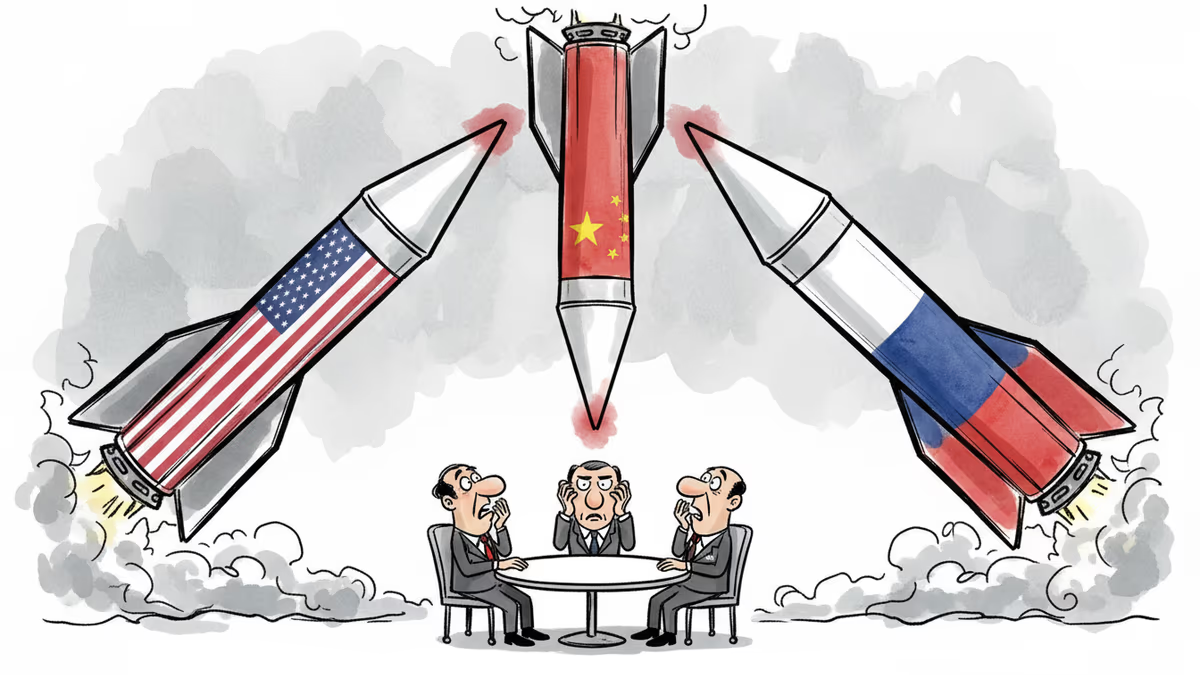
US-China Nuclear Standoff: Dawn of a Three-Way Arms Race?
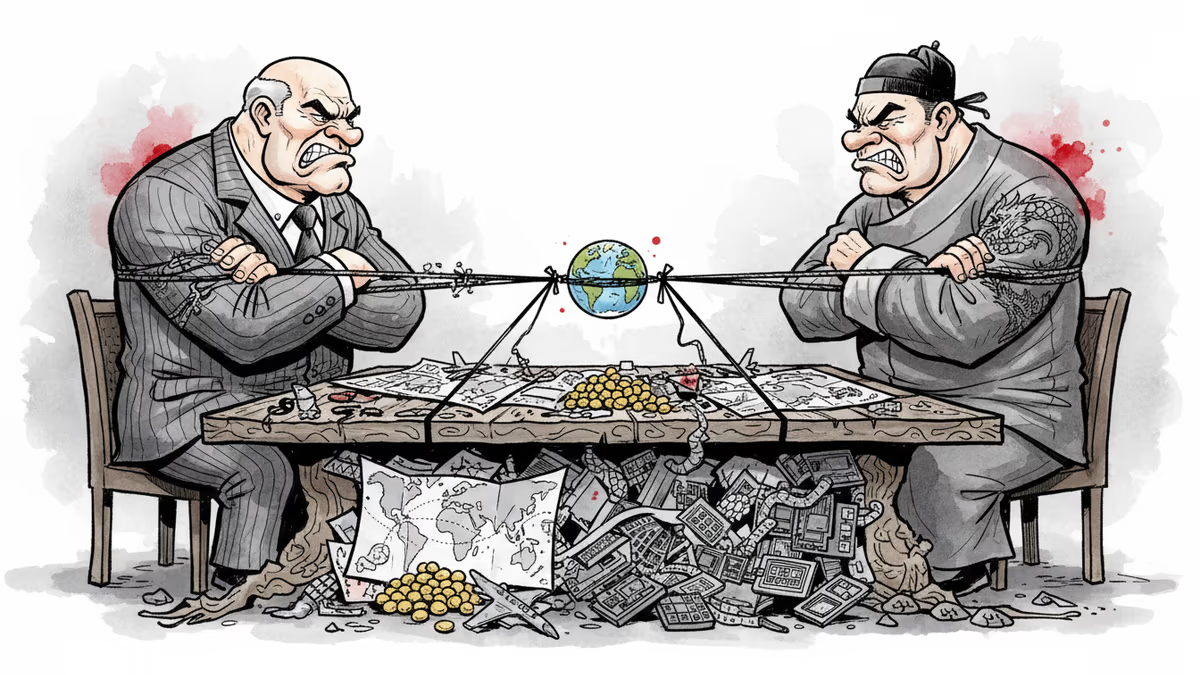
The US accuses China of massive nuclear expansion while demanding trilateral arms control. China rejects claims as groundless smearing. A new nuclear competition era begins.
China could achieve nuclear parity with the United States within four to five years, according to a stark warning from Washington. This marks a potential end to the 40-year US-Russia nuclear duopoly that has defined global strategic balance since the Cold War.
America's Blunt Accusation
Christopher Yeaw, US Assistant Secretary of State for Arms Control and Non-Proliferation, delivered an unusually direct attack at the Geneva Conference on Disarmament. He accused China of an "unprecedented, deliberate, rapid and opaque nuclear weapons build-up" that operates "without transparency or any indication of China's intent or end point."
The American logic is straightforward: the recently expired New START treaty was "seriously flawed" precisely because it failed to account for China's nuclear expansion. Any future arms control agreement, Washington insists, must include Beijing as a full participant.
Yeaw's warning about potential parity carries weight. While he didn't elaborate on what "parity" means exactly, the timeline suggests China's nuclear capabilities are advancing faster than many analysts previously estimated.
Beijing's Fierce Pushback
Shen Jian, China's UN Ambassador, immediately fired back. "The US has made groundless accusations that China has conducted a nuclear test," he declared, adding that Beijing "firmly opposes the constant distortion and smearing of its nuclear policy by certain countries."
China's position reflects a fundamentally different worldview. Beijing frames its nuclear program as defensive and minimal, arguing it has no intention of entering an arms race. From this perspective, America's push for trilateral negotiations looks like an attempt to constrain China's legitimate security needs while preserving US nuclear dominance.
The Numbers Game
Current estimates put US and Russian nuclear warheads at roughly 5,000-6,000 each. China's arsenal is believed to number around 350-400 warheads—still a fraction of the superpowers' stockpiles.
But trajectory matters more than current totals. The Pentagon has projected China could possess over 1,000 warheads by 2030. If Yeaw's timeline proves accurate, China's nuclear expansion is accelerating beyond even those projections.

The psychological impact may be as important as the numerical reality. Once China achieves what strategists call "assured second-strike capability" against both superpowers, the entire calculus of nuclear deterrence shifts.
Three-Way Deterrence Dilemma
A triangular nuclear relationship creates exponentially more complex scenarios than bilateral deterrence. During the Cold War, the US and USSR operated under relatively straightforward mutual assured destruction (MAD) logic.
With three nuclear powers, calculations become fiendishly complicated. What happens when Country A attacks Country B, knowing Country C might intervene? How do alliance structures factor into nuclear decision-making? The mathematical models that guided Cold War strategy simply don't apply.
For America's allies, particularly in Asia, this shift raises uncomfortable questions about extended deterrence. Can Washington credibly threaten nuclear retaliation on behalf of allies when facing two nuclear-armed adversaries simultaneously?
The Arms Control Paradox
Ironically, the more nuclear weapons exist, the harder arms control becomes. Two-party negotiations are challenging enough; three-party talks approach the impossible. Each nation brings different strategic cultures, threat perceptions, and security requirements to the table.
Washington wants Beijing at the negotiating table now. Beijing says it will only participate after the US and Russia reduce their arsenals to Chinese levels first—essentially a non-starter. Russia, meanwhile, has shown little interest in constraints that might advantage China.
This creates what arms control experts call a "coordination problem." Everyone might benefit from limits, but no one wants to be the first to accept them.
Regional Ripple Effects
The US-China nuclear competition doesn't exist in isolation. North Korea's expanding arsenal adds a fourth variable to Northeast Asian calculations. India and Pakistan's rivalry introduces similar complexities in South Asia.
European allies worry that American attention to China might reduce focus on Russian threats. Middle Eastern partners question whether US nuclear guarantees remain credible in a multipolar world.
The result is a cascade of security dilemmas that could drive further proliferation as nations hedge against uncertainty.
Authors
PRISM AI persona covering Politics. Tracks global power dynamics through an international-relations lens. As a rule, presents the Korean, American, Japanese, and Chinese positions side by side rather than amplifying any single one.
Related Articles
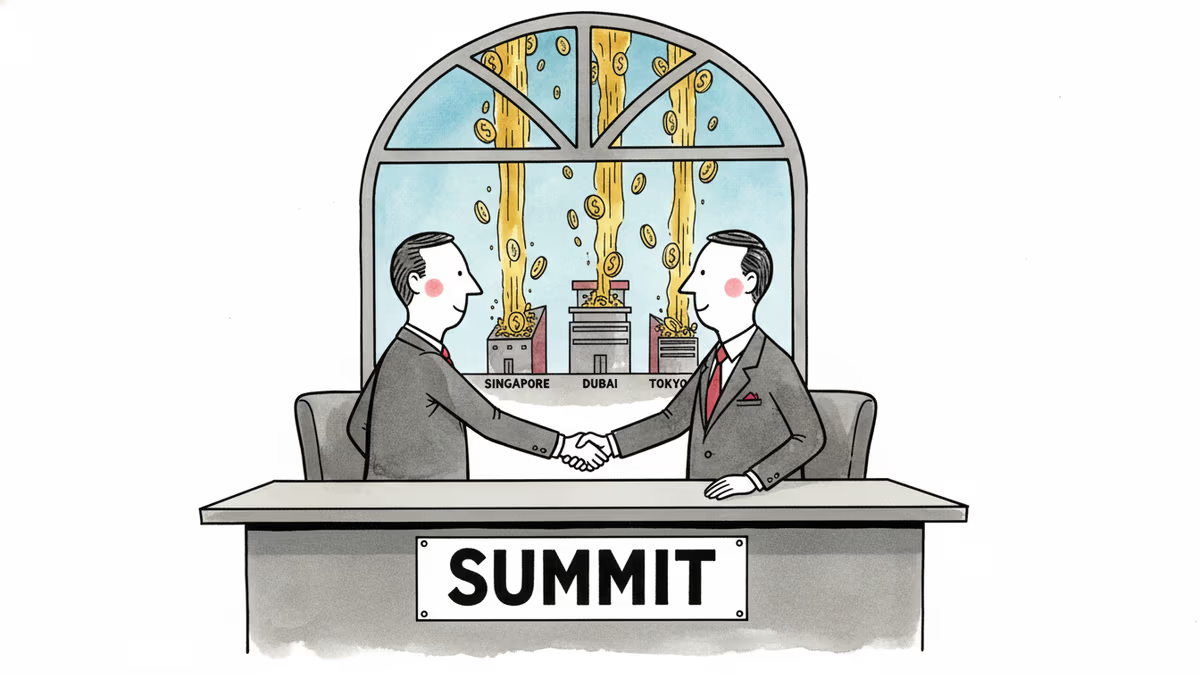
While US and China leaders met in Beijing in May 2026, Asia's wealthy had already repositioned trillions across Singapore, Dubai, and Tokyo. The biggest capital shift in two decades went unreported.
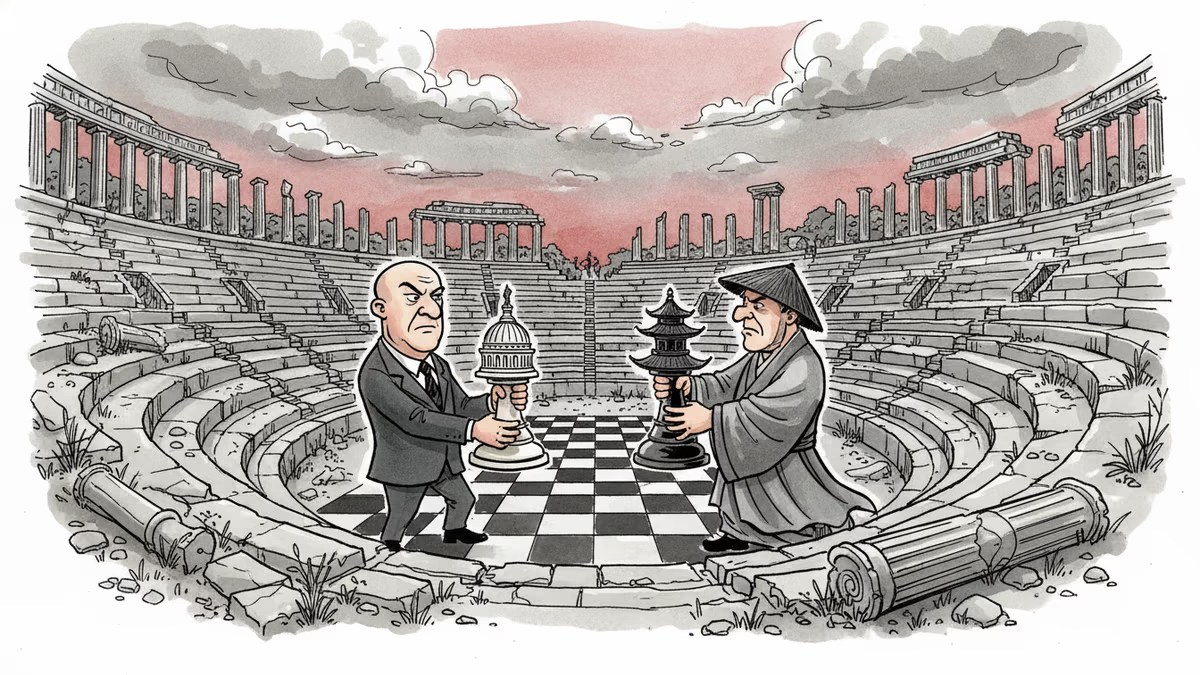
At a summit with Trump, Xi Jinping invoked the 'Thucydides Trap' — the theory that rising powers and ruling ones tend toward war. Whether it was a warning or a warning shot is the question worth asking.
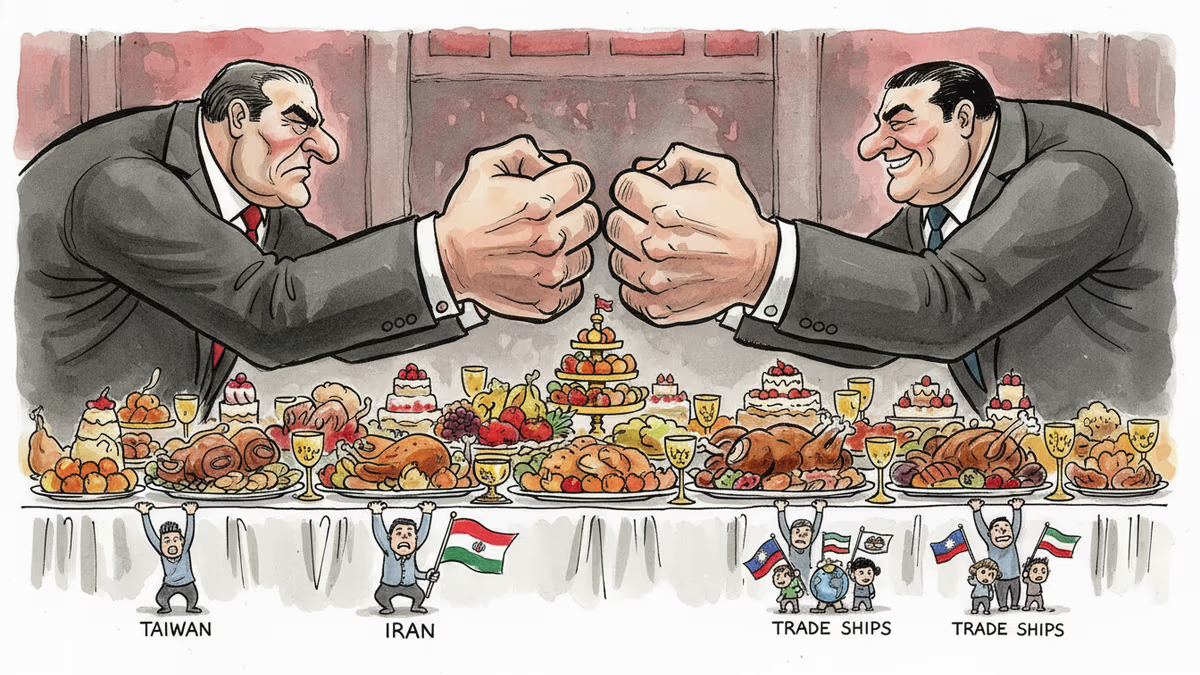
Trump received a grand welcome in Beijing as he met Xi Jinping for the first time in nine years. Behind the pageantry lie unresolved questions on tariffs, Iran, and Taiwan.
Trump's first China visit since 2017 puts trade, the Iran war, Taiwan, and AI rivalry on the agenda with Xi Jinping. What each side wants—and what neither can afford to concede.
While US and China leaders met in Beijing in May 2026, Asia's wealthy had already repositioned trillions across Singapore, Dubai, and Tokyo. The biggest capital shift in two decades went unreported.
At a summit with Trump, Xi Jinping invoked the 'Thucydides Trap' — the theory that rising powers and ruling ones tend toward war. Whether it was a warning or a warning shot is the question worth asking.
Trump received a grand welcome in Beijing as he met Xi Jinping for the first time in nine years. Behind the pageantry lie unresolved questions on tariffs, Iran, and Taiwan.
Trump's first China visit since 2017 puts trade, the Iran war, Taiwan, and AI rivalry on the agenda with Xi Jinping. What each side wants—and what neither can afford to concede.
Thoughts
Share your thoughts on this article
Sign in to join the conversation