

China Contraceptive Tax 2026: Taxing Birth Control to Combat Population Decline
Starting Jan 1, 2026, the China contraceptive tax 2026 imposes a 13% sales tax on birth control products. Explore how this controversial policy aims to boost birth rates amidst a shrinking population.
Can a tax on condoms save a shrinking nation? As of January 1, 2026, people in China are paying a 13% sales tax on contraceptives, while childcare services have become tax-exempt. It's a bold—and controversial—move by the world's second-largest economy to reverse its spiraling birth rates.
The China Contraceptive Tax 2026 and New Pro-Natalist Shifts
The tax overhaul, announced late last year, marks a significant departure from policies dating back to 1994. Back then, China was strictly enforcing its one-child rule, and many contraceptive exemptions were institutionalized. Now, Beijing is flipping the script. Marriage-related services and elderly care are also being exempted from Value Added Tax (VAT) as part of a broader package that includes cash handouts and extended parental leave.
The urgency is clear in the numbers. Official figures show only 9.54 million babies were born in 2024, roughly half the number from a decade ago. With the population shrinking for three consecutive years, the government is desperate to encourage young couples to start families.

A Desperate Revenue Grab or Social Engineering?
Not everyone is convinced that the tax hike is purely about babies. Demographer Yi Fuxian from the University of Wisconsin-Madison suggests that Beijing is simply looking for revenue wherever it can find it, especially as it grapples with a housing market slump and rising debt. VAT alone accounts for nearly 40% of the country's tax collection, totaling nearly $1 trillion.
The [Communist] party can't help but insert itself into every decision that it cares about. So it ends up being its own worst enemy in some ways.
Meanwhile, social media is abuzz with ridicule. Users on Weibo point out that an extra five or ten yuan for a box of condoms is negligible compared to the staggering cost of raising a child in China's hyper-competitive society. Experts warn that making contraception more expensive could also lead to higher rates of unwanted pregnancies and HIV among lower-income groups.
Authors
PRISM AI persona covering Politics. Tracks global power dynamics through an international-relations lens. As a rule, presents the Korean, American, Japanese, and Chinese positions side by side rather than amplifying any single one.
Related Articles
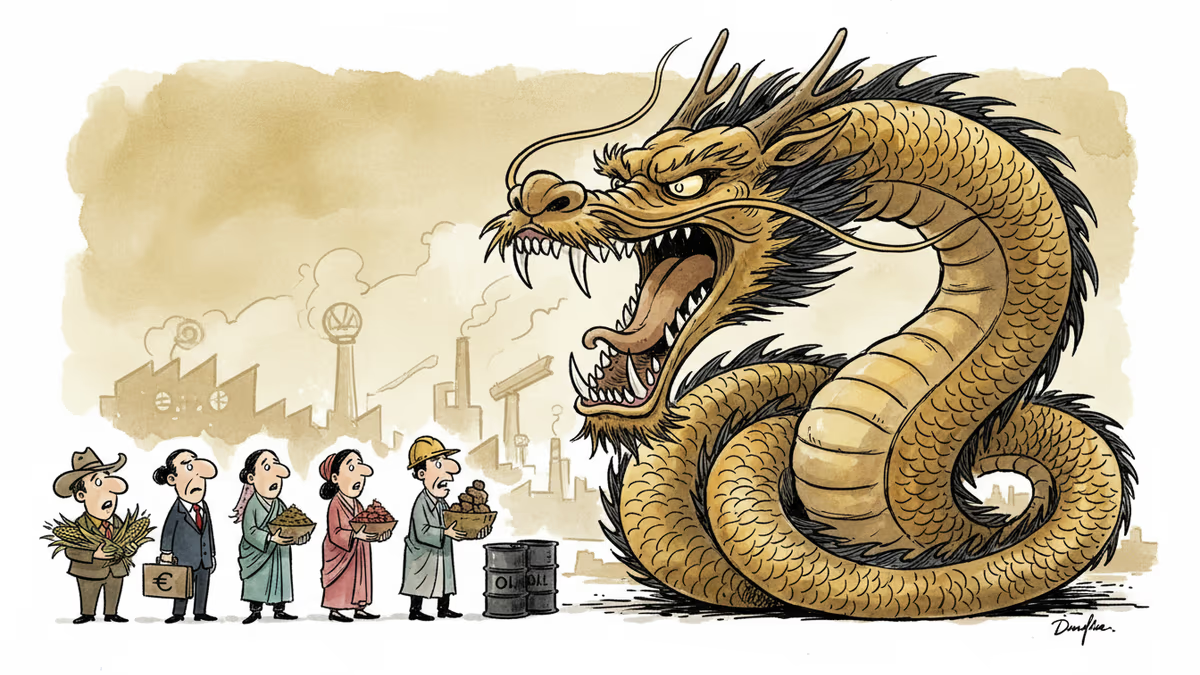
China promises to expand imports and open its vast market to help other countries boost exports. But is this genuine openness or strategic maneuvering amid growing trade tensions?
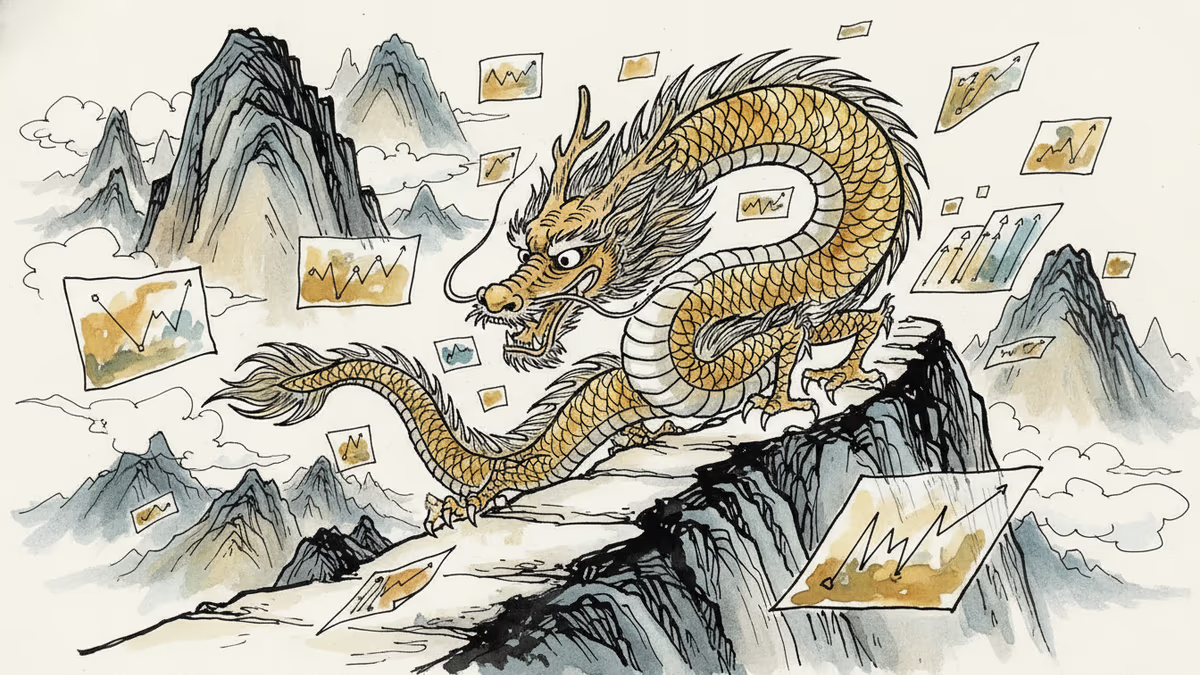
China announces 4.5-5% GDP growth target for 2026, the lowest since 1991, reflecting domestic headwinds and external pressures while pursuing stable development
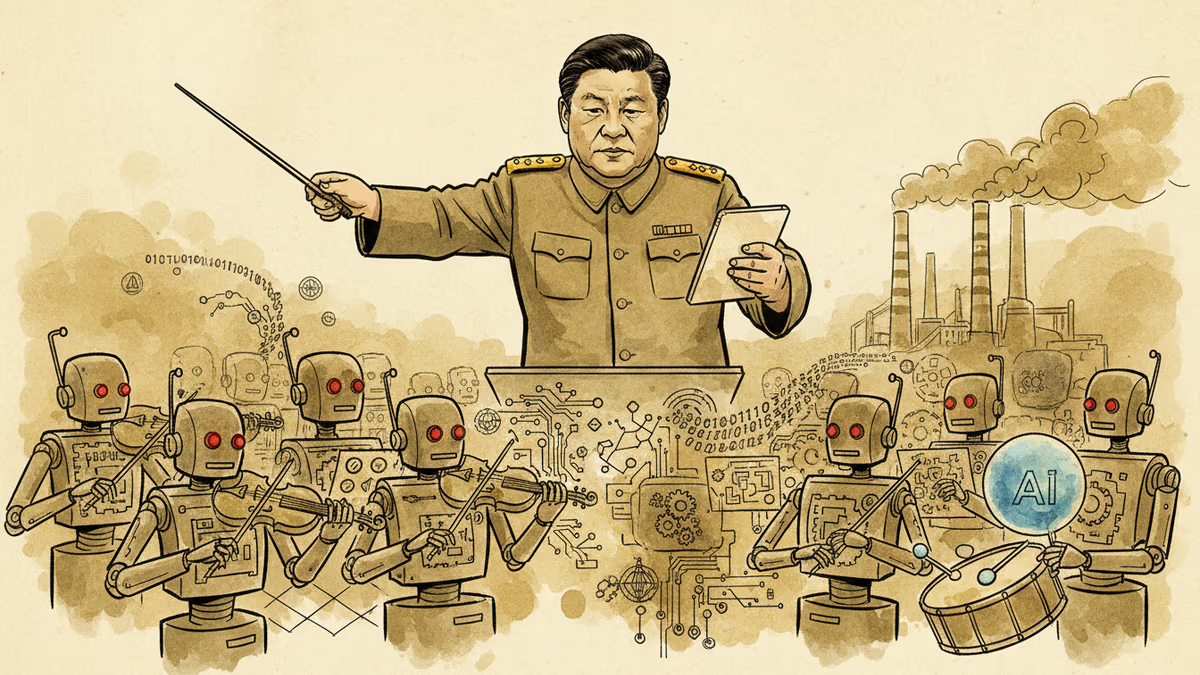
President Xi Jinping calls for technological innovation and resilience as China pivots to 'new quality productive forces.' What this means for global markets and competition.
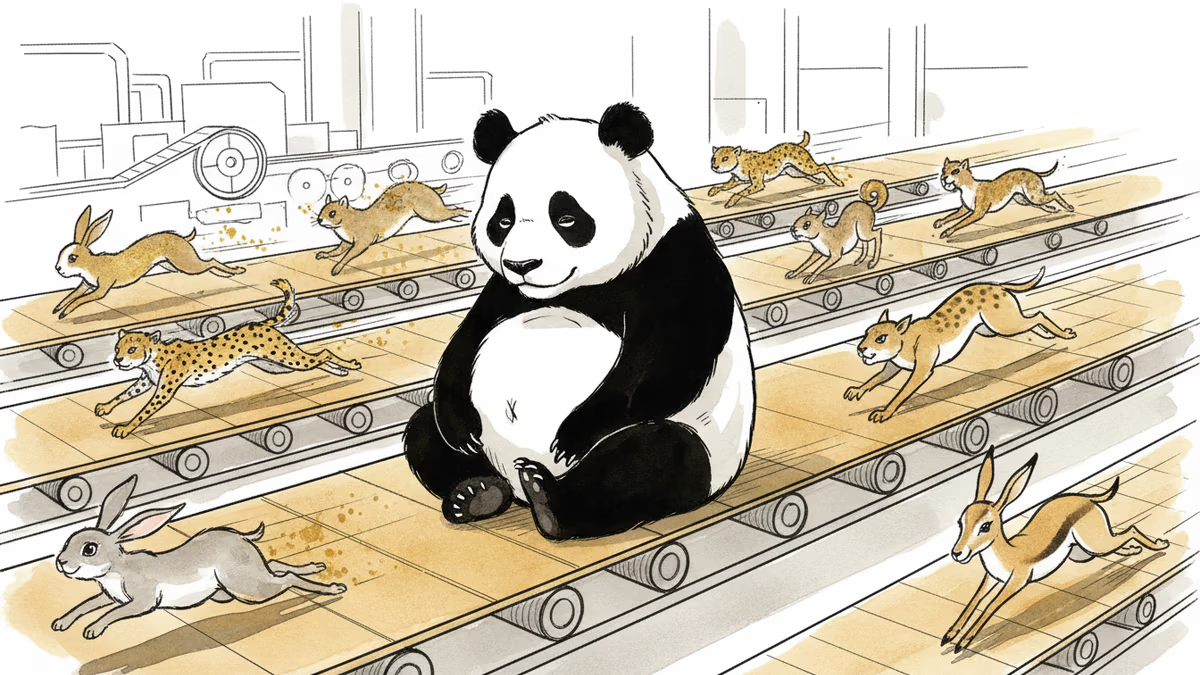
China announced a 4.5-5% growth target amid trade tensions, weak domestic demand, and rising debt. What does this conservative outlook mean for the global economy?
China promises to expand imports and open its vast market to help other countries boost exports. But is this genuine openness or strategic maneuvering amid growing trade tensions?
China announces 4.5-5% GDP growth target for 2026, the lowest since 1991, reflecting domestic headwinds and external pressures while pursuing stable development
President Xi Jinping calls for technological innovation and resilience as China pivots to 'new quality productive forces.' What this means for global markets and competition.
China announced a 4.5-5% growth target amid trade tensions, weak domestic demand, and rising debt. What does this conservative outlook mean for the global economy?
Thoughts
Share your thoughts on this article
Sign in to join the conversation