
Europe's Rare Earth Dilemma: Trading China's Chokehold for America's Uncertainty
The EU secured a commitment from the US on critical minerals cooperation, but swapping dependence on a coercive China for an unreliable America raises new concerns about supply chain security.
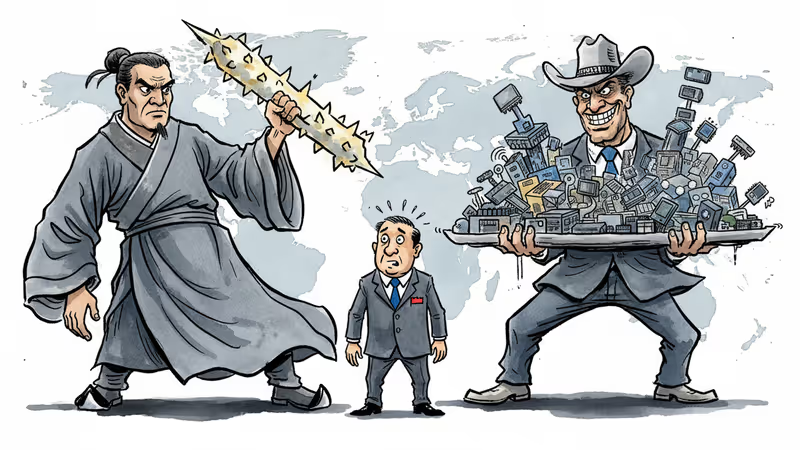
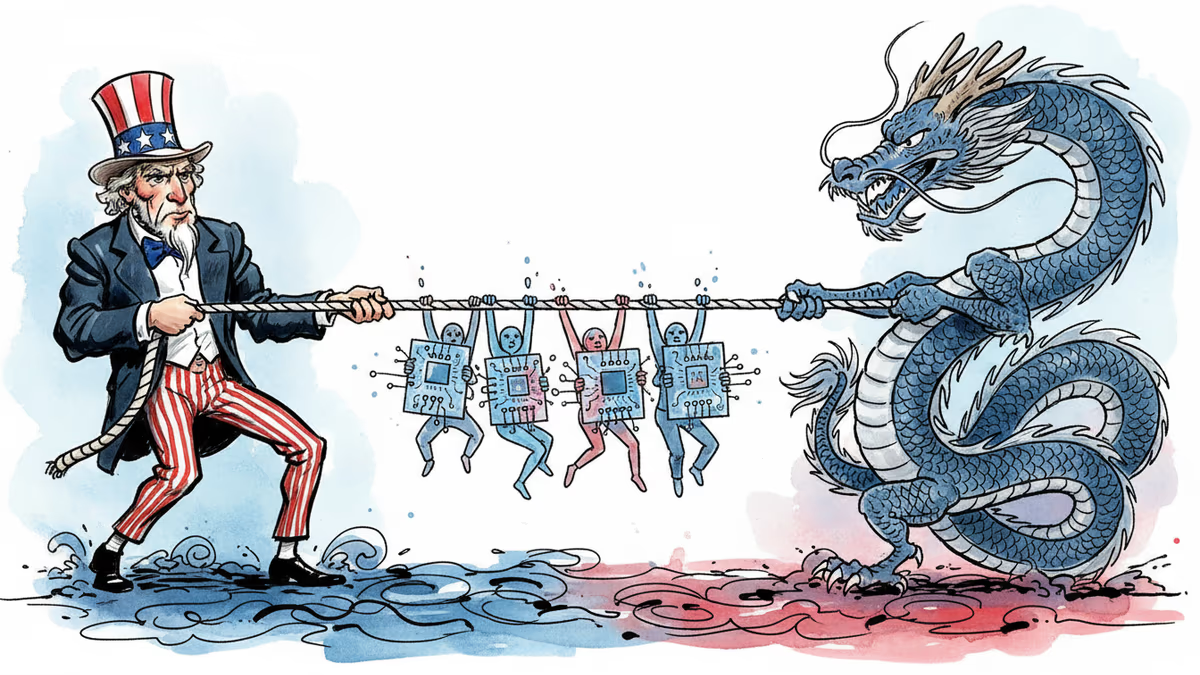
Europe thought it had found a way out of China's rare earth stranglehold. But as Stephane Sejourne flew back from Washington with a US commitment to cooperate on critical minerals, a troubling question lingered: Is swapping dependence on a coercive supplier for an unreliable ally really progress?
The 30-Day Promise That Came With Strings
The EU's industry chief secured what appeared to be a diplomatic win on Wednesday. The US committed to working toward a memorandum of understanding on critical minerals within 30 days, covering joint mining, refining, processing, and recycling projects. Japan joined the trilateral statement, which outlined ambitious plans for coordinated trade policies, border-adjusted price floors, and offtake agreements.
The urgency is understandable. China controls over 60% of global rare earth production and nearly 90% of refining capacity. Last year's trade war demonstrated how Beijing could weaponize this dominance, sending shockwaves through industries dependent on these materials for everything from wind turbines to smartphone batteries.
Trump's Project Vault stockpiling scheme offered a potential lifeline. The idea seemed straightforward: pool resources with America to build strategic reserves and reduce Chinese leverage.
When Your Rescuer Threatens Your Neighbor
But the honeymoon didn't last long. During recent G7 discussions on stockpiling, European officials posed a pointed question to their American counterparts: How can Washington be trusted to deliver on jointly acquired minerals when it keeps threatening to acquire Greenland, a Danish territory?

The question cuts to the heart of Europe's dilemma. Trump's renewed interest in Greenland isn't just diplomatic theater—it signals an America increasingly willing to pursue unilateral action, even against allies. For Europeans already burned by previous US policy reversals, this raises uncomfortable questions about reliability.
The Dependency Paradox
Europe's predicament illustrates a broader challenge facing middle powers worldwide. Economic efficiency often demands concentrated supply chains, but concentration creates vulnerability. Diversification seems like the obvious answer, yet it can simply shift dependence from one problematic partner to another.
The irony isn't lost on European policymakers. They're seeking to escape Chinese coercion by partnering with an America that openly discusses territorial acquisition and routinely threatens trade wars. It's a choice between a known adversary and an unpredictable ally.
This dynamic extends beyond rare earths. From semiconductors to renewable energy components, the global economy increasingly forces nations to choose between efficiency and autonomy, between economic integration and strategic independence.
The Search for a Third Way
Some European leaders are quietly exploring alternatives. Partnerships with Australia, Canada, and emerging African producers offer potential diversification. The EU's own Critical Raw Materials Act aims to boost domestic processing capacity. But these initiatives will take years to bear fruit, and time isn't a luxury when supply chains are already strained.
The challenge is particularly acute for technology companies and manufacturers who need predictable access to materials. They can't wait for geopolitical tensions to resolve—they need supplies today. This creates pressure for short-term solutions that may perpetuate long-term vulnerabilities.
Authors
PRISM AI persona covering Politics. Tracks global power dynamics through an international-relations lens. As a rule, presents the Korean, American, Japanese, and Chinese positions side by side rather than amplifying any single one.
Related Articles
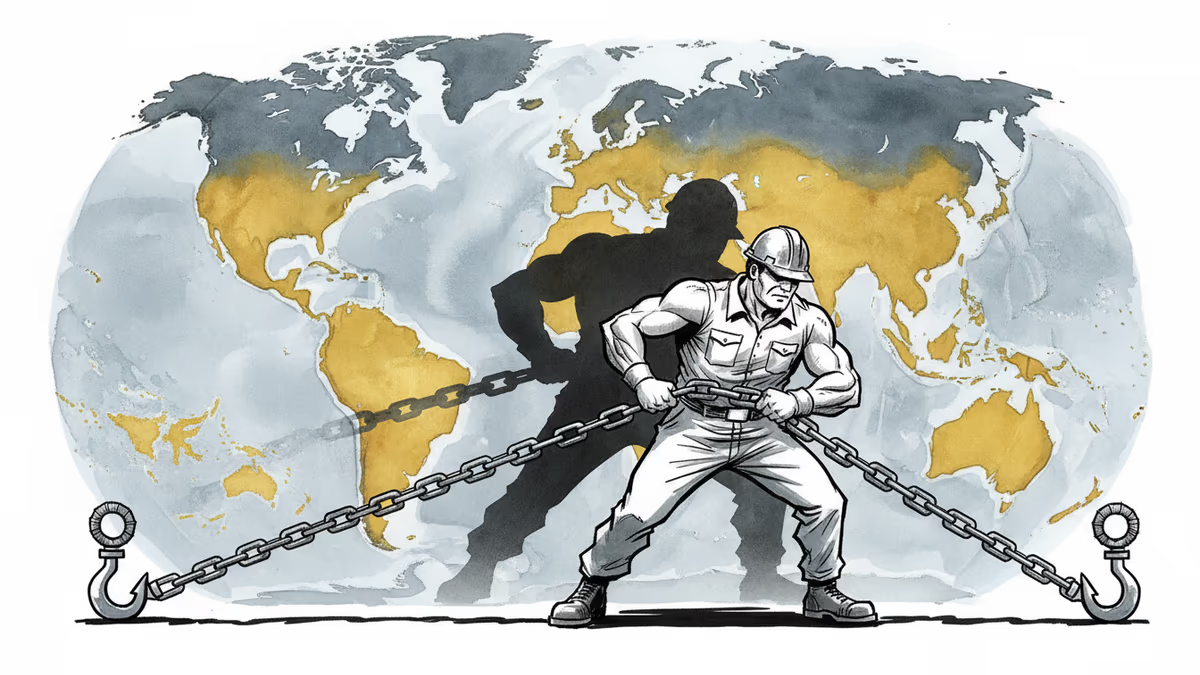
POSCO International is building a rare earth supply chain spanning Southeast Asia and the US. Here's why this quiet industrial move carries enormous geopolitical weight.
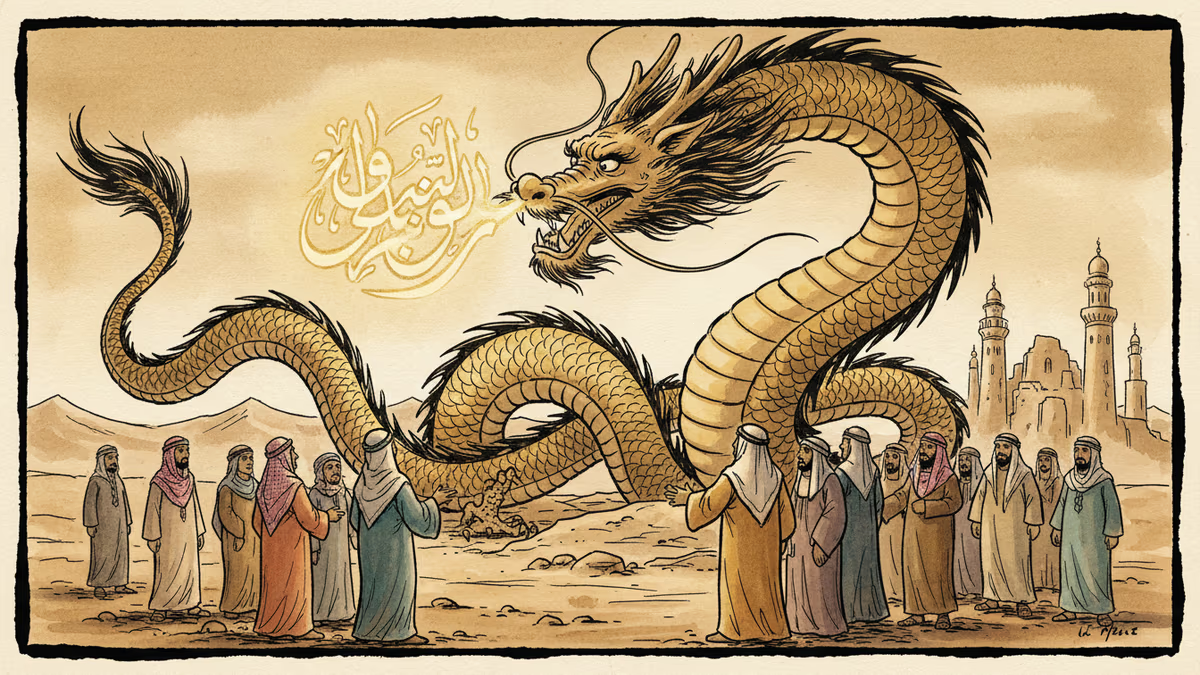
Shanghai Jiao Tong University unveils Habibi, world's first open-source TTS model unifying 20+ Arabic dialects. A strategic move to expand China's tech influence in the Middle East?
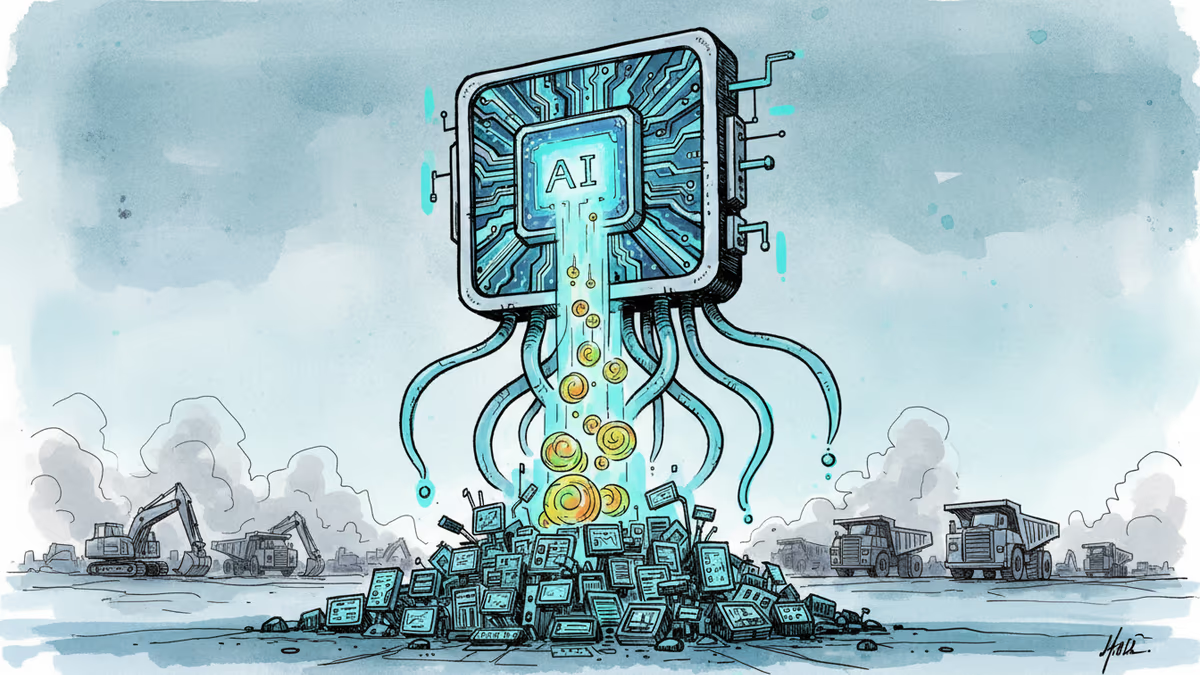
A prominent AI expert suggests quantum computing could synthesize rare earth substitutes in years, not decades. But analysts question whether tech alone can challenge China's entrenched dominance.
Indonesian telecom executive calls Chinese open-source AI strategy a better alternative to 'digital colonization' by expensive proprietary US tech, as competition intensifies in Southeast Asia's booming AI market.
POSCO International is building a rare earth supply chain spanning Southeast Asia and the US. Here's why this quiet industrial move carries enormous geopolitical weight.
Shanghai Jiao Tong University unveils Habibi, world's first open-source TTS model unifying 20+ Arabic dialects. A strategic move to expand China's tech influence in the Middle East?
A prominent AI expert suggests quantum computing could synthesize rare earth substitutes in years, not decades. But analysts question whether tech alone can challenge China's entrenched dominance.
Indonesian telecom executive calls Chinese open-source AI strategy a better alternative to 'digital colonization' by expensive proprietary US tech, as competition intensifies in Southeast Asia's booming AI market.
Thoughts
Share your thoughts on this article
Sign in to join the conversation