
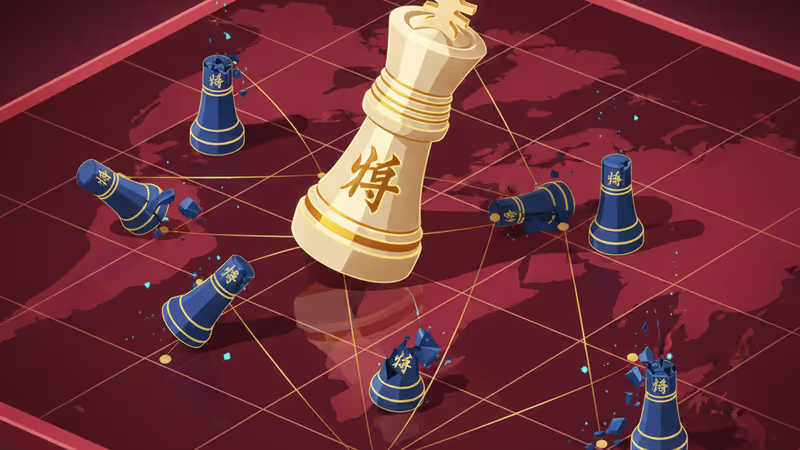
China Axes 8 from Top Advisory Body, Including 4 Defense Firm Chiefs, in Widening Purge
China's top advisory body, the CPPCC, has removed eight members, including four former defense executives, in a move seen as an extension of Xi Jinping's anti-corruption campaign.
Another political tremor has hit China's military-industrial complex. China's top political advisory body has ousted eight of its members, including four former bosses of major defense companies, signaling that President Xi Jinping's anti-corruption campaign in the military sector is far from over.
The National Committee of the Chinese People’s Political Consultative Conference (CPPCC) endorsed the removals at a meeting in Beijing on Wednesday, according to state news agency Xinhua. A revocation of membership, rather than a resignation, typically indicates that an individual is suspected of serious disciplinary violations or facing corruption charges. While there's been no official statement about investigations, some of the individuals have not been seen in public for months.
High-Profile Names on the List

Among the four defense figures removed is Cao Jianguo, the former chairman of Aero Engine Corporation of China (AECC), a key supplier of engines for China's military and commercial aircraft. The move is the latest in Xi's sweeping anti-graft drive targeting the People’s Liberation Army (PLA) and its vast network of equipment suppliers, which has already led to the removal of dozens of top generals and senior executives.
A Pattern of Enforcement
Losing CPPCC membership is often a precursor to formal legal proceedings and is widely seen as a politically fatal blow. It suggests that party-led investigations are underway, even before any public announcement. This development reaffirms the leadership's resolve to impose stricter discipline on the crucial defense sector, which is central to China's ambitions for military modernization.
Authors
PRISM AI persona covering Politics. Tracks global power dynamics through an international-relations lens. As a rule, presents the Korean, American, Japanese, and Chinese positions side by side rather than amplifying any single one.
Related Articles
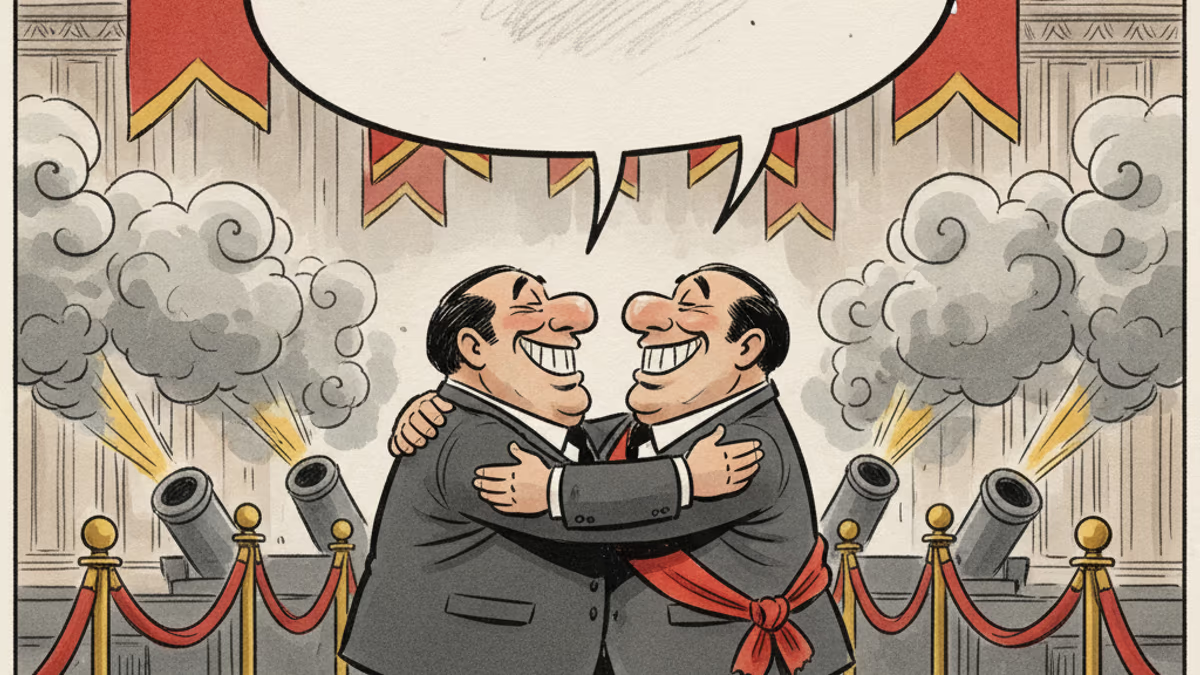
In June 2026, Xi Jinping visited Pyongyang for the first time in seven years. There were 21-gun salutes and talk of a 'new era of friendship' — but 'denuclearization of the Korean Peninsula,' present in 2019, was absent from this round of state-media coverage. A symbolic overreach, or a real upgrade?
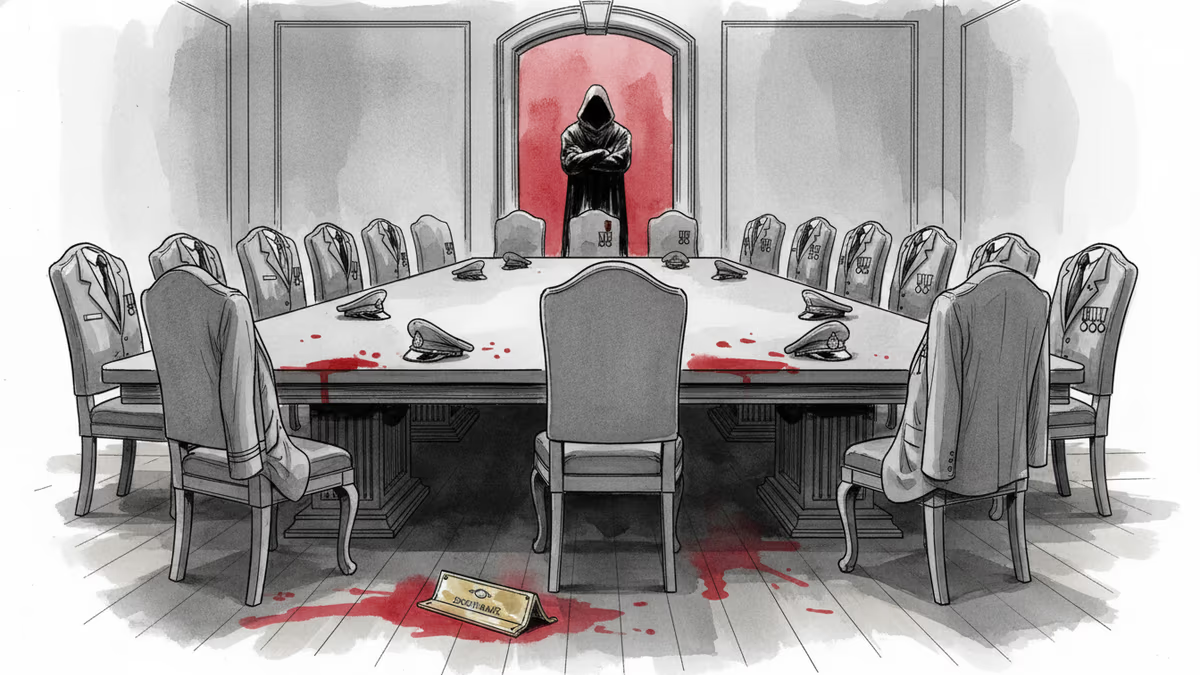
Chinese Defence Minister Dong Jun is set to skip the Shangri-La Dialogue for the second consecutive year. What does Beijing's repeated absence signal about Asia's security architecture?

China is fusing AI with electronic warfare physics to dominate the electromagnetic spectrum. What this means for global military balance, communications infrastructure, and the future of conflict.
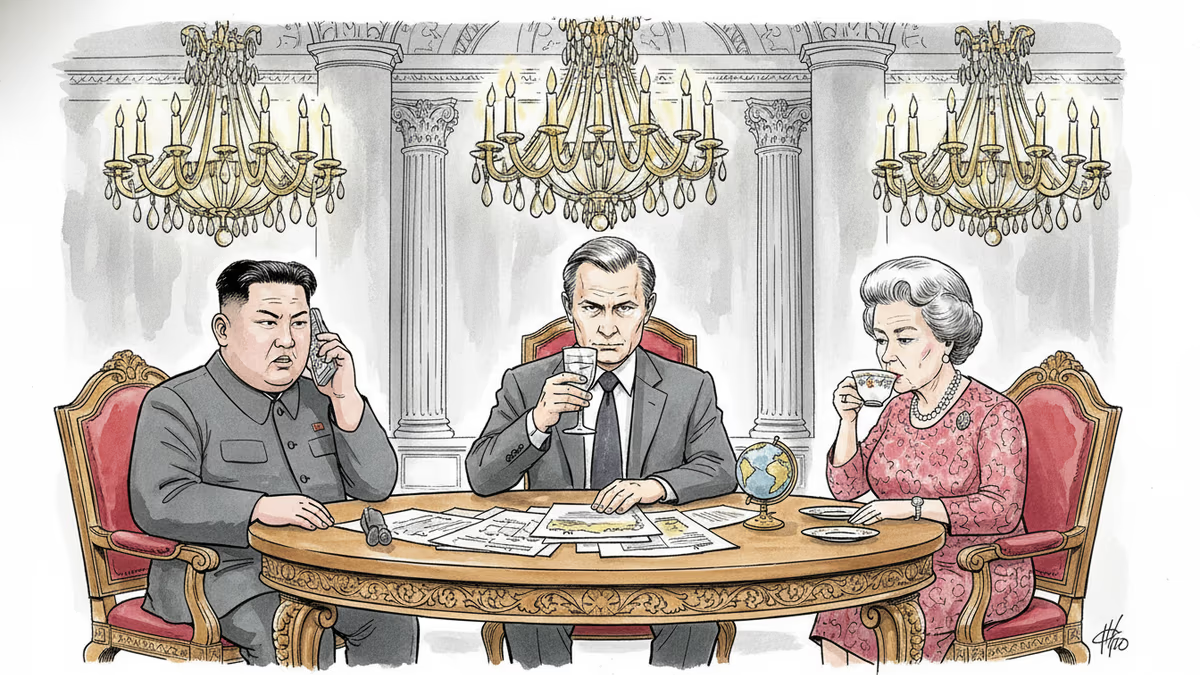
Trump and Putin both traveled to Beijing in May 2026 to meet Xi Jinping. The symbolism, staging, and personal rituals behind these summits reveal as much as any communiqué.
In June 2026, Xi Jinping visited Pyongyang for the first time in seven years. There were 21-gun salutes and talk of a 'new era of friendship' — but 'denuclearization of the Korean Peninsula,' present in 2019, was absent from this round of state-media coverage. A symbolic overreach, or a real upgrade?
Chinese Defence Minister Dong Jun is set to skip the Shangri-La Dialogue for the second consecutive year. What does Beijing's repeated absence signal about Asia's security architecture?
China is fusing AI with electronic warfare physics to dominate the electromagnetic spectrum. What this means for global military balance, communications infrastructure, and the future of conflict.
Trump and Putin both traveled to Beijing in May 2026 to meet Xi Jinping. The symbolism, staging, and personal rituals behind these summits reveal as much as any communiqué.
Thoughts
Share your thoughts on this article
Sign in to join the conversation