

AI Labeling: China's Platform Duty vs EU Code's Pledge
China's rules in force since Sept 2025 require 'AIGC' file metadata and platform checks. EU code signatories voluntarily pledge metadata plus a watermark for images, video and audio.
Text at least 5% of the frame's shortest side in height. On video, at least 2 seconds on screen. If the label goes into audio as a rhythm, it's "短长 短短" (short-long, short-short): Morse code for "AI." Those are the specs for the visible labels on AI-made content in China. Inside the file, seven fields sit under the name "AIGC." Both come from GB 45438—2025, a mandatory national standard (standard text, copy posted by Sidley). The standard and the 「人工智能生成合成内容标识办法」 (Measures for Labeling AI-Generated and Synthesized Content; "the Measures" below), posted by the Cyberspace Administration of China (CAC), took effect together on September 1, 2025. The Measures set the obligations. GB 45438, as its introduction says, sets out the labeling methods on the basis of the Measures and other rules. Visible labels apply where the public could be confused or misled.
In the EU, the Code of Practice on Transparency of AI-Generated Content sets out invisible marking in two layers. Providers that sign it pledge to embed both signed metadata and an imperceptible watermark in images, video and audio. Signed metadata is file information carrying a digital signature and a timestamp, so tampering can be spotted. An imperceptible watermark is a mark hidden inside the content itself. The code attaches a condition: the two layers apply "so long as no single marking technique can … ensure by itself compliance" with the requirements. Signing the code is voluntary. For invisible marking, what the EU AI Act makes mandatory goes as far as the machine-readable, detectable marking in Article 50(2) (Part 1). China encourages watermarks (in the Measures) and permits them (in GB 45438). So where do the two systems part ways? Within what it has checked, PRISM sees two places: the duties at the stage where files are read, and the second layer at the stage where content is made.
Visible labels: where, how big, how long
Article 3 of the Measures defines visible labels (显式标识) as "可以被用户明显感知到的标识" (labels users can clearly perceive; English glosses of Chinese text in this article are PRISM translations). Article 4 ties this duty to the services covered by Article 17(1) of the 「互联网信息服务深度合成管理规定」 (Provisions on the Administration of Deep Synthesis in Internet Information Services; the Deep Synthesis Provisions below): services that are "可能导致公众混淆或者误认的" (likely to cause public confusion or misidentification). The provision lists dialogue and writing services, synthetic voices, images and video of people such as faces, immersive scenes, and any other service that generates or significantly alters information content. That last item is a catch-all, so the list isn't closed. Services outside it must offer a labeling function (Article 17(2)).
Here are GB 45438's specs by medium.
- Text: Characters or a corner mark (角标). The characters include "人工智能" (artificial intelligence) or "AI," plus at least one of "生成" (generated) and "合成" (synthesized).
- Images: At an edge or corner. "文字高度不应低于画面最短边长度的5%" (text height shall not be less than 5% of the length of the frame's shortest side).
- Video: At an edge or corner, with text at least 5% high. It has to stay up for at least 2 seconds at normal playback speed.
- Audio: A voice label or a rhythm label. A note in the standard describes the "短长 短短" rhythm as "“AI”的摩斯码表示" (the Morse code representation of "AI"). It goes in at least one of the start, the end or the middle.
- Virtual scenes: A text prompt.
The label has to survive a download. Article 4 of the Measures says providers "应当确保" (shall ensure) that downloaded, copied or exported files contain the visible label. Article 9 is the exception. If the user agreement spells out the user's labeling duty and responsibility for use, a provider may supply a version without visible labels. In that case, it keeps logs for at least six months.
In the EU, visible labels fall to deployers under Article 50(4) of the AI Act, and they cover deepfakes and AI-generated text on matters of public interest. The Commission's EU icons come in four variations. The Commission states: "The use of these EU icons is optional, but the labelling requirements under Article 50 AI Act are not." The code encourages an optional feature that adds a visible label in the signatory's system interface (Measure 1.4).
Labels in the file: seven "AIGC" fields and platforms' duty to check
Invisible labels (隐式标识) are labels added to file data through technical measures that are "不易被用户明显感知到" (not easily perceived by users) (Article 3 of the Measures). GB 45438 splits them by where they sit: labels in the file metadata and labels inside the content. Article 5 of the Measures defines metadata as "嵌入到文件头部的描述性信息" (descriptive information embedded in the file header).
Article 5 makes this metadata label mandatory for providers of generation services. Its basis, Article 16 of the Deep Synthesis Provisions, requires labels on information content generated or edited with a service, and it carries no scope condition like the one in Article 17(1). The format is set out in Annex E of GB 45438 (Article 11 of the Measures also requires compliance with mandatory national standards). The field name or keyword has to contain "AIGC." Going by field names, the structure covers whether the content is AI-generated (Label), the service that made it and a content ID (ContentProducer, ProduceID), the platform that spread it and its ID (ContentPropagator, PropagateID), and two ReservedCode fields.
{"AIGC":{"Label":"value1","ContentProducer":"value2","ProduceID":"value3","ReservedCode1":"value4","ContentPropagator":"value5","PropagateID":"value6","ReservedCode2":"value7"}}Label takes one of three values: 1 if the content is generated or synthesized, 2 if it may be (可能), 3 if it's suspected (疑似). A file keeps "仅保留一份" (only one copy) of the metadata label.
The "可能" and "疑似" behind Labels 2 and 3 are the same words used in the notices required by Article 6 of the Measures. Article 6 says providers of platforms that spread content, "网络信息内容传播服务" (online information content dissemination services), "应当" (shall) take the following steps.
- Confirmed: "核验" (verify) whether the file metadata contains an invisible label. If the metadata states the content is generated, flag it as "属于生成合成内容" (generated or synthesized content).
- Possible: If no label is verified in the metadata but the user declares the content generated, flag it as "可能为" (possibly) such content.
- Suspected: If there's neither, but the platform detects "显式标识或者其他生成合成痕迹" (visible labels or other traces of generation or synthesis), flag it as "疑似" (suspected).
Only "confirmed" comes from checking the metadata. "Possible" and "suspected" are the routes for when there's no metadata. In all three cases, the platform appends dissemination elements to the metadata, such as its own name or code and a content ID.
Douyin (抖音) said in a notice posted on September 1, 2025 that it had built features to read and write AI-content metadata. It said it would add "作品含AI生成内容" (this work contains AI-generated content) when it verifies an invisible label in the metadata, and "疑似使用了AI生成技术,请谨慎甄别" (suspected use of AI generation technology; please judge with care) when its technology detects content that creators didn't label themselves. WeChat (微信) also announced it would flag content that may be AI-generated, Xinhuanet reported on September 9, 2025, republishing an article from People's Posts and Telecommunications News. Whether the two platforms actually apply these labels lies outside the notices.
More than a year after the rules took effect, we couldn't find an official tally that breaks out enforcement actions for labeling violations, or any tally of detection results by platform. We also couldn't confirm any schedule for publishing them.
The first layer for EU code signatories is metadata too. Under Sub-measure 1.1.1, signatories "will record information in the metadata on whether the content is AI-generated or manipulated," and add a digital signature and a timestamp ("on systems where time information is available"). The code's text doesn't contain the terms "C2PA" (the Coalition for Content Provenance and Authenticity, which developed Content Credentials) or "content credentials."
Labels in the content: watermarks, encouraged or pledged
A watermark is an invisible label blended into the content itself. It's what GB 45438 calls "内容隐式标识" (invisible labels within content), and the standard gives digital watermarks as an example. Article 5 of the Measures "鼓励" (encourages) adding labels such as digital watermarks. Clause 6.2 of GB 45438 permits them: "准许采用数字水印等形式" (forms such as digital watermarks may be used).
For EU code signatories, the watermark is the second layer. Sub-measure 1.1.2 reads: "Signatories will ensure that AI-generated or manipulated content is marked with an imperceptible watermark, with the exception of very short text." Free-form text longer than 200 tokens still gets one, "even though it may have lower reliability." The code considers one layer enough for free-form text, which "cannot transport metadata," and for generative AI built into physical products in "a technically controlled and closed environment." Fingerprinting and logging are optional.
Neither system requires watermarks by law. China encourages and permits them through the Measures and GB 45438. In the EU, providers that sign the code pledge them.

On the corporate side, OpenAI's help page (accessed November 4) says images made with ChatGPT, Codex and the API carry both Content Credentials metadata and Google DeepMind's SynthID watermark. It says text watermarks are added only in the EU, to comply with the EU AI Act.
When labels come off
Does a single screenshot wipe the metadata? OpenAI's own help page says Content Credentials "can be lost through everyday actions, such as taking a screenshot or converting a file." Watermarks can also go undetected after heavy cropping, compression, substantial paraphrasing or translation ("can make a watermark undetectable").
For text watermarks, there are numbers. In an internal evaluation OpenAI published on October 5, swapping 10% of the words in 400-token passages for synonyms cut the watermark detection rate from about 92% to 66%. Swapping 25% cut it to 17%. These figures are for text only.
China's Measures write the path after a label is lost into the text. Without metadata, labeling falls back to "possible" or "suspected," and services that add visible labels must make sure the label stays in downloaded files. Article 10 says no organization or individual may "恶意删除、篡改、伪造、隐匿" (maliciously delete, tamper with, forge or conceal) labels. Article 18 of the Deep Synthesis Provisions also bans using technical means to remove labels.
EU code signatories pledge that when their AI transforms input content, they'll keep existing metadata markings and won't intentionally alter or remove them (Measure 1.2). China's ban applies to everyone. The EU pledge applies when signatories transform content with their own AI. Because the two rules differ in nature, this comparison can't tell us which does more to stop labels from being removed.
Code signatories also pledge to make a detection solution, a way to check whether content carries a mark, available free of charge. Signatories whose generative AI has fewer than 1 million monthly users and whose detection solution is costly to run may charge a fee. The deadline for an interoperability solution that lets signatories' detection tools work with one another is February 2, 2027.
Here's the original wording of the condition on the two-layer pledge: "So long as no single marking technique can, under the state of the art, ensure by itself compliance with the four requirements in Article 50(2) AI Act of effectiveness, interoperability, robustness, and reliability…" The code also leaves room for signatories to show compliance in the future through "alternative marking technique(s) (possibly a single marking technique)." In the provisions of the Measures and GB 45438 that PRISM checked, we didn't find a condition like this.
We don't know which system actually catches more. We didn't find primary sources measuring detection results under either system. The 92% and 66% figures above come from OpenAI's own evaluation of its text watermark, so they can't be used for this comparison.
Where they split: two readings
Within what it has checked, PRISM reads the two systems as splitting in two places. At the reading stage, China made it a legal duty for distribution platforms to check metadata and relabel. At the making stage, EU code signatories pledge two layers: metadata plus a watermark.
The opposite reading comes from the same texts. On this view, both systems share a two-step structure: label at the making stage, check at the reading stage. China's "confirmed" label only appears if a generation service has already embedded metadata. EU documents also contain wording on the distribution (platform) stage. On this reading, the difference is one of degree. China wrote the reading stage into law as a duty, while the EU left it as encouragement, tools and examples of risk mitigation. Here's the wording that supports it.
- Code, Section 1 (end of Measure 1.2, Commitment 2, Measure 1.4): Signatories that run platforms "are encouraged" to ensure the platform "preserves metadata markings," and all signatories "are encouraged" to make detection solutions "directly available within distribution and communication platforms." Supporting measures that help platform, search engine and website providers display labels are also optional and encouraged.
- Code, Section 2 (signatories that are platform or search engine providers, including very large platforms subject to Article 35(1) of the Digital Services Act): They "are encouraged" to use the EU icon or an equivalent solution, for example through disclosure tools in upload interfaces.
- DSAArticle 35(1)(k): The duty of very large online platforms and search engines is to put risk mitigation measures in place ("shall put in place"). Making generated or manipulated images, audio or video that resemble real people, places and the like and appear authentic "distinguishable through prominent markings" is one example of those measures ("may include, where applicable"). There's no wording about checking metadata.
The two readings disagree on one point: whether the gap between duty and encouragement is one of kind (who has to read the labels) or of degree (how tightly they're bound). They share one fact. Within what we checked, China is where checking and relabeling by distribution platforms is a legal duty, and the EU's platform wording is either encouragement or an example of risk mitigation. When PRISM says the systems "split" at the reading stage, it means only this shared part. Whether that's a difference of kind or of degree can't be settled from the texts alone. On the EU side, we checked Article 50 of the AI Act, the code of practice and Article 35(1) of the DSA. We didn't check other EU platform rules.
Answers to three questions
Q1. What do labels on AI-generated images, video and audio look like in China?
If the service could confuse or mislead the public, a visible label goes on. On images and video, it's text at an edge or corner, at least 5% of the shortest side in height. On video, it stays up for at least 2 seconds. Audio uses a voice notice or the "短长 短短" rhythm (Morse code for "AI"). The label has to stay in downloaded files. A version without visible labels can be provided on two conditions: a user agreement, and logs kept for at least six months.
Q2. How do watermarks differ from metadata, and what happens if they're stripped or screenshotted?
Metadata is descriptive information in the file header. A watermark is a mark embedded in the content itself. China makes metadata mandatory and encourages or permits watermarks. According to OpenAI, metadata can be lost in a screenshot or file conversion, and watermarks can go undetected after heavy cropping or compression. When that happens, China has fallback routes, user declarations (声明) and platform detection, plus a ban on removal that applies to everyone. EU code signatories pledge not to strip metadata when their own AI transforms content, and to offer detection solutions free of charge. We didn't find primary sources measuring detection results under either system, so we don't know which catches more.
Q3. If a Korean app launches an AI image feature in China and the EU, how many layers does it need, and of what?
- China: Offering a generation feature means embedding an "AIGC" label in the file metadata (Article 5 of the Measures). If the service could confuse or mislead the public, it needs a visible label too (Article 4). Watermarks are encouraged. The checking and relabeling under Article 6 apply to providers of "网络信息内容传播服务," services that spread content. So the to-do list depends on whether the app only offers generation or also distributes users' content. App stores ask during app review whether an app provides generation services and check its labeling materials (Article 7).
- EU: Machine-readable marking under Article 50(2) is mandatory. The two layers, metadata and watermark, are a pledge that comes with signing the code. On the Commission's signatory list (updated September 24), Section 1, the part for providers, has 95 signatories.
- Bundling into one set: Unknown. No primary source addresses whether the two formats fit together, and GB 45438's one-copy rule covers the "AIGC" metadata label. The EU interoperability solution for detection, due February 2, 2027, could offer a clue, but we don't know whether it will cover format mapping.
PRISM's reading and how strong the evidence is
Here's PRISM's reading. China's rules, in force since September 2025, require distribution platforms to check "AIGC" metadata and relabel. The EU code of practice has signing providers pledge two layers, metadata and a watermark, for images, video and audio. Within what we checked, the two systems split over the duty at the reading stage and the second layer at the making stage.
We confirmed the first two facts in primary texts: for China, the "应当" (shall) in Article 6 of the Measures; for the EU, the conditional "will" in Measure 1.1 of the code. "Split" is PRISM's interpretation. China's rules are obligations under law and a mandatory national standard, while the EU's two layers are pledges by signatories to a voluntary code. That's why we use "split" only to mean the two systems put their rules in different places. We make no judgment about which is better.
We'll revisit this reading if a labeling duty for distribution platforms is confirmed in the EU, if the code's platform wording shifts from encouragement ("are encouraged") to a pledge ("will"), or if China makes watermarks mandatory.
What to watch
- February 2, 2027: The deadline for EU code signatories' interoperability solution for detection. We'll watch whether it covers detection rates or format mapping.
- WeChat's original notice: We checked Douyin's notice in the original. We couldn't open WeChat's notice directly, so we relied on media reports. If we confirm the original, we'll add an update below this article.
- Enforcement and detection figures: We'll watch whether official numbers on penalties for labeling violations or on detection results by platform come out.
- Series: Part 3 (November 19) covers penalties in Korea and Taiwan. China's Measures contain no fine amounts. Part 4 (November 26) covers Japan and a checklist.
Series Part 1: EU Deepfake Labels Already Apply. What Changes Dec. 2
As of: November 12, 2026 KST; based on the CAC Measures, a copy of GB 45438, the EU code of practice and the DSA text
Sources
- Cyberspace Administration of China (CAC), 「人工智能生成合成内容标识办法」 (Measures for Labeling AI-Generated and Synthesized Content; posted by CAC March 14, 2025, effective September 1, 2025), https://www.cac.gov.cn/2025-03/14/c_1743654684782215.htm
- Cyberspace Administration of China (CAC), 「互联网信息服务深度合成管理规定」 (Provisions on the Administration of Deep Synthesis in Internet Information Services), https://www.cac.gov.cn/2022-12/11/c_1672221949354811.htm
- GB 45438—2025 「网络安全技术 人工智能生成合成内容标识方法」 (Cybersecurity technology—Labeling method for content generated by artificial intelligence), copy of the standard text (posted by Sidley), issued February 28, 2025, effective September 1, 2025, https://www.sidley.com/en/-/media/resource-pages/ai-monitor/20250314-china-standard-gb-454382025-labeling-method-for-content-generated-by-ai.pdf?la=en
- China's national standards full-text disclosure system, GB 45438-2025 listing ("强标," mandatory standard), https://openstd.samr.gov.cn/bzgk/gb/std_list?p.p2=45438
- 抖音安全与信任中心 (Douyin Safety and Trust Center), 「抖音关于升级AI内容标识功能的公告」 (Douyin notice on upgrading its AI content labeling features), September 1, 2025, https://95152.douyin.com/article/69831756697378034
- Xinhuanet, 「《人工智能生成合成内容标识办法》正式施行 多平台出台内容管理细则」 (republished from People's Posts and Telecommunications News), September 9, 2025, https://www.xinhuanet.com/tech/20250909/fb164c6d092146aa8e13ddc283fe416a/c.html
- European Commission, "Code of Practice on Transparency of AI-Generated Content" PDF, checked November 6, 2026, https://ec.europa.eu/newsroom/dae/redirection/document/129555
- European Commission, code of practice signatory list (Last update 24 September 2026), https://digital-strategy.ec.europa.eu/en/news/strong-backing-code-practice-transparency-ai-generated-content
- European Commission, "EU icons for labelling AI-generated content," checked November 4, 2026, https://digital-strategy.ec.europa.eu/en/policies/eu-icons-labelling-ai-generated-content
- EUR-Lex, Regulation (EU) 2022/2065 (Digital Services Act), OJ L 277, October 27, 2022, https://eur-lex.europa.eu/legal-content/EN/TXT/HTML/?uri=CELEX:32022R2065
- OpenAI Help Center, "Provenance signals in OpenAI-generated content," checked November 4, 2026, https://help.openai.com/en/articles/8912793-provenance-signals-in-openai-generated-content
- OpenAI, "Our approach to EU text provenance rules," October 5, 2026, https://openai.com/index/eu-text-provenance/
- Korea Law Information Center, Enforcement Decree of the AI Basic Act (인공지능 발전과 신뢰 기반 조성 등에 관한 기본법 시행령), checked November 4, 2026, https://www.law.go.kr/법령/인공지능발전과신뢰기반조성등에관한기본법시행령
This content is AI-generated based on source articles. While we strive for accuracy, errors may occur. We recommend verifying with the original source.
Related Articles

Korea's AI Basic Act fines a missing AI label only after an ignored order. In 5 Korean and 4 Taiwanese laws PRISM checked, a missing AI label or disclosure draws a fine from the first offense in two places: election deepfakes and Taiwan ad platforms.
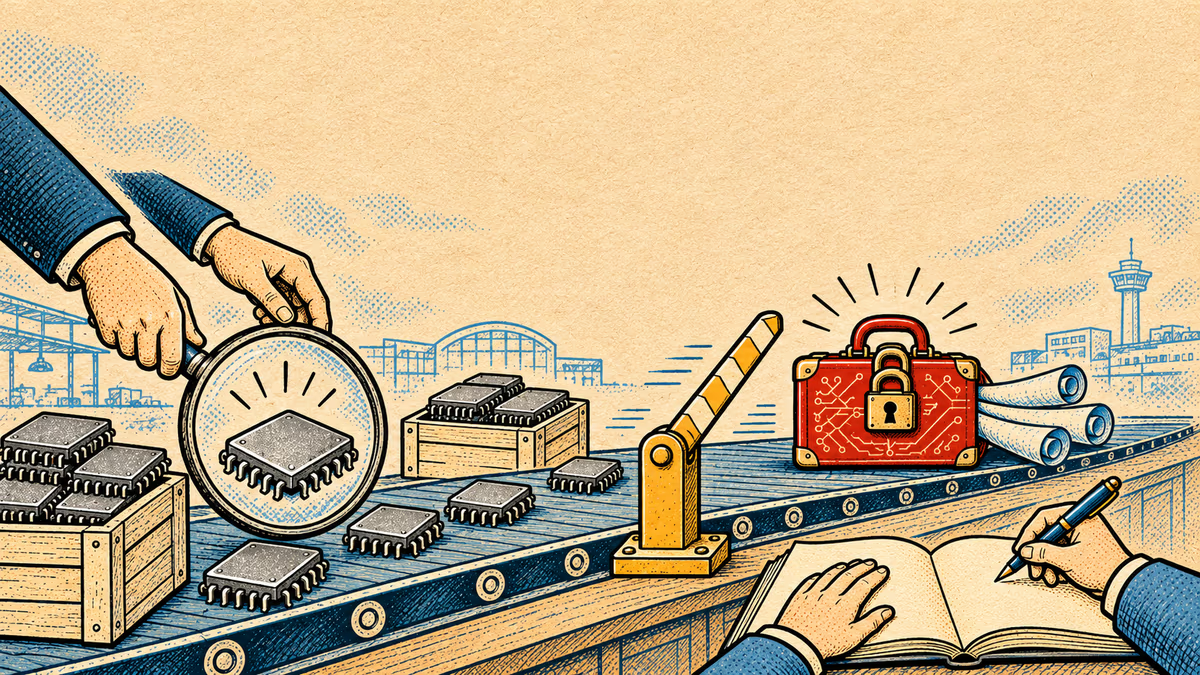
Korean firms using models like DeepSeek may run into China's draft AI export list in on-premises deals. We check its 10^26 bar, the U.S. rule and GAO's view.
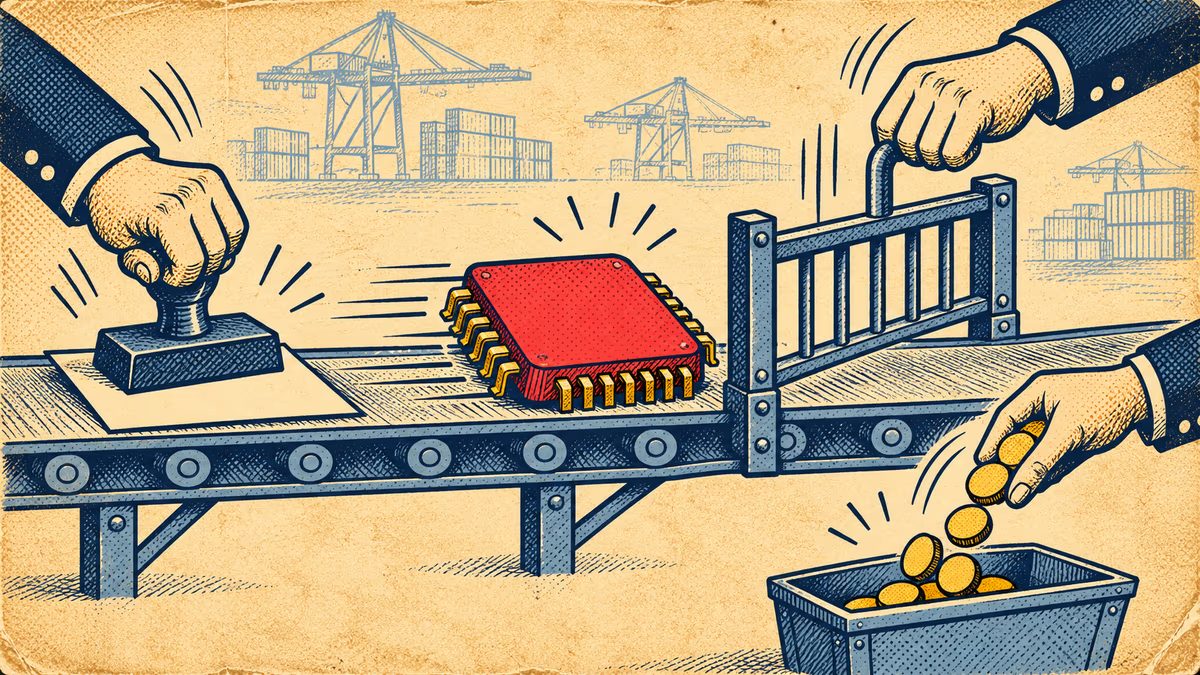
Korea's October exports rose 93.7% to $115.28 billion. Apple said its 47.9% gross margin included about 1 percentage point from tariff refunds. Plus China's draft tech export list.
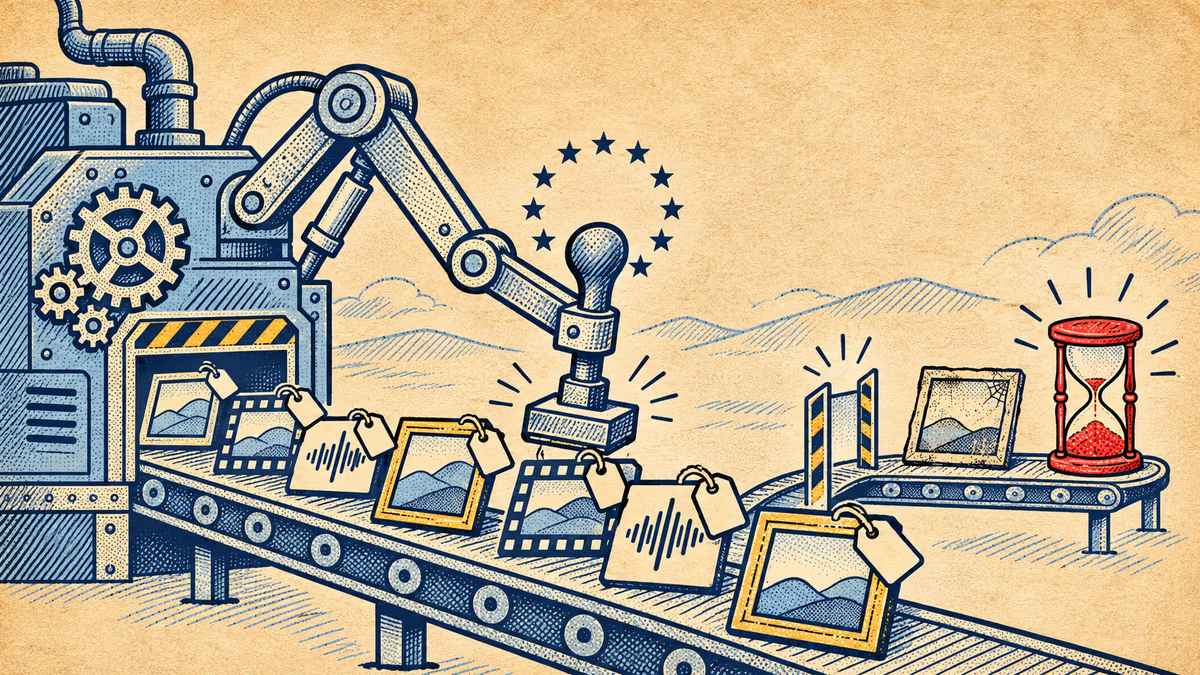
EU AI Act deepfake labeling has applied since Aug. 2. Dec. 2 ends only a narrow marking grace period and starts a conditional ban on non-consensual sexual-deepfake AI.
Korea's AI Basic Act fines a missing AI label only after an ignored order. In 5 Korean and 4 Taiwanese laws PRISM checked, a missing AI label or disclosure draws a fine from the first offense in two places: election deepfakes and Taiwan ad platforms.
Korean firms using models like DeepSeek may run into China's draft AI export list in on-premises deals. We check its 10^26 bar, the U.S. rule and GAO's view.
Korea's October exports rose 93.7% to $115.28 billion. Apple said its 47.9% gross margin included about 1 percentage point from tariff refunds. Plus China's draft tech export list.
EU AI Act deepfake labeling has applied since Aug. 2. Dec. 2 ends only a narrow marking grace period and starts a conditional ban on non-consensual sexual-deepfake AI.
Thoughts
Share your thoughts on this article
Sign in to join the conversation