
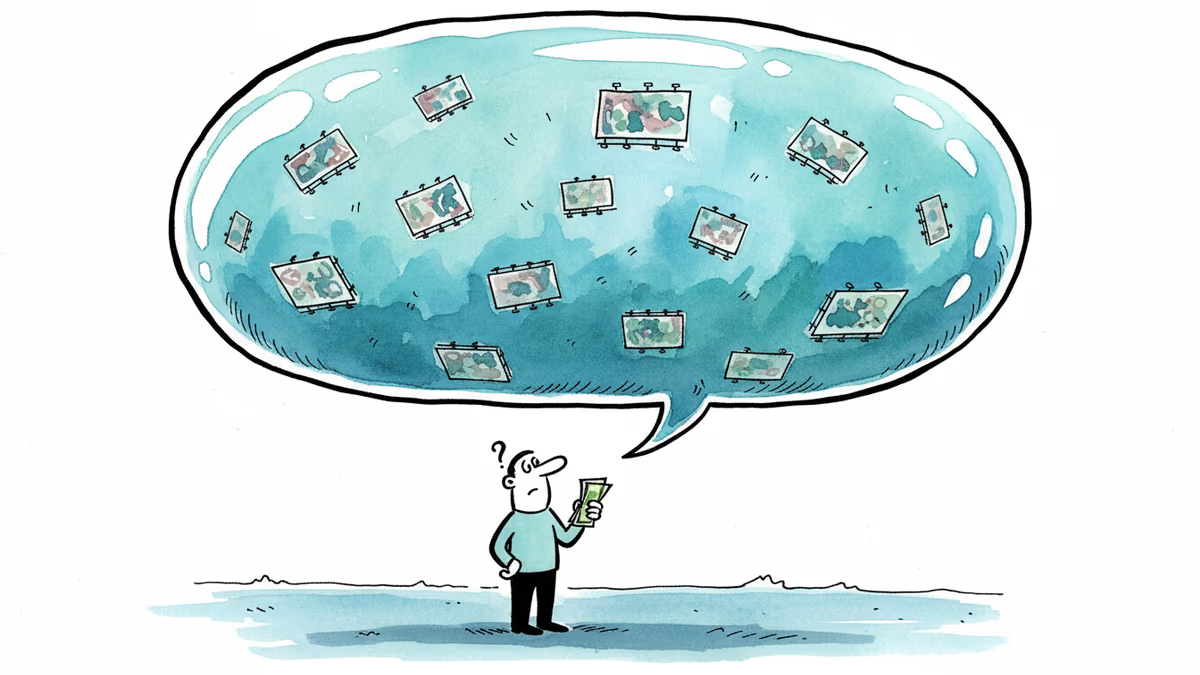
ChatGPT Gets Ads: Will You Pay $20 to Avoid Them?
OpenAI begins testing ads in ChatGPT for free users. Ad-free AI requires a $20 monthly subscription. The AI monetization model is shifting toward advertising.
200 Million Users About to See Ads in Their AI Chats
OpenAI made it official Monday: ChatGPT will start showing ads. These "sponsored" links will appear at the bottom of ChatGPT responses, though the company insists ads "do not influence the answers ChatGPT gives you."
The catch? Only free users and those on the $8ChatGPT Go plan will see ads. Everyone else—Plus, Pro, Business, Enterprise, and Education subscribers—gets an ad-free experience. Want to avoid ads? You'll need to pay at least $20 monthly for Plus.
The End of Free AI or Just the Beginning?
Google turned search into an advertising goldmine. Now AI is following the same playbook. But there's a crucial difference: search is about finding information, while AI is about conversation. When users share personal dilemmas or seek advice, ads feel more intrusive than helpful.
This move signals a broader shift in the AI industry. Free AI models are becoming unsustainable as computing costs soar. OpenAI reportedly spends over $700,000 daily just to run ChatGPT. Something had to give.
The $20 Question: Premium AI or Ad-Supported Access?

$20 might seem reasonable for unlimited, ad-free AI. It's less than most streaming services. But here's the problem: AI isn't a winner-take-all market. Power users often need Claude for analysis, Midjourney for images, and Copilot for coding. Multiple subscriptions add up fast.
For casual users, ads might be acceptable. But what about professionals who rely on AI for critical decisions? Can they trust advice that sits alongside sponsored content, even if OpenAI promises separation?
Advertisers' New Frontier
Google's ad empire generates $280 billion annually. AI advertising could be even more valuable because it understands user intent with unprecedented precision. When someone asks ChatGPT about "best project management tools," that's a marketer's dream.
The implications extend beyond OpenAI. Microsoft, Google, and Anthropic are all watching this experiment closely. If ChatGPT ads succeed, expect every AI platform to follow suit. The era of purely subscription-based AI might be shorter than we thought.
The Trust Factor
OpenAI faces a delicate balancing act. Users trust ChatGPT partly because it feels neutral—like talking to a knowledgeable friend rather than a salesperson. Introducing ads, even labeled ones, changes that dynamic.
The company's promise that ads won't influence responses sounds reassuring. But can users truly separate sponsored links from the advice above them? Psychology suggests otherwise. Context matters, and ads create context.
Authors
Related Articles

OpenAI has reorganized for the second time in a month, merging ChatGPT and Codex into a single agentic platform under president Greg Brockman's unified product leadership.
After two weeks of witnesses calling him a liar, OpenAI CEO Sam Altman testified in his own defense, claiming Elon Musk tried to kill the company twice.
Sam Nelson, 19, died after following ChatGPT's advice to mix Kratom and Xanax. His parents are suing OpenAI for wrongful death, raising urgent questions about AI trust, liability, and design.
OpenAI's new Daybreak initiative uses the Codex AI agent to find and patch security vulnerabilities before attackers do—putting it in direct competition with Anthropic's secretive Claude Mythos.
OpenAI has reorganized for the second time in a month, merging ChatGPT and Codex into a single agentic platform under president Greg Brockman's unified product leadership.
After two weeks of witnesses calling him a liar, OpenAI CEO Sam Altman testified in his own defense, claiming Elon Musk tried to kill the company twice.
Sam Nelson, 19, died after following ChatGPT's advice to mix Kratom and Xanax. His parents are suing OpenAI for wrongful death, raising urgent questions about AI trust, liability, and design.
OpenAI's new Daybreak initiative uses the Codex AI agent to find and patch security vulnerabilities before attackers do—putting it in direct competition with Anthropic's secretive Claude Mythos.
Thoughts
Share your thoughts on this article
Sign in to join the conversation