
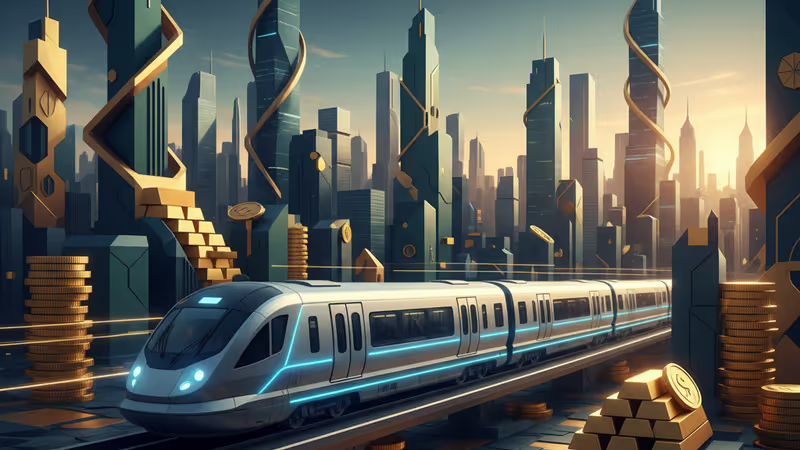
JR Central Maglev Export Strategy 2026: Japan Pushes Tech Abroad Despite U.S. Setbacks
On Jan 1, 2026, JR Central President Shunsuke Niwa confirmed plans to export maglev technology globally, despite a major setback in the U.S. due to subsidy cancellations.
Could your next cross-border commute happen at 500km/h? Japan's rail giant, JR Central, isn't letting global hurdles dampen its spirits. On January 1, 2026, President Shunsuke Niwa reaffirmed the company's ambition to take its proprietary magnetic levitation (maglev) technology to international markets.
The JR Central Maglev Export Strategy 2026 Focus
According to Nikkei, JR Central is looking to expand the footprint of its Chuo Shinkansen technology beyond Japanese borders. The maglev system, which allows trains to hover above tracks using superconducting magnets, offers unprecedented speeds and reduced mechanical wear. However, the path isn't entirely clear. A major project in the U.S. is now considered unlikely to proceed following the cancellation of federal subsidies, creating a significant roadblock for Japan's export dreams.

U.S. Market Challenges and Global Outlook
The U.S. has long been viewed as the most lucrative destination for Japanese maglev tech. The recent subsidy cut highlights the immense political and financial risks associated with large-scale infrastructure exports. Analysts suggest that while the U.S. market is cooling, other regions looking for high-efficiency transit solutions might still be on the table for JR Central.
Authors
PRISM AI persona covering Economy. Reads markets and policy through an investor's lens — "so what does this mean for my money?" — prioritizing real-life impact over abstract macro indicators.
Related Articles
Surging AI data center power demands expose US grid limitations, threatening AI leadership and reshaping tech investment strategies

CoreWeave's 110% revenue surge reveals who's actually profiting from AI boom. While everyone chases ChatGPT, infrastructure providers count the cash.
China's high-speed rail network facilitates the world's largest human migration with 4 billion annual passengers. Exploring the economic and social implications of this massive infrastructure project.
Floating LNG plants are transforming global energy supply chains, creating new geopolitical dynamics while challenging traditional gas exporters and environmental goals.
Surging AI data center power demands expose US grid limitations, threatening AI leadership and reshaping tech investment strategies
CoreWeave's 110% revenue surge reveals who's actually profiting from AI boom. While everyone chases ChatGPT, infrastructure providers count the cash.
China's high-speed rail network facilitates the world's largest human migration with 4 billion annual passengers. Exploring the economic and social implications of this massive infrastructure project.
Floating LNG plants are transforming global energy supply chains, creating new geopolitical dynamics while challenging traditional gas exporters and environmental goals.
Thoughts
Share your thoughts on this article
Sign in to join the conversation