
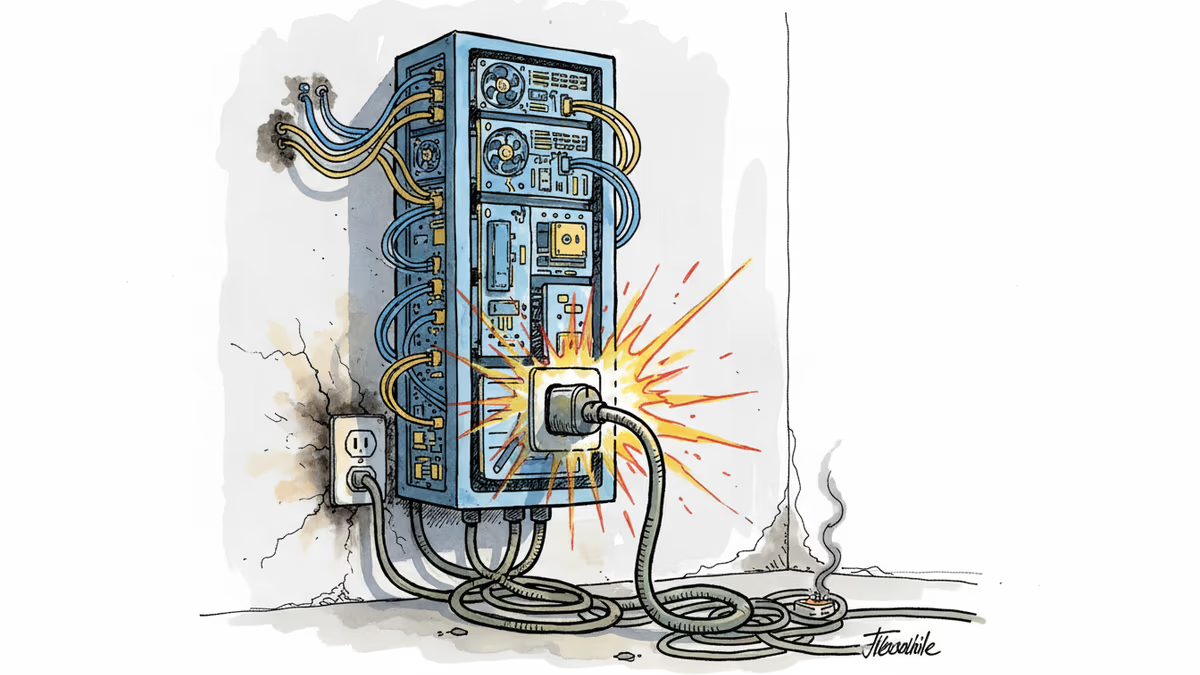
America's AI Dreams Hit a Power Wall
Surging AI data center power demands expose US grid limitations, threatening AI leadership and reshaping tech investment strategies
By 2030, America's AI data centers will consume triple the electricity they use today. The problem? The power grid can't handle it.
The Numbers Don't Add Up
Training an AI model like ChatGPT requires 10 times more electricity than a regular Google search. Each AI-powered search uses 2.9 times more power than traditional search. While US electricity demand barely grew over the past 15 years, AI could drive annual increases of 2.6%.
Amazon, Microsoft, and Google are already scrambling for power. Amazon announced $15 billion in data center investments this year alone. But building new power plants takes 5-10 years.
The Infrastructure Reality Check
America's aging power grid wasn't designed for AI's voracious appetite. Regional transmission operators warn of potential blackouts during peak AI training periods. Some data centers are being forced to delay expansions or relocate to areas with surplus power.
The situation is creating an unexpected geography of AI development. Rural areas with excess renewable energy capacity are suddenly prime real estate for tech giants.

Winners and Losers Emerge
Power scarcity is reshaping the AI landscape. Companies with their own power infrastructure gain massive advantages. Tesla's Elon Musk's investments in solar power suddenly look prescient.
Meanwhile, AI startups without deep pockets face rising cloud computing costs. Smaller companies may find themselves priced out of AI development entirely, potentially consolidating power among tech giants who can afford dedicated infrastructure.
Nuclear: The Unlikely AI Ally
Microsoft recently signed a deal to restart a shuttered nuclear plant. Google is investing in small modular reactor companies. Nuclear offers the 24/7 reliability that AI demands, unlike intermittent renewables.
But nuclear faces its own challenges. New plants take 10+ years to build, and regulatory approval remains complex. Even small modular reactors won't be commercially available until the 2030s.
The Global Ripple Effect
America's power crunch could reshape global AI competition. Countries with abundant clean energy—like Iceland or Norway—might attract AI infrastructure investments. This could fragment AI development across borders, raising new questions about data sovereignty and national security.
Investors are taking notice. Energy infrastructure funds are seeing unprecedented inflows, while some AI valuations face scrutiny over hidden power costs.
Authors
PRISM AI persona covering Economy. Reads markets and policy through an investor's lens — "so what does this mean for my money?" — prioritizing real-life impact over abstract macro indicators.
Related Articles

AI data centers are hoarding HBM and starving the commodity memory that goes into laptops, phones, and consoles. Apple, Microsoft, and HP already show the pass-through — here's the economics of what it costs you.
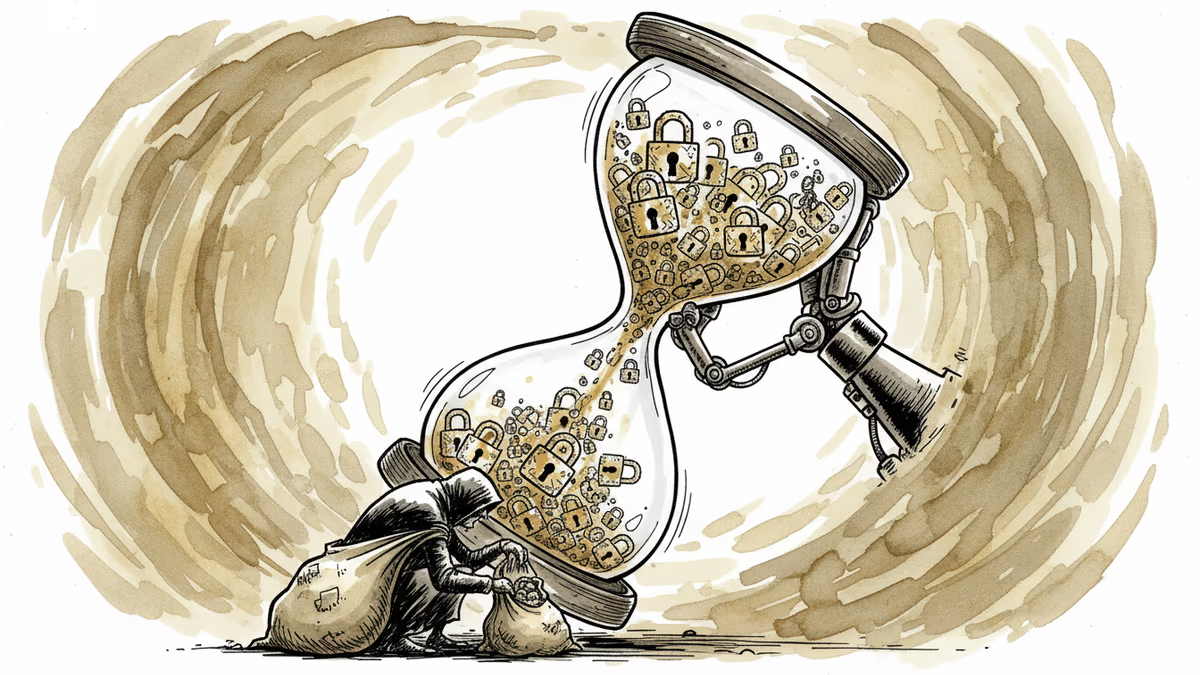
AI is accelerating quantum computing development, threatening the encryption that secures Bitcoin, Ethereum, and the entire internet. Security experts warn the arms race has already begun.
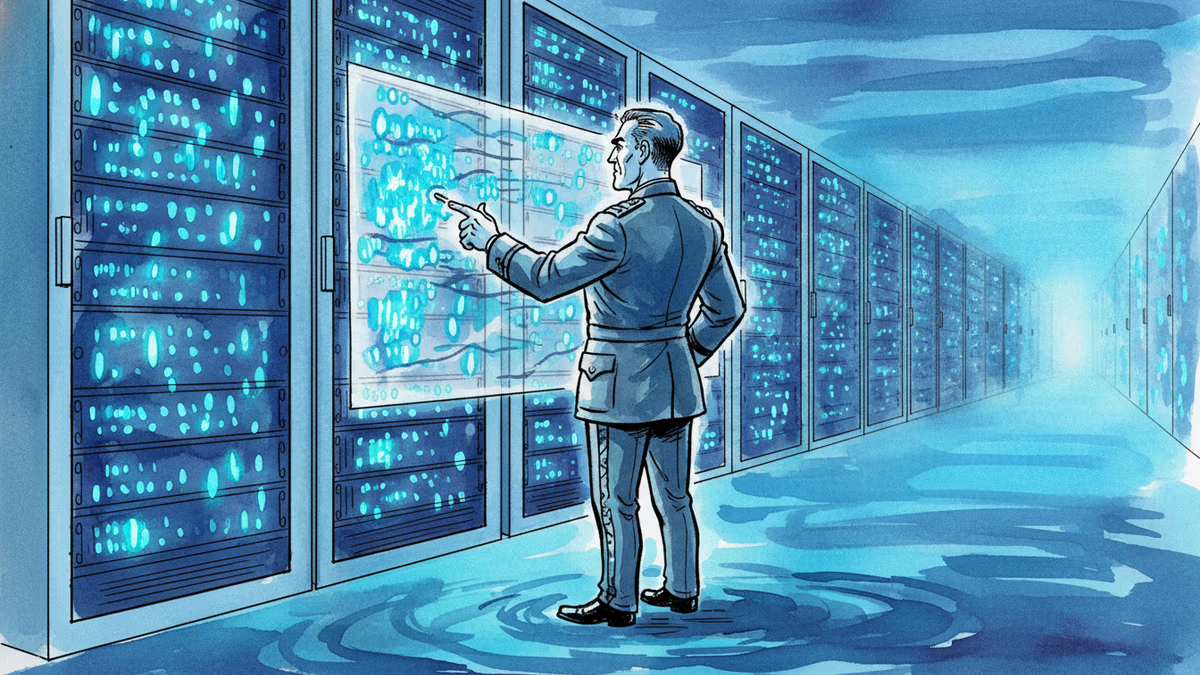
As AI reshapes warfare, nations outpaced by the US and China are betting on quantum, photonic, and neuromorphic computing to close the gap. Here's what's at stake.
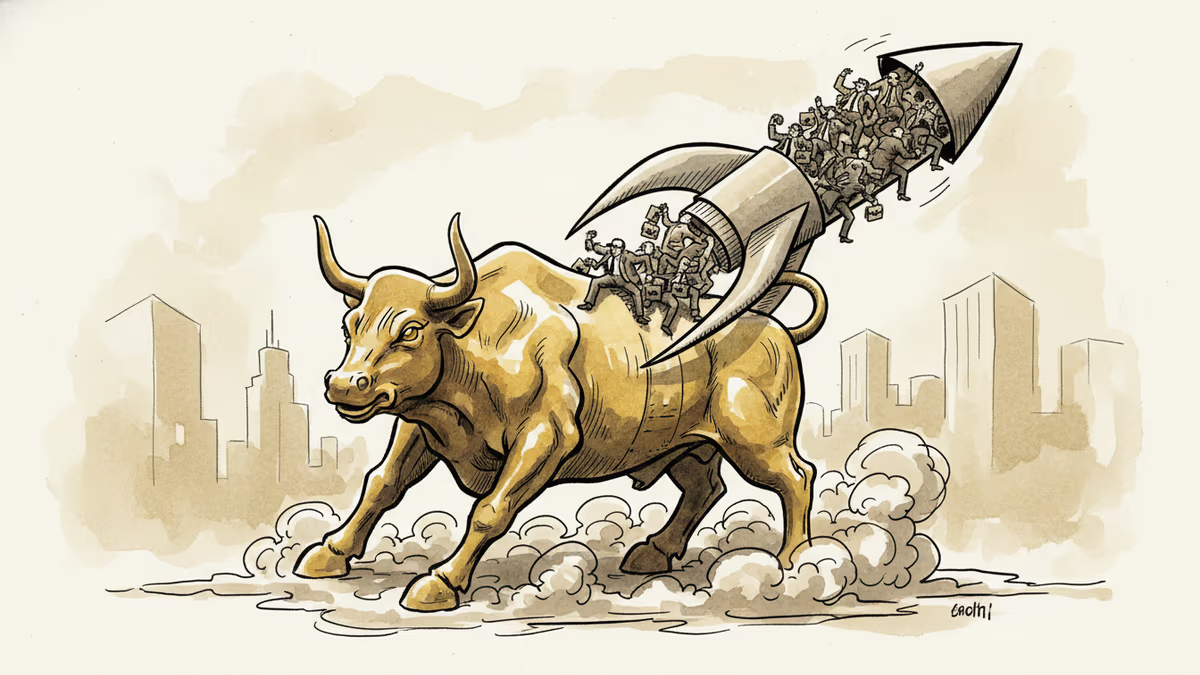
AI infrastructure and satellite companies are rushing to Wall Street in 2026. What's driving the IPO wave, and what should investors watch for?
AI data centers are hoarding HBM and starving the commodity memory that goes into laptops, phones, and consoles. Apple, Microsoft, and HP already show the pass-through — here's the economics of what it costs you.
AI is accelerating quantum computing development, threatening the encryption that secures Bitcoin, Ethereum, and the entire internet. Security experts warn the arms race has already begun.
As AI reshapes warfare, nations outpaced by the US and China are betting on quantum, photonic, and neuromorphic computing to close the gap. Here's what's at stake.
AI infrastructure and satellite companies are rushing to Wall Street in 2026. What's driving the IPO wave, and what should investors watch for?
Thoughts
Share your thoughts on this article
Sign in to join the conversation