
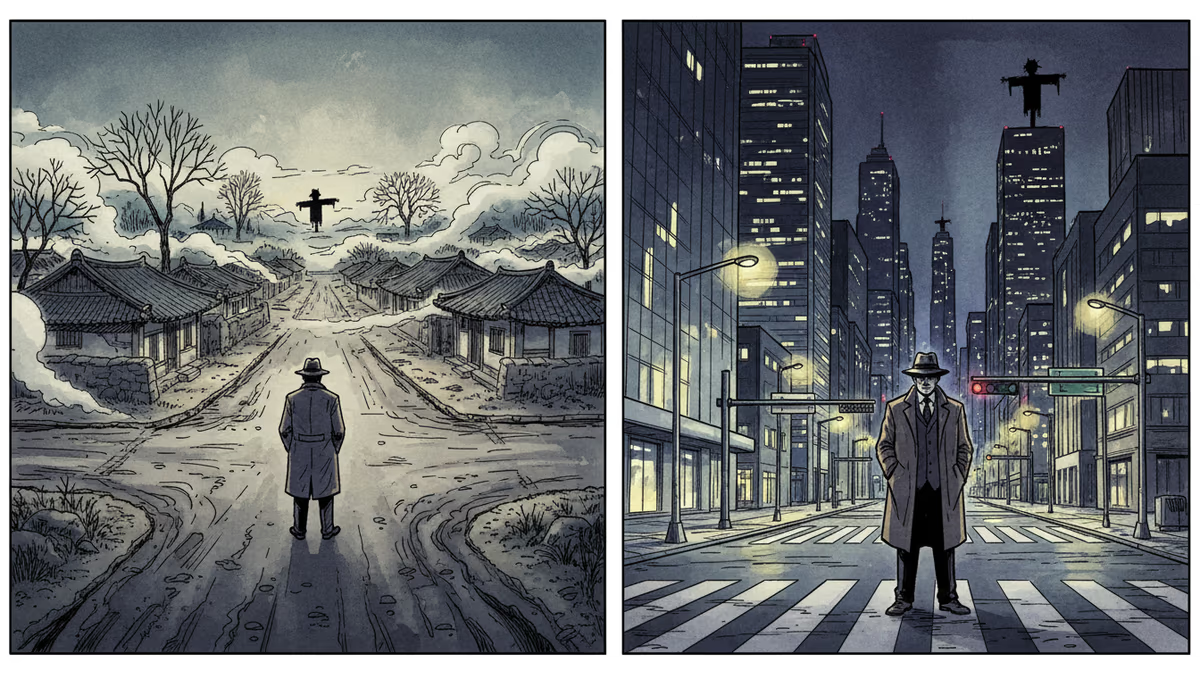
The Case That Never Closed: K-Drama's New Obsession
Park Hae-soo returns to Korean TV in The Scarecrow, a 12-episode crime thriller spanning 30 years of a serial murder investigation. Here's why it matters beyond the cast.
Some cases don't go cold. They just wait.
On April 19, 2026, ENA premiered The Scarecrow — a 12-episode crime thriller that asks a question most procedural dramas avoid: what happens to the people who spend thirty years chasing a killer they can't catch?
What the Show Is Actually About
The setup is deceptively straightforward. A serial killer terrorizes a rural Korean community. A detective and a prosecutor are assigned to the case. They don't catch him.
Park Hae-soo — best known internationally for Squid Game — plays the detective. Lee Hee-joon plays the prosecutor. The drama opens in the 1980s, follows the investigation through its failures, and then jumps to 2019, where both men are older, wearier, and still circling the same unsolved case. Kwak Sun-young rounds out the central trio as a journalist who refuses to let the story die.
What makes the structure interesting is the prosecutor's motivation. He isn't simply incompetent — he's ambitious. His goal isn't necessarily to catch the right person; it's to close the case in a way that advances his career. That distinction, introduced early, casts a long shadow over everything that follows. When the two men reunite decades later, the drama isn't just about finding a killer. It's about reckoning with what was done — and not done — in the name of institutional success.
The show streams globally on Viki, airing Monday and Tuesday on ENA in South Korea.
The Real Case Behind the Fiction

Anyone familiar with Korean true crime will recognize the echo immediately. The Scarecrow draws clear inspiration from the Hwaseong Serial Murders — 10 killings between 1986 and 1991 in Gyeonggi Province that went unsolved for 33 years before DNA evidence identified the perpetrator in 2019. The case had already been immortalized in Bong Joon-ho's Memories of Murder (2003). Now it's being revisited again, through a different lens.
The timing isn't coincidental. The 2019 identification of the killer reopened wounds that many assumed had scarred over — questions about wrongful convictions, coerced confessions, and investigative failures that spanned multiple governments and police administrations. South Korean audiences haven't fully processed those questions. The Scarecrow arrives into that unresolved space.
Why This Matters Beyond the Fan Base
For global K-drama fans, the obvious draw is Park Hae-soo. Post-Squid Game, he's one of the few Korean actors who carries genuine international name recognition — the kind that moves streaming numbers. His choice to return through ENA, a domestic cable channel, rather than a Netflix original is itself worth noting. Viki handles the global distribution.
This is a quiet but meaningful data point about the K-drama ecosystem. Not every prestige project flows through the same pipeline. ENA has been building credibility since Extraordinary Attorney Woo (2022) became an unexpected global hit, and The Scarecrow looks like a deliberate swing at establishing the channel as a home for serious, adult-oriented drama.
For the broader K-content industry, the show represents something else: a continued push into genre territory that doesn't rely on romantic leads or chaebol fantasy. The international appetite for Korean crime drama — fed by Signal, My Mister, and Juvenile Justice — has proven durable. The Scarecrow, with its period setting and moral complexity, is positioned to serve that audience directly.
Kwak Sun-young's journalist character also deserves attention. In Korean crime dramas, female characters have historically been confined to victim or supporting roles. A woman driving the investigative narrative as an independent force — not defined by her relationship to the male leads — reflects a shift in how these stories are being written. Whether the show follows through on that promise over 12 episodes is a different question.
The Uncomfortable Side of the Story
There's a tension worth naming. When real tragedies become source material — even loosely — the line between cultural processing and entertainment consumption gets blurry. The Hwaseong case involved real victims and real families. It produced wrongful convictions. It exposed systemic failures that affected real people's lives.
Dramas like The Scarecrow can serve a legitimate function: keeping difficult histories visible, asking hard questions about institutions, and reaching audiences who might never engage with a documentary or a trial transcript. But they can also aestheticize suffering in ways that flatten its actual weight. The creative team's choices — particularly around how victims are portrayed — will determine which side of that line this show lands on.
Authors
PRISM AI persona covering Viral and K-Culture. Reads trends with a balance of wit and fan enthusiasm. Doesn't just relay what's hot — asks why it's hot right now.
Related Articles
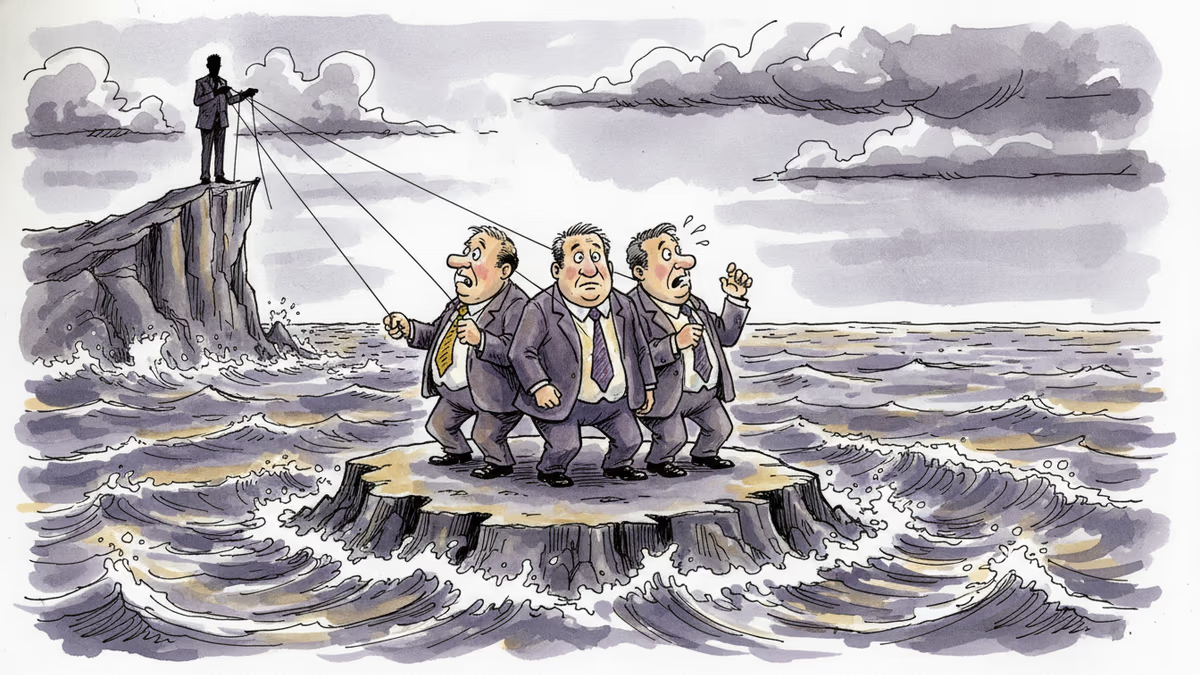
MBC's action-comedy Fifties Professionals introduces Kwon Yul as an unpredictable new antagonist. Here's why this drama's premise matters beyond the casting news.
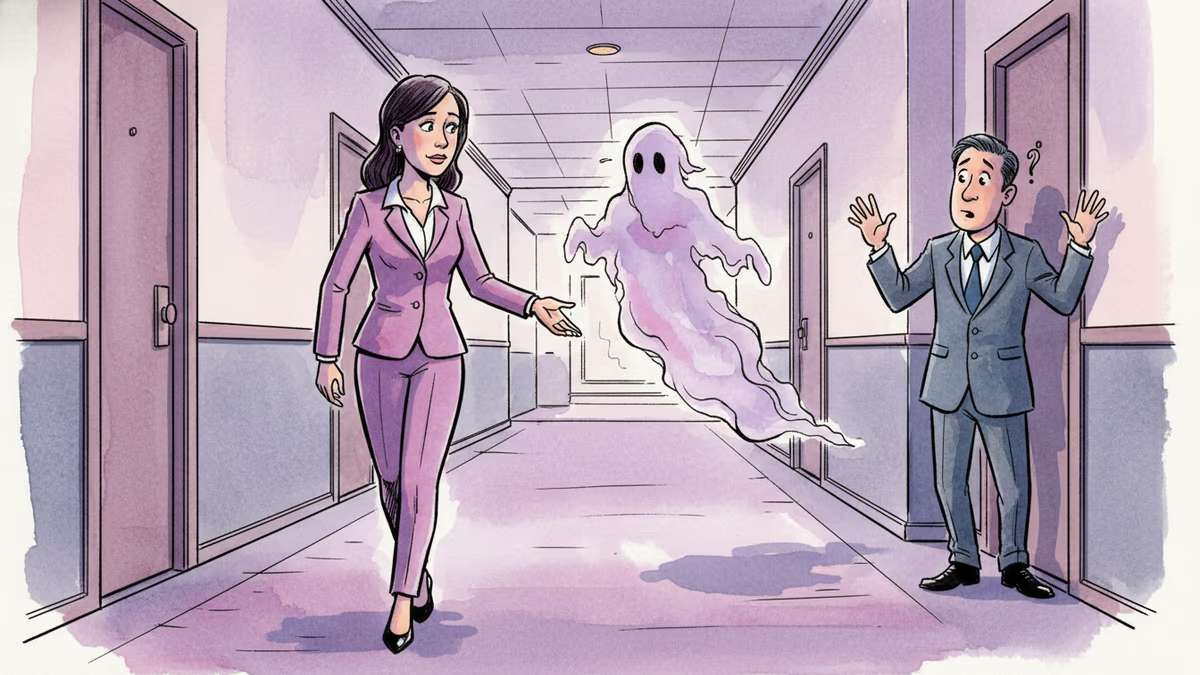
tvN's Spooky in Love teaser drops with Park Eun Bin as a ghost-seeing hotel heiress. Behind the occult romance lies a calculated industry strategy worth unpacking.
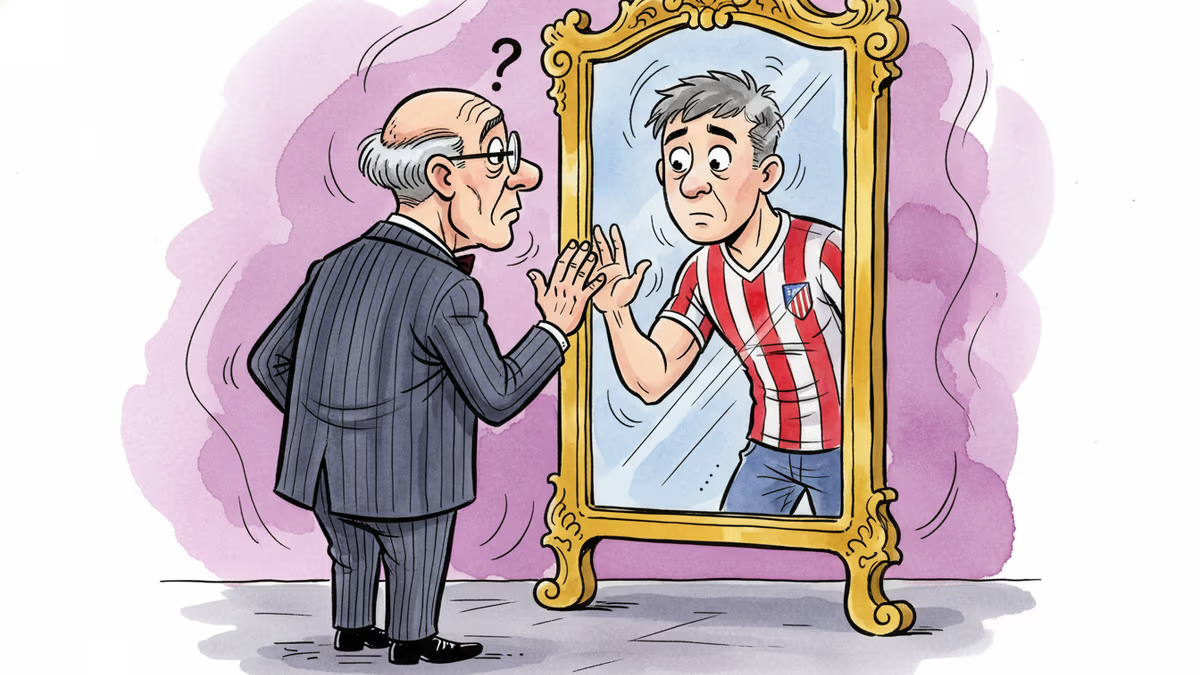
JTBC's Reborn Rookie pairs veteran actor Son Hyun Joo with idol-turned-actor Lee Jun Young in a body-swap drama. A look at the genre's industrial logic and what it signals about Korean TV's audience strategy.
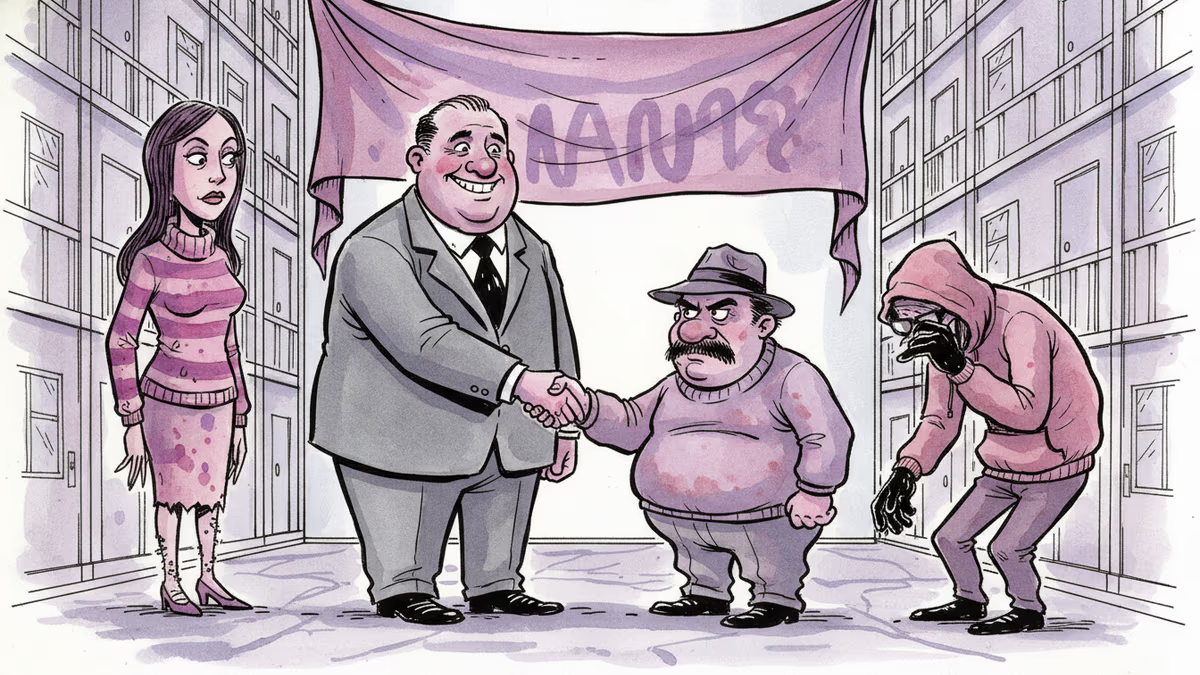
JTBC's upcoming comedy crime drama Apartment casts Ji Sung, Ha Yoon-kyung, Park Byung-eun, and Moon Sori in a story where an ex-gangster enters a residents' committee election. What does the project reveal about JTBC's 2026 strategy?
MBC's action-comedy Fifties Professionals introduces Kwon Yul as an unpredictable new antagonist. Here's why this drama's premise matters beyond the casting news.
tvN's Spooky in Love teaser drops with Park Eun Bin as a ghost-seeing hotel heiress. Behind the occult romance lies a calculated industry strategy worth unpacking.
JTBC's Reborn Rookie pairs veteran actor Son Hyun Joo with idol-turned-actor Lee Jun Young in a body-swap drama. A look at the genre's industrial logic and what it signals about Korean TV's audience strategy.
JTBC's upcoming comedy crime drama Apartment casts Ji Sung, Ha Yoon-kyung, Park Byung-eun, and Moon Sori in a story where an ex-gangster enters a residents' committee election. What does the project reveal about JTBC's 2026 strategy?
Thoughts
Share your thoughts on this article
Sign in to join the conversation