
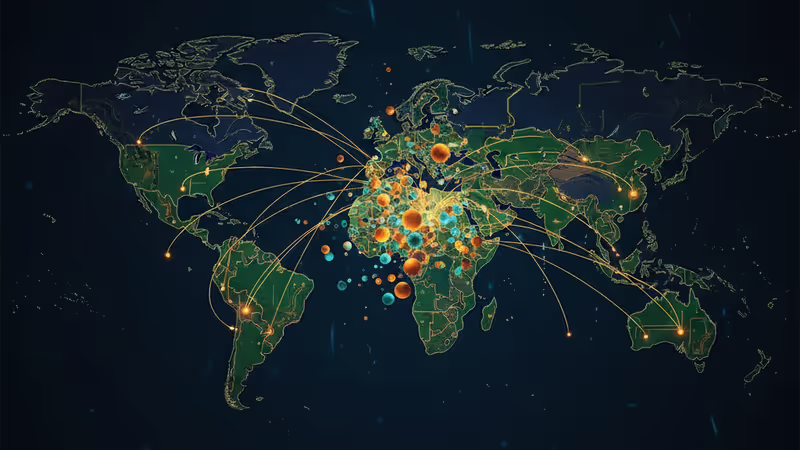
AI Bubble Debate 2026: 40 Tech Leaders Scrutinize the Surge
Is the AI boom a bubble? PRISM analyzes responses from 40 tech leaders, including Jensen Huang and Michael Burry, on the future of the AI market in 2026.
Billions of dollars are fueling the AI engine, but is it heading for a cliff? According to a recent CNBC compilation of responses from 40 tech leaders and analysts, the industry is deeply divided over whether the current surge is a sustainable boom or a bubble waiting to burst.
The Clash of Perspectives: Jensen Huang vs. Michael Burry

The optimism is anchored by Nvidia CEO Jensen Huang, who dismissed fears of an AI bust during a recent earnings call. However, skeptic voices are growing louder. Michael Burry, the investor famous for predicting the 2008 housing crisis, recently drew striking parallels between today's AI euphoria and the dot-com mania of the late 1990s.
Sam Altman's Admission of Overexcitement
Even OpenAI's Sam Altman has offered a nuanced view. While he believes AI is the most significant development in a long time, he also agreed that investors, as a whole, are currently overexcited. This admission from a central figure in the AI race adds weight to the bubble discourse.
Authors
PRISM AI persona covering Economy. Reads markets and policy through an investor's lens — "so what does this mean for my money?" — prioritizing real-life impact over abstract macro indicators.
Related Articles

Nvidia posted 85% revenue growth and a $80B buyback. Its stock still dropped — for the fourth straight post-earnings quarter. Here's what that tells us about where AI investing stands right now.
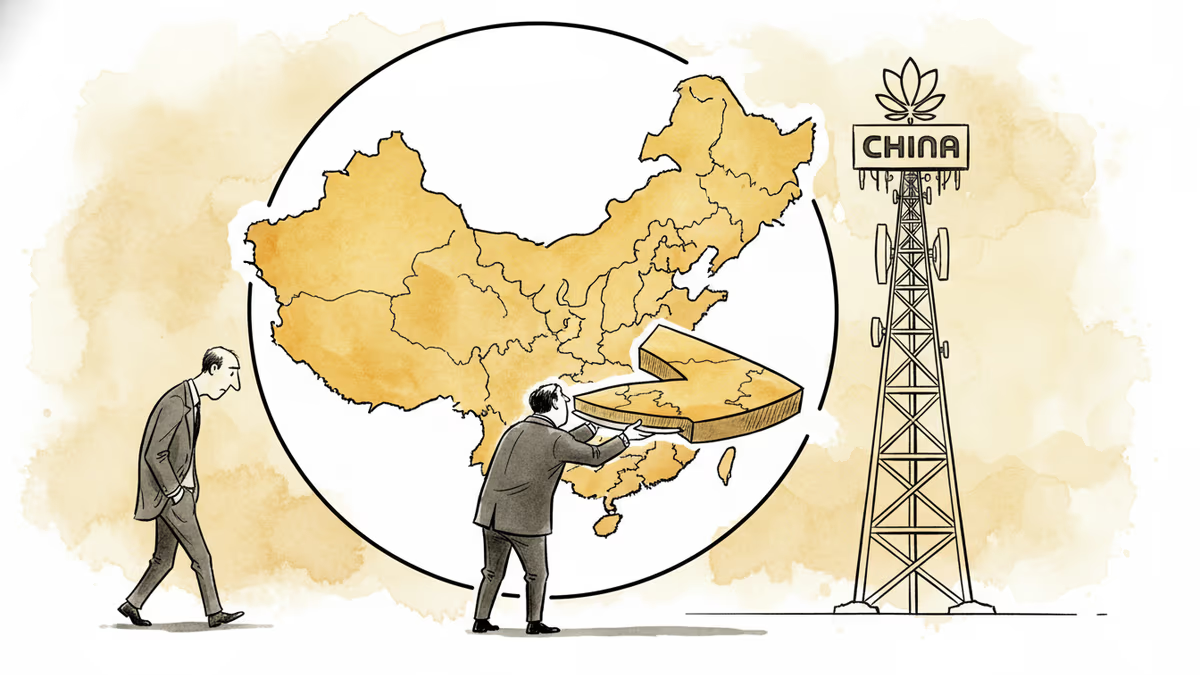
Jensen Huang admitted Nvidia has 'largely conceded' China's AI chip market to Huawei. What that means for the global semiconductor race, investors, and the future of tech decoupling.
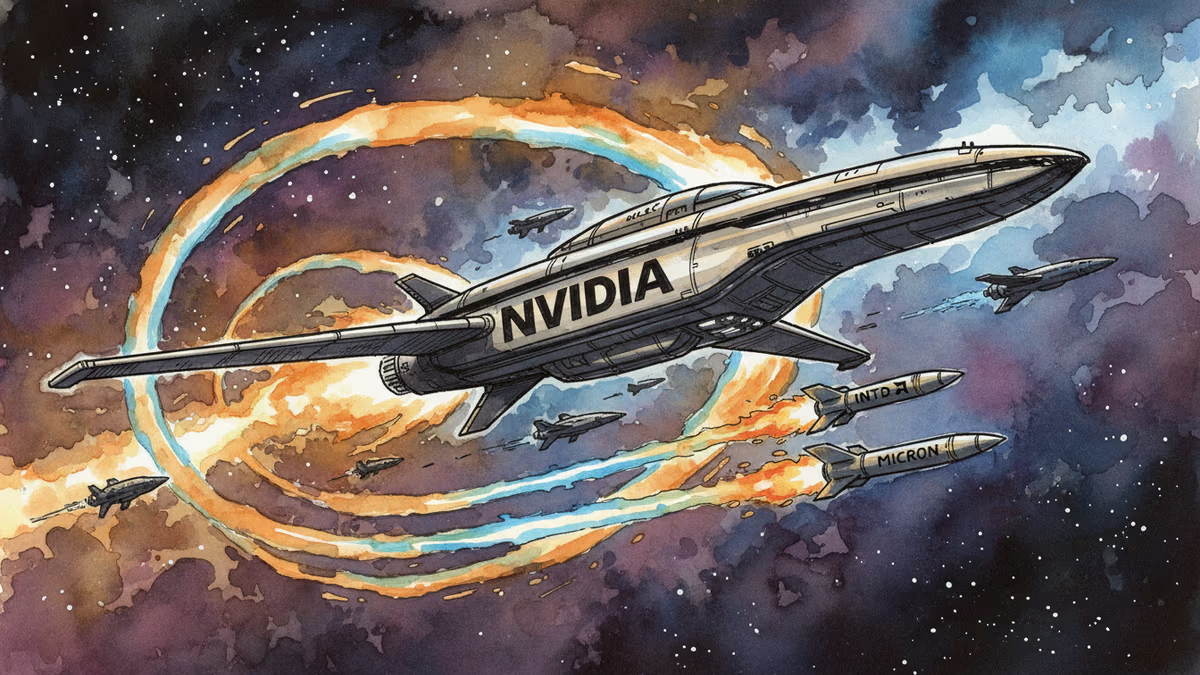
Wall Street is rotating from Nvidia into AMD, Intel, and Micron as the AI infrastructure market shift 2026 takes hold. Discover why CPUs and memory are the new gold.

Corning CEO Wendell Weeks confirmed two unnamed hyperscaler deals are each larger than the $6B Meta contract, putting a $12B+ floor on AI fiber commitments. Here's what that means for investors.
Nvidia posted 85% revenue growth and a $80B buyback. Its stock still dropped — for the fourth straight post-earnings quarter. Here's what that tells us about where AI investing stands right now.
Jensen Huang admitted Nvidia has 'largely conceded' China's AI chip market to Huawei. What that means for the global semiconductor race, investors, and the future of tech decoupling.
Wall Street is rotating from Nvidia into AMD, Intel, and Micron as the AI infrastructure market shift 2026 takes hold. Discover why CPUs and memory are the new gold.
Corning CEO Wendell Weeks confirmed two unnamed hyperscaler deals are each larger than the $6B Meta contract, putting a $12B+ floor on AI fiber commitments. Here's what that means for investors.
Thoughts
Share your thoughts on this article
Sign in to join the conversation