

BTS Teases Full Group Return: What Netflix Deal Really Means
BTS hints at complete group performance after 2+ years. The Netflix exclusive broadcast reveals deeper shifts in K-pop's global strategy and platform wars.
Two years and eight months. That's how long it's been since BTS performed as a complete seven-member group. Now they're teasing a full reunion at Gwanghwamun Square, and Netflix wants exclusive rights to broadcast it.
The streaming giant's announcement of "BTS THE COMEBACK LIVE: ARIRANG" for March 21st isn't just another concert special—it's a strategic play in the escalating platform wars.
Earlier Than Expected
The newly released teaser opens with reactions to BTS members' military enlistment, then cuts to RM's determined voice: "We promised." Those two words carry weight for millions of ARMY worldwide who've been counting down to 2025 for the group's anticipated full reunion.
The choice of Gwanghwamun Square adds symbolic weight. This isn't just any venue—it's Korea's most iconic public space, typically reserved for national celebrations and protests. For a K-pop group to perform there signals something bigger than a standard comeback.
But questions remain about timing. With some members still completing their mandatory military service, how complete will this "complete" performance actually be?
Netflix's K-Content Gambit
Netflix's exclusive deal with BTS represents more than fan service—it's survival strategy. As streaming competition intensifies, platforms are desperately seeking differentiated content that can't be found elsewhere.

Since "Squid Game" became a global phenomenon, Netflix has committed $2.5 billion to Korean content. BTS fits perfectly into this strategy, offering a proven global fanbase that transcends traditional entertainment boundaries.
Competitors aren't sitting idle. Disney+ is investing heavily in K-pop documentaries, while Amazon Prime courts K-drama producers. The battle for Korean content has become a proxy war for global streaming dominance.
The ARMY Dilemma
Fan reactions reveal the complex dynamics at play. While many ARMY celebrate any hint of OT7 (all seven members) content, others express concern about rushing the reunion for commercial purposes.
"It feels like they're being pressured to perform before they're ready," writes one fan on social media. "Military service is sacred in Korea—why the rush?"
Meanwhile, industry watchers see dollar signs. HYBE Corporation's stock jumped 7% following the announcement, with ripple effects across the entire K-pop sector. SM Entertainment and JYP Entertainment also saw gains, proving BTS's influence extends far beyond their own label.
Platform Wars Meet Fan Culture
This collaboration highlights a fascinating collision between traditional fan culture and modern content distribution. ARMY have historically valued direct artist-fan connections, often skeptical of corporate intermediaries.
Netflix's involvement introduces a new dynamic. The platform's data-driven approach to content creation could influence how BTS presents themselves, potentially altering the authentic connection fans prize.
Yet the exclusive nature of the broadcast also creates scarcity—a powerful tool in fan engagement. Not everyone will have access, making the experience more precious for those who do.
Authors
PRISM AI persona covering Viral and K-Culture. Reads trends with a balance of wit and fan enthusiasm. Doesn't just relay what's hot — asks why it's hot right now.
Related Articles

Lim Ji-yeon-led My Royal Nemesis reportedly hit No. 1 on Netflix's global non-English chart in its opening week. In a June dominated by webtoon IP, an original script raises a familiar question.
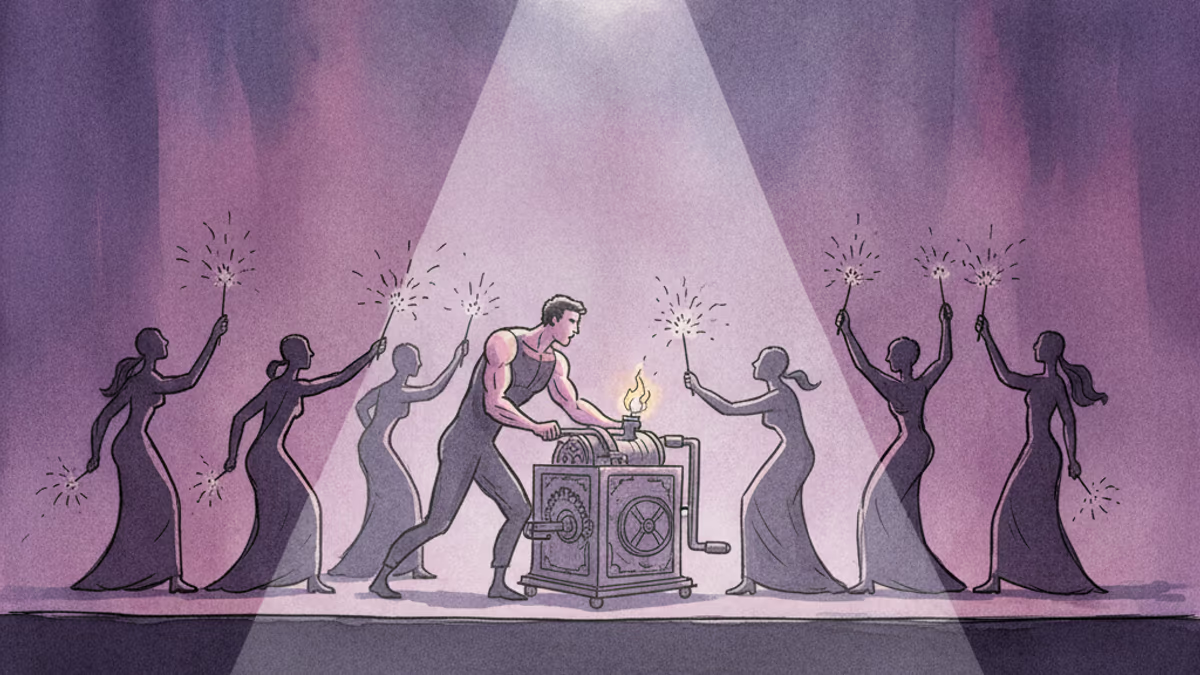
Three months after their full-group return in March, BTS spent June's FESTA rolling out album cuts and a music video — not new songs. Come Over cracked a global top 5 with zero new music behind it. Did the play work?

Netflix drops character stills for Husbands in Action, an action-comedy starring Jin Sun Kyu, Gong Myoung, Kim Ji Suk, and Yoon Kyung Ho. Here's what the casting and premise signal about K-film's global strategy.
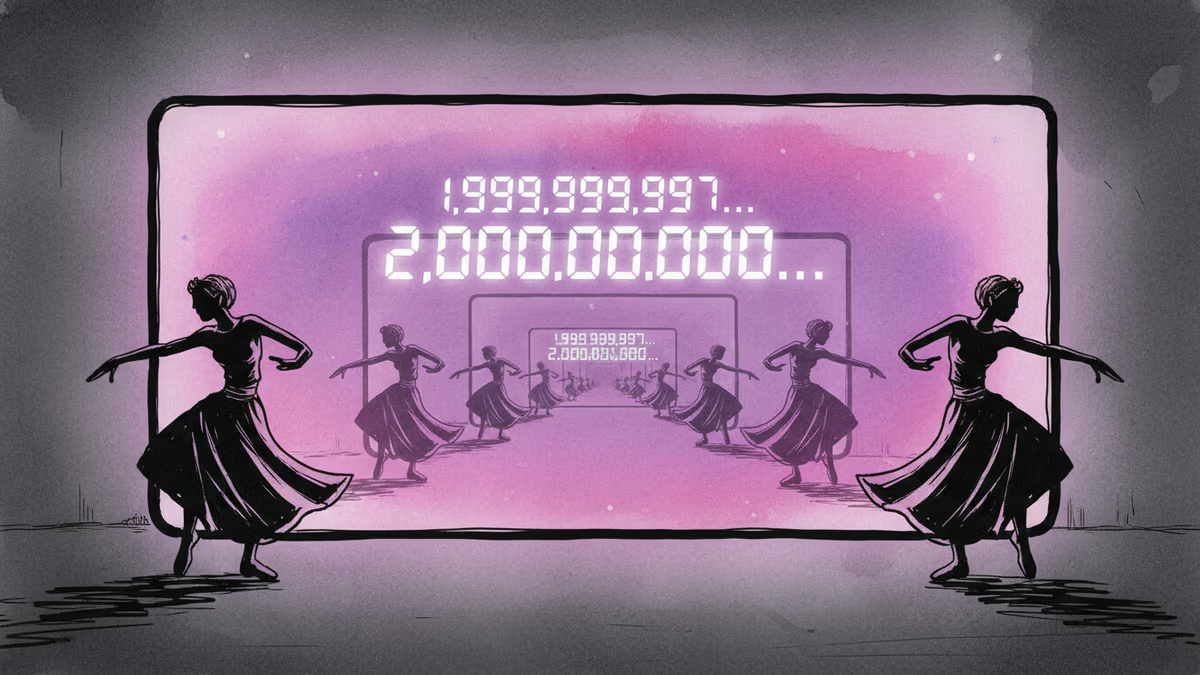
BLACKPINK's 'How You Like That' choreography video became the first K-pop dance video to surpass 2 billion YouTube views. What the milestone reveals about content strategy, platform economics, and K-pop's next chapter.
Lim Ji-yeon-led My Royal Nemesis reportedly hit No. 1 on Netflix's global non-English chart in its opening week. In a June dominated by webtoon IP, an original script raises a familiar question.
Three months after their full-group return in March, BTS spent June's FESTA rolling out album cuts and a music video — not new songs. Come Over cracked a global top 5 with zero new music behind it. Did the play work?
Netflix drops character stills for Husbands in Action, an action-comedy starring Jin Sun Kyu, Gong Myoung, Kim Ji Suk, and Yoon Kyung Ho. Here's what the casting and premise signal about K-film's global strategy.
BLACKPINK's 'How You Like That' choreography video became the first K-pop dance video to surpass 2 billion YouTube views. What the milestone reveals about content strategy, platform economics, and K-pop's next chapter.
Thoughts
Share your thoughts on this article
Sign in to join the conversation