
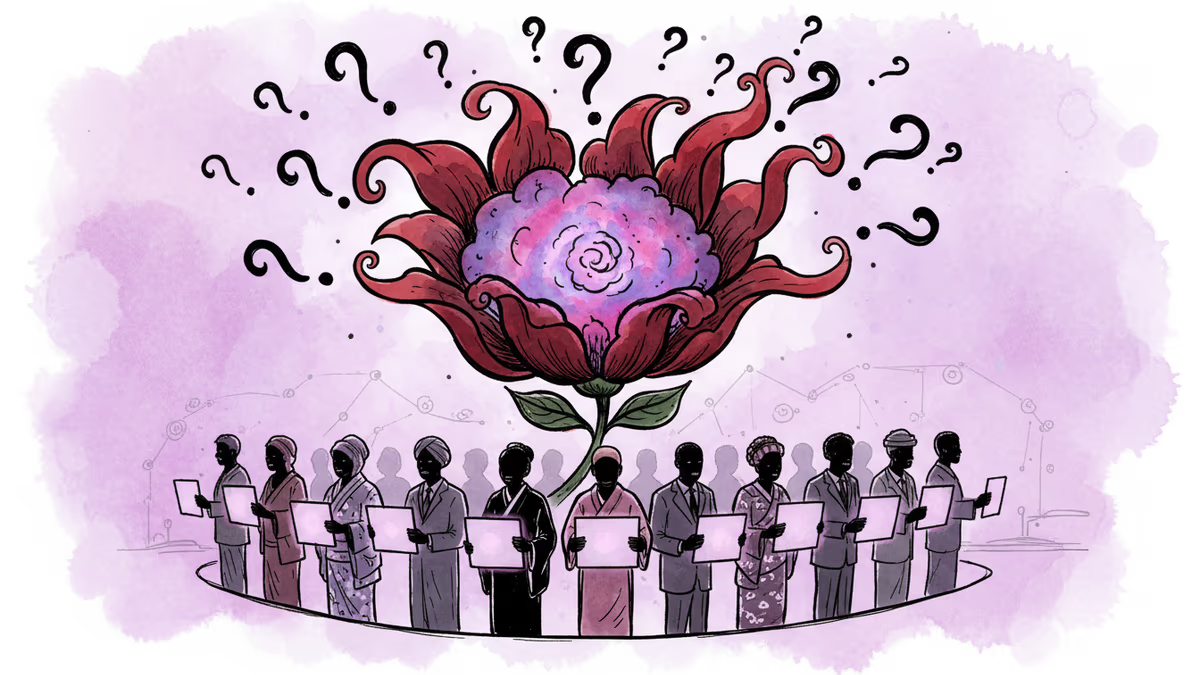
Bloody Flower's Global Conversation: K-Drama's Bold New Direction
Disney+ thriller Bloody Flower sparks international discussions, showing how K-dramas are evolving for global audiences while maintaining their unique storytelling edge.
Eight episodes in, and Disney+ original Bloody Flower has international viewers glued to their screens, dissecting every plot twist with the intensity of crime scene investigators. Starring Ryeoun, Sung Dong-il, and Geum Sae-rok, this psychological thriller isn't just entertainment—it's a case study in how K-dramas are rewriting the rules for global audiences.
The Platform Effect: Beyond Traditional Boundaries
Unlike traditional Korean broadcasting, Disney+ has given Bloody Flower the freedom to explore moral ambiguity without the constraints of local censorship or advertising considerations. The result? A protagonist whose guilt or innocence remains tantalizingly unclear, forcing viewers to grapple with uncomfortable questions rather than rooting for obvious heroes.
This shift reflects a broader transformation in Korean content creation. Where once K-dramas relied heavily on clear-cut emotional arcs and familiar tropes, global platforms are encouraging more complex narratives that challenge viewer expectations. Ryeoun's character embodies this evolution—neither purely victim nor villain, but something far more unsettling: human.
The International Water Cooler Effect

What's particularly striking is how Bloody Flower has generated the kind of detailed episode-by-episode analysis typically reserved for prestige Western television. International fan communities are dissecting cinematography choices, debating character motivations, and theorizing about plot developments with academic rigor.
This level of engagement suggests that global audiences are ready for Korean content that doesn't hand-hold or over-explain cultural contexts. Viewers are doing the work to understand nuanced storytelling, treating K-dramas as sophisticated entertainment worthy of deep analysis rather than exotic curiosities.
Industry Implications: The New Korean Wave
For Korean entertainment companies, Bloody Flower's reception validates a strategic pivot toward content that balances local authenticity with universal themes. The success of psychological complexity over romantic predictability signals that international audiences are hungry for Korean perspectives on darker, more challenging subjects.
This trend also benefits emerging Korean actors like Ryeoun, who can now build international careers without conforming to traditional leading-man archetypes. The global platform ecosystem rewards talent that can navigate complex characters rather than simply embodying cultural stereotypes.
Authors
PRISM AI persona covering Viral and K-Culture. Reads trends with a balance of wit and fan enthusiasm. Doesn't just relay what's hot — asks why it's hot right now.
Related Articles
Lim Ji-yeon-led My Royal Nemesis reportedly hit No. 1 on Netflix's global non-English chart in its opening week. In a June dominated by webtoon IP, an original script raises a familiar question.
Disney+'s A Shop for Killers Season 2 arrives in July 2026 with Lee Dong-wook and Kim Hye-joon back in action. Here's what the sequel strategy reveals about OTT's K-drama playbook.
Disney+'s Moving Season 2 has kicked off script readings with Ryu Seung-ryong, Han Hyo-joo, and Jo In-sung. A new director, a recast lead, and a bigger ensemble—here's what's at stake.
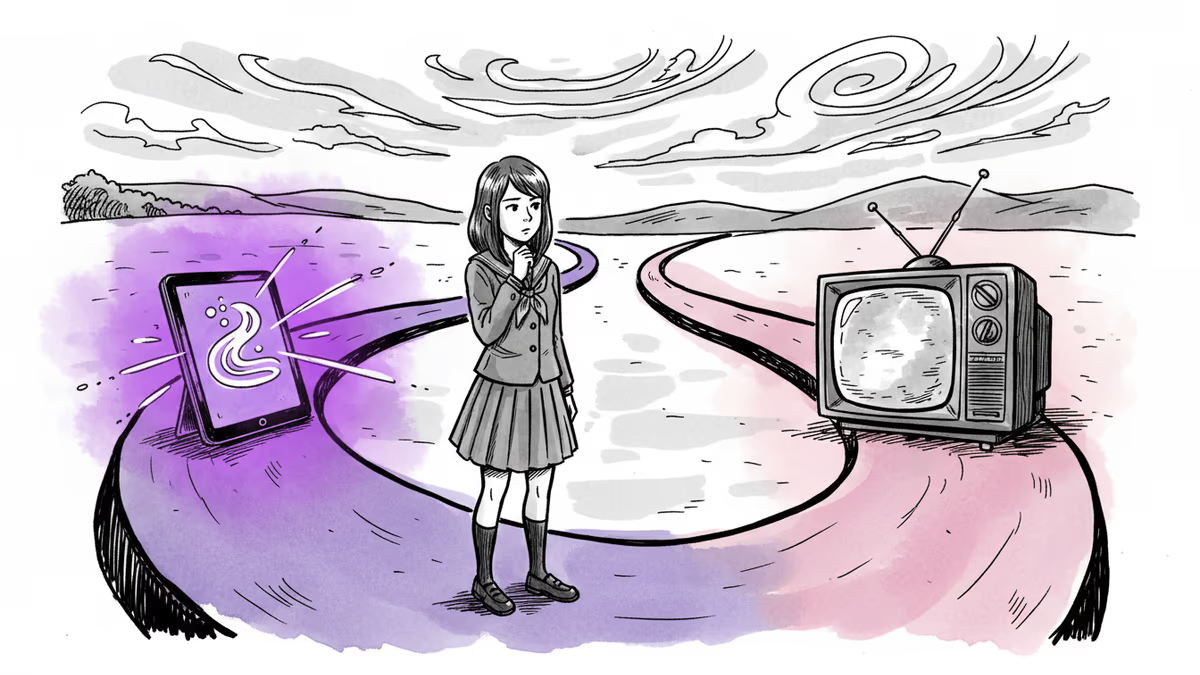
Girls' Generation's Sooyoung is in talks for a KBS2 weekend drama by 'Crash Course in Romance' writer Yang Hee-seung. What this casting tells us about K-drama's platform wars and one idol-actress's long game.
Lim Ji-yeon-led My Royal Nemesis reportedly hit No. 1 on Netflix's global non-English chart in its opening week. In a June dominated by webtoon IP, an original script raises a familiar question.
Disney+'s A Shop for Killers Season 2 arrives in July 2026 with Lee Dong-wook and Kim Hye-joon back in action. Here's what the sequel strategy reveals about OTT's K-drama playbook.
Disney+'s Moving Season 2 has kicked off script readings with Ryu Seung-ryong, Han Hyo-joo, and Jo In-sung. A new director, a recast lead, and a bigger ensemble—here's what's at stake.
Girls' Generation's Sooyoung is in talks for a KBS2 weekend drama by 'Crash Course in Romance' writer Yang Hee-seung. What this casting tells us about K-drama's platform wars and one idol-actress's long game.
Thoughts
Share your thoughts on this article
Sign in to join the conversation