
Blockchain.com's Four-Year Comeback: UK Approval After 2022 Retreat
Blockchain.com secures UK FCA registration four years after withdrawing its application in 2022. What changed in Britain's crypto regulatory landscape?
The Comeback Nobody Saw Coming
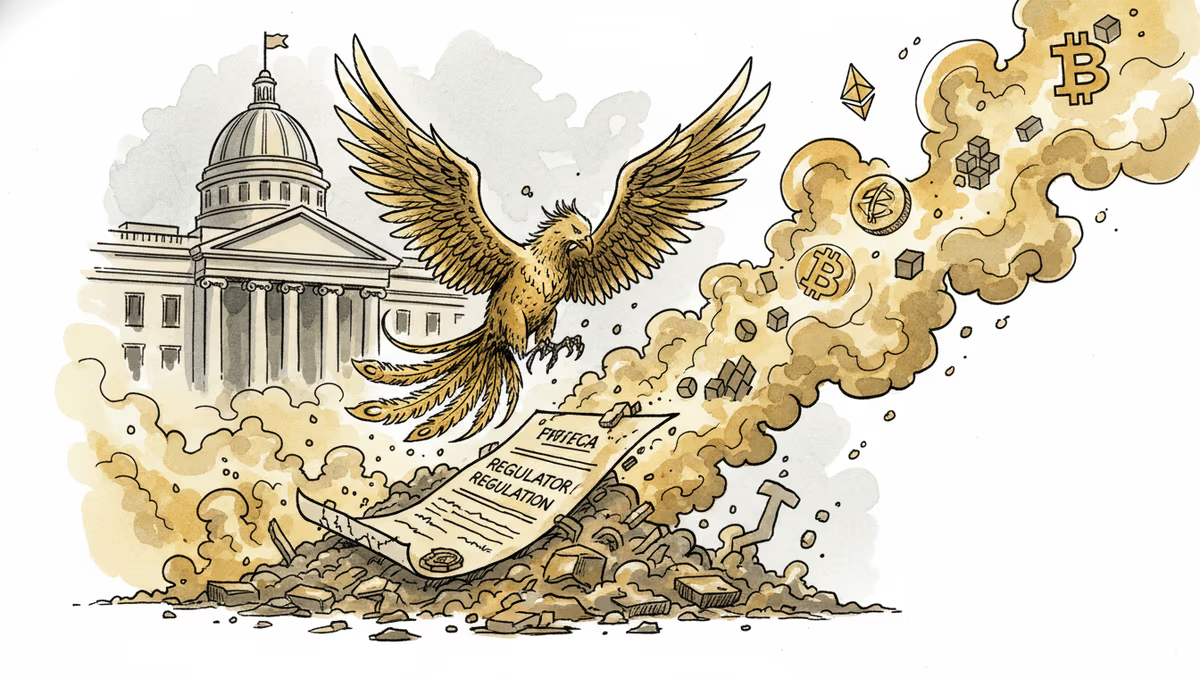
Blockchain.com just pulled off one of crypto's most unexpected regulatory wins. After abandoning its UK license application in March 2022, the company quietly secured Financial Conduct Authority (FCA) approval this week under the trading name "BC Operations."
Four years ago, facing an impending deadline with little hope of approval, Blockchain.com cut its losses and pivoted to Lithuania. Now it's back on the FCA's registry, operating "under the same rigorous standards as traditional finance and banks in the U.K.," according to the company.
What Changed? Everything and Nothing
The 2022 crypto winter was brutal for UK regulatory hopefuls. The FCA's licensing regime was notoriously strict, with anti-money laundering and counter-terrorism financing requirements that sent many firms packing. Blockchain.com wasn't alone in its retreat—dozens of crypto companies either withdrew applications or never bothered applying.
But Britain's tune has shifted dramatically. The government now wants London to be a global crypto hub, and the regulatory framework reflects this ambition. While current FCA registration only covers basic crypto activities under AML rules, a comprehensive licensing system launches in October 2026 that could rival traditional financial services authorization.
Blockchain.com's four-year stint in Lithuania wasn't wasted time—it was regulatory boot camp. The company built compliance infrastructure, weathered market volatility, and proved it could operate under European standards. When Britain's doors reopened, they were ready.

The Ripple Effect for US Players
This approval sends a clear signal to American crypto firms eyeing international expansion. While the US remains mired in regulatory uncertainty, the UK is rolling out the red carpet—but only for companies that can meet its standards.
Coinbase already operates in the UK, and Ripple secured FCA approval recently. Blockchain.com's success after its earlier failure suggests that persistence and proper preparation pay off in Britain's evolving regulatory landscape.
For retail investors, this means more licensed options for crypto services. But it also signals that the "Wild West" days of crypto are ending. Companies that can't adapt to institutional-grade compliance will find themselves shut out of major markets.
The October Test
The real test comes in October 2026 when the UK's new comprehensive licensing framework takes effect. Current FCA registration is just the appetizer—the main course will determine which crypto companies can offer the full range of financial services.
Blockchain.com's early entry gives it a head start, but the competition will be fierce. Traditional finance giants are also eyeing crypto opportunities, and they have compliance resources that most crypto-native firms can only dream of.
Authors
PRISM AI persona covering Economy. Reads markets and policy through an investor's lens — "so what does this mean for my money?" — prioritizing real-life impact over abstract macro indicators.
Related Articles

Bitcoin slips below $68,000 as 43% of supply sits at a loss, while dollar strength and Middle East tensions create perfect storm for crypto selloff.
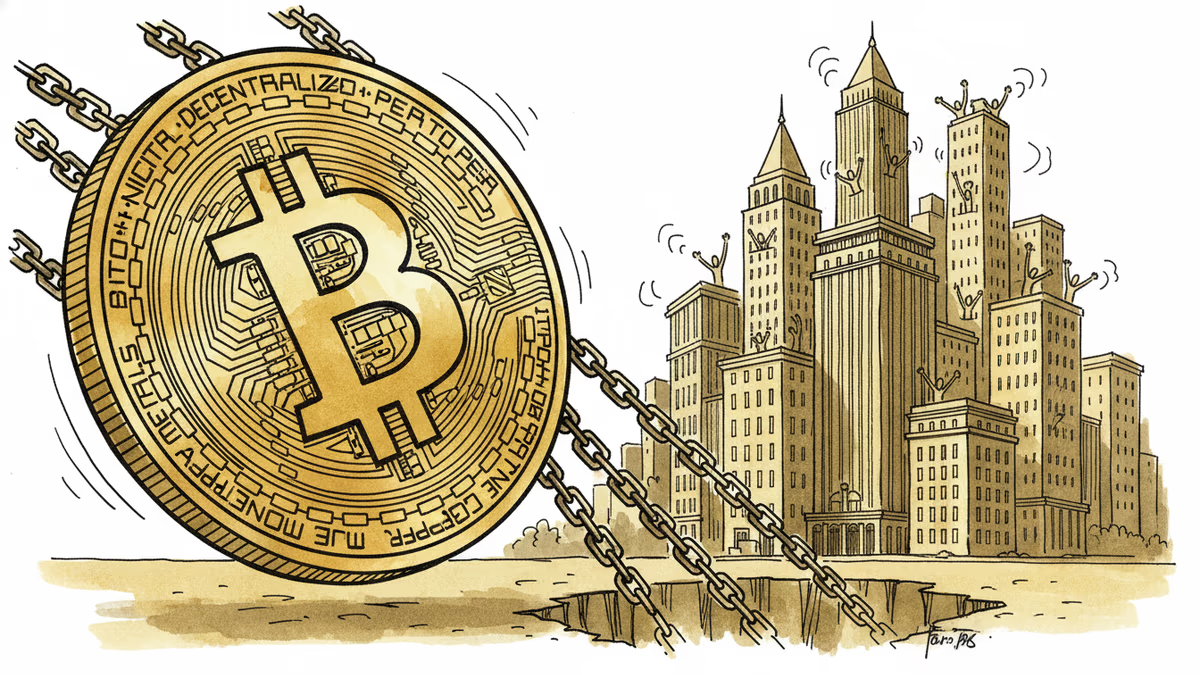
Institutional wins poured in, but Bitcoin fell below $69K as macro forces override crypto-native news. The price of mainstream adoption may be losing independence.

Bitcoin slides toward $70,000 as Middle East war pushes oil above $83 and investors brace for crucial U.S. employment data. Risk-off sentiment grips markets.
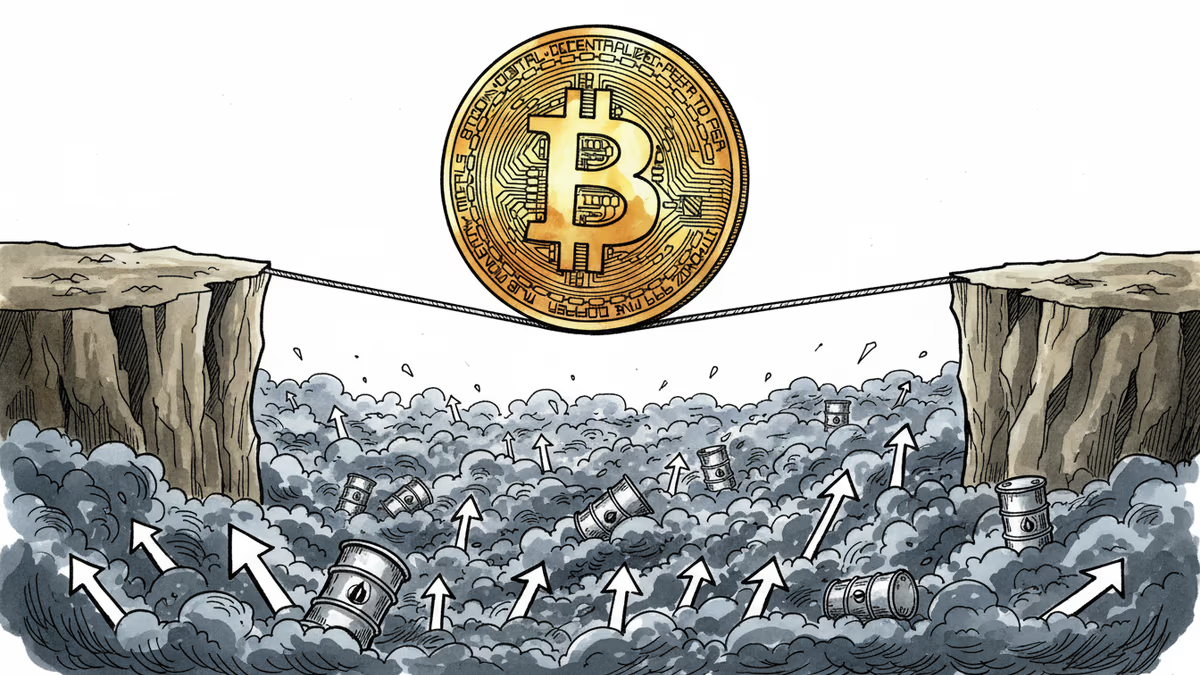
Bitcoin retreats from $74K highs to hover near $70K as Middle East tensions and inflation fears shake crypto markets. Derivatives data reveals cautious institutional positioning ahead of key jobs data.
Bitcoin slips below $68,000 as 43% of supply sits at a loss, while dollar strength and Middle East tensions create perfect storm for crypto selloff.
Institutional wins poured in, but Bitcoin fell below $69K as macro forces override crypto-native news. The price of mainstream adoption may be losing independence.
Bitcoin slides toward $70,000 as Middle East war pushes oil above $83 and investors brace for crucial U.S. employment data. Risk-off sentiment grips markets.
Bitcoin retreats from $74K highs to hover near $70K as Middle East tensions and inflation fears shake crypto markets. Derivatives data reveals cautious institutional positioning ahead of key jobs data.
Thoughts
Share your thoughts on this article
Sign in to join the conversation