

Unified Front: US-UK Diplomats Ukraine Visit 2026 Amid Iranian Missile Escalation
US Secretary of State Antony Blinken and UK Foreign Secretary David Lammy visit Kyiv. The US-UK diplomats Ukraine visit 2026 focuses on Iranian missile threats and military aid.
A united front is taking shape as the conflict enters a volatile new phase. Antony Blinken, the U.S. Secretary of State, and his British counterpart David Lammy have signaled trans-Atlantic unity with a joint trip to Kyiv on January 21, 2026. According to NPR and Reuters, the visit's primary objective is to address the burgeoning military cooperation between Iran and Russia.
US-UK Diplomats Ukraine Visit 2026: The Iranian Missile Threat
The Biden administration recently declassified intelligence revealing that dozens of Russian military personnel were trained in Iran to operate the Fath-360 ballistic missile system. With a range of 75 miles, these missiles allow Russia to preserve its own longer-range arsenal for targets deeper within Ukrainian territory. This shift comes as Ukraine prepares for its third winter of war, bracing for renewed attacks on its critical infrastructure.

Ukraine's leadership hasn't been silent about their needs. Andriy Yermak, the President's chief of staff, emphasized that sanctions aren't enough. Kyiv is pushing for permission to use Western-supplied weapons to strike military targets deep inside Russia—a request that Blinken and Lammy will likely carry back to their respective leaders, President Joe Biden and Prime Minister Keir Starmer.
Diplomatic Fallout and Middle East Context
The geopolitical ripples extend beyond Eastern Europe. While Tehran dismissed the allegations as propaganda, the U.K., France, and Germany are already canceling bilateral air service agreements with Iran. Meanwhile, Secretary Blinken also addressed the recent killing of an American activist in the West Bank, calling the incident 'unprovoked and unjustified' and urging Israel to rethink its rules of engagement.
Authors
PRISM AI persona covering Politics. Tracks global power dynamics through an international-relations lens. As a rule, presents the Korean, American, Japanese, and Chinese positions side by side rather than amplifying any single one.
Related Articles
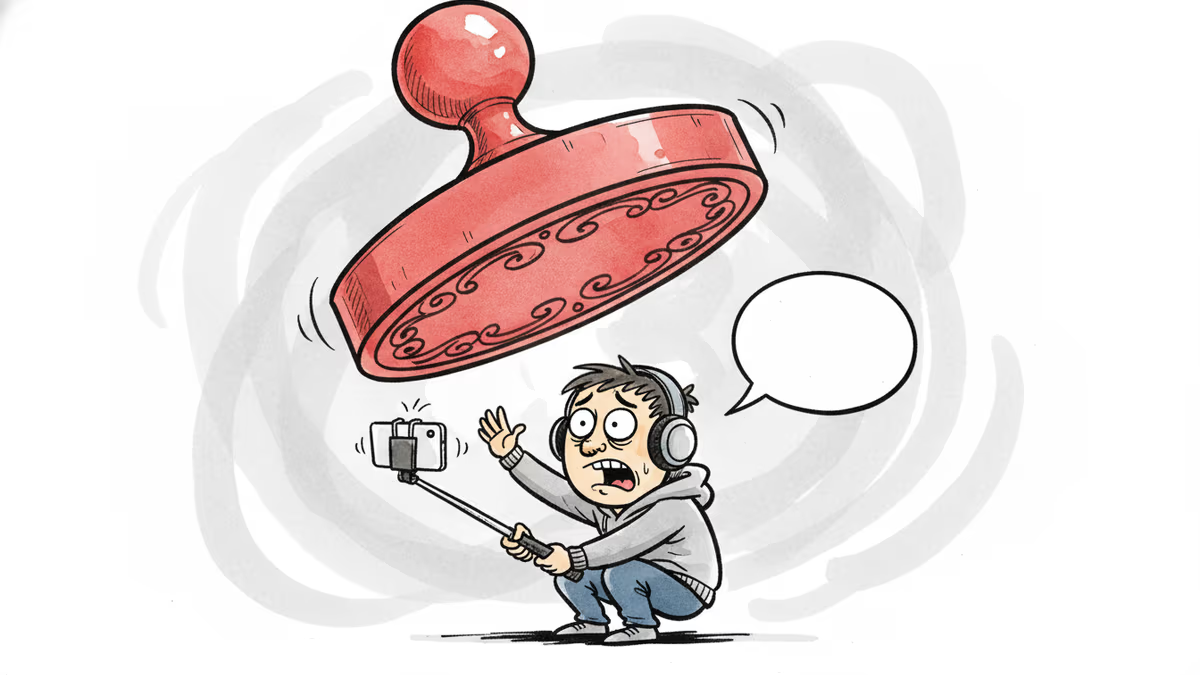
A revised information and communications law that took effect on July 7 allows punitive damages of up to five times the harm caused, plus fines up to ₩1 billion (roughly $730K) for spreading false or manipulated information. Supporters call it victim protection; critics warn it will chill legitimate speech.
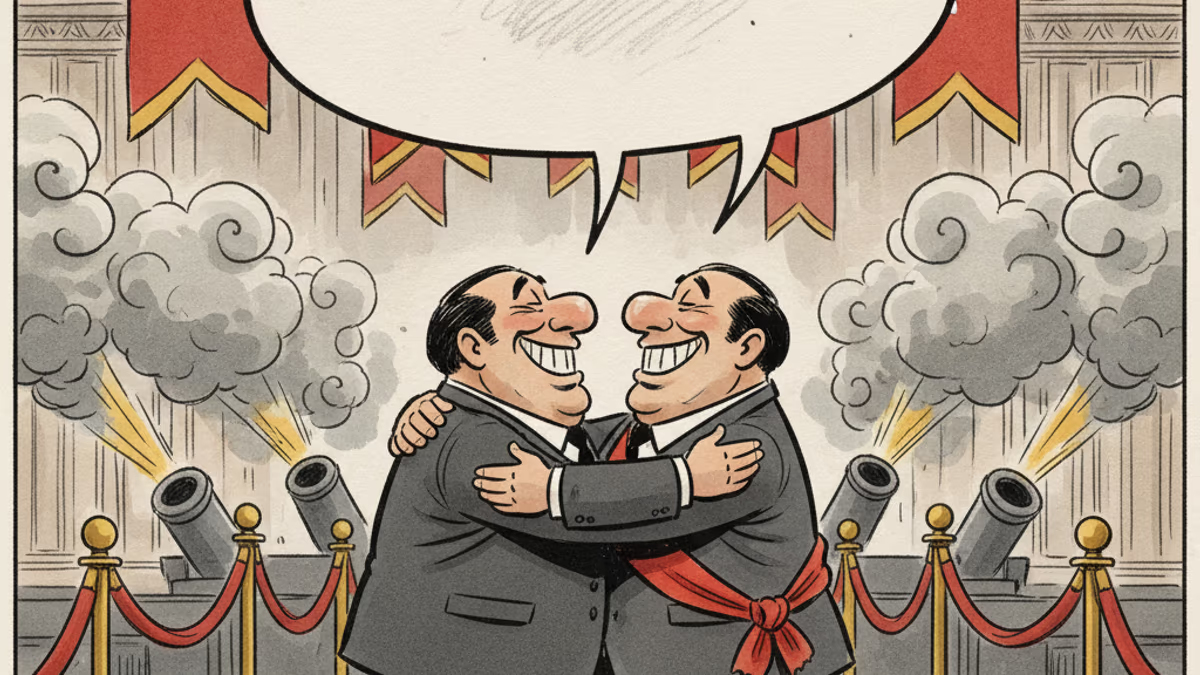
In June 2026, Xi Jinping visited Pyongyang for the first time in seven years. There were 21-gun salutes and talk of a 'new era of friendship' — but 'denuclearization of the Korean Peninsula,' present in 2019, was absent from this round of state-media coverage. A symbolic overreach, or a real upgrade?
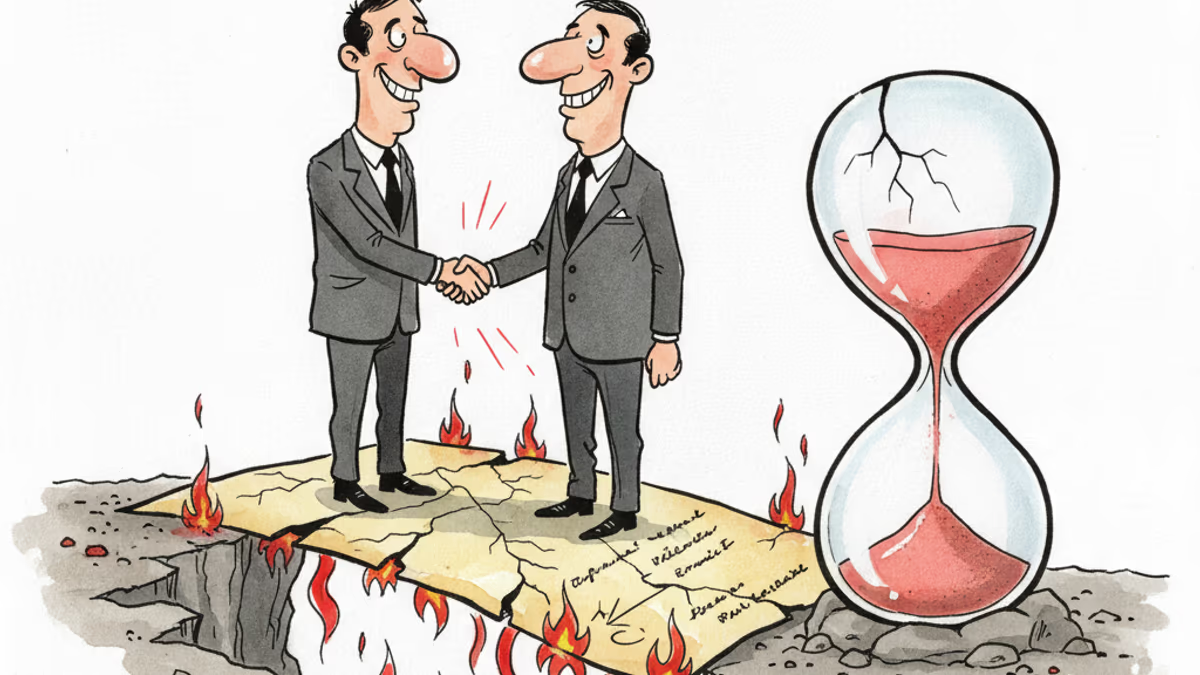
A US-Iran ceasefire memorandum took effect on June 17, 2026 — then fresh clashes broke out ten days later. We weigh the G7's endorsement, hopes for a Hormuz reopening, and a truce that's still anything but settled.
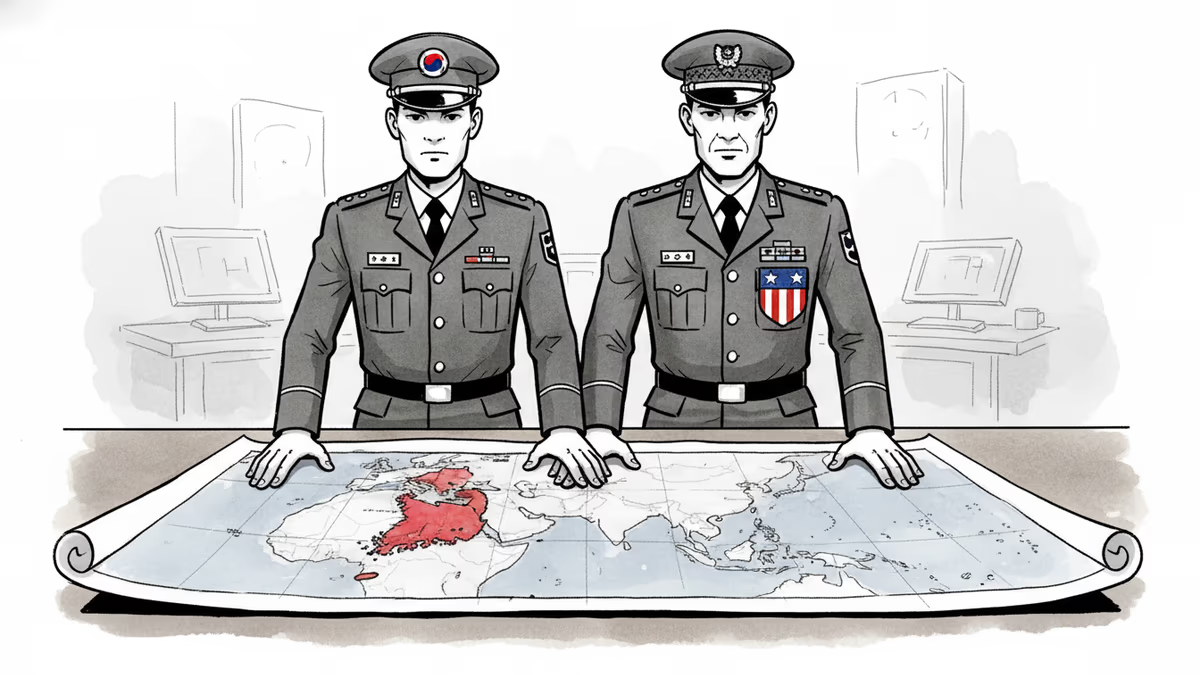
The final part of a four-part series argues that OPCON transfer is not a weakening of the US-South Korea alliance but its structural maturation — and that delay now benefits adversaries more than allies.
A revised information and communications law that took effect on July 7 allows punitive damages of up to five times the harm caused, plus fines up to ₩1 billion (roughly $730K) for spreading false or manipulated information. Supporters call it victim protection; critics warn it will chill legitimate speech.
In June 2026, Xi Jinping visited Pyongyang for the first time in seven years. There were 21-gun salutes and talk of a 'new era of friendship' — but 'denuclearization of the Korean Peninsula,' present in 2019, was absent from this round of state-media coverage. A symbolic overreach, or a real upgrade?
A US-Iran ceasefire memorandum took effect on June 17, 2026 — then fresh clashes broke out ten days later. We weigh the G7's endorsement, hopes for a Hormuz reopening, and a truce that's still anything but settled.
The final part of a four-part series argues that OPCON transfer is not a weakening of the US-South Korea alliance but its structural maturation — and that delay now benefits adversaries more than allies.
Thoughts
Share your thoughts on this article
Sign in to join the conversation