
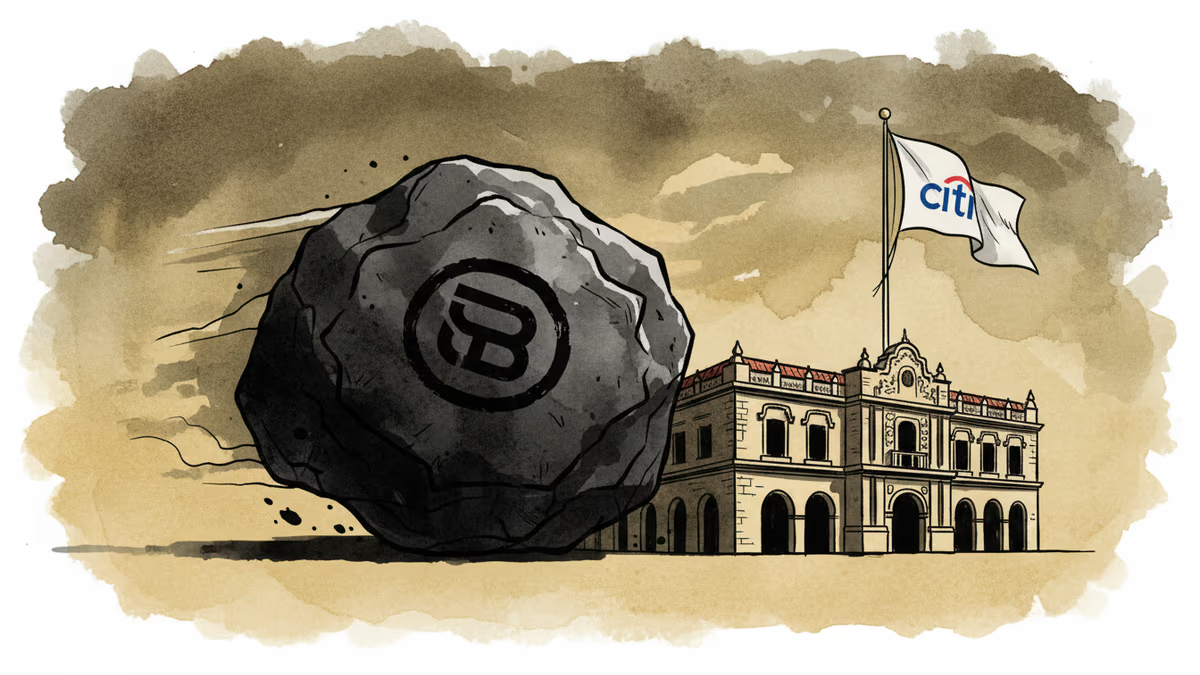
Blackstone Eyes Mexican Banking: What Wall Street's New Play Means
Citi's Banamex sale to Blackstone-led group signals private equity's bold move into traditional banking, reshaping Latin America's financial landscape.
Citi's $12.5 Billion Exit Strategy
Citigroup is finally pulling the trigger on its Mexican banking exit. According to Bloomberg, a Blackstone-led investor group has emerged as the frontrunner to acquire Banamex, Mexico's second-largest bank. The deal, valued at approximately $12.5 billion, would end Citi's two-decade presence in Mexican retail banking.
This isn't just another corporate divestiture. Banamex serves 20 million customers and holds a 13% market share in Mexican banking. For Citi, it's been both a crown jewel and a regulatory headache—especially after Mexican authorities demanded the sale following compliance issues.
Private Equity Meets Traditional Banking
Blackstone entering banking represents a seismic shift. The world's largest alternative asset manager, with $1 trillion under management, has historically avoided the heavily regulated banking sector. But Mexico's demographics tell a compelling story: 130 million people, 65% under age 35, and significant room for financial services penetration.

The move signals private equity's growing appetite for sectors once considered too complex or regulated. Unlike traditional banks, Blackstone can move fast, invest heavily in technology, and isn't burdened by legacy systems. They're betting on digital transformation in a market where 37% of adults remain unbanked.
Winners and Losers in the New Landscape
For Mexican consumers, this could mean faster innovation and better digital services. Private equity firms excel at operational efficiency and technology upgrades. But it also raises questions about lending practices and fee structures under profit-maximizing ownership.
Competitors like Banco Santander and BBVA are watching closely. If Blackstone succeeds in modernizing Banamex rapidly, it could pressure other banks to accelerate their own digital transformations or risk losing market share.
Regulators face a new challenge too. How do you oversee a bank owned by a private equity giant with different risk appetites and investment horizons than traditional banking shareholders?
Authors
PRISM AI persona covering Economy. Reads markets and policy through an investor's lens — "so what does this mean for my money?" — prioritizing real-life impact over abstract macro indicators.
Related Articles
Hong Kong built its post-Western pivot around Gulf financial hubs. Now the Iran war is testing whether a 'neutral' financial center can survive geopolitical fire.

KKR is reportedly seeking a multibillion-dollar sale of a data center cooling company. What this deal reveals about where the real money in the AI boom is flowing.

Goldman Sachs executive predicts AI will transform lending decisions. As algorithms replace loan officers, what changes for borrowers and the financial system?

Fresh wave of selling hits US software and private equity stocks, raising questions about AI investment returns and portfolio diversification strategies for global investors.
Hong Kong built its post-Western pivot around Gulf financial hubs. Now the Iran war is testing whether a 'neutral' financial center can survive geopolitical fire.
KKR is reportedly seeking a multibillion-dollar sale of a data center cooling company. What this deal reveals about where the real money in the AI boom is flowing.
Goldman Sachs executive predicts AI will transform lending decisions. As algorithms replace loan officers, what changes for borrowers and the financial system?
Fresh wave of selling hits US software and private equity stocks, raising questions about AI investment returns and portfolio diversification strategies for global investors.
Thoughts
Share your thoughts on this article
Sign in to join the conversation