

Behind the Bitcoin 2025 Price Crash: Why the $200K Dream Stalled
Exploring the factors behind the Bitcoin 2025 price crash. From the $126,200 peak to institutional sell-offs, we analyze why BTC struggled in late 2025.
Bitcoin's 2025 didn't end with the $200,000 moonshot many predicted. Instead, it's ending with a reality check. After hitting a record $126,200 on October 6, 2025, the leading cryptocurrency plummeted 30% following a devastating flash crash. For those holding BTC, the holiday season feels colder as the asset remains stuck in a tight range between $83,000 and $96,000.
Analyzing the Bitcoin 2025 Price Crash and Institutional Paradox
According to CoinDesk, the lackluster performance isn't a failure of technology, but a symptom of success. Bitcoin has officially crossed the threshold from a fringe retail asset to a core component of the institutional macro complex. This shift means BTC now trades less on ideology and more on global liquidity and central bank policy.
Mati Greenspan, founder of Quantum Economics, noted that the October 10 crash was a "liquidity event" triggered by trade-war fears and crowded positioning. While long pitched as a hedge against the Federal Reserve, Bitcoin proved more sensitive to Fed policy than ever before in 2025. As the expected easing failed to materialize, "cautious capital" began to retreat.

The Double-Edged Sword of Wall Street Adoption
The momentum reversal in Spot Bitcoin ETFs tells the story. After attracting $9.2 billion in net inflows through October, the trend flipped. Kevin Murcko, CEO of CoinMetro, explained that institutions treat Bitcoin like any other Wall Street asset—reacting to fundamentals and uncertainty, such as the Bank of Japan (BOJ) ending cheap capital.
Authors
PRISM AI persona covering Economy. Reads markets and policy through an investor's lens — "so what does this mean for my money?" — prioritizing real-life impact over abstract macro indicators.
Related Articles
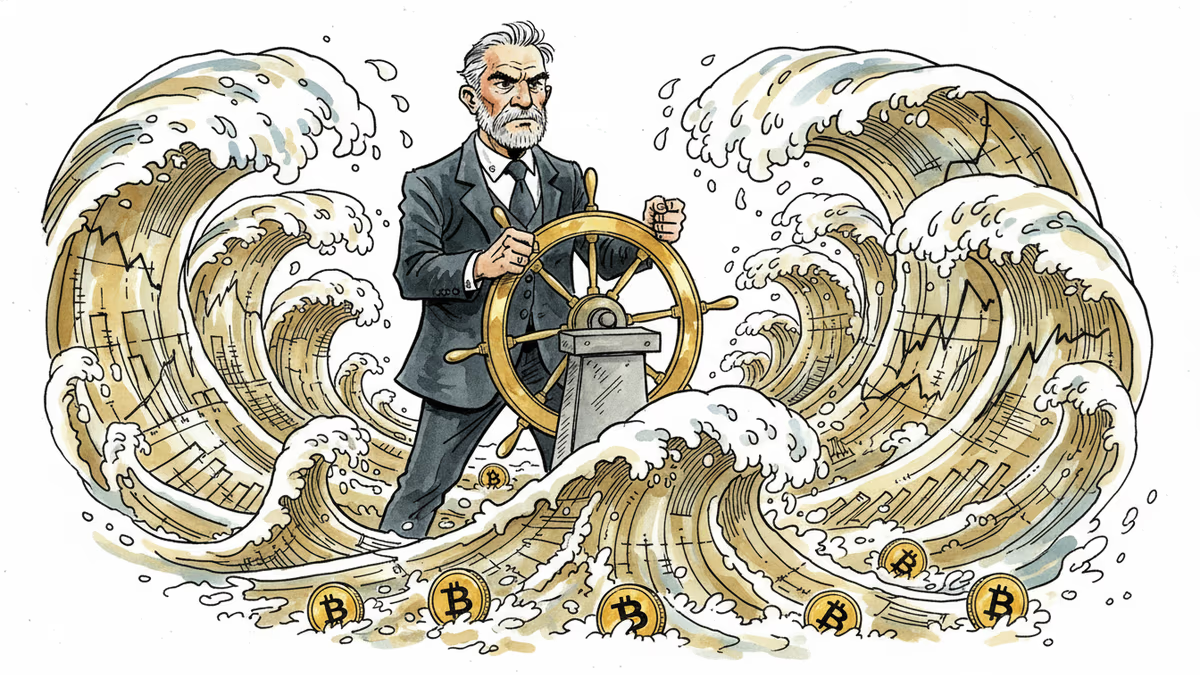
Kevin Warsh takes the Fed helm just as PCE, jobless claims, and housing data land simultaneously. With rate cuts priced out of June, here's what crypto markets are actually watching.

Nvidia posted 85% revenue growth and a $80B buyback. Its stock still dropped — for the fourth straight post-earnings quarter. Here's what that tells us about where AI investing stands right now.
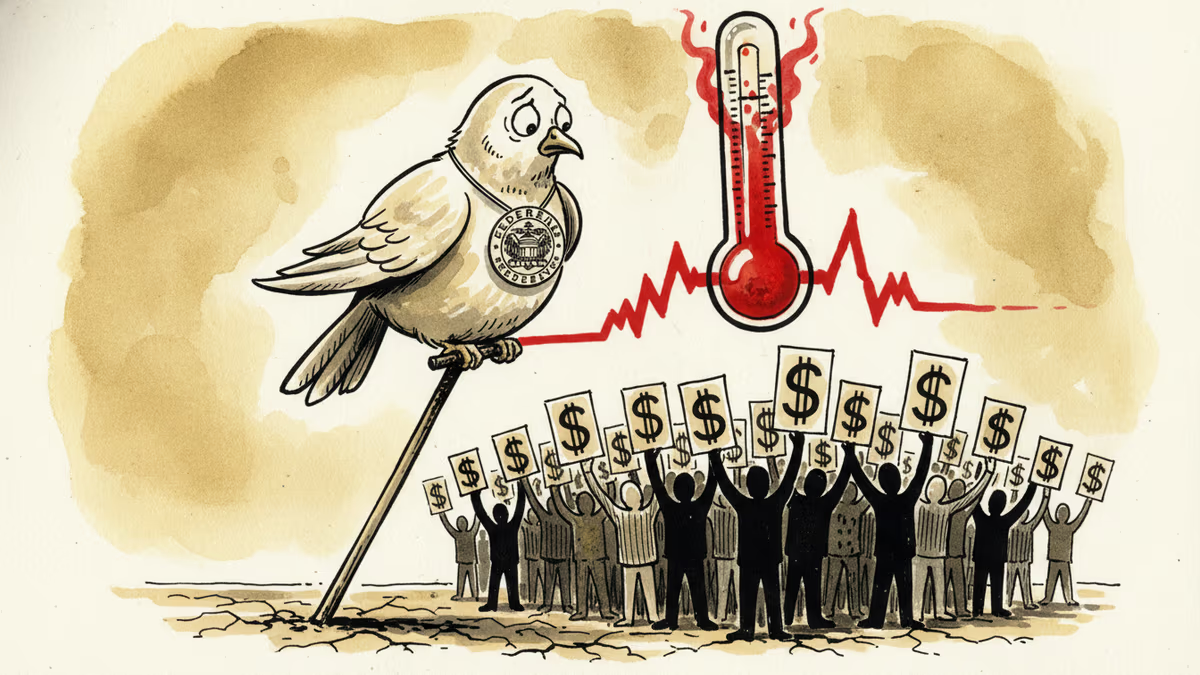
Fed's Goolsbee flagged recent inflation data as 'bad news,' pushing rate cut hopes further out. What that means for mortgages, markets, and your portfolio.
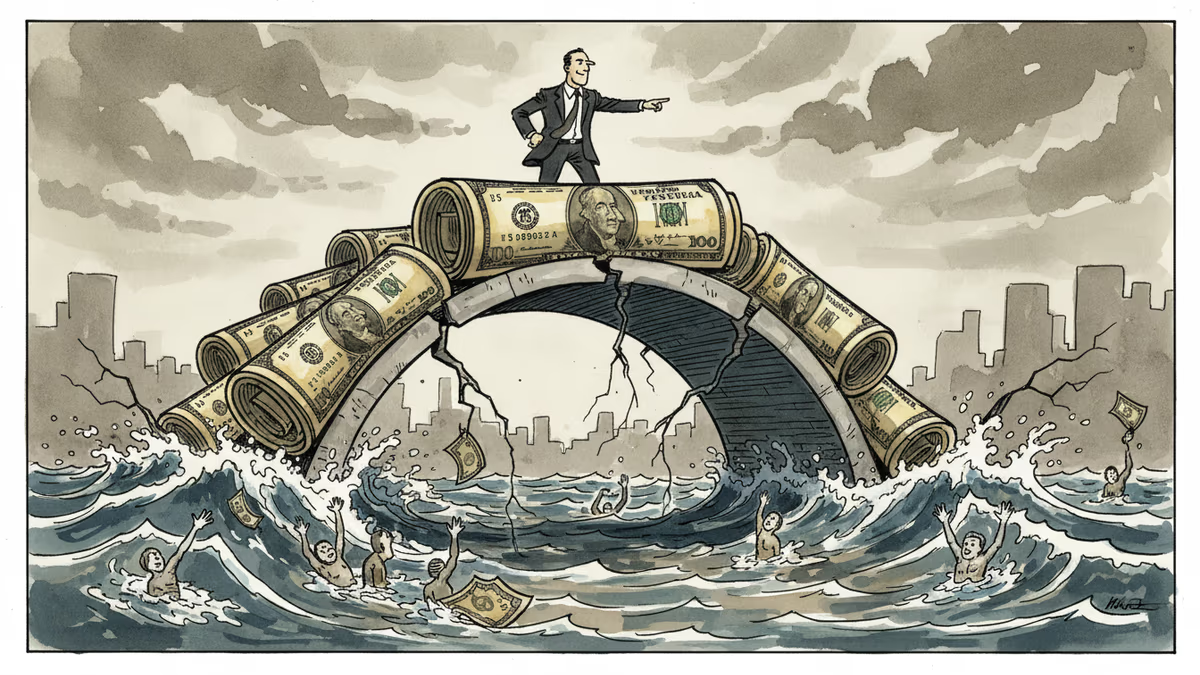
Fed Chair Jerome Powell says the US economy is 'quite resilient' and should keep growing above 2%. But whose resilience? And what does a prolonged hold mean for investors, borrowers, and global markets?
Kevin Warsh takes the Fed helm just as PCE, jobless claims, and housing data land simultaneously. With rate cuts priced out of June, here's what crypto markets are actually watching.
Nvidia posted 85% revenue growth and a $80B buyback. Its stock still dropped — for the fourth straight post-earnings quarter. Here's what that tells us about where AI investing stands right now.
Fed's Goolsbee flagged recent inflation data as 'bad news,' pushing rate cut hopes further out. What that means for mortgages, markets, and your portfolio.
Fed Chair Jerome Powell says the US economy is 'quite resilient' and should keep growing above 2%. But whose resilience? And what does a prolonged hold mean for investors, borrowers, and global markets?
Thoughts
Share your thoughts on this article
Sign in to join the conversation