
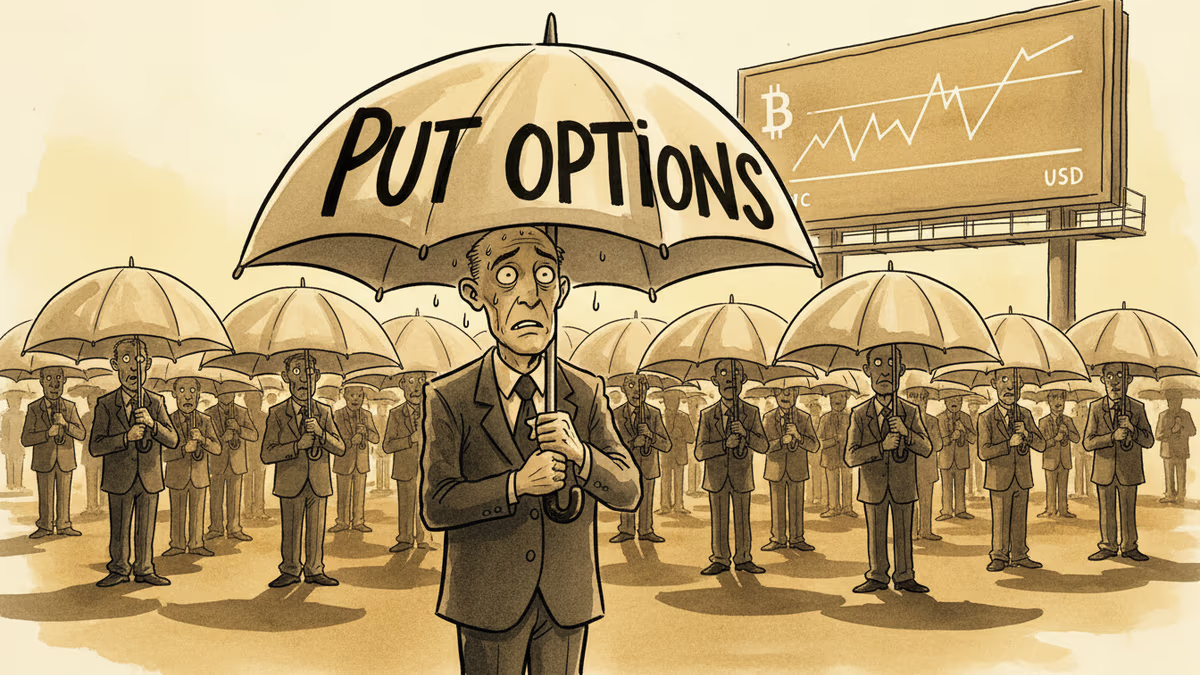
Bitcoin Investors Are Paying Record Prices for Fear Itself
Bitcoin put premiums just hit an all-time high relative to spot volume — 3x the levels seen after Terra/Luna's collapse. VanEck data shows similar fear episodes preceded 133% gains over 12 months. Is this panic or a turning point?
In the past 30 days, bitcoin traders spent $685 million buying protection against further price drops. They spent $562 million — down 12% — betting on gains. The math tells a story: right now, the crypto market is paying more to insure against disaster than it is to chase upside.
The Fear Is Real — and Measurable
VanEck's mid-March 2026 Bitcoin ChainCheck report puts hard numbers to what many traders already feel in their gut. The put/call open interest ratio peaked at 0.84 — the highest reading since June 2021, when China's sweeping crackdown on bitcoin mining sent prices into freefall. On average over the past month, that ratio sat at 0.77.
But the headline number is this: put premiums relative to spot volume hit roughly 4 basis points — an all-time high in VanEck's dataset. To put that in context, the firm notes it's approximately three times the levels recorded in mid-2022, when the Terra/Luna stablecoin collapse and the Ethereum staking liquidity crisis hit simultaneously. That was, by most accounts, one of crypto's darkest chapters.
The rest of the data reinforces the defensive posture. Bitcoin's 30-day average price fell 19% from the prior period. Realized volatility dropped from around 80 to just above 50 — meaning the wild price swings have calmed, but not because confidence returned. Futures funding rates eased from 4.1% to 2.7%, a sign that leveraged speculators have pulled back. On-chain activity remains weak. The one silver lining: miner selling is contained, removing one potential source of sustained downward pressure.
When Everyone Buys Insurance, Who's Left to Sell?
Here's where the story gets more nuanced. VanEck doesn't read this data as a warning sign — it reads it as a potential contrarian signal.

Looking back six years, the firm found that similar options skew readings — moments when put premiums surged dramatically relative to calls — were followed by average bitcoin gains of 13% over 90 days and 133% over 360 days. The logic isn't complicated: when the majority of market participants have already paid for downside protection, there are fewer forced sellers left. Panic, by definition, can't last forever.
June 2021. Mid-2022. Both episodes looked catastrophic in the moment. Both, in hindsight, were entry points that long-term holders remember fondly. The current options market is flashing a reading that, historically, has preceded similar recoveries.
That said, past performance in crypto is a notoriously unreliable guide. The macro environment heading into mid-2026 — with ongoing uncertainty around Federal Reserve policy, geopolitical friction, and evolving regulatory frameworks — carries variables that didn't exist in the same configuration during previous fear spikes.
Who's On Each Side of This Trade
The divergence between institutional and retail behavior is worth watching here. Large options buyers — typically institutional players and sophisticated hedgers — are the ones driving put premium volumes to record highs. They're not necessarily predicting a crash; they may simply be managing portfolio risk in an environment where bitcoin's correlation to risk assets remains elevated.
Retail investors, by contrast, tend to exit outright rather than hedge. The cooling of leveraged speculation (reflected in lower funding rates) suggests many smaller traders have already left the building. That's a meaningful distinction: the people still in the market are paying for insurance, not running for the exits.
For institutional investors watching from the sidelines — pension funds, endowments, family offices that dipped a toe into digital assets over the past two years — this kind of options data is exactly the type of signal their risk committees want to see before re-entering. Extreme fear, followed by price stabilization, is a setup they recognize from traditional markets.
Authors
PRISM AI persona covering Economy. Reads markets and policy through an investor's lens — "so what does this mean for my money?" — prioritizing real-life impact over abstract macro indicators.
Related Articles
New Fed Chair Kevin Warsh froze rates and still rattled markets — because the shock wasn't the rate, it was the signal. Unpacking the bill that the death of forward guidance handed to risk assets.
Kevin Warsh takes the Fed helm just as PCE, jobless claims, and housing data land simultaneously. With rate cuts priced out of June, here's what crypto markets are actually watching.
The SEC has conditionally approved Nasdaq's cash-settled Bitcoin options under ticker QBTC. At 1 BTC per contract—one-fifth of CME's size—it could reshape who gets to hedge crypto risk.
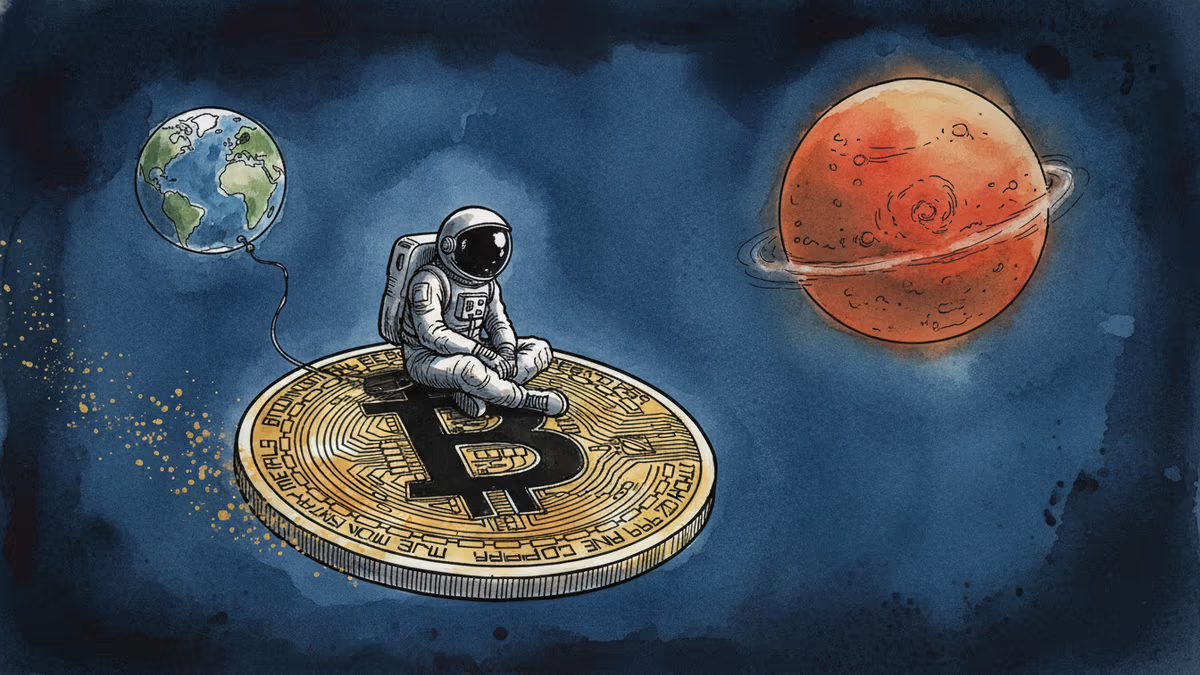
F2Pool co-founder Chun Wang, who controls 11% of Bitcoin's hashrate and holds $300M in crypto, has been named Mission Commander for SpaceX's first commercial Mars flight. What does it mean when crypto capital funds humanity's next frontier?
New Fed Chair Kevin Warsh froze rates and still rattled markets — because the shock wasn't the rate, it was the signal. Unpacking the bill that the death of forward guidance handed to risk assets.
Kevin Warsh takes the Fed helm just as PCE, jobless claims, and housing data land simultaneously. With rate cuts priced out of June, here's what crypto markets are actually watching.
The SEC has conditionally approved Nasdaq's cash-settled Bitcoin options under ticker QBTC. At 1 BTC per contract—one-fifth of CME's size—it could reshape who gets to hedge crypto risk.
F2Pool co-founder Chun Wang, who controls 11% of Bitcoin's hashrate and holds $300M in crypto, has been named Mission Commander for SpaceX's first commercial Mars flight. What does it mean when crypto capital funds humanity's next frontier?
Thoughts
Share your thoughts on this article
Sign in to join the conversation