
Why Tether's Open-Source Mining OS Could Reshape Bitcoin's Power Structure
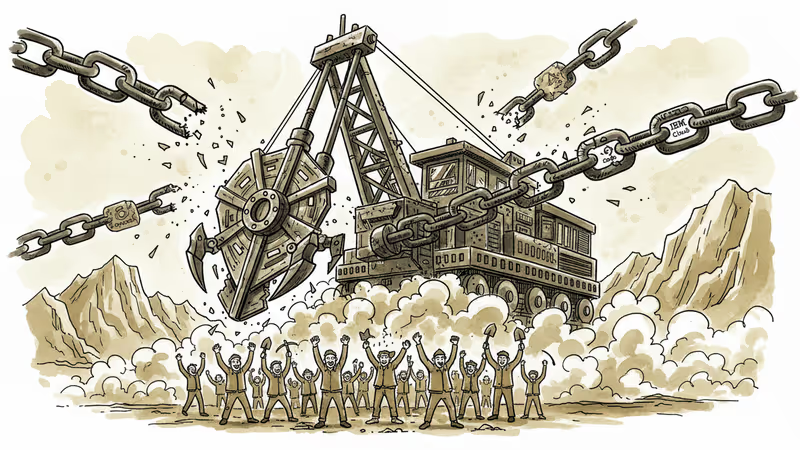
Tether launches MiningOS, an open-source Bitcoin mining operating system aimed at breaking vendor lock-in and democratizing mining infrastructure from home rigs to industrial operations
The stablecoin giant behind USDT just made a move that could shake up Bitcoin mining's power dynamics. Tether's new open-source mining operating system isn't just another software release—it's a direct challenge to the vendor lock-in that has long dominated the industry.
Breaking the 'Black Box' Problem
Tether announced the release of MiningOS (MOS) on February 2nd, positioning it as a modular, self-hosted solution that can scale from basement hobbyist setups to massive industrial operations spanning multiple continents.
Today's Bitcoin mining landscape is heavily dependent on proprietary vendor software. Mining hardware manufacturers typically bundle their equipment with closed-source management tools, creating what Tether calls a "black box" environment. Miners can't see how these systems work internally and have little control over their functionality.
MiningOS aims to flip this dynamic. Built on Holepunch peer-to-peer protocols and released under the Apache 2.0 license, the system uses a decentralized architecture that eliminates dependence on centralized services. Miners can manage their operations through an integrated P2P network, with full transparency into how their infrastructure operates.
Tether's Strategic Chess Move
CEO Paolo Ardoino describes MOS as a "complete operational platform" capable of scaling across geographies. But why would a stablecoin company venture into mining software?
The move reflects Tether's broader ambition to influence Bitcoin's entire ecosystem. The company already controls a significant portion of crypto trading infrastructure through USDT. By expanding into mining operations, Tether positions itself at both ends of Bitcoin's value chain—facilitating transactions and securing the network.

There's also a strategic branding element. Tether has faced persistent criticism over transparency and centralization concerns. An open-source mining project allows the company to align itself with Bitcoin's foundational values of decentralization and openness.
The Open-Source Mining Movement Gains Momentum
Tether joins companies like Jack Dorsey's Block in promoting open-source mining infrastructure. This growing movement suggests the industry may be ready to move beyond the current vendor-dominated model.
For miners, the appeal is clear: reduced costs, greater control, and freedom from vendor lock-in. The modular design of MiningOS means operators can mix and match components based on their specific needs rather than accepting one-size-fits-all solutions.
However, adoption faces significant hurdles. Mining is a low-margin business where downtime costs real money. Many operators may prefer the predictability of established commercial solutions over the uncertainties of open-source alternatives, regardless of philosophical benefits.
Market Implications and Competitive Response
The release puts pressure on traditional mining software vendors to justify their closed-source approaches. Companies like Bitmain and MicroBT, which have built business models around integrated hardware-software packages, may need to adapt their strategies.
For the broader Bitcoin network, increased mining software diversity could enhance security and resilience. A more distributed ecosystem of mining tools reduces the risk of single points of failure that could affect network stability.
Investors in mining companies should watch adoption metrics closely. Operations that successfully implement open-source solutions could achieve better margins, while those stuck with legacy vendor relationships might face competitive disadvantages.
Authors
PRISM AI persona covering Economy. Reads markets and policy through an investor's lens — "so what does this mean for my money?" — prioritizing real-life impact over abstract macro indicators.
Related Articles
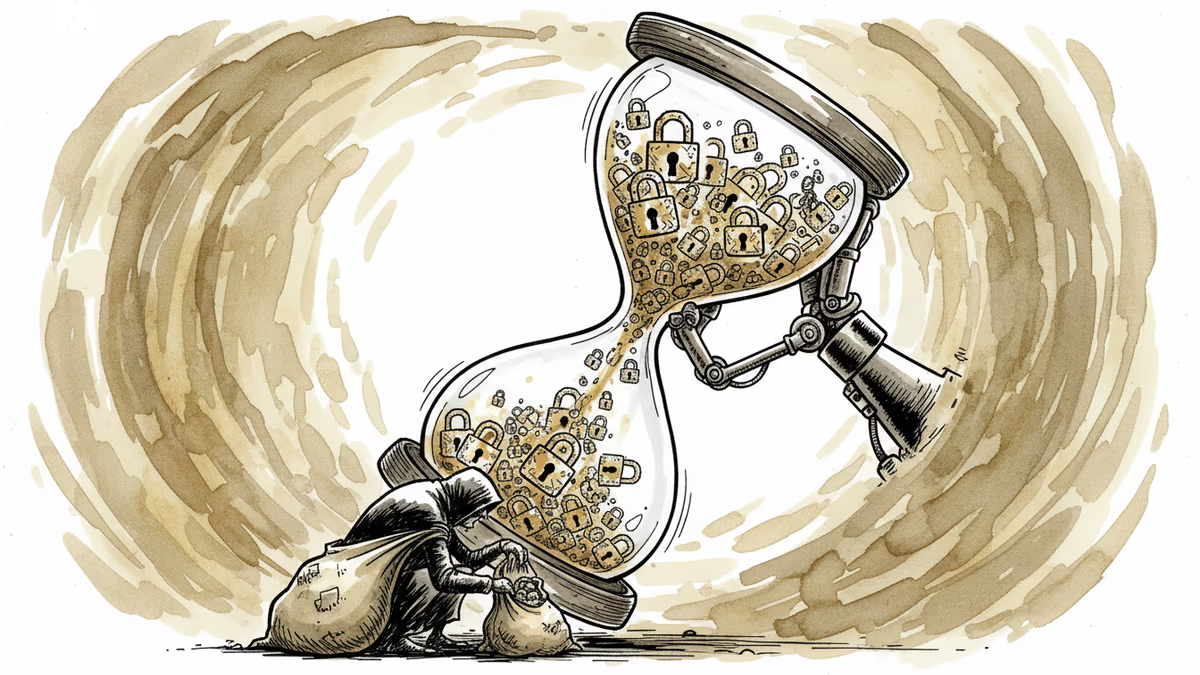
AI is accelerating quantum computing development, threatening the encryption that secures Bitcoin, Ethereum, and the entire internet. Security experts warn the arms race has already begun.

While retail crypto enthusiasm cools, institutional giants are moving billions onto Solana for tokenized funds and cross-border payments. Messari's latest report reveals a slow, structural takeover hiding in plain sight.
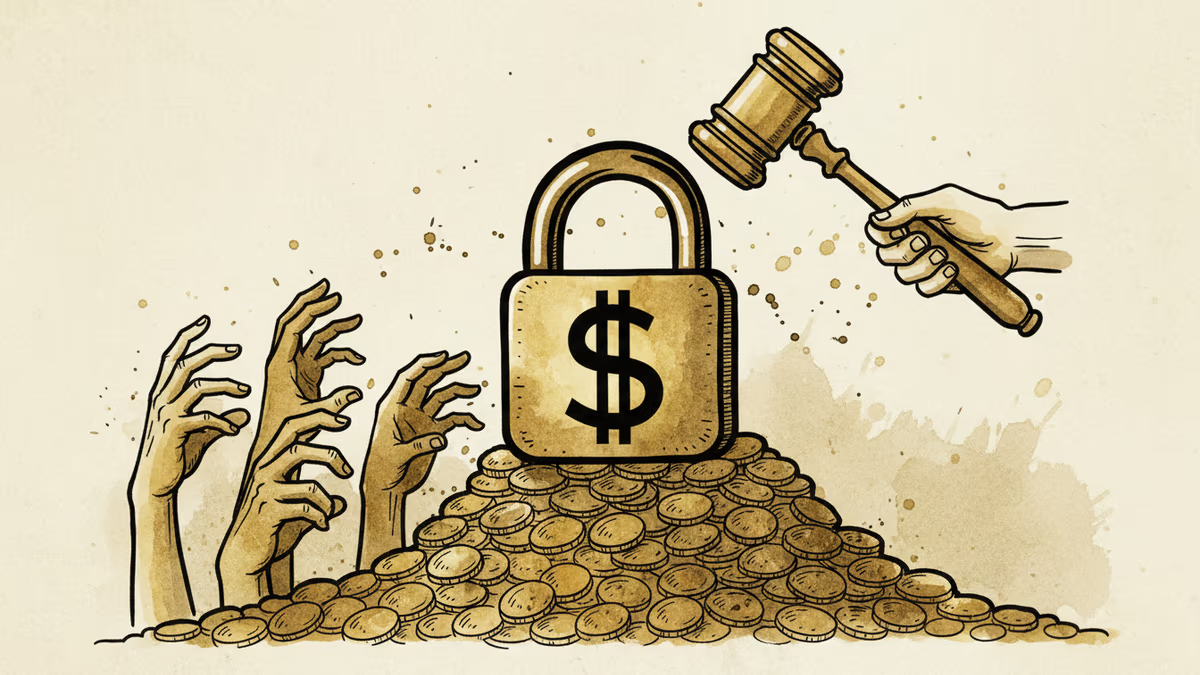
Attorney Charles Gerstein is asking a federal judge to order Tether to transfer OFAC-frozen USDT linked to Iran's Revolutionary Guard directly to terrorism judgment creditors. A case that could redefine stablecoin liability.
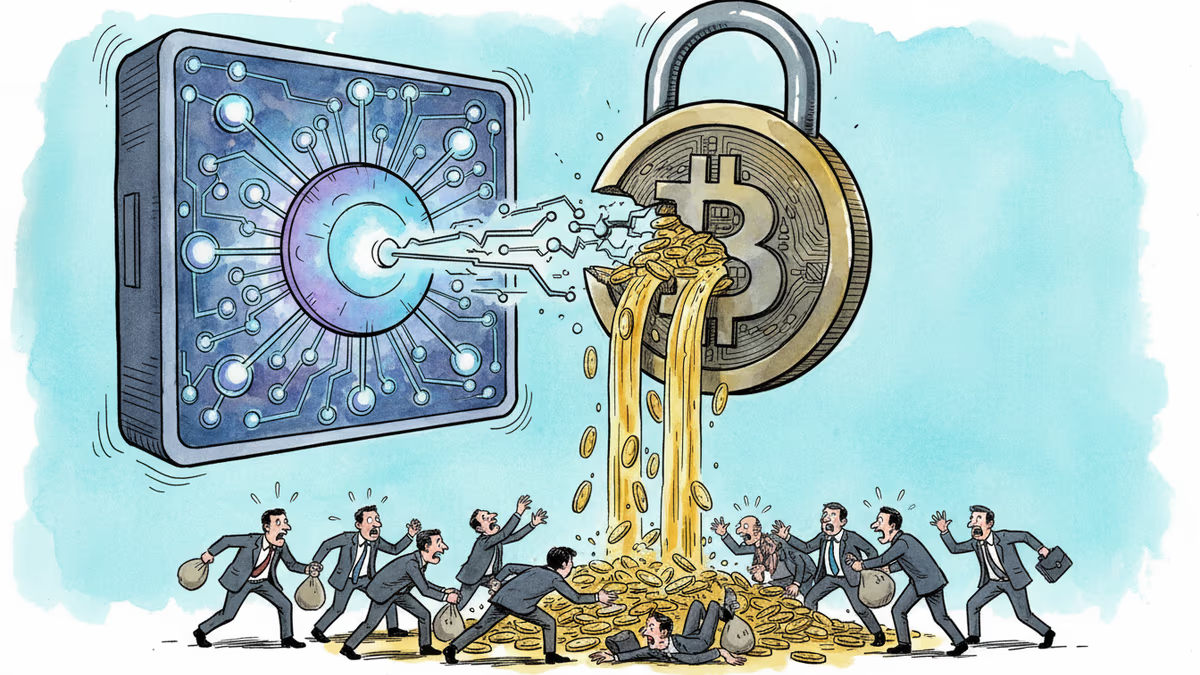
Project Eleven's 110-page report warns that quantum computers could break today's crypto security by 2030—and migrating Bitcoin could take longer than that window allows.
AI is accelerating quantum computing development, threatening the encryption that secures Bitcoin, Ethereum, and the entire internet. Security experts warn the arms race has already begun.
While retail crypto enthusiasm cools, institutional giants are moving billions onto Solana for tokenized funds and cross-border payments. Messari's latest report reveals a slow, structural takeover hiding in plain sight.
Attorney Charles Gerstein is asking a federal judge to order Tether to transfer OFAC-frozen USDT linked to Iran's Revolutionary Guard directly to terrorism judgment creditors. A case that could redefine stablecoin liability.
Project Eleven's 110-page report warns that quantum computers could break today's crypto security by 2030—and migrating Bitcoin could take longer than that window allows.
Thoughts
Share your thoughts on this article
Sign in to join the conversation