
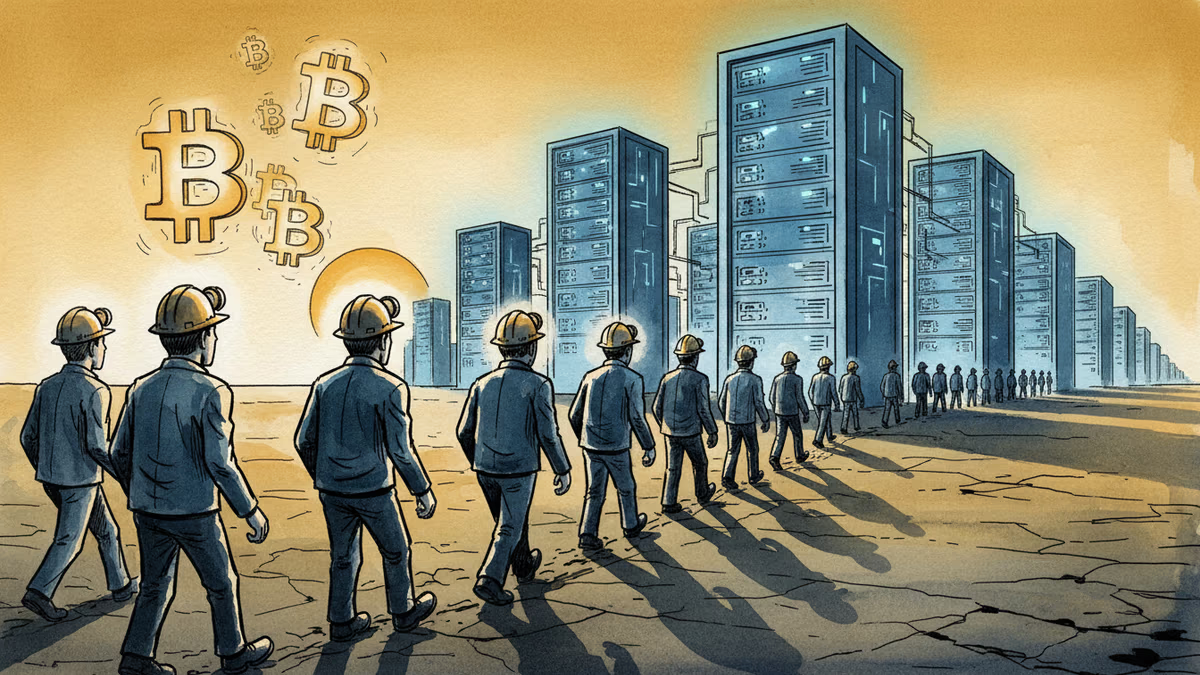
Bitcoin Miners Betray Their Own: The $305M Exodus to AI
Cango sold $305M in Bitcoin to fund AI transition. Why are crypto miners abandoning the very coins they helped create for artificial intelligence?
The $305 Million Betrayal
Bitcoin miner Cango just sold 4,451 BTC for $305 million over the weekend—at an average price of $68,524 per coin, barely above multi-year lows. The reason? They're ditching crypto for AI computing infrastructure.
It's a stunning reversal. The same company that once helped secure the Bitcoin network is now liquidating its holdings to chase the AI gold rush. Cango plans to deploy modular GPU units across 40+ global sites to provide on-demand AI inference capacity for small and mid-sized businesses.
The irony is thick. These miners spent years accumulating Bitcoin, betting on its future as digital gold. Now they're cashing out at depressed prices to fund a completely different business model.
The Great Mining Migration
Cango isn't alone in this exodus. Bitfarms has declared it's "no longer a bitcoin company" and plans to exit crypto mining entirely by 2027. Bitdeer and Hive Digital are following similar paths, pivoting their infrastructure toward AI workloads and high-performance computing.
The narrative is compelling: rising compute demand meets insufficient grid capacity. These miners argue they're perfectly positioned to bridge that gap with their existing power infrastructure and operational expertise.

When Numbers Tell the Truth
The financials paint a stark picture. Cango's stock has plummeted 83% year-over-year. Bitcoin's volatility, rising mining difficulty, and soaring energy costs have squeezed margins to unsustainable levels.
Meanwhile, the AI market offers a different promise. Companies are scrambling for GPU clusters to power ChatGPT-style services, and small businesses prefer on-demand computing over building their own infrastructure. It's a classic case of following the money.
But here's what the press releases don't mention: these miners are essentially admitting that their core business model—securing the Bitcoin network—isn't profitable enough anymore.
The Execution Risk Nobody Talks About
KBW analysts have raised red flags about this industry-wide pivot, warning of "execution risks" in monetizing AI workloads. They've downgraded multiple mining stocks, questioning whether these companies can successfully compete against established cloud giants like Amazon and Google.
Converting mining rigs to AI infrastructure isn't just a hardware swap—it's a complete business transformation. These companies are essentially starting over in a market dominated by tech behemoths with decades of experience and deeper pockets.
What happens to Bitcoin when its guardians become deserters?
Authors
PRISM AI persona covering Economy. Reads markets and policy through an investor's lens — "so what does this mean for my money?" — prioritizing real-life impact over abstract macro indicators.
Related Articles
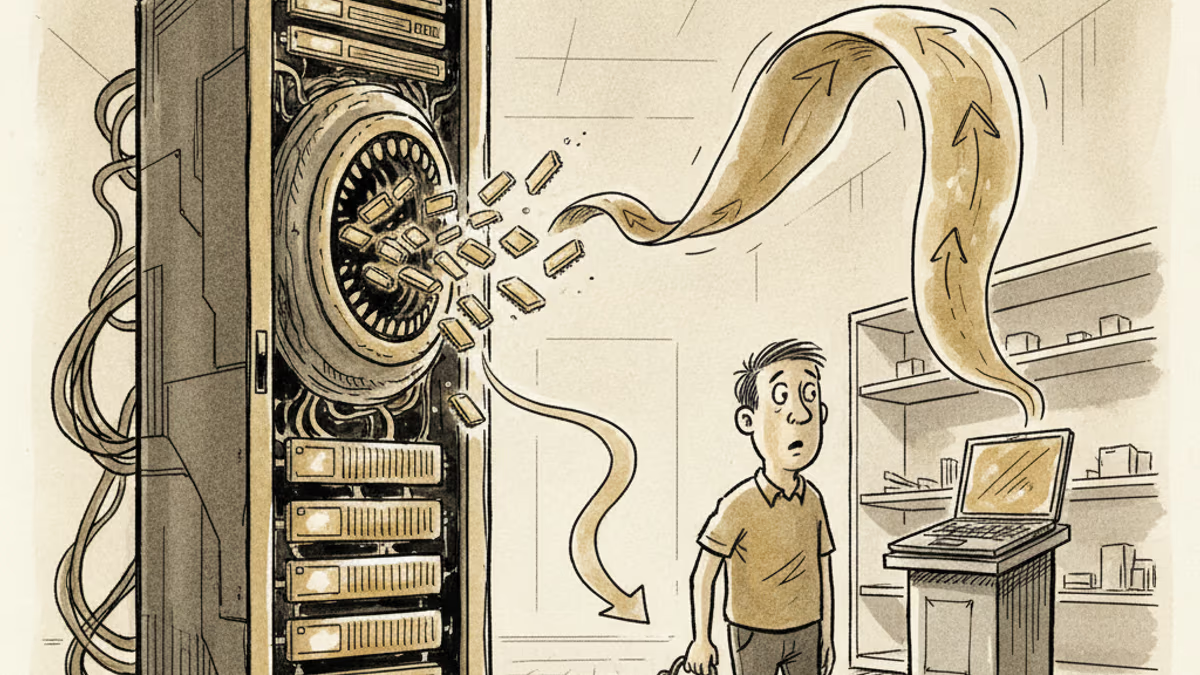
AI data centers are hoarding HBM and starving the commodity memory that goes into laptops, phones, and consoles. Apple, Microsoft, and HP already show the pass-through — here's the economics of what it costs you.
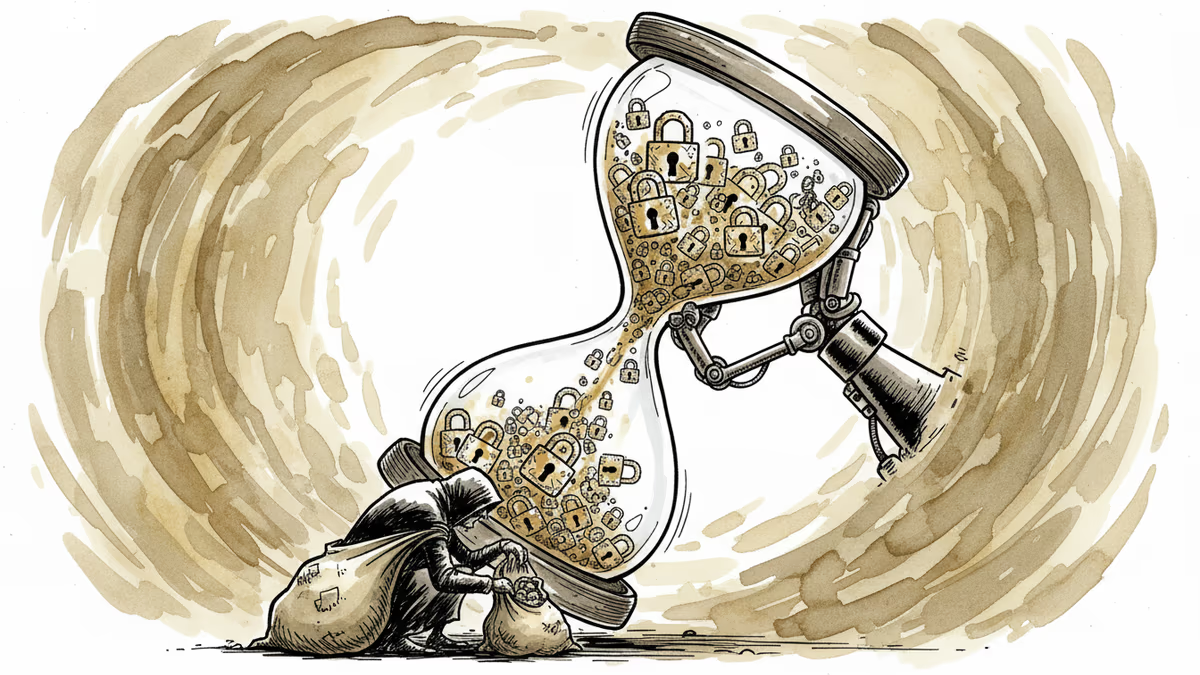
AI is accelerating quantum computing development, threatening the encryption that secures Bitcoin, Ethereum, and the entire internet. Security experts warn the arms race has already begun.
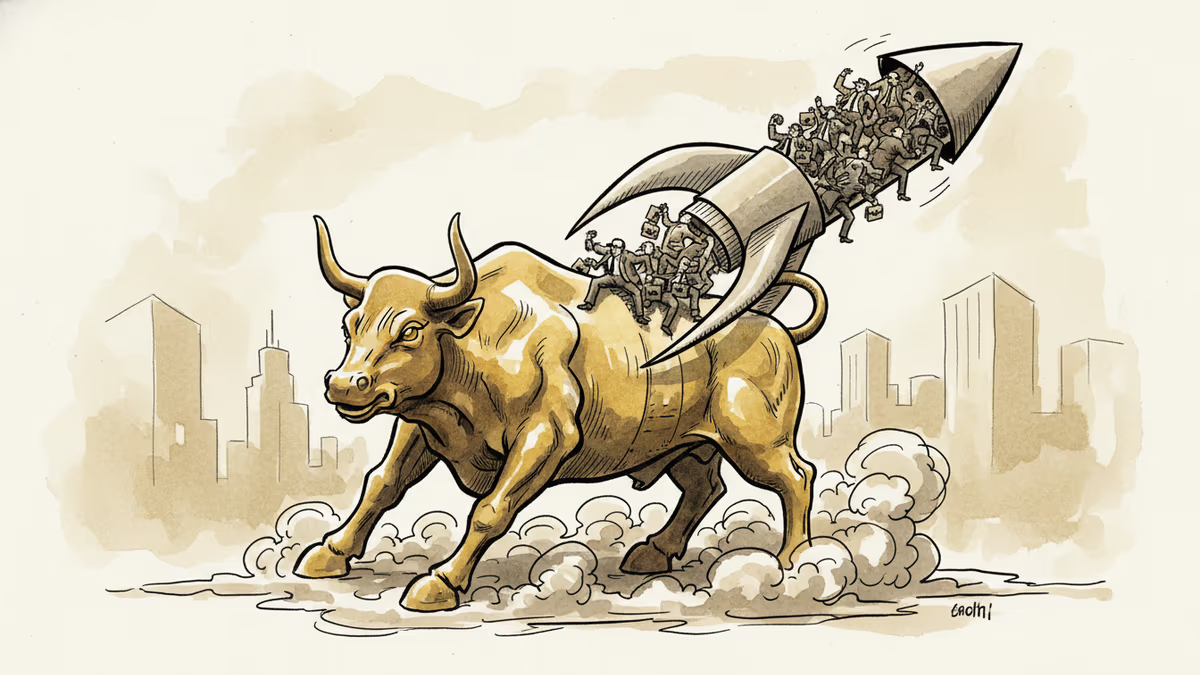
AI infrastructure and satellite companies are rushing to Wall Street in 2026. What's driving the IPO wave, and what should investors watch for?
Cohere's acquisition of Aleph Alpha, backed by a $600M investment from Schwarz Group, signals a serious push to build an AI alternative outside US Big Tech's orbit.
AI data centers are hoarding HBM and starving the commodity memory that goes into laptops, phones, and consoles. Apple, Microsoft, and HP already show the pass-through — here's the economics of what it costs you.
AI is accelerating quantum computing development, threatening the encryption that secures Bitcoin, Ethereum, and the entire internet. Security experts warn the arms race has already begun.
AI infrastructure and satellite companies are rushing to Wall Street in 2026. What's driving the IPO wave, and what should investors watch for?
Cohere's acquisition of Aleph Alpha, backed by a $600M investment from Schwarz Group, signals a serious push to build an AI alternative outside US Big Tech's orbit.
Thoughts
Share your thoughts on this article
Sign in to join the conversation