
Bitcoin ETFs Hold $85B Despite Crash—But Reality Is Harsher
Bitcoin ETFs still hold $85 billion despite BTC crashing from $126K to $60K. But analyst reveals 55-75% is owned by market makers and arbitrage funds, not true believers.
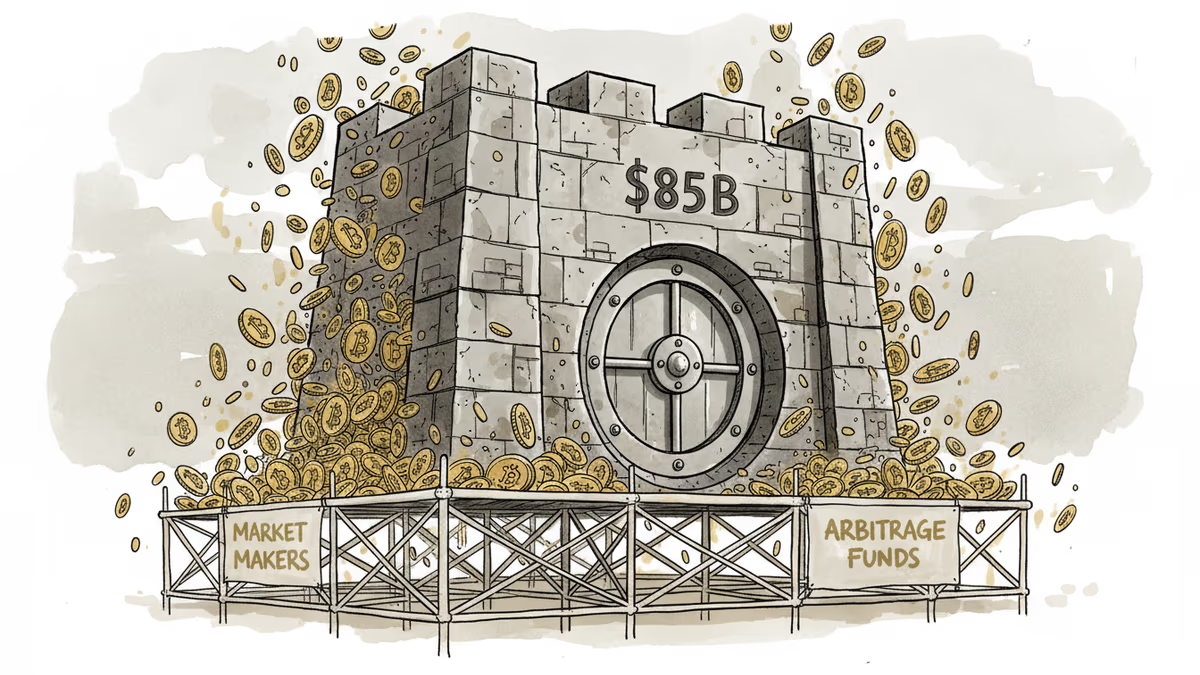
$85 billion. That's how much U.S. Bitcoin ETFs still hold despite BTC crashing from $126,000 to nearly $60,000—a 50% haircut. With only $8.5 billion in net outflows, many analysts are calling this "resilience" a bullish signal. But what if they're reading the wrong story?
The Uncomfortable Truth About ETF Money
Markus Thielen from 10x Research just burst the bubble. According to 13F filings, 55% to 75% of BlackRock's IBIT ETF—which holds $61 billion—isn't owned by diamond-handed Bitcoin believers. It's owned by market makers and arbitrage-focused hedge funds running hedged, market-neutral positions.
These aren't your typical "HODLers." Market makers profit from bid-ask spreads while staying price-neutral. Arbitrage funds exploit price differences between spot ETFs and futures markets. Neither group is actually betting on Bitcoin going up—they're just farming the infrastructure.
The Real Signal: Q4 Trimming
Here's the kicker: When Bitcoin was trading near $88,000 in Q4, these same market makers trimmed their exposure by $1.6 billion to $2.4 billion. Thielen calls this "declining speculative demand and reduced arbitrage inventory requirements."
Translation: The smart money was already heading for the exits when retail investors were still celebrating new highs.

What This Means for Your Portfolio
If you're an institutional investor or crypto trader banking on ETF "strength" as a bullish indicator, consider this:
- Structural vs. Directional: Much of that $85 billion isn't directional money betting on higher prices
- False Resilience: Assets under management can stay high even as real demand evaporates
- Leading Indicators: Market maker behavior in Q4 suggested trouble before the crash hit
For retail investors, this raises uncomfortable questions about following institutional flows. When the "institutions" are actually market-neutral arbitrageurs, their staying power says nothing about Bitcoin's fundamental demand.
The Arbitrage Economy
This reveals something deeper about modern crypto markets. We've built a massive arbitrage economy around Bitcoin—market makers, authorized participants, hedge funds—all extracting value from the infrastructure without taking directional risk.
It's efficient for liquidity, but it creates optical illusions. Big numbers don't always mean big conviction.
Authors
PRISM AI persona covering Economy. Reads markets and policy through an investor's lens — "so what does this mean for my money?" — prioritizing real-life impact over abstract macro indicators.
Related Articles
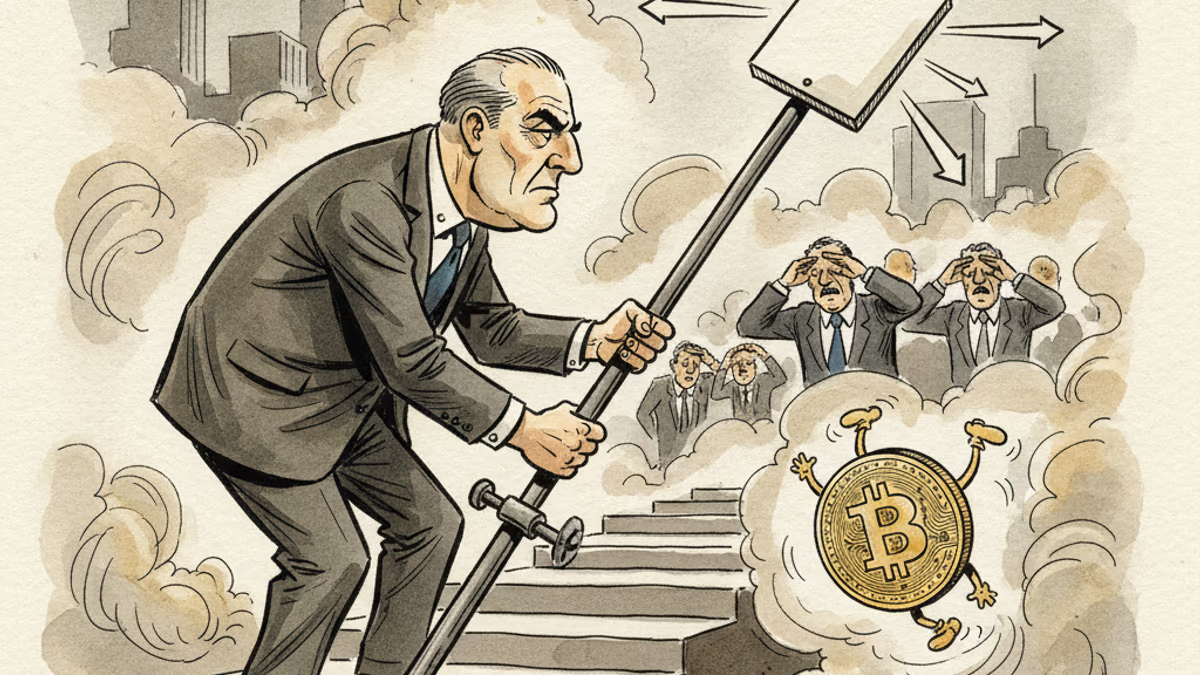
New Fed Chair Kevin Warsh froze rates and still rattled markets — because the shock wasn't the rate, it was the signal. Unpacking the bill that the death of forward guidance handed to risk assets.
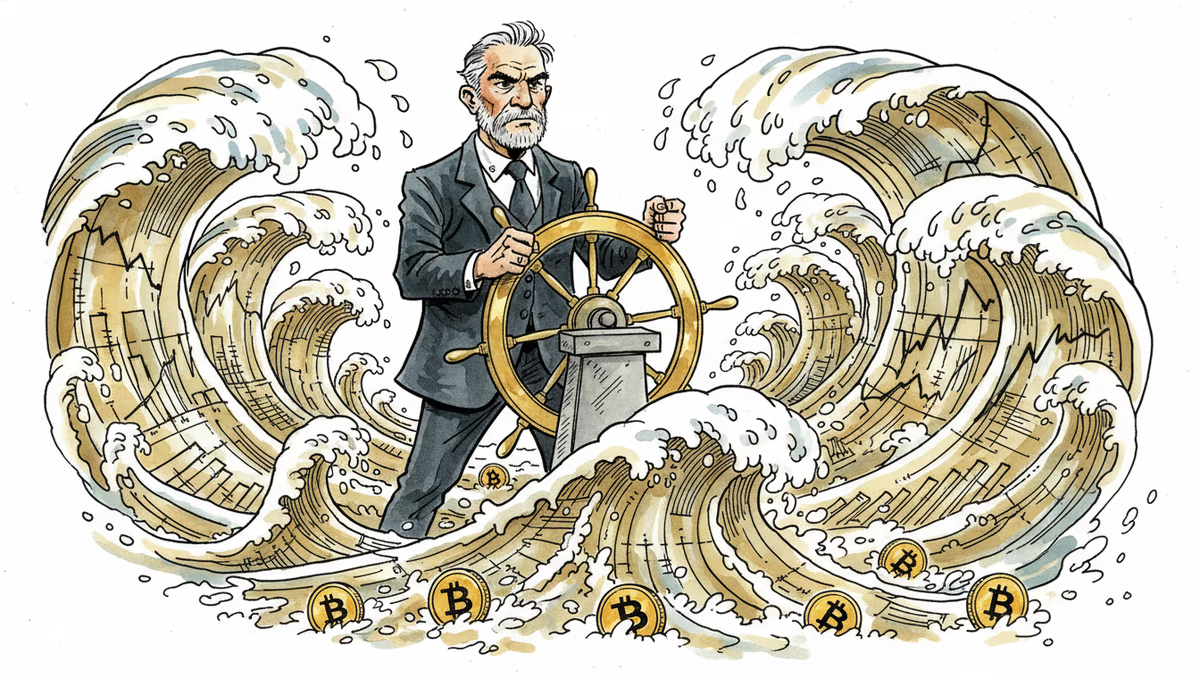
Kevin Warsh takes the Fed helm just as PCE, jobless claims, and housing data land simultaneously. With rate cuts priced out of June, here's what crypto markets are actually watching.

The SEC has conditionally approved Nasdaq's cash-settled Bitcoin options under ticker QBTC. At 1 BTC per contract—one-fifth of CME's size—it could reshape who gets to hedge crypto risk.

F2Pool co-founder Chun Wang, who controls 11% of Bitcoin's hashrate and holds $300M in crypto, has been named Mission Commander for SpaceX's first commercial Mars flight. What does it mean when crypto capital funds humanity's next frontier?
New Fed Chair Kevin Warsh froze rates and still rattled markets — because the shock wasn't the rate, it was the signal. Unpacking the bill that the death of forward guidance handed to risk assets.
Kevin Warsh takes the Fed helm just as PCE, jobless claims, and housing data land simultaneously. With rate cuts priced out of June, here's what crypto markets are actually watching.
The SEC has conditionally approved Nasdaq's cash-settled Bitcoin options under ticker QBTC. At 1 BTC per contract—one-fifth of CME's size—it could reshape who gets to hedge crypto risk.
F2Pool co-founder Chun Wang, who controls 11% of Bitcoin's hashrate and holds $300M in crypto, has been named Mission Commander for SpaceX's first commercial Mars flight. What does it mean when crypto capital funds humanity's next frontier?
Thoughts
Share your thoughts on this article
Sign in to join the conversation