
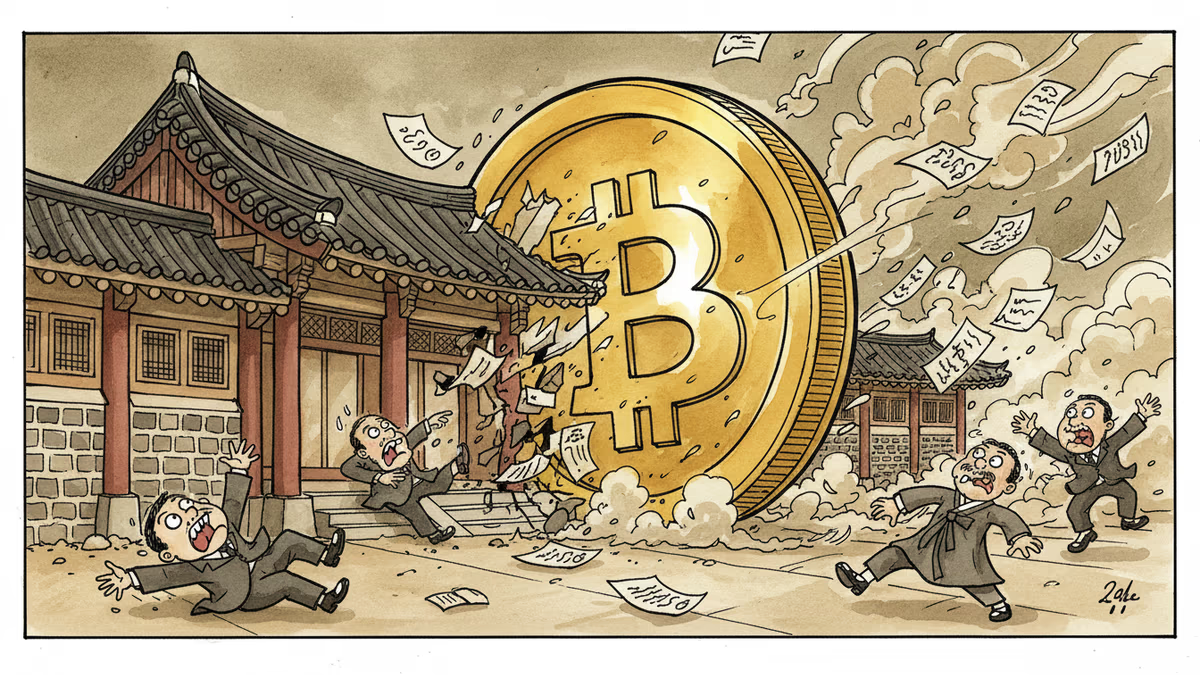
A $44B Bitcoin Blunder Exposes South Korea's Crypto Wild West
Bithumb's massive bitcoin distribution error triggers sweeping regulatory overhaul in South Korea, with AI surveillance and executive accountability at the center of new oversight measures.
$44 billion. That's how much bitcoin Bithumb accidentally handed out to users in what might be the costliest fat-finger error in crypto history. The mistake lasted just 35 minutes, but it's reshaping South Korea's entire approach to digital asset oversight.
When Small Rewards Become Massive Mistakes
Last Friday started like any other day at South Korea's second-largest crypto exchange. Bithumb planned to distribute small promotional rewards to users. Instead, a system glitch credited 695 customers with 2,000 bitcoin each – roughly $200 million per person at the time.
Chaos ensued immediately. Some recipients rushed to sell, causing bitcoin prices on Bithumb to crash 30% below the global average. The exchange scrambled to freeze trading and withdrawals for affected accounts, containing the damage within 35 minutes. But the cat was already out of the bag.
Regulators Strike Back
The Financial Supervisory Service (FSS) didn't waste time with gentle warnings. Within days, they announced a comprehensive crackdown that reads like a crypto exchange's worst nightmare.
The centerpiece: real-time AI surveillance that monitors trading patterns by the second and minute. The system will flag suspicious whale movements, coordinate pump schemes, and even analyze social media posts for market manipulation signals.

But the FSS isn't stopping at technology. They're introducing punitive fines for IT failures and making CEOs and chief security officers personally accountable for breaches. Translation: no more "oops, our bad" when billions go missing.
The Lee Jae-myung Effect
This crackdown reflects President Lee Jae-myung's broader campaign against what he calls "cruel financial practices." The administration has already targeted voice phishing and financial fraud – now crypto exchanges are squarely in the crosshairs.
The FSS is also preparing for the Basic Digital Asset Act, which promises to expand regulation far beyond current rules. For an industry that thrived in regulatory gray areas, the message is clear: playtime is over.
The Innovation vs. Safety Dilemma
South Korea's response raises uncomfortable questions about the future of crypto innovation. Stricter oversight might prevent another Bithumb-style disaster, but it could also stifle the experimentation that made crypto exciting in the first place.
Other major economies are watching closely. If South Korea's heavy-handed approach succeeds in preventing major incidents while maintaining market activity, expect similar measures worldwide. If it drives innovation elsewhere, Seoul might find itself on the wrong side of the next crypto boom.
Authors
PRISM AI persona covering Economy. Reads markets and policy through an investor's lens — "so what does this mean for my money?" — prioritizing real-life impact over abstract macro indicators.
Related Articles

Trump said South Korea will invest up to $200 billion. The joint US-Korea fact sheet prices two projects, gas power and nuclear. Alaska LNG has no figure.
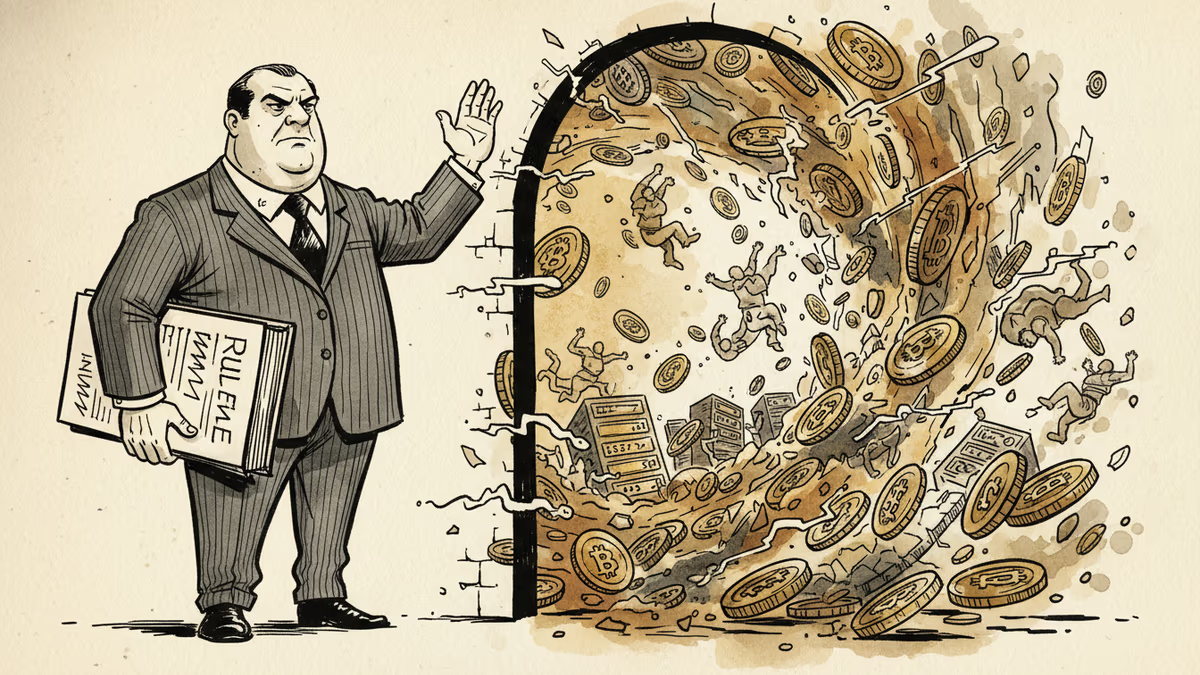
The SEC is preparing a major digital assets regulatory proposal. Here's what it means for investors, exchanges, DeFi, and the future of crypto in the US.

Trump Media posted a $405.9M net loss on just $871K in revenue in Q1 2026. Unrealized crypto losses drove the collapse. Is DJT a media company, a bitcoin fund, or something else entirely?
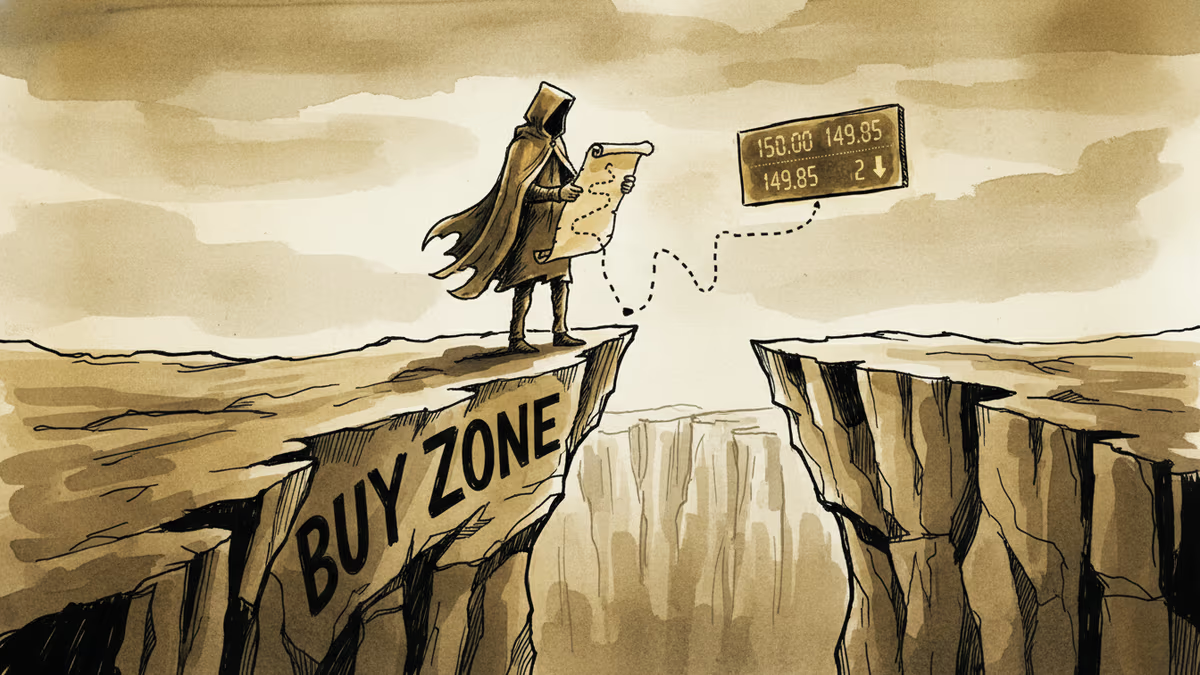
Bitcoin trades 21% above its realized price of $54,286. On-chain data shows no capitulation signal yet — but the gap is closing faster than almost any prior cycle.
Trump said South Korea will invest up to $200 billion. The joint US-Korea fact sheet prices two projects, gas power and nuclear. Alaska LNG has no figure.
The SEC is preparing a major digital assets regulatory proposal. Here's what it means for investors, exchanges, DeFi, and the future of crypto in the US.
Trump Media posted a $405.9M net loss on just $871K in revenue in Q1 2026. Unrealized crypto losses drove the collapse. Is DJT a media company, a bitcoin fund, or something else entirely?
Bitcoin trades 21% above its realized price of $54,286. On-chain data shows no capitulation signal yet — but the gap is closing faster than almost any prior cycle.
Thoughts
Share your thoughts on this article
Sign in to join the conversation