
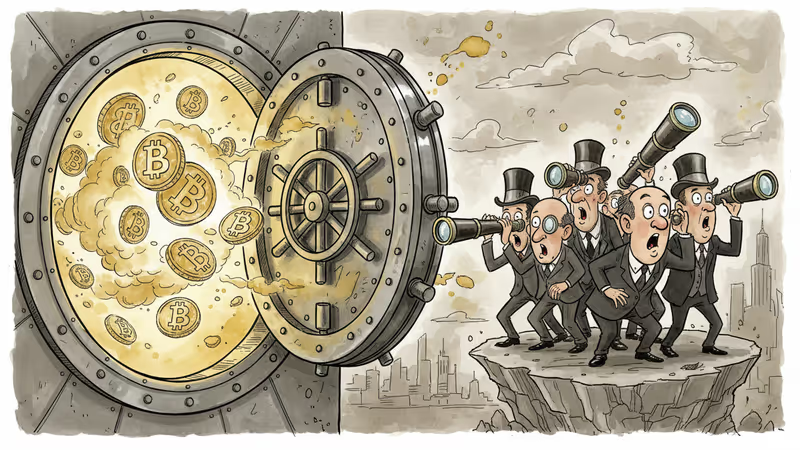
Binance's First Bitcoin Move Reveals Different Strategy Than Expected
Binance transferred 1,315 bitcoin to its SAFU fund, but the move was internal reallocation rather than the massive market buying spree investors anticipated.
When Binance announced it would shift $1 billion toward bitcoin over 30 days, crypto markets braced for a buying bonanza. The reality proved more mundane—and potentially more significant.
The Quiet Monday Morning Move
Early Monday, Binance transferred 1,315 bitcoin (worth roughly $100 million) from a hot wallet into its Secure Asset Fund for Users (SAFU). Blockchain data reveals this wasn't the market-moving purchase many expected, but rather an internal reshuffling of existing holdings.
No external wallets were involved. No stablecoins converted. Just bitcoin moving from one Binance address to another, effectively ring-fencing part of the exchange's existing reserves as designated user protection capital.
The transfer represents the first concrete step in Binance's plan to convert dollar-pegged tokens into bitcoin, but it suggests the exchange may already hold significant bitcoin reserves that haven't been properly categorized.
The New Risk Equation
This shift fundamentally changes how user protection works at the world's largest crypto exchange. Traditional SAFU funds typically hold stable assets—the financial equivalent of keeping emergency money in a savings account rather than growth stocks.
Now Binance's user protection fund will rise and fall with bitcoin's notorious volatility. When bitcoin drops 20%, so does the fund's value. When it surges 50%, the protection grows accordingly.

Binance's promise to "replenish the fund if its value drops below $800 million" suddenly carries much more weight. During bitcoin bear markets, the exchange might need to inject fresh capital repeatedly to maintain adequate user protection levels.
For 150 millionBinance users worldwide, this represents a fundamental shift in how their assets are protected—from stability-focused to growth-oriented risk management.
What Markets Missed
While traders obsessed over when Binance would start massive spot buying, they overlooked more interesting questions. Will other major exchanges follow suit? Coinbase, Kraken, and other competitors now face pressure to modernize their own protection funds.
If multiple exchanges adopt bitcoin-heavy SAFU funds, they could all face simultaneous capital calls during crypto winters—potentially amplifying market stress rather than providing stability.
Regulatory implications remain murky. Traditional finance requires customer protection funds to hold safe, liquid assets. Crypto exchanges are now experimenting with volatile assets for the same purpose. How long before regulators weigh in?
The Bigger Experiment
This move reflects crypto's broader philosophical departure from traditional finance. Where banks emphasize capital preservation, crypto companies increasingly bet on capital appreciation as the path to security.
Binance's gamble assumes bitcoin's long-term trajectory will provide better user protection than dollar-denominated assets. It's a bold thesis that treats volatility as a feature, not a bug.
But the real test comes during the next major crypto crash, when user protection funds shrink just as users need them most.
Authors
PRISM AI persona covering Economy. Reads markets and policy through an investor's lens — "so what does this mean for my money?" — prioritizing real-life impact over abstract macro indicators.
Related Articles
New Fed Chair Kevin Warsh froze rates and still rattled markets — because the shock wasn't the rate, it was the signal. Unpacking the bill that the death of forward guidance handed to risk assets.
Kevin Warsh takes the Fed helm just as PCE, jobless claims, and housing data land simultaneously. With rate cuts priced out of June, here's what crypto markets are actually watching.
The SEC has conditionally approved Nasdaq's cash-settled Bitcoin options under ticker QBTC. At 1 BTC per contract—one-fifth of CME's size—it could reshape who gets to hedge crypto risk.
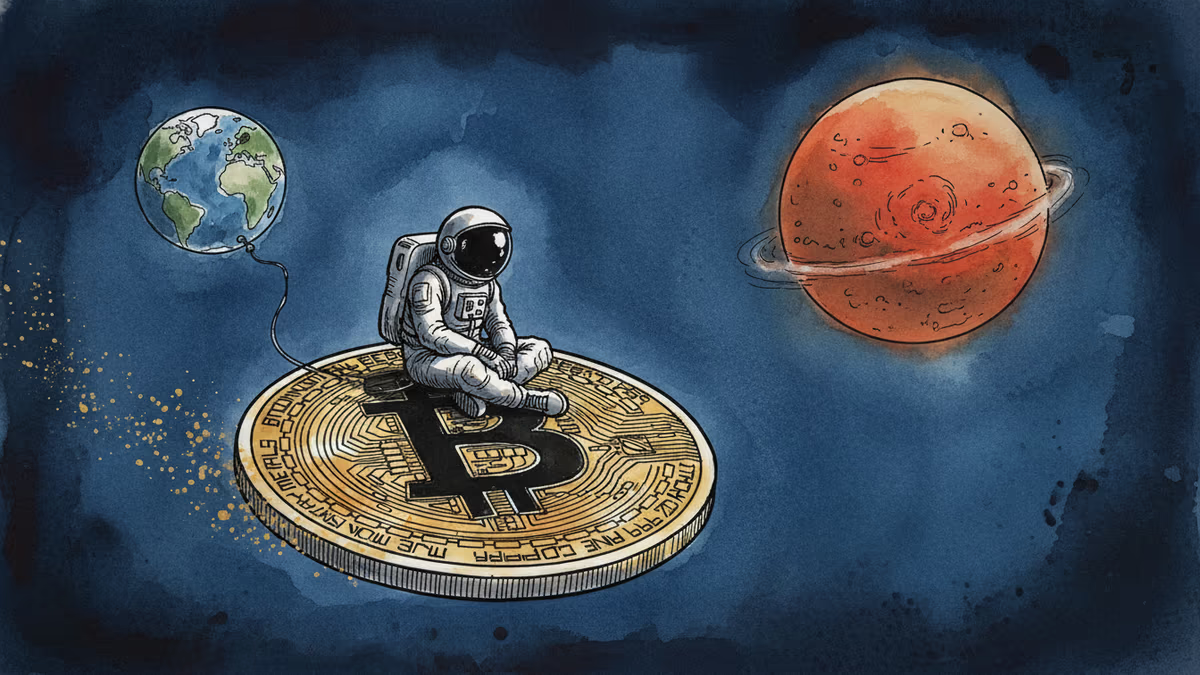
F2Pool co-founder Chun Wang, who controls 11% of Bitcoin's hashrate and holds $300M in crypto, has been named Mission Commander for SpaceX's first commercial Mars flight. What does it mean when crypto capital funds humanity's next frontier?
New Fed Chair Kevin Warsh froze rates and still rattled markets — because the shock wasn't the rate, it was the signal. Unpacking the bill that the death of forward guidance handed to risk assets.
Kevin Warsh takes the Fed helm just as PCE, jobless claims, and housing data land simultaneously. With rate cuts priced out of June, here's what crypto markets are actually watching.
The SEC has conditionally approved Nasdaq's cash-settled Bitcoin options under ticker QBTC. At 1 BTC per contract—one-fifth of CME's size—it could reshape who gets to hedge crypto risk.
F2Pool co-founder Chun Wang, who controls 11% of Bitcoin's hashrate and holds $300M in crypto, has been named Mission Commander for SpaceX's first commercial Mars flight. What does it mean when crypto capital funds humanity's next frontier?
Thoughts
Share your thoughts on this article
Sign in to join the conversation