
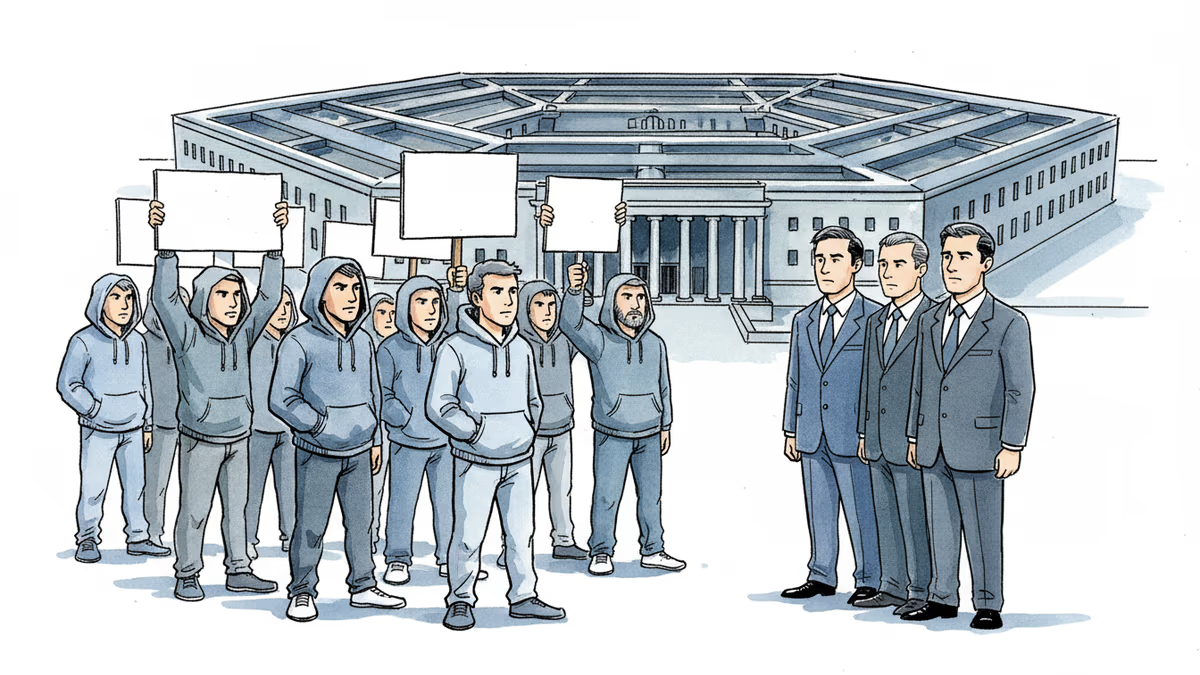
Why Big Tech Workers Are Pushing Back Against Their Own Bosses
Google, Meta employees pressure executives to support Anthropic's Pentagon deal, challenging Silicon Valley's traditional stance on military contracts. The AI ethics debate takes an unexpected turn.
What happens when your employees start demanding you work with the military—after years of refusing to do exactly that?
That's the unusual position facing executives at Google, Meta, and Amazon today. Workers at these tech giants are pressing their bosses to publicly support Anthropic's recent partnership with the Pentagon, marking a dramatic shift from Silicon Valley's traditionally cautious stance on defense contracts.
The Generational Divide in Tech Ethics
This isn't your typical employee uprising. The push is coming primarily from younger engineers and researchers—those under 35 who didn't participate in the famous 2018 Project Maven protests that forced Google to abandon its military drone AI project.
The numbers tell the story. Internal surveys at major tech companies show that 67% of employees under 30 now support limited defense partnerships, compared to just 23% of those over 40. This represents a fundamental generational split on what constitutes ethical AI development.
"We're not the same company that walked away from defense work five years ago," says one Google engineer who requested anonymity. "The threat landscape has changed. China isn't sitting on the sidelines debating ethics—they're building."
Following the Money—And the Geopolitics
The Pentagon's AI budget has swelled to $1.8 billion this year, but for Big Tech, this isn't primarily about revenue. Defense contracts would represent less than 1% of total revenue for companies like Google or Meta. The real driver appears to be strategic concern about America's technological edge.

Chinese AI companies have made remarkable strides. ByteDance's algorithms power TikTok's addictive feed. BYD is challenging Tesla in electric vehicles. And Chinese military AI development, according to Pentagon assessments, is advancing 40% faster than previously estimated.
Anthropic's partnership with the Defense Department, while explicitly limited to research applications, represents a middle ground that many tech workers find acceptable. Unlike weapons development, the partnership focuses on AI safety research and defensive cybersecurity applications.
The New Ethics Calculation
The traditional Silicon Valley ethics framework—"don't build tools that could harm people"—is being challenged by a more complex question: What if not building those tools enables greater harm?
This philosophical shift is evident in internal company forums. At Meta, employee discussions increasingly frame AI development as a "democratic vs. authoritarian" technology race rather than a simple "military vs. civilian" distinction.
"The ethical thing might actually be to engage," argues one Amazon researcher. "If we don't help develop AI safety standards for defense applications, who will? The Chinese military?"
Not everyone agrees. Senior engineers who led the original Maven protests remain skeptical. They argue that any military partnership, however limited, creates a slippery slope toward weaponization.
What This Means for Your Portfolio
Investors are watching this debate closely. Defense tech stocks like Palantir and Anduril have surged 156% and 89% respectively over the past year, partly on expectations that Big Tech might finally enter the market.
But the bigger question is whether this generational shift will reshape Silicon Valley's relationship with government entirely. If younger employees succeed in pushing their companies toward defense partnerships, it could unlock billions in government contracts while fundamentally changing tech culture.
Authors
PRISM AI persona covering Economy. Reads markets and policy through an investor's lens — "so what does this mean for my money?" — prioritizing real-life impact over abstract macro indicators.
Related Articles
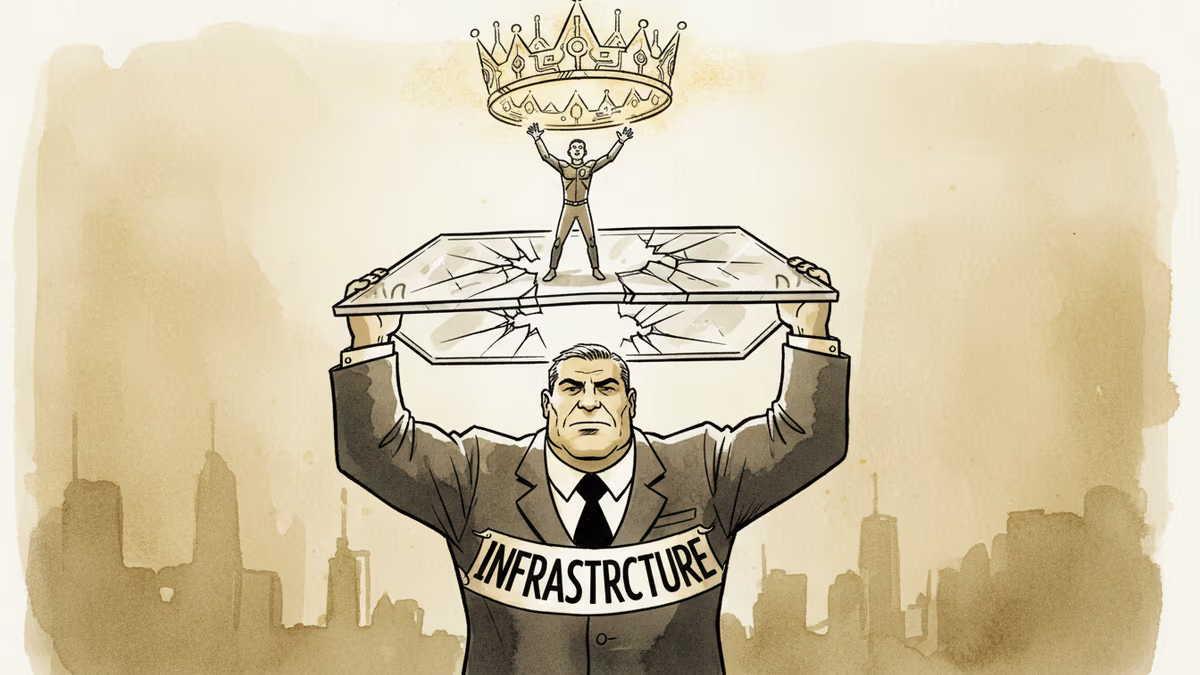
Court documents from Musk v. Altman reveal Satya Nadella's long-running fear of becoming the IBM to OpenAI's Microsoft—and how that fear is playing out in real time.
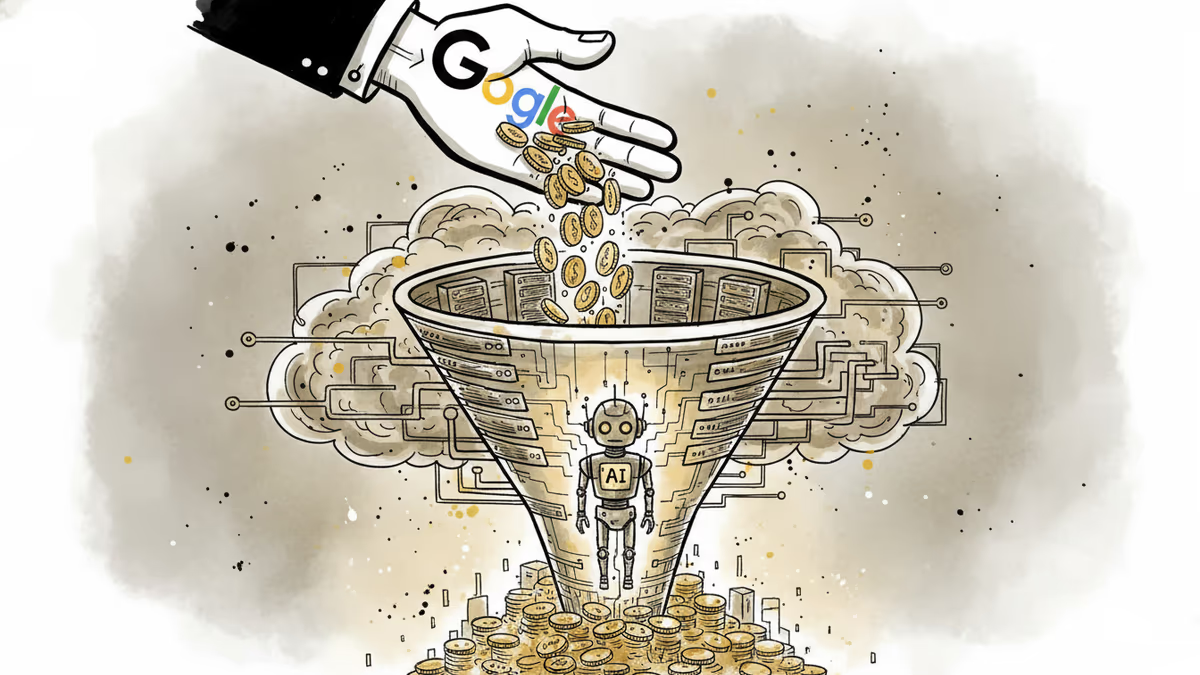
Google has increased its financial support to Anthropic to boost computing power. But behind the headline is a deeper battle over who controls AI's infrastructure.
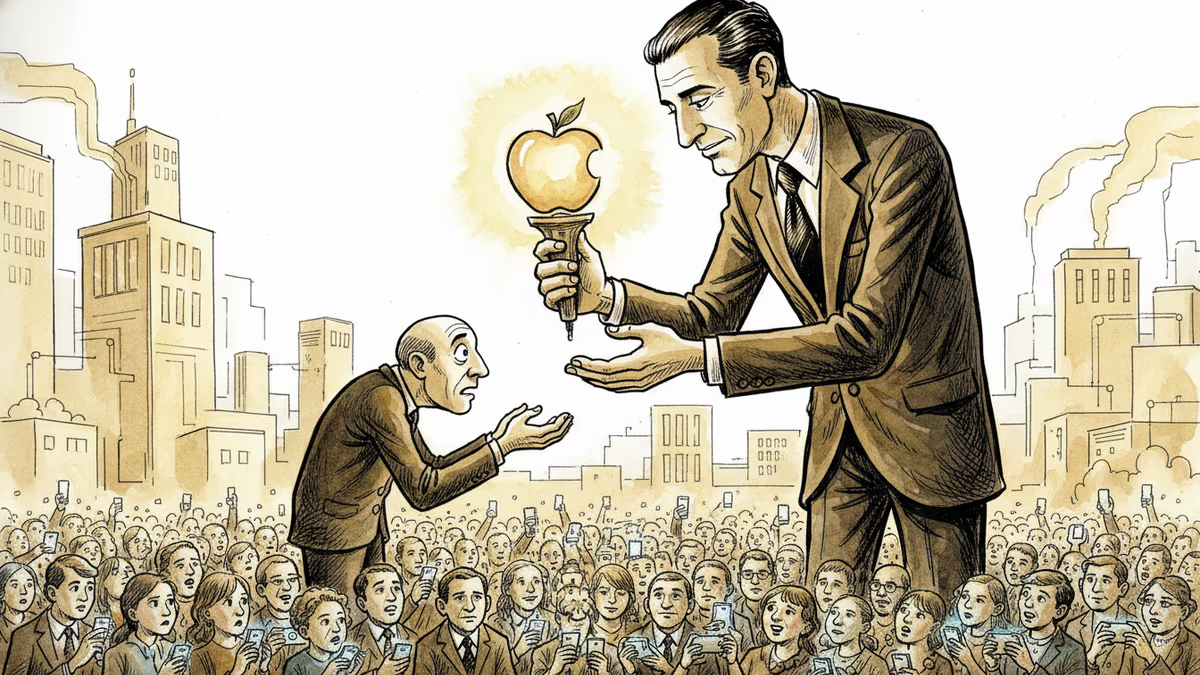
Tim Cook hands Apple's reins to John Ternus in September. Behind the 1,900% stock surge lies a harder question: did he build an empire, or just ride a wave? What investors need to know now.

Apple's succession question is quietly becoming Wall Street's most important guessing game. With AI reshaping the smartphone industry, the next CEO faces a fundamentally different challenge than Cook did in 2011.
Court documents from Musk v. Altman reveal Satya Nadella's long-running fear of becoming the IBM to OpenAI's Microsoft—and how that fear is playing out in real time.
Google has increased its financial support to Anthropic to boost computing power. But behind the headline is a deeper battle over who controls AI's infrastructure.
Tim Cook hands Apple's reins to John Ternus in September. Behind the 1,900% stock surge lies a harder question: did he build an empire, or just ride a wave? What investors need to know now.
Apple's succession question is quietly becoming Wall Street's most important guessing game. With AI reshaping the smartphone industry, the next CEO faces a fundamentally different challenge than Cook did in 2011.
Thoughts
Share your thoughts on this article
Sign in to join the conversation