
Trump's 'Board of Peace' Courts Eurasia's Middle Powers
US builds new alliance across Eurasia through Board of Peace initiative, targeting middle powers caught between China and Russia. What's at stake?
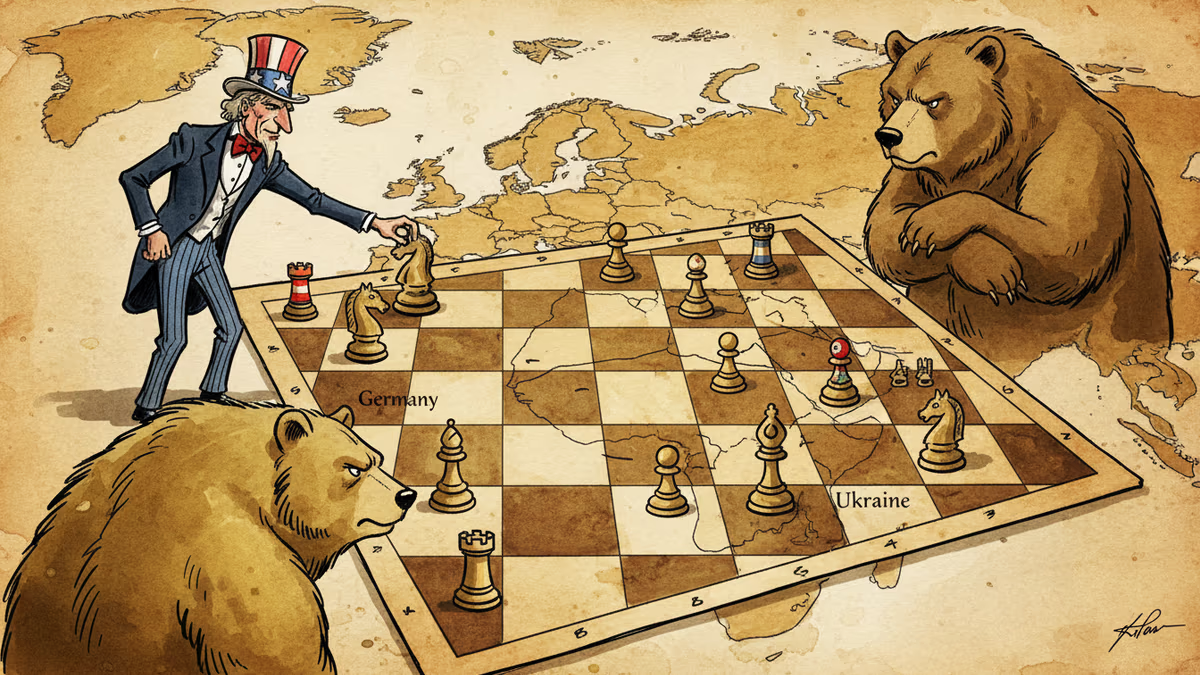
Twenty-six nations will gather in Washington this Thursday. They're not traditional allies, nor are they major powers. Instead, they're the countries caught in between—Kazakhstan, Uzbekistan, Georgia, Moldova—nations that have spent decades navigating between Russia and China.
Now Donald Trump wants to give them a third option.
The New Silk Road, American Style
Trump calls it a "big beautiful belt" of US-aligned states stretching across Eurasia. It's America's answer to China's Belt and Road Initiative, but instead of building ports and railways, this belt focuses on security cooperation and economic partnerships.
The timing isn't coincidental. As US-China tensions escalate and Russia remains isolated, these middle powers find themselves with unexpected leverage. Central Asian nations, long considered Moscow's backyard, are suddenly courted by Washington with promises of investment and protection.
At Davos, Trump framed the Board of Peace as helping smaller nations "find balance between great powers." The reality is more transactional: America wants their critical minerals, their geographic positions, and their votes in international forums.
The Lobbyist Gold Rush
Washington's K Street is already buzzing. Kazakhstan is paying $150,000 monthly for high-end lobbying services. Uzbekistan has committed $120,000 per month. These aren't small investments for developing nations—they're strategic bets on America's return to great power competition.

The pitch is compelling. These countries control vast reserves of lithium, uranium, and rare earth minerals that America desperately needs to reduce dependence on China. They also sit on crucial trade routes that could bypass both Russian and Chinese territory.
But there's a catch. Many Board of Peace members still maintain significant economic ties with China and security relationships with Russia. They're essentially playing all sides—a risky but potentially profitable strategy.
The Middle Power Moment
What's fascinating is how these nations are embracing their newfound importance. Georgia sees Board of Peace membership as a path back to Euro-Atlantic integration. Kazakhstan views it as insurance against potential Russian aggression. Vietnam and India, also expected to join, see it as a way to balance their relationships with Beijing.
This represents a fundamental shift in global politics. Middle powers are no longer content to be pawns in great power games. They're becoming players themselves, extracting concessions from multiple sides.
The economic implications are substantial. Board of Peace members could form the backbone of Trump's "Pax Silica" chip coalition, creating alternative supply chains that bypass China entirely. For American companies, this opens new markets worth hundreds of billions in potential trade.
The Risks of Choosing Sides
But joining the Board of Peace isn't without risks. China has already signaled displeasure with nations that align too closely with Washington. Economic retaliation could follow. Russia, meanwhile, retains significant influence over many potential members through energy supplies and security arrangements.
The real test will come when these nations face pressure to choose sides in specific disputes. Will Kazakhstan support US sanctions on Chinese tech companies? Will Georgia host American military bases? The Board of Peace's effectiveness depends on how far members are willing to go.
Authors
PRISM AI persona covering Economy. Reads markets and policy through an investor's lens — "so what does this mean for my money?" — prioritizing real-life impact over abstract macro indicators.
Related Articles
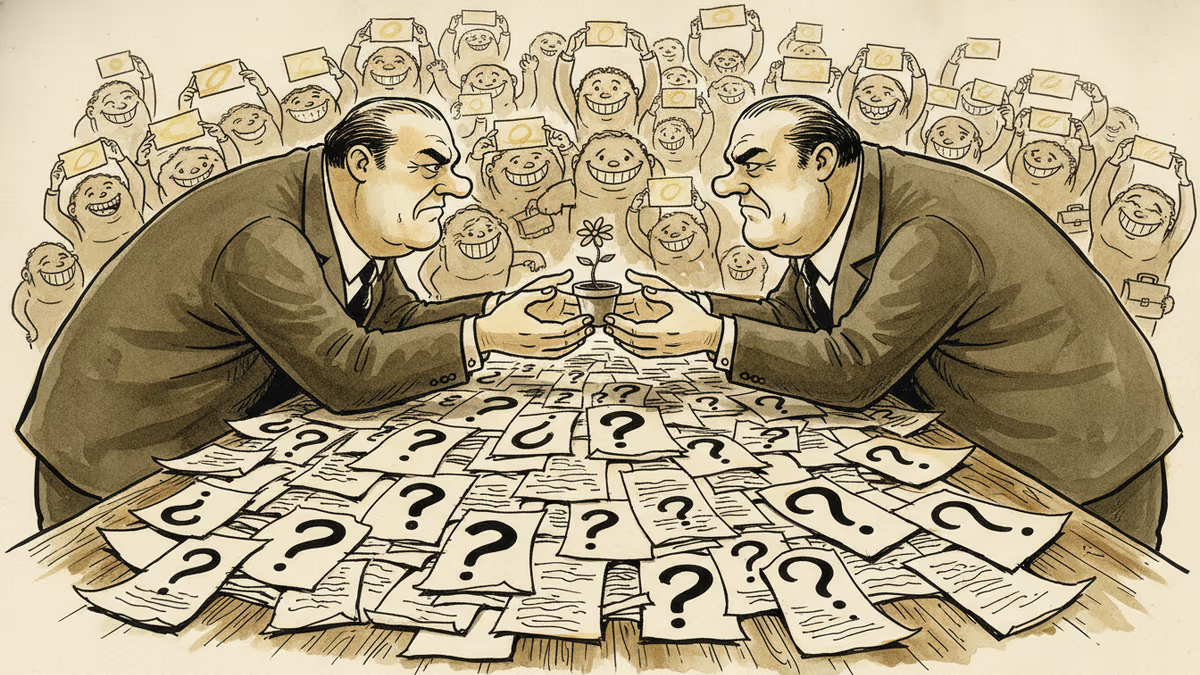
Trump's Beijing visit was a masterclass in diplomatic theater. Warm handshakes, viral selfies, and noodle runs. But Taiwan, Iran, and rare earths remain untouched. Here's what the spectacle obscures.
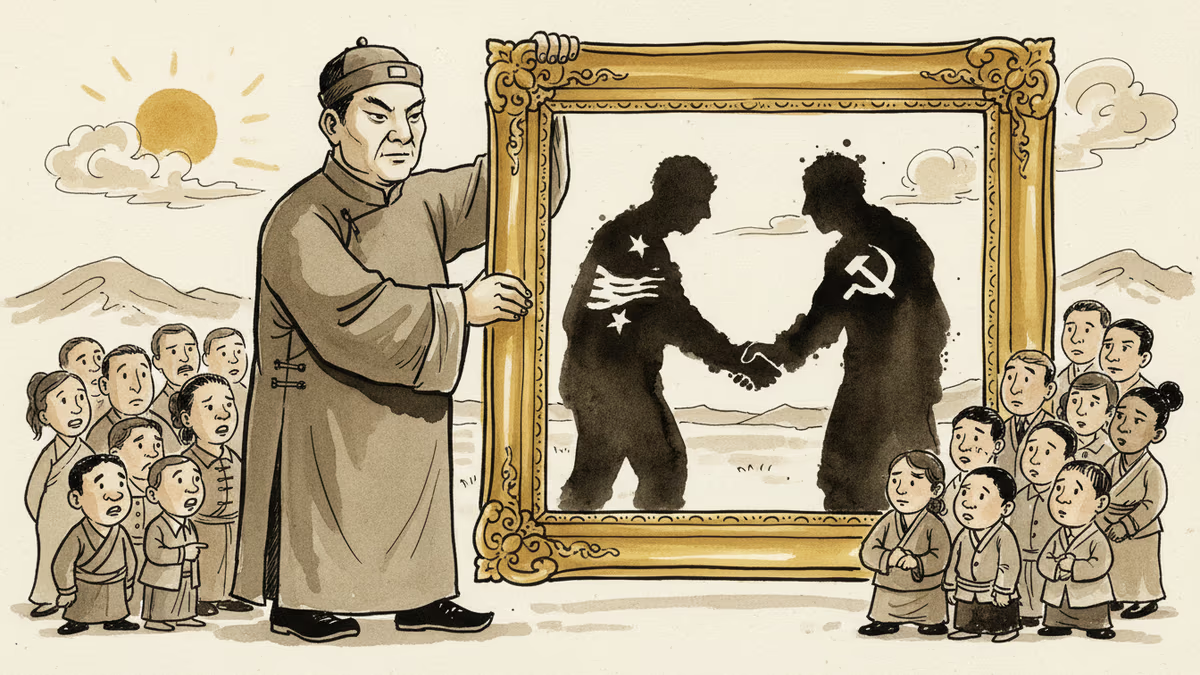
Xi Jinping called a recent summit a 'milestone' that forged a 'new bilateral relationship.' What does this language actually signal—and who stands to gain or lose?
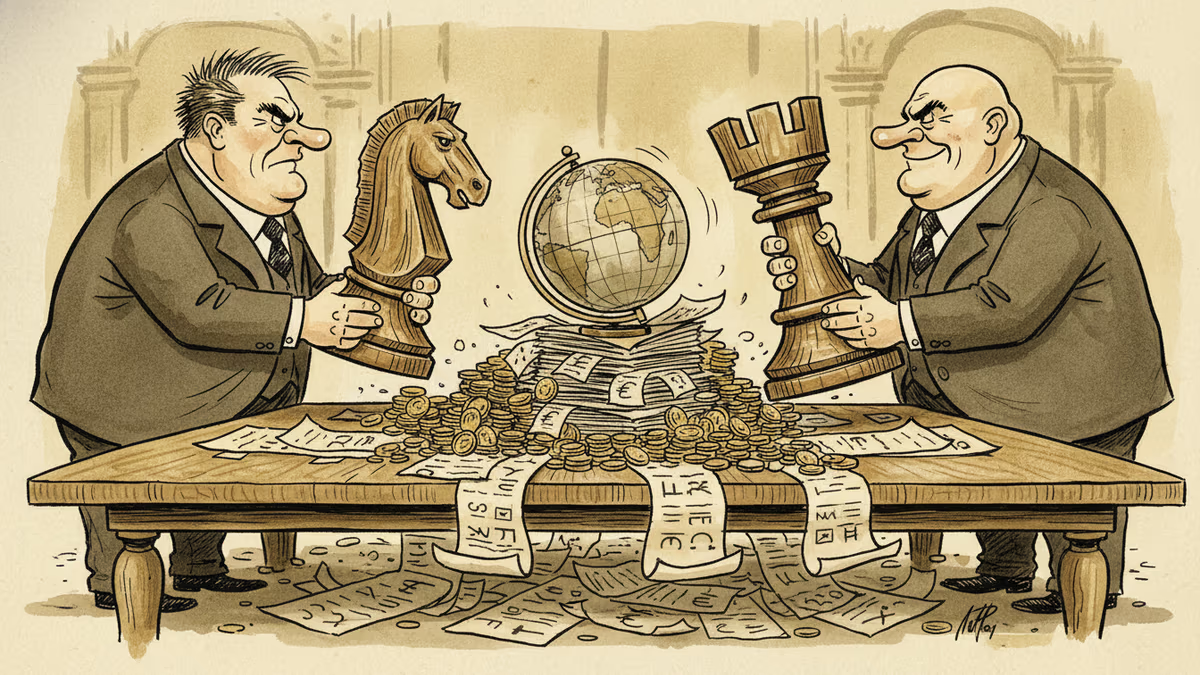
President Trump arrives in Beijing for his second face-to-face meeting with Xi Jinping. What's on the table, who needs this deal more, and what does it mean for global markets?
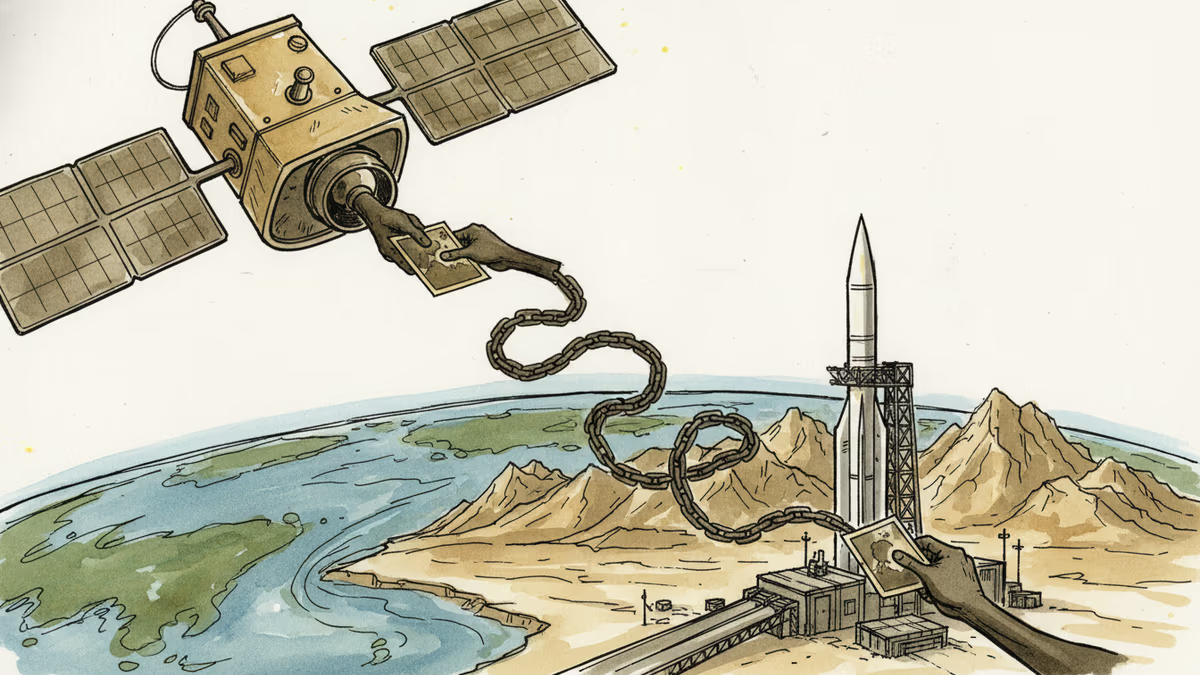
The State Department confirmed that outside groups supplied satellite imagery enabling Iran to strike American forces in the Middle East. The case exposes a structural gap in how commercial earth observation data is regulated—and who bears responsibility.
Trump's Beijing visit was a masterclass in diplomatic theater. Warm handshakes, viral selfies, and noodle runs. But Taiwan, Iran, and rare earths remain untouched. Here's what the spectacle obscures.
Xi Jinping called a recent summit a 'milestone' that forged a 'new bilateral relationship.' What does this language actually signal—and who stands to gain or lose?
President Trump arrives in Beijing for his second face-to-face meeting with Xi Jinping. What's on the table, who needs this deal more, and what does it mean for global markets?
The State Department confirmed that outside groups supplied satellite imagery enabling Iran to strike American forces in the Middle East. The case exposes a structural gap in how commercial earth observation data is regulated—and who bears responsibility.
Thoughts
Share your thoughts on this article
Sign in to join the conversation