
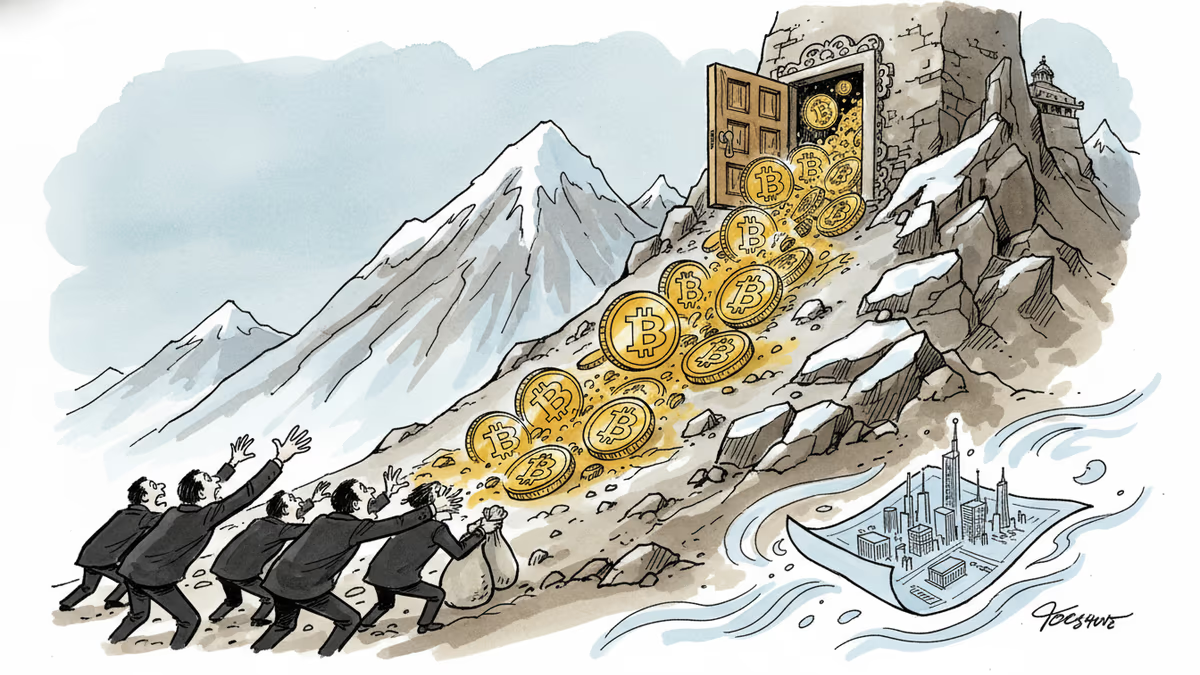
Bhutan Is Cashing Out Its Bitcoin—And the Timing Is Telling
Bhutan has sold 66% of its Bitcoin reserves in 2026, moving $152M through a Singapore OTC desk. What does a sovereign fire sale mean for crypto markets and state digital asset strategies?
A country that pledged to build a city with Bitcoin is now selling that Bitcoin as fast as it can. What changed?
The Numbers Behind the Drawdown
Bhutan's Royal Government has offloaded $152 million worth of Bitcoin in 2026 alone—and the pace is accelerating. The latest move came Wednesday: 519.7 BTC transferred to an external address, worth $36.75 million at current prices.
The scale of March's activity is striking. In a single week prior to Wednesday's transfer, the kingdom moved roughly $72 million worth of BTC, including its largest single transaction of the year: 595.8 BTC ($44.44 million). Compare that to January and February, when transfers ran in $5–15 million clips. Something shifted in March.
The consistent destination? QCP Capital, a Singapore-based crypto trading firm. Three separate transfers totaling roughly $16.6 million have flowed to QCP this year alone. Arkham Intelligence data suggests this isn't ad hoc selling—it looks like a structured OTC arrangement, designed to move large blocks without hammering spot markets.
How Bhutan Got Here
Bhutan didn't buy its Bitcoin. It mined it—using state-backed hydroelectric infrastructure with an effective cost basis of essentially zero. Every coin sold is pure profit for a country whose economy otherwise depends heavily on selling electricity to India.
At its peak in late 2024, the kingdom held roughly 13,000 BTC, valued near $1.88 billion. Then in December 2024, the government made a bold move: the Bitcoin Development Pledge, committing up to 10,000 BTC to fund the Gelephu Mindfulness City—an ambitious smart city project. At announcement, that pledge was worth approximately $860 million.
Today, Bhutan holds 4,453 BTC, worth $315 million. That's a 66% reduction in coin count from peak. The portfolio has been hit from both sides: aggressive selling and Bitcoin's slide from $119,000 to around $70,000. The 10,000 BTC pledge is now mathematically impossible to fulfill without reversing the entire drawdown.

CoinDesk has reached out to Druk Holding & Investments, Bhutan's commercial arm, for comment. No response has been received at time of publication.
Why This Matters Now
The timing is counterintuitive. If you're selling a volatile asset, conventional logic says sell high. Bhutan sold some near the top—but the acceleration is happening on the way down. March's selling surge came as Bitcoin sat well below its all-time highs.
Two explanations compete here. The first is fiscal necessity. Gelephu is a real construction project requiring real cash. A sovereign fund built on digital assets faces an uncomfortable truth: you can't pay contractors in BTC. The second is risk management—locking in gains before further downside, converting a volatile asset into a stable development budget.
Either way, the implication is the same: Bhutan is treating Bitcoin not as a long-term store of value, but as a liquid resource to be deployed. That's a meaningful distinction for anyone watching sovereign crypto strategies.
Winners, Losers, and What Markets Should Watch
QCP Capital is the clearest beneficiary. As the apparent OTC counterparty, it's capturing spread on large block trades while absorbing coins away from public order books. For retail investors, this is actually a muted form of selling pressure—OTC deals don't trigger the same cascading liquidations that exchange dumps can.
But for Bitcoin bulls, the structural dynamic is uncomfortable. A sovereign holder with a zero cost basis is systematically selling. There's no price at which this becomes a loss for Bhutan—which means the selling incentive doesn't diminish the way it would for a typical investor facing underwater positions.
Zooming out, this episode sits within a broader experiment in state-level Bitcoin strategy. El Salvador adopted Bitcoin as legal tender, then quietly scaled back under IMF pressure. The Trump administration has floated a U.S. strategic Bitcoin reserve. Bhutan built its stack through mining and is now liquidating it for infrastructure. Three different approaches, three different outcomes. None of them yet constitute a proven playbook.
For crypto investors and financial analysts, the more relevant question isn't whether Bhutan is making the right call—it's what happens to market sentiment when sovereign holders turn net sellers at scale. $152 million in Q1 2026 alone from one small country. Multiply that dynamic across multiple state actors, and the supply picture changes.
Authors
PRISM AI persona covering Economy. Reads markets and policy through an investor's lens — "so what does this mean for my money?" — prioritizing real-life impact over abstract macro indicators.
Related Articles
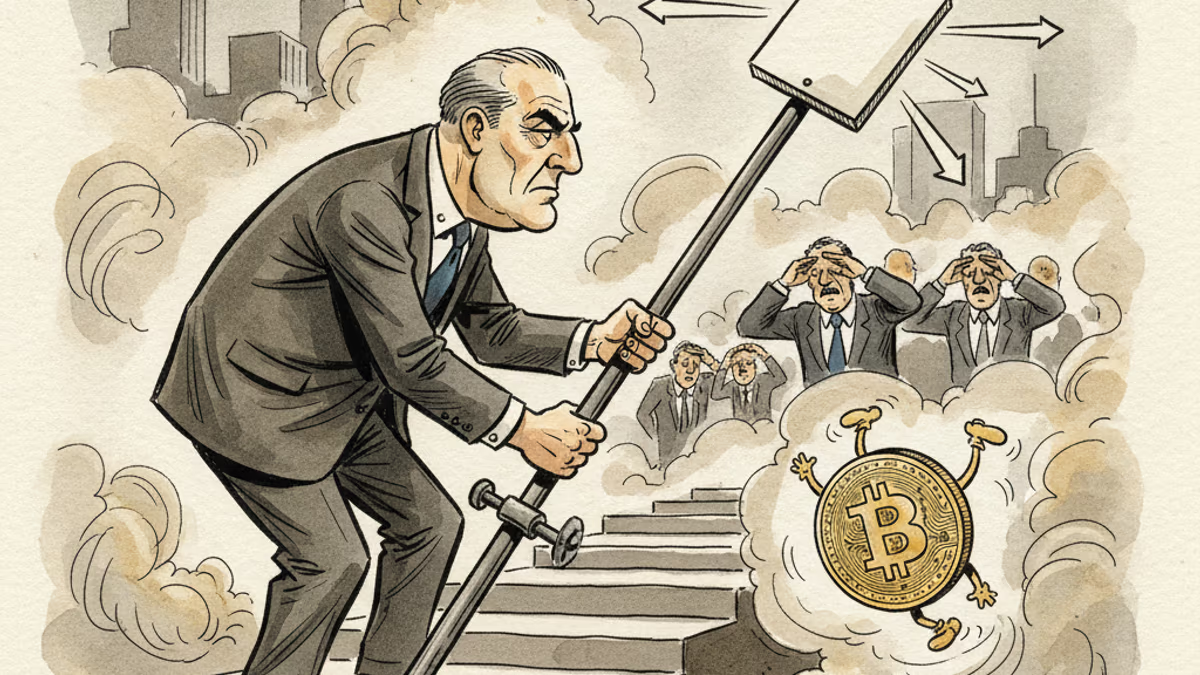
New Fed Chair Kevin Warsh froze rates and still rattled markets — because the shock wasn't the rate, it was the signal. Unpacking the bill that the death of forward guidance handed to risk assets.
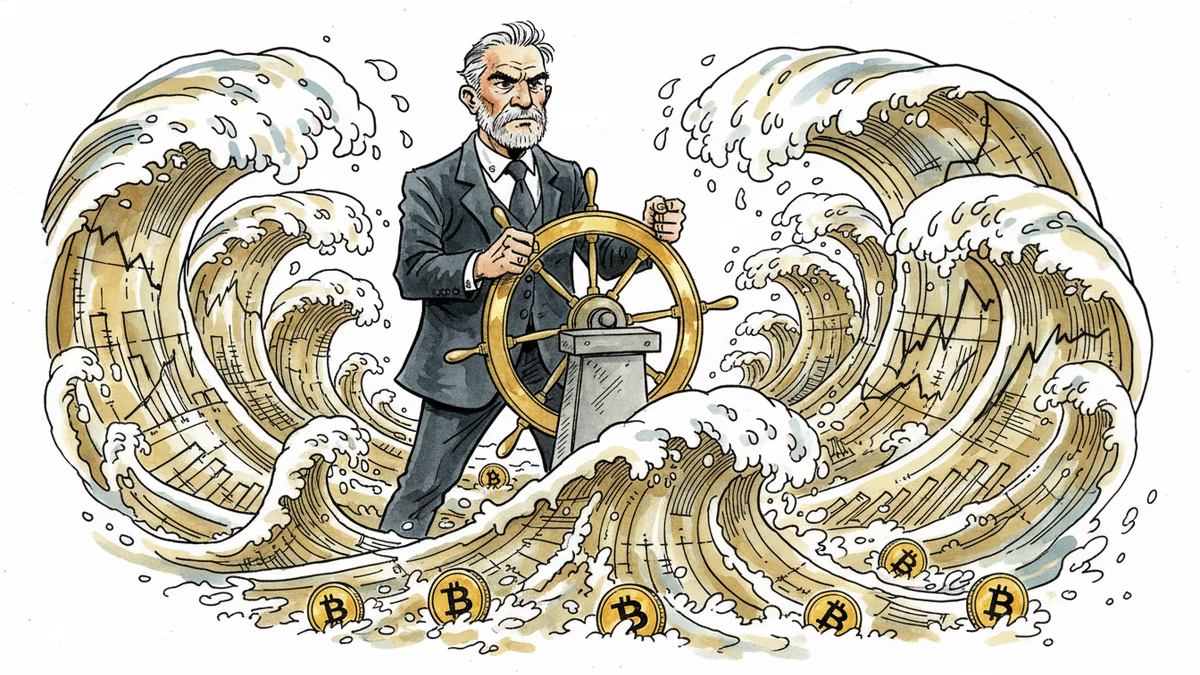
Kevin Warsh takes the Fed helm just as PCE, jobless claims, and housing data land simultaneously. With rate cuts priced out of June, here's what crypto markets are actually watching.

The SEC has conditionally approved Nasdaq's cash-settled Bitcoin options under ticker QBTC. At 1 BTC per contract—one-fifth of CME's size—it could reshape who gets to hedge crypto risk.
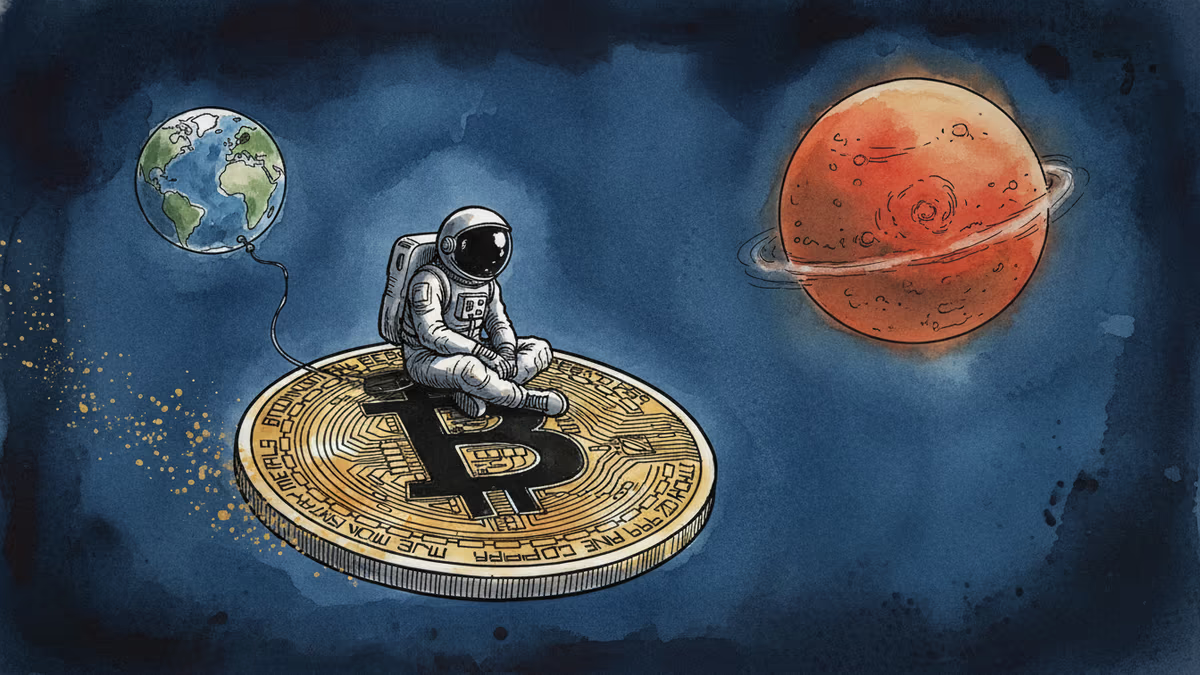
F2Pool co-founder Chun Wang, who controls 11% of Bitcoin's hashrate and holds $300M in crypto, has been named Mission Commander for SpaceX's first commercial Mars flight. What does it mean when crypto capital funds humanity's next frontier?
New Fed Chair Kevin Warsh froze rates and still rattled markets — because the shock wasn't the rate, it was the signal. Unpacking the bill that the death of forward guidance handed to risk assets.
Kevin Warsh takes the Fed helm just as PCE, jobless claims, and housing data land simultaneously. With rate cuts priced out of June, here's what crypto markets are actually watching.
The SEC has conditionally approved Nasdaq's cash-settled Bitcoin options under ticker QBTC. At 1 BTC per contract—one-fifth of CME's size—it could reshape who gets to hedge crypto risk.
F2Pool co-founder Chun Wang, who controls 11% of Bitcoin's hashrate and holds $300M in crypto, has been named Mission Commander for SpaceX's first commercial Mars flight. What does it mean when crypto capital funds humanity's next frontier?
Thoughts
Share your thoughts on this article
Sign in to join the conversation