
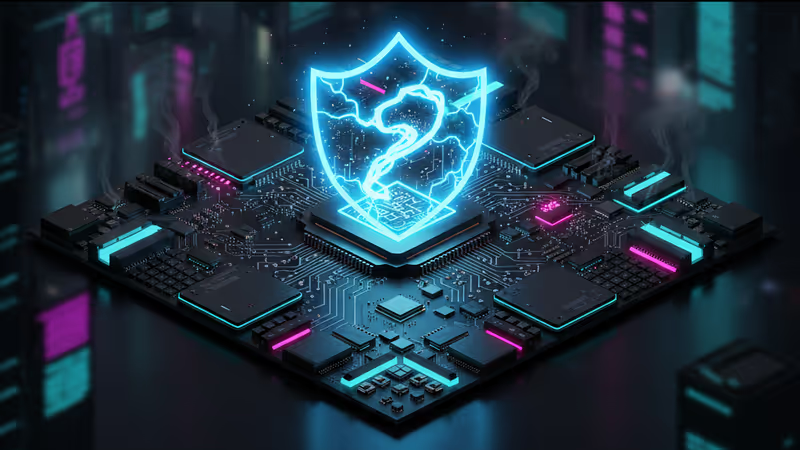
Beyond the Kernel: Riot Games Forces a Hardware Reckoning in the Anti-Cheat War
Riot Games' discovery of a critical motherboard flaw shifts the anti-cheat battleground from software to silicon. An analysis of the new hardware security reality.
The Lede: A Software Firm is Dictating Hardware Security
When a video game developer forces the world’s largest motherboard manufacturers—including ASUS, Gigabyte, and MSI—to issue emergency firmware updates, it’s no longer a story about cheating in games. It’s a story about a fundamental shift in the cybersecurity landscape. Riot Games, through its Vanguard anti-cheat system, has exposed a vulnerability so deep it threatens the trusted foundation of the entire PC ecosystem, forcing a hardware reckoning that will have ripple effects far beyond gaming.
Why It Matters: The Integrity of the Platform is at Stake
This isn't just about stopping cheaters in Valorant or League of Legends. The BIOS/UEFI firmware flaw discovered by Riot would have effectively neutered all current and future anti-cheat systems that rely on detecting malicious Direct Memory Access (DMA). Here’s the critical breakdown:
- The Ultimate Backdoor: DMA-based cheats use dedicated hardware to read and write to a PC's memory directly, bypassing the CPU and operating system. This makes them virtually invisible to traditional software-based anti-cheat. The motherboard flaw would have provided a privileged, undetectable channel for these attacks.
- Ecosystem-Wide Threat: Riot stated this vulnerability would have "completely nullified all existing DMA detection and prevention tech currently on the market." This means every competitive title, from Counter-Strike to Call of Duty, was at risk. The economic integrity of the $200 billion gaming industry and the burgeoning esports scene relies on a fair playing field, which was quietly on the verge of collapse.
- Blurring Lines: The techniques used in advanced cheating tools are often precursors to malware and cyber-espionage tools. A vulnerability at this level is a flashing red light for enterprise security teams, not just game administrators.
The Analysis: The Battlefield Moves to Silicon
For two decades, the cat-and-mouse game between cheaters and developers has escalated. We moved from simple memory edits to sophisticated hacks that operate at the kernel level—the core of the operating system. This prompted the creation of invasive, kernel-level anti-cheat drivers like Riot's Vanguard and BattlEye.
Gamers and privacy advocates have long debated the trade-offs of granting such deep system access to a game company. However, this incident serves as powerful validation for Riot's aggressive security posture. Without Vanguard's deep hooks into the system, this hardware-level flaw might have remained a zero-day exploit for nation-state actors or, in this case, a game-breaking tool for cheaters.
What we're witnessing is the battleground shifting beneath the OS itself, down to the firmware and silicon. Motherboard manufacturers have historically competed on features like overclocking potential, port selection, and RGB lighting. Riot has now forcibly inserted platform security as a critical, non-negotiable feature for the massive gaming market.
PRISM Insight: The Rise of Hardware Attestation in Gaming
This event is an accelerant for a trend we've been tracking: the consumerization of Secured-core PC principles. Expect to see the following:
- Mandatory Firmware Security: Future high-end "gaming" motherboards will be marketed on their security features and timely patching, not just performance metrics. A board that can't run the latest competitive titles due to a security hold will be a commercial failure.
- The "Vanguard Ready" Ecosystem: Don't be surprised to see hardware partners start certifying their components as compliant with standards set by major anti-cheat providers. This effectively makes Riot Games a de-facto security standards body for the consumer PC hardware industry.
- Investment Signal: This signals a growing market for firmware security analysis and hardware-based attestation services outside of the traditional enterprise and government sectors. The integrity of digital entertainment is now a multi-billion dollar security vertical.
PRISM's Take: A Necessary Escalation
Riot Games has drawn a new line in the sand, and it's etched directly onto the motherboard's PCB. While the notion of a game refusing to launch because of your BIOS version may feel like an overreach, it's a necessary response to the escalating sophistication of threats. The integrity of competitive play—and by extension, the security of the underlying platform—can no longer be entrusted to the OS alone. The war against cheating has officially gone to the hardware level, and every component manufacturer is now on the front line, whether they wanted to be or not.
Related Articles

OpenAI's GPT-5.2-Codex moves beyond coding assistance to system-level reasoning. Our analysis covers its impact on technical debt, cybersecurity, and the future of development.

Analysis of GPT-5's safety measures reveals a strategic shift towards autonomous AI agents, impacting enterprise adoption, cybersecurity, and future regulation.

Microsoft is killing the RC4 cipher after 26 years. Our analysis reveals why this overdue move exposes a deep-seated problem with enterprise tech debt.

The ROG Ally and other Windows handhelds are slowly fixing their biggest flaw through software updates. Can this challenge the Steam Deck's dominance?