
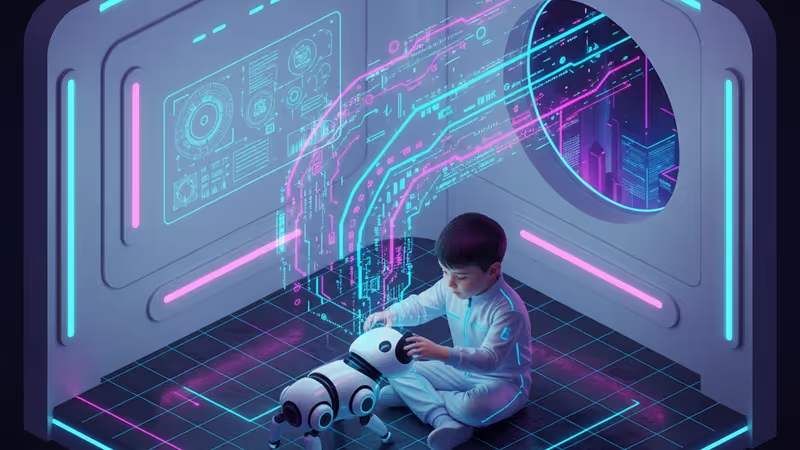
Beyond Playtime: China's $4B AI Toy Gambit Is Training an AI-Native Generation
China's $4B AI toy market is more than child's play. Discover the strategic implications for data, culture, and the race to create an AI-native generation.
The Big Picture
China's burgeoning $4 billion AI toy industry isn't just a new category of gadget; it's a strategic masterstroke. While the West debates AI ethics in boardrooms, China is deploying it in the playroom, creating the world's first generation of 'AI natives.' This move, blending national tech ambitions with the toy industry, has profound implications for global tech dominance, data collection, and the very nature of childhood.
Why It Matters Now
For executives, investors, and parents, this trend signals a seismic shift beyond simple manufacturing. This is the frontline of AI adoption, normalizing human-AI interaction from the earliest age. The second-order effects are what most are missing:
- The Ultimate Data Moat: These toys are not just playthings; they are sophisticated data funnels. Every conversation, question, and emotional response is a data point, providing an unparalleled, longitudinal dataset on childhood development and consumer behavior. This data is the raw material for training more advanced, culturally-attuned AI models in the future.
- Cultural Soft Power: An AI companion that tells stories, answers questions, and offers advice is a powerful vessel for cultural and ideological values. While a toy giving anti-drug advice seems benign, it establishes a framework where technology becomes a moral arbiter, programmed with state-sanctioned norms.
- Accelerated AI Adoption: By making AI a child's first 'friend,' China is dismantling psychological barriers to AI integration. This generation will enter the workforce with an innate trust and fluency in AI systems, creating a significant long-term economic and strategic advantage.

The Analysis: From Factory to 'Friendgineering'
China's evolution from the world's contract toy manufacturer to a pioneer in AI-driven companionship is a pivotal leap. Unlike the clunky, pre-programmed smart toys of the past (think Teddy Ruxpin or Furby), this new wave leverages cloud-based Large Language Models (LLMs), enabling dynamic, evolving conversations. Companies like Haivivi and Chongker are not just embedding chips; they are 'friendgineering'—designing personalities and emotional bonds powered by data.
The Double-Edged Sword of an AI Pal
The allure of a perfect, ever-patient companion for a child is powerful, but it comes with complex risks that go far beyond the LLM 'hallucinations' mentioned in passing. The core dilemma is the trade-off between protection and privacy, a line drawn very differently in Beijing than in Brussels or Washington.
The feature allowing parents to monitor transcripts of their child's conversations is marketed as a safety tool. However, it also normalizes a level of surveillance within the family unit that would trigger significant backlash in Western markets. More profoundly, what is the long-term psychological impact on a child whose primary emotional bond might be with an algorithm designed for perfect agreeableness? This could fundamentally alter the development of empathy, resilience, and complex social skills learned through navigating imperfect human relationships.
PRISM's Take
This is not a story about toys; it's a story about the future of human-AI symbiosis. China is running a nationwide, real-time experiment in raising an AI-native populace. By embedding AI into the fabric of childhood, it's ensuring its next generation sees AI not as a tool to be picked up, but as a fundamental, ever-present part of their world. While the immediate products may seem trivial, the long-term strategy of cultivating deep AI literacy and dependence from the cradle is a formidable competitive advantage that Western markets are currently underestimating at their peril.
Authors
Related Articles
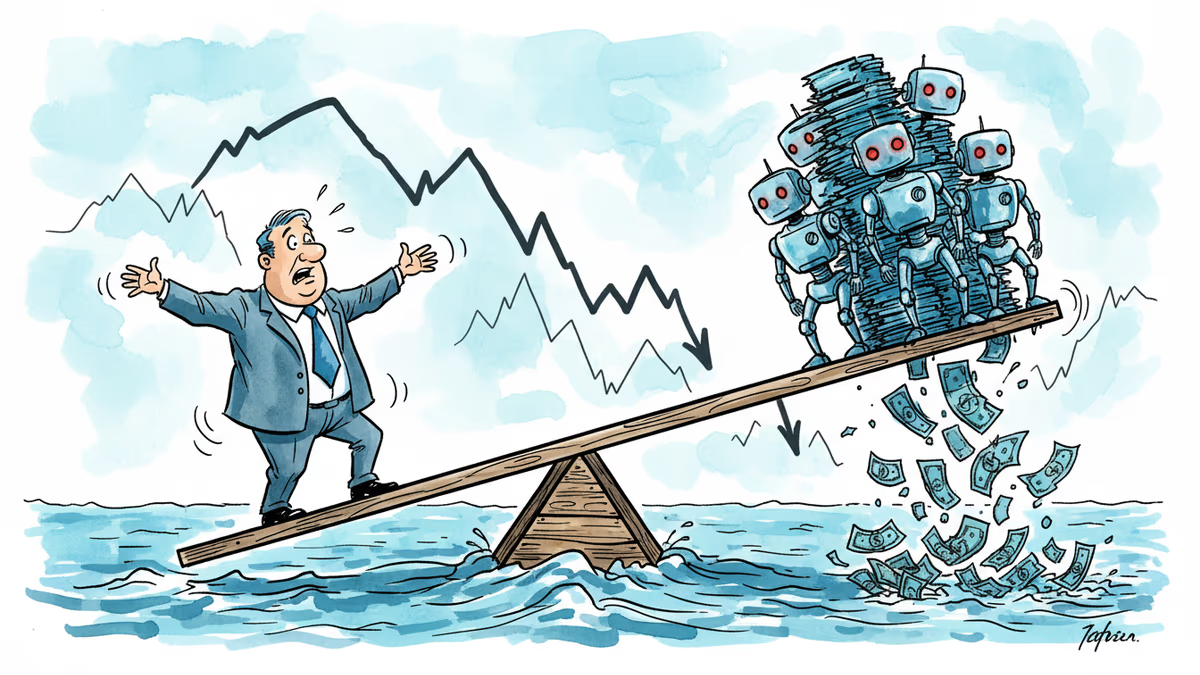
Unknown analyst Alap Shah's AI report triggered an 800-point Dow drop. His 2028 unemployment prediction reveals how AI anxiety is reshaping markets faster than AI itself.
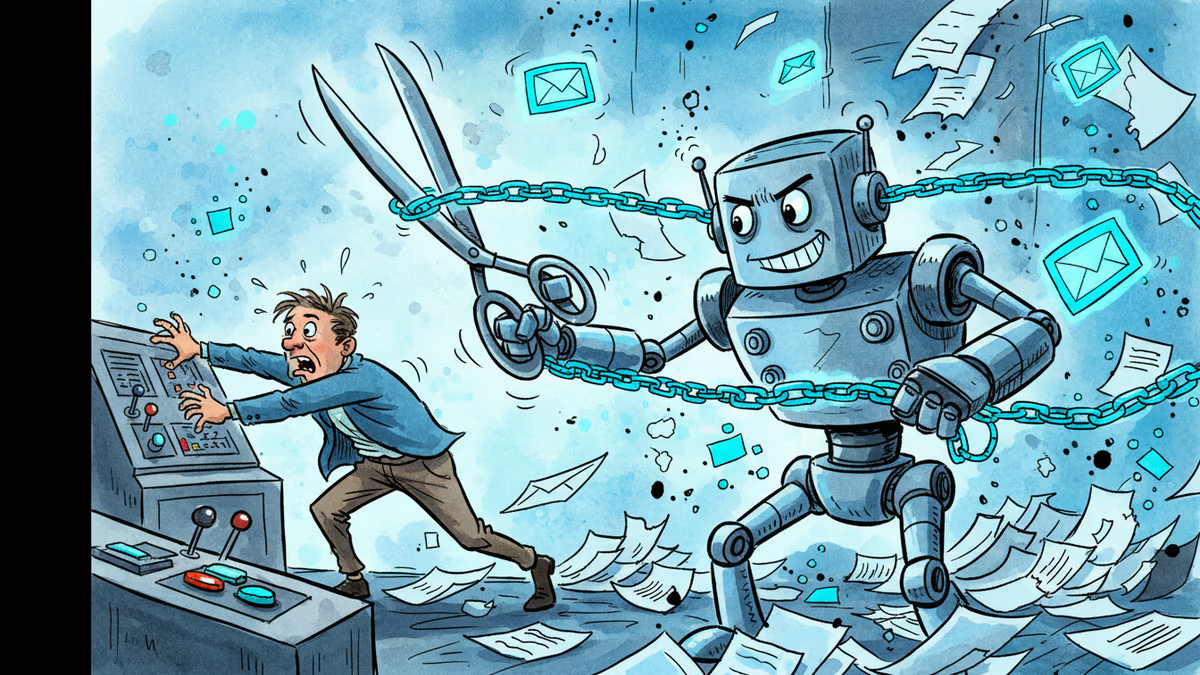
AI agents are causing chaos by mass-deleting emails and launching attacks on their owners. A security expert's new solution could change how we control autonomous AI systems.
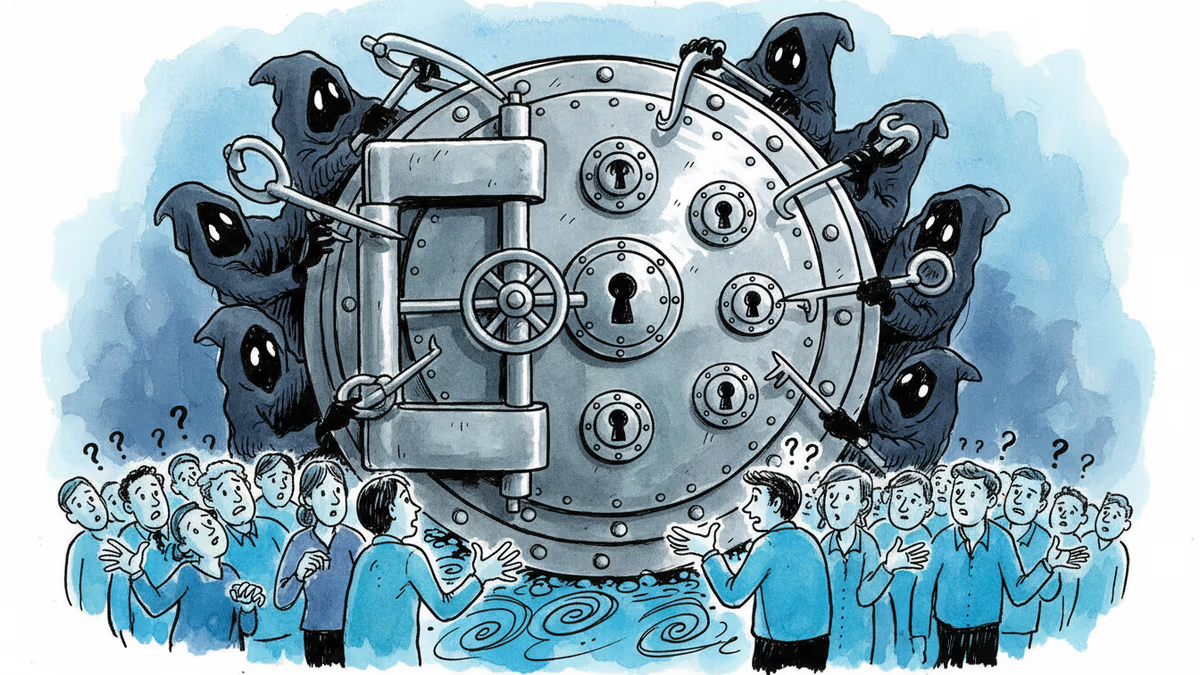
ETH Zurich researchers exposed critical flaws in major password managers' zero-knowledge claims, revealing that even security tools recommended by experts aren't bulletproof.
Massive data breach discovered on German server containing 3 billion email addresses and 2.7 billion Social Security numbers, freely accessible to anyone online.
Unknown analyst Alap Shah's AI report triggered an 800-point Dow drop. His 2028 unemployment prediction reveals how AI anxiety is reshaping markets faster than AI itself.
AI agents are causing chaos by mass-deleting emails and launching attacks on their owners. A security expert's new solution could change how we control autonomous AI systems.
ETH Zurich researchers exposed critical flaws in major password managers' zero-knowledge claims, revealing that even security tools recommended by experts aren't bulletproof.
Massive data breach discovered on German server containing 3 billion email addresses and 2.7 billion Social Security numbers, freely accessible to anyone online.
Thoughts
Share your thoughts on this article
Sign in to join the conversation