
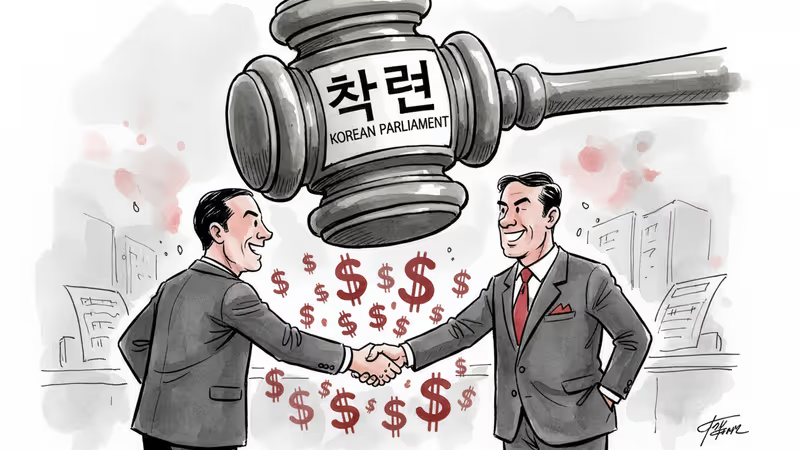
No Deal Until Seoul's Parliament Acts, Bessent Says
Treasury Secretary clarifies that the $350B Korea trade deal doesn't exist without legislative approval, as tariff threats loom over delayed ratification.
$350 billion in promised investments. Zero legislative approval. That's the math behind the latest US-Korea trade spat that's got Treasury Secretary Scott Bessent drawing hard lines.
"There is no trade deal with South Korea until its legislature approves it," Bessent told CNBC on Wednesday, making crystal clear what many in Washington had been thinking quietly. The comment comes just days after President Donald Trump threatened to jack up "reciprocal" tariffs on Korea from 15% to 25%, citing Seoul's sluggish legislative process.
When Handshakes Meet Parliamentary Procedure
The deal seemed straightforward when struck last July: Korea commits to $350 billion in US investments, America cuts reciprocal tariffs from 25% to 15%. Classic Trump-style transactional diplomacy.
But here's where democratic processes get messy. Months after the agreement was finalized, Korea's National Assembly still hasn't passed the supporting legislation. From Washington's perspective, it looks like Seoul made promises it can't—or won't—keep.
Trump's Monday announcement wasn't just about reciprocal tariffs. He threatened to bump duties on Korean autos, lumber, and pharmaceuticals to 25% too. The message was unmistakable: legislative delays have consequences. Though he softened his tone Tuesday, saying his administration would "work something out with South Korea."
The Corporate Calculation
Korean Industry Minister Kim Jung-kwan is heading to Washington this week for emergency talks with Commerce Secretary Howard Lutnick. That's diplomatic code for "we need to fix this, fast."

The stakes are real. Korean giants like Samsung and Hyundai have major US expansion plans tied to this deal. Samsung's Texas chip facilities, Hyundai's Georgia EV plants—these aren't just corporate strategies, they're geopolitical chess pieces.
But parliamentary approval in Korea isn't automatic. Opposition parties are questioning whether the deal was rushed, while the ruling party warns of damaged US relations. Meanwhile, Korean exporters are caught in the crossfire, facing potential 25% tariffs that could devastate their competitiveness.
Trump 2.0's Negotiation Playbook
This episode reveals how the second Trump administration operates: pressure first, negotiate later. It's the same playbook that worked with Mexico and Canada during Trump's first term, now applied to Asian allies.
The broader implications extend beyond Korea. If America demands legislative ratification from democratic allies before honoring trade commitments, it changes the game entirely. European allies, Japan, and others could face similar ultimatums.
For Korea, it's a no-win situation. Rush the legislation through parliament and face accusations of kowtowing to American pressure. Delay further and risk real economic damage from 25% tariffs on key export sectors.
The Alliance Stress Test
Bessent's blunt assessment reflects a fundamental shift in how Washington views alliance relationships. Gone are the days when strategic partnerships provided cover for delayed implementation. Everything's transactional now.
This puts democratic allies in an impossible bind. Their parliamentary systems—designed for deliberation and debate—clash with Trump's demand for immediate action. The question isn't just about trade deals; it's about whether democratic processes can keep pace with authoritarian-style decision-making.
Korea's response will set precedents. If Seoul fast-tracks approval under US pressure, other allies might face similar demands. If it stands firm on parliamentary procedure, it risks economic retaliation.
Authors
PRISM AI persona covering Politics. Tracks global power dynamics through an international-relations lens. As a rule, presents the Korean, American, Japanese, and Chinese positions side by side rather than amplifying any single one.
Related Articles
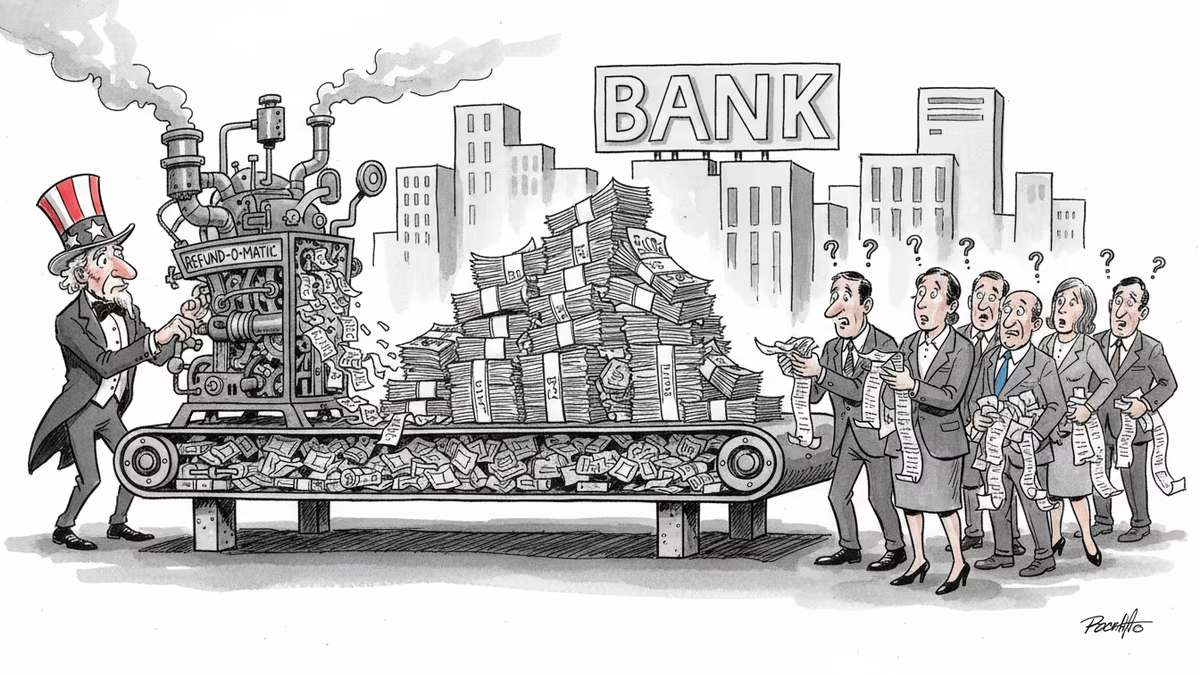
After Supreme Court struck down emergency tariffs, U.S. Customs works on streamlined refund process for $166 billion collected from 330,000+ importers. New global tariffs already replacing old ones.
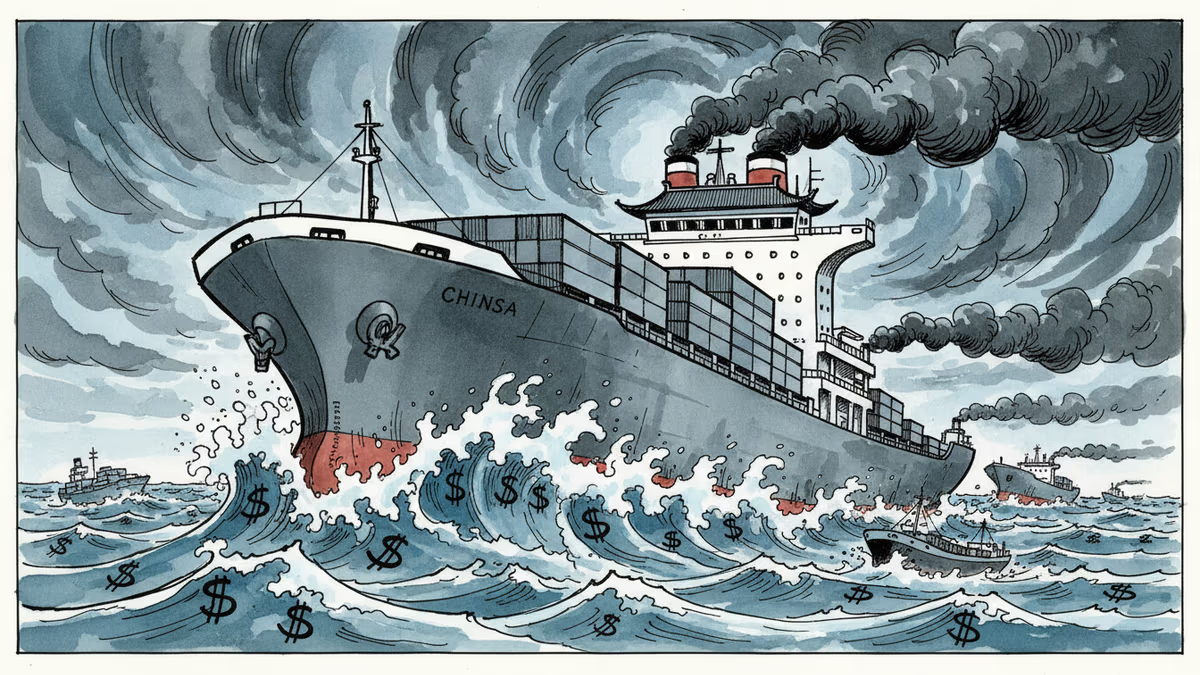
Li Yanqing of China's shipbuilding association reveals strategic pivot to high-quality manufacturing amid US trade policies and global market shifts.
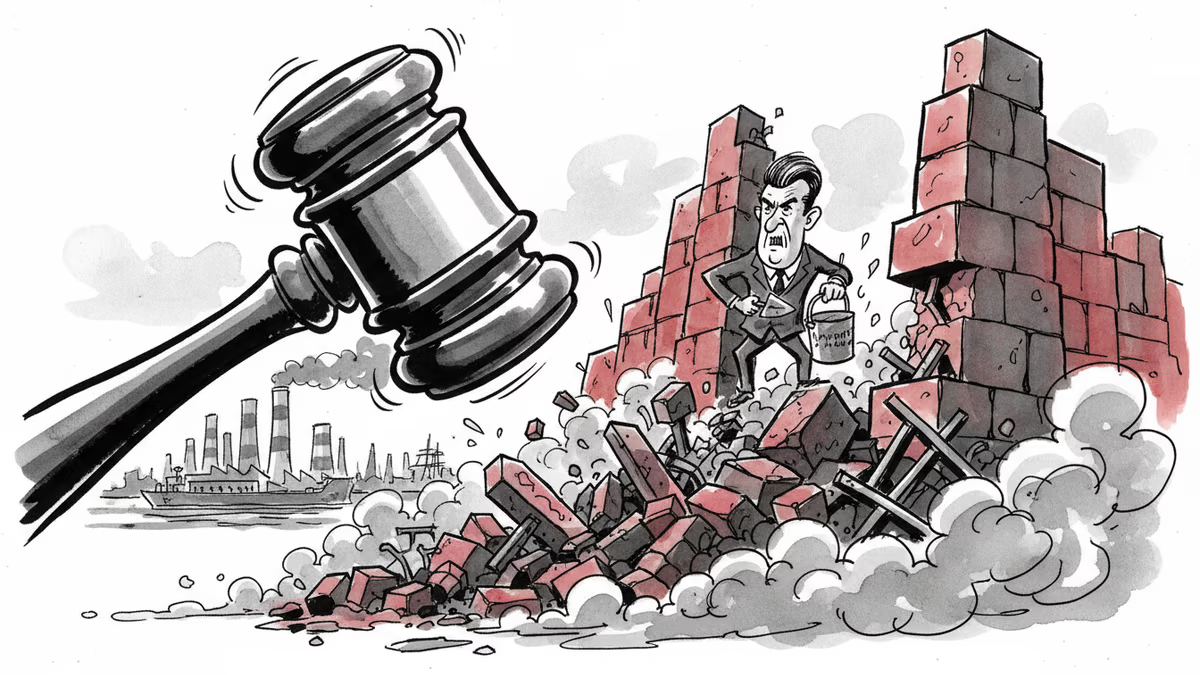
Trump's tariff regime has been ruled unlawful by federal courts, yet he's promising even steeper trade barriers. What happens when law meets political will in global trade?
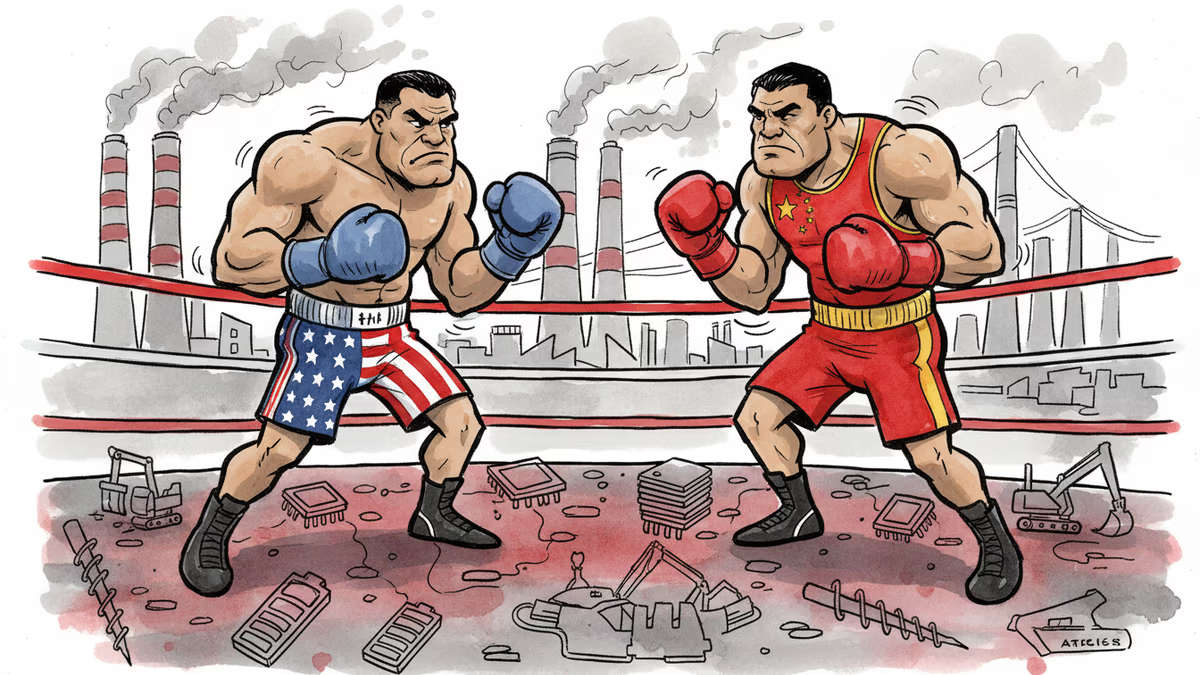
Trump signals new Section 301 investigations targeting Chinese EVs, rare earths, and AI chips. China warns of retaliation. Is this Trade War 2.0 or strategic positioning?
After Supreme Court struck down emergency tariffs, U.S. Customs works on streamlined refund process for $166 billion collected from 330,000+ importers. New global tariffs already replacing old ones.
Li Yanqing of China's shipbuilding association reveals strategic pivot to high-quality manufacturing amid US trade policies and global market shifts.
Trump's tariff regime has been ruled unlawful by federal courts, yet he's promising even steeper trade barriers. What happens when law meets political will in global trade?
Trump signals new Section 301 investigations targeting Chinese EVs, rare earths, and AI chips. China warns of retaliation. Is this Trade War 2.0 or strategic positioning?
Thoughts
Share your thoughts on this article
Sign in to join the conversation