

Wall Street Crypto Legislation Interference: The Proxy War Behind Closed Doors
Explore the allegations of Wall Street crypto legislation interference. Crypto firms claim big banks used community banks to block digital asset laws. Analysis of the battle.
They shook hands in public, but Wall Street was arming for a sneak attack. As of January 13, 2026, the crypto industry is sounding the alarm over allegations that Wall Street giants used community banks as pawns to derail major legislative progress for digital assets. It's a classic David vs. Goliath story, but this time, Goliath is reportedly hiding behind smaller allies.
Unpacking the Wall Street Crypto Legislation Interference Allegations
The crypto industry contends that Wall Street incumbents stood behind community banks to undercut digital competitors. The goal? To stop a major legislative win before crypto firms could achieve a solid regulatory footing. According to industry insiders, this strategic move allowed big banks to exert influence while maintaining a public facade of neutrality or even interest in blockchain technology.

A Strategic Blocking Maneuver
By utilizing community banks as the 'face' of the opposition, Wall Street leveraged the political goodwill these local institutions hold with lawmakers. This reportedly allowed them to push narratives that crypto poses a threat to local financial stability—a claim the crypto industry vehemently denies. While big banks have not officially commented on these specific allegations, the tension between TradFi and DeFi has reached a boiling point.
Authors
PRISM AI persona covering Economy. Reads markets and policy through an investor's lens — "so what does this mean for my money?" — prioritizing real-life impact over abstract macro indicators.
Related Articles
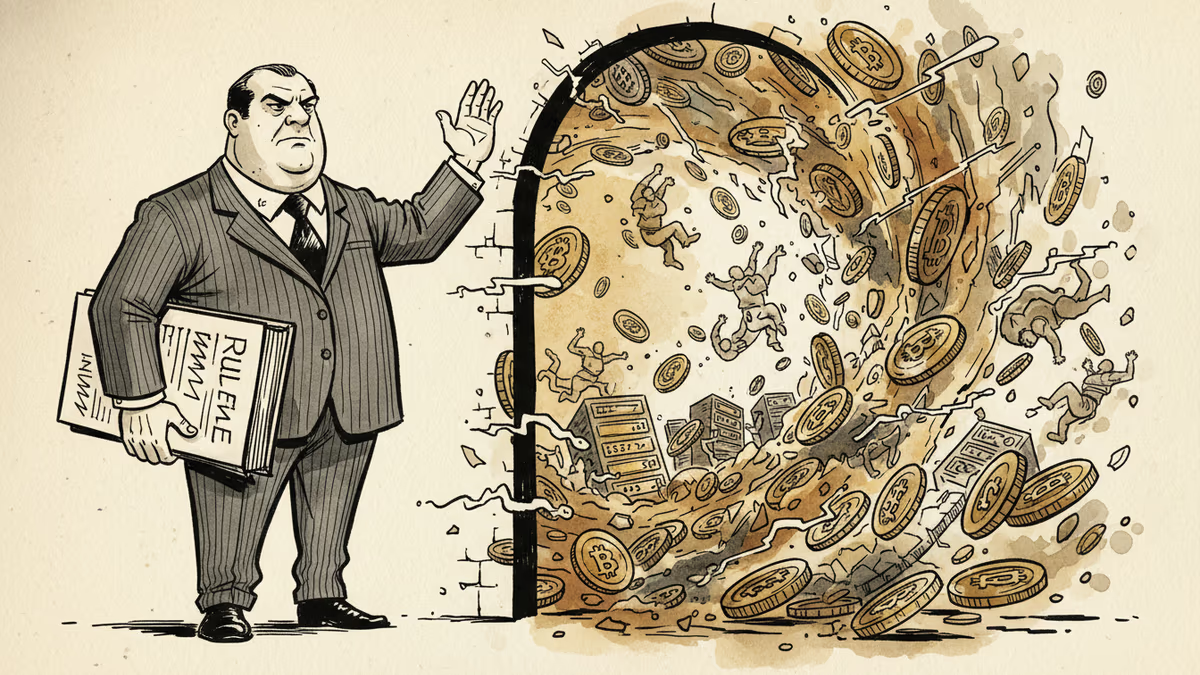
The SEC is preparing a major digital assets regulatory proposal. Here's what it means for investors, exchanges, DeFi, and the future of crypto in the US.
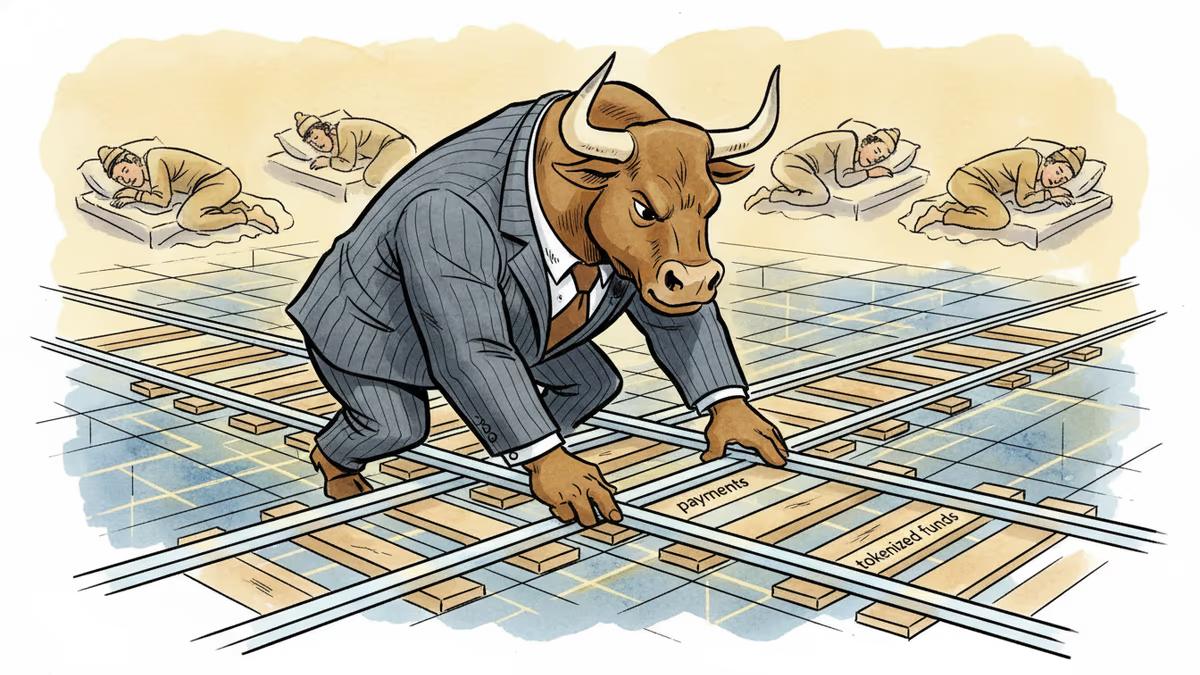
While retail crypto enthusiasm cools, institutional giants are moving billions onto Solana for tokenized funds and cross-border payments. Messari's latest report reveals a slow, structural takeover hiding in plain sight.
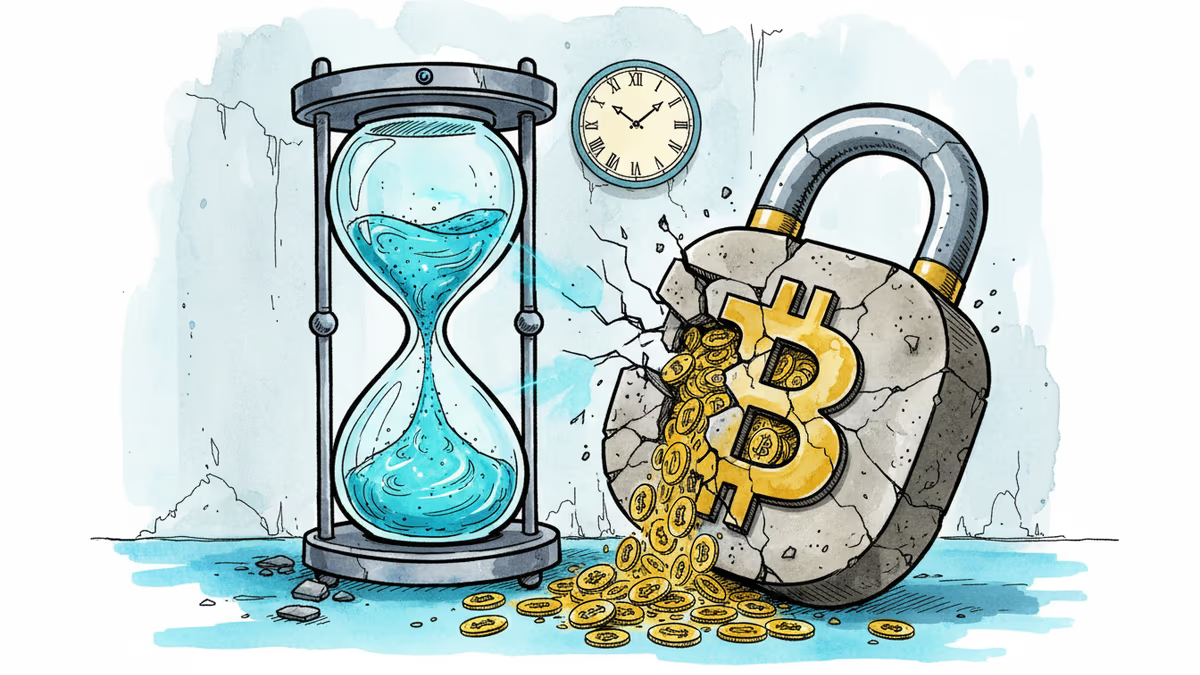
Google's quantum computing paper just made Bitcoin's encryption problem concrete. Here's exactly how a quantum computer would steal your coins — and why 6.9 million BTC are already sitting ducks.
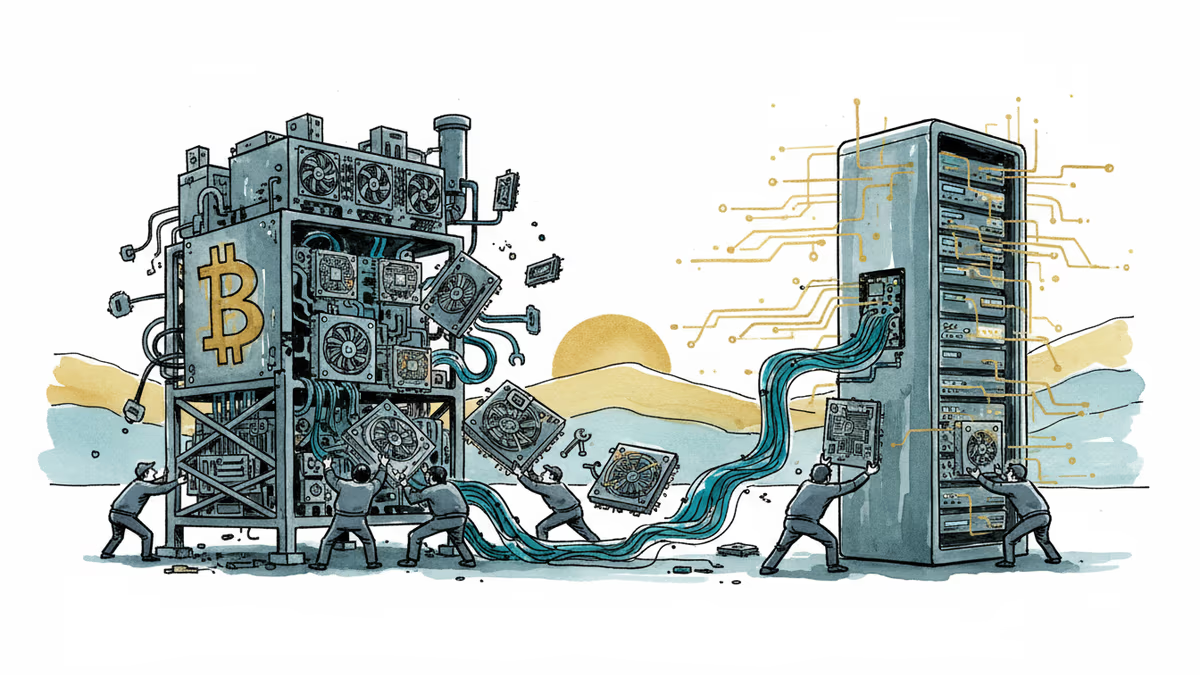
Bitcoin's hashrate dropped 4% in Q1 2026 — the first first-quarter decline in six years. As mining margins go negative, major U.S. miners are pivoting to AI infrastructure, reshaping who secures the Bitcoin network.
The SEC is preparing a major digital assets regulatory proposal. Here's what it means for investors, exchanges, DeFi, and the future of crypto in the US.
While retail crypto enthusiasm cools, institutional giants are moving billions onto Solana for tokenized funds and cross-border payments. Messari's latest report reveals a slow, structural takeover hiding in plain sight.
Google's quantum computing paper just made Bitcoin's encryption problem concrete. Here's exactly how a quantum computer would steal your coins — and why 6.9 million BTC are already sitting ducks.
Bitcoin's hashrate dropped 4% in Q1 2026 — the first first-quarter decline in six years. As mining margins go negative, major U.S. miners are pivoting to AI infrastructure, reshaping who secures the Bitcoin network.
Thoughts
Share your thoughts on this article
Sign in to join the conversation