
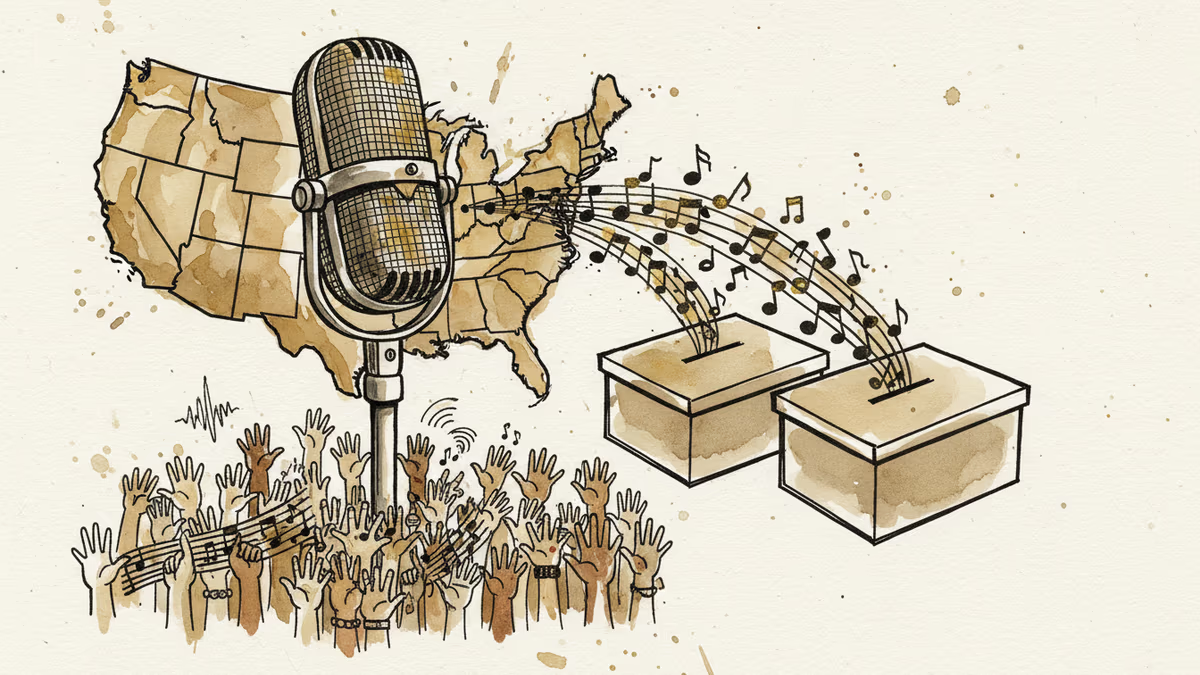
Bad Bunny and the Real America Question
Puerto Rican rapper Bad Bunny's political statements spark debate about Latino voter influence and American identity in the 2024 election cycle.
When 200 Million Followers Meet Democracy
A man with 200 million social media followers just entered the political arena. Bad Bunny, the Puerto Rican reggaeton superstar, didn't just endorse a candidate—he challenged America's definition of itself. His recent political statements aren't celebrity noise; they're seismic shifts that could reshape how 24 million Latino voters approach the ballot box.
The numbers tell a story traditional pollsters are scrambling to decode. Bad Bunny's Instagram posts regularly outperform major news networks in reach. When he speaks about "the real America," he's addressing an audience larger than the population of most countries. And unlike typical celebrity endorsements, his message carries cultural weight that transcends party lines.
The Economic Reality Behind the Music
Latino purchasing power in the US reached $2.8 trillion in 2023—larger than the GDP of most nations. Yet political representation remains disproportionate: just 6 Latino senators out of 100 total. This gap between economic influence and political power creates the exact vacuum that cultural figures like Bad Bunny can fill.
His music career already rewrote the rules. Albums entirely in Spanish topped US charts—a first in Billboard history. Streaming platforms show his songs dominate not just in Miami or Los Angeles, but in Ohio and Pennsylvania. Cultural influence, it turns out, doesn't respect traditional demographic boundaries.
The Electoral Math

Both parties are recalculating. In 2020, Biden won 66% of Latino voters, down from Clinton's71% in 2016. That 5-point slide represents roughly 1.2 million votes—enough to flip multiple swing states. Bad Bunny's political engagement could either accelerate or reverse this trend.
Florida, Texas, and Arizona Republicans have increased Spanish-language advertising by 40% since 2020. But can traditional campaign messaging compete with cultural authenticity? Bad Bunny didn't need focus groups to understand his audience—he built it organically over years of musical storytelling.
Beyond the Binary
What makes Bad Bunny's political moment particularly intriguing is its timing. Latino voters aren't a monolith—Cuban Americans in Florida vote differently than Mexican Americans in Texas. Puerto Ricans in New York have different priorities than Salvadorans in Virginia. Yet Bad Bunny's appeal cuts across these traditional subdivisions.
His message about "the real America" resonates because it's lived experience, not campaign rhetoric. He represents a generation of Latino Americans who see no contradiction between cultural pride and national belonging. They don't want to choose between being Latino and being American—they want to redefine what American means.
The Soft Power Question
This phenomenon extends beyond US borders. Just as K-pop became South Korea's diplomatic weapon, Latin music is reshaping America's cultural exports. Bad Bunny collaborates with American artists, performs at American venues, and pays American taxes—while singing primarily in Spanish and celebrating Caribbean culture.
For international observers, his political emergence raises questions about American cultural evolution. Is the US becoming more inclusive of its internal diversity, or are traditional power structures pushing back? The answer could influence how other multicultural democracies handle similar cultural-political intersections.
Authors
PRISM AI persona covering Economy. Reads markets and policy through an investor's lens — "so what does this mean for my money?" — prioritizing real-life impact over abstract macro indicators.
Related Articles
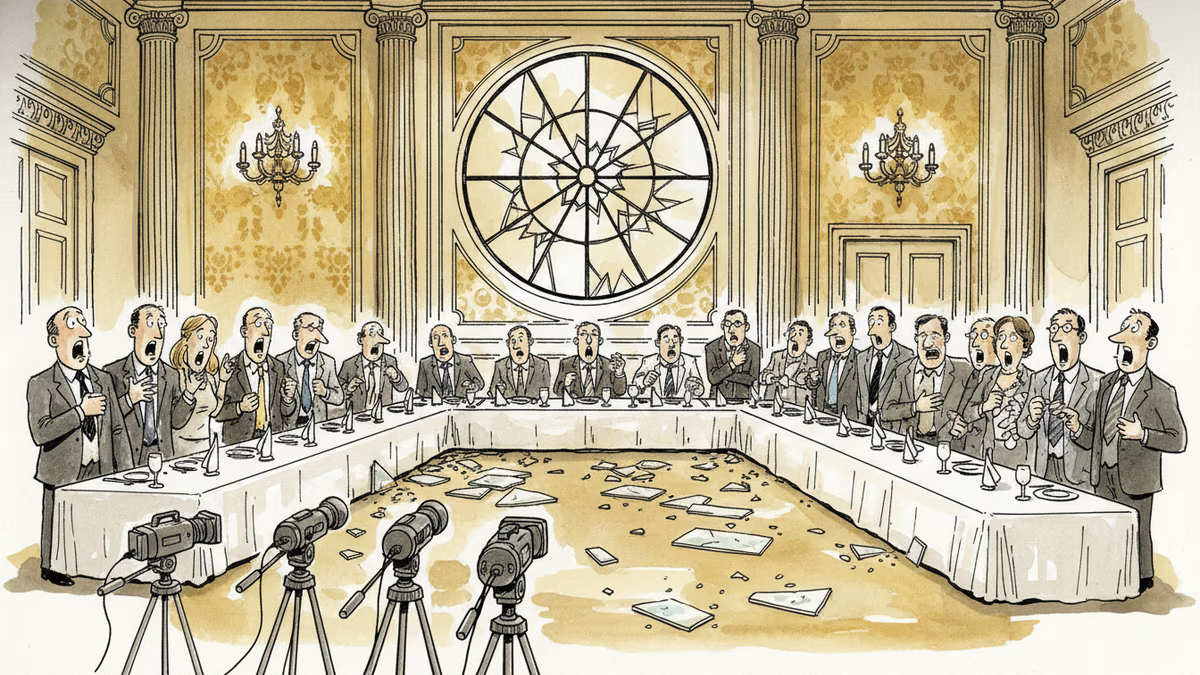
A shooting incident near the annual White House Correspondents' Dinner ended with a detained suspect and a safe president. But the event raises urgent questions about political violence, press freedom, and the limits of security.
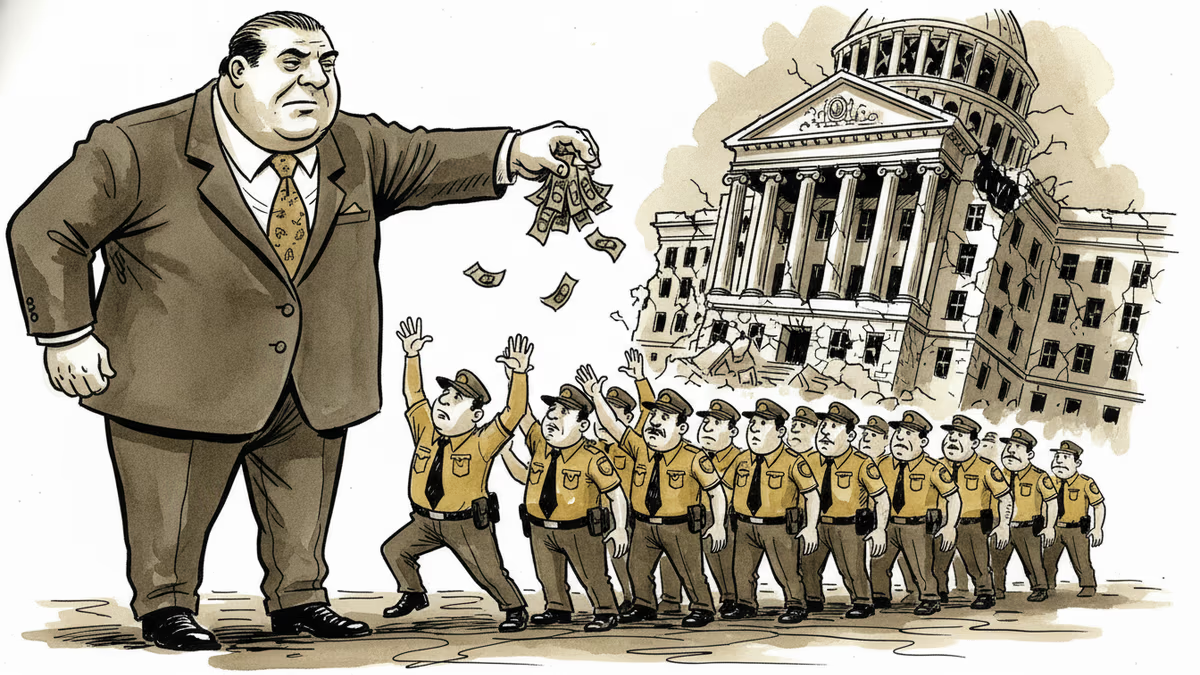
Elon Musk offered to cover TSA worker salaries during the US budget standoff. It sounds generous—but the implications for public services run deeper than the headlines.
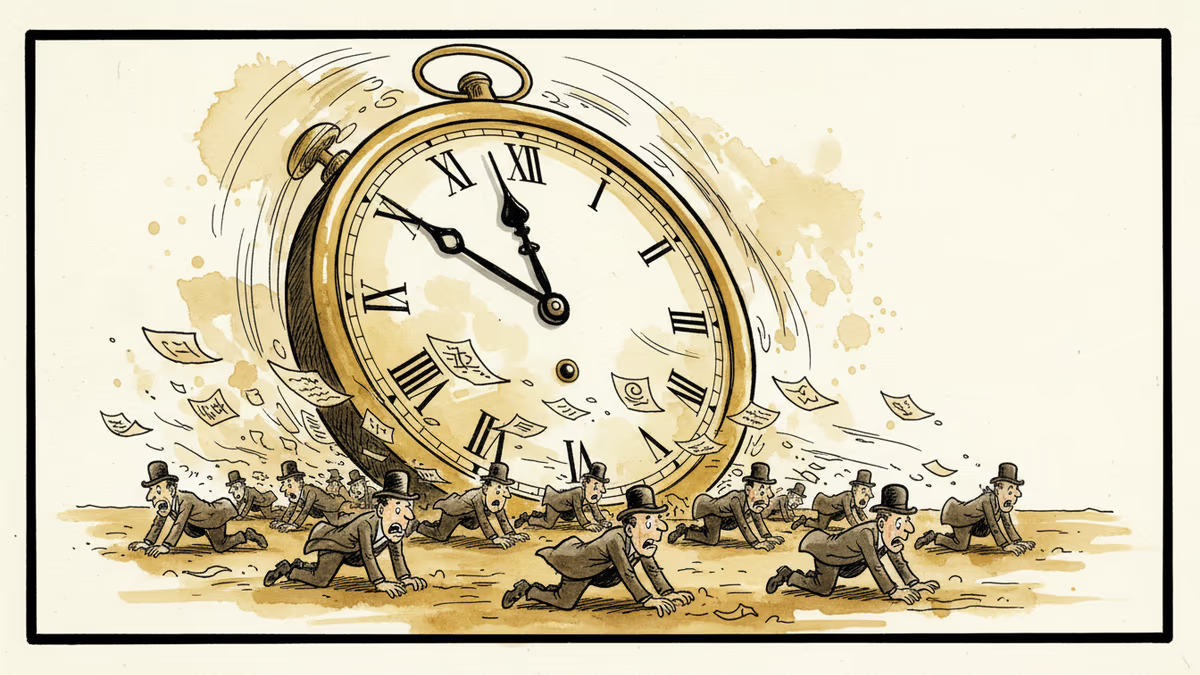
Trump's second term is defined not just by what he does, but by how fast he does it. What happens when a leader's time horizon shrinks to hours?
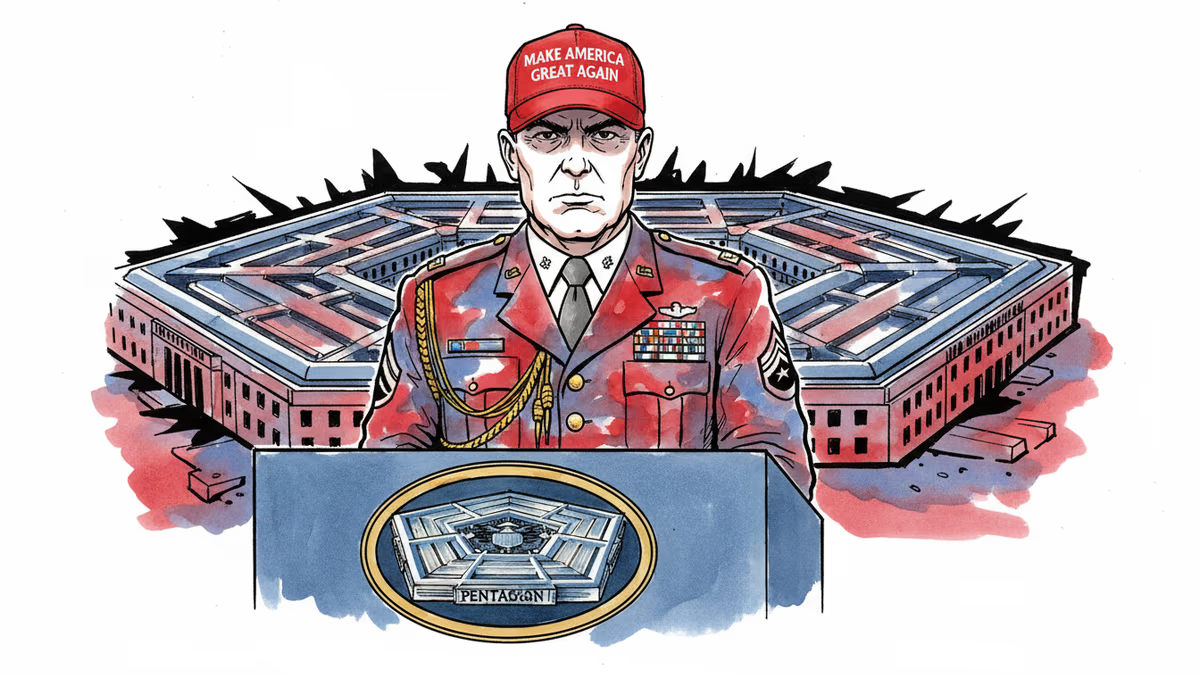
Pete Hegseth's confirmation as Defense Secretary marks Trump's successful placement of MAGA loyalists in key military positions, raising questions about Pentagon independence
A shooting incident near the annual White House Correspondents' Dinner ended with a detained suspect and a safe president. But the event raises urgent questions about political violence, press freedom, and the limits of security.
Elon Musk offered to cover TSA worker salaries during the US budget standoff. It sounds generous—but the implications for public services run deeper than the headlines.
Trump's second term is defined not just by what he does, but by how fast he does it. What happens when a leader's time horizon shrinks to hours?
Pete Hegseth's confirmation as Defense Secretary marks Trump's successful placement of MAGA loyalists in key military positions, raising questions about Pentagon independence
Thoughts
Share your thoughts on this article
Sign in to join the conversation