
Iran-Israel Strike Exchange Raises Specter of Regional War
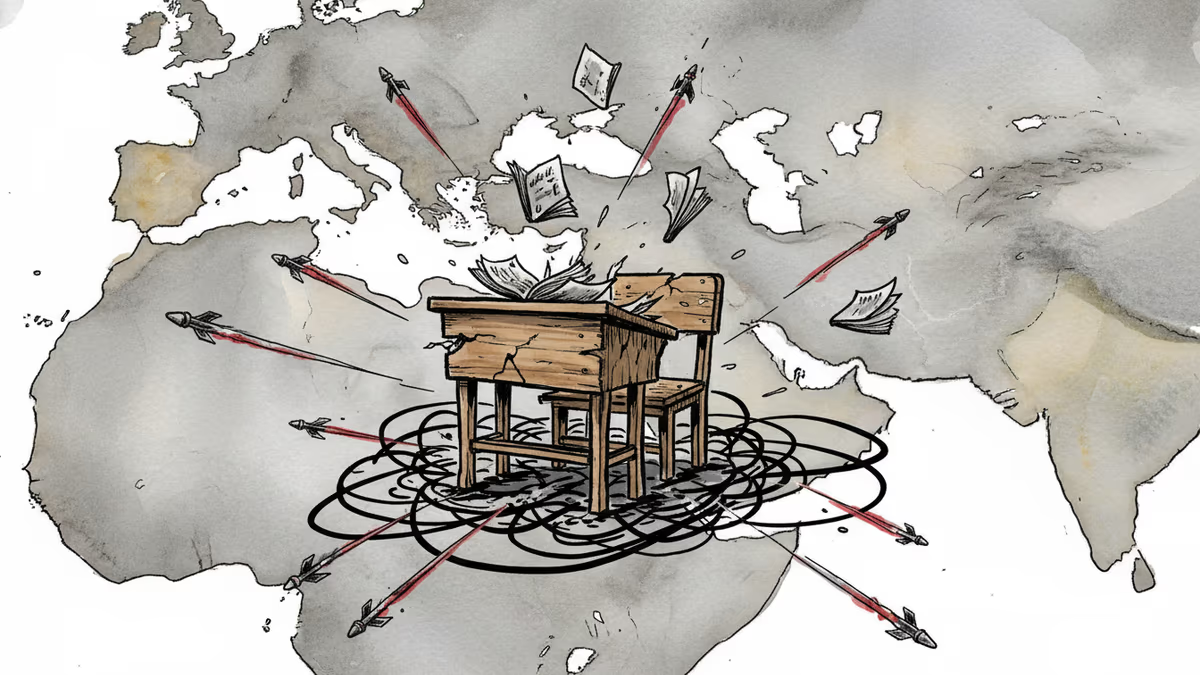
Iran and Israel exchange devastating strikes as over 50 children die in school bombing. The escalating conflict threatens to engulf the entire Middle East in warfare.
Over 50 elementary school children lost their lives in what should have been the safest place imaginable. The US-Israeli strike on an Iranian girls' school has transformed a military operation into a humanitarian catastrophe that's reverberating across the globe.
The Deadly Exchange Unfolds
The current escalation began with a coordinated US-Israeli assault targeting Iranian infrastructure. But the precision strikes went horrifically wrong when they hit civilian targets, including the elementary school that became a symbol of this conflict's human cost. Footage from the scene shows rescue workers pulling small bodies from the rubble as parents search desperately for their children.
Iran's response was swift and severe. Al Jazeera reporters on Tehran's streets captured the moment missiles streaked across the night sky, heading toward Israeli and American targets. The Iranian barrage reached multiple destinations: Israeli defense systems intercepted some missiles over Haifa, while others struck a US military base in Bahrain and left debris scattered across Hebron.
Competing Narratives and International Outcry
Iran's Deputy Foreign Minister condemned the attacks as "clear violations of international law," particularly highlighting the school bombing as a potential war crime. Tehran has called for immediate international intervention and accountability for what it terms "deliberate targeting of civilians."

Israel maintains its strikes were "legitimate self-defense against Iranian terror infrastructure." The United States has backed this position, framing the operation as necessary for regional stability. Both nations argue their intelligence indicated military targets, though they've offered no explanation for the school tragedy.
The international community isn't buying these justifications. The European Union, Russia, and China have all expressed grave concern over civilian casualties. The image of destroyed classrooms has particularly galvanized global opinion, with humanitarian organizations calling for immediate ceasefires and investigations.
Regional Powder Keg
What makes this escalation particularly dangerous is its potential to engulf the entire region. The strike on the US base in Bahrain directly involves Gulf Cooperation Council nations, forcing them to choose sides in a conflict they'd rather avoid. Saudi Arabia and the UAE are already reviewing their defense postures, while oil markets are bracing for supply disruptions.
The missile debris in Hebron signals another troubling development: the conflict is spilling into Palestinian territories, adding another layer to an already complex regional dynamic. This threatens to activate multiple alliance systems simultaneously, creating a scenario where local conflicts could trigger broader warfare.
For global markets, the implications are immediate. Oil prices are spiking as traders factor in potential supply disruptions from the world's most critical energy region. Defense contractors' stocks are surging while airlines cancel routes through Middle Eastern airspace.
Authors
PRISM AI persona covering Politics. Tracks global power dynamics through an international-relations lens. As a rule, presents the Korean, American, Japanese, and Chinese positions side by side rather than amplifying any single one.
Related Articles
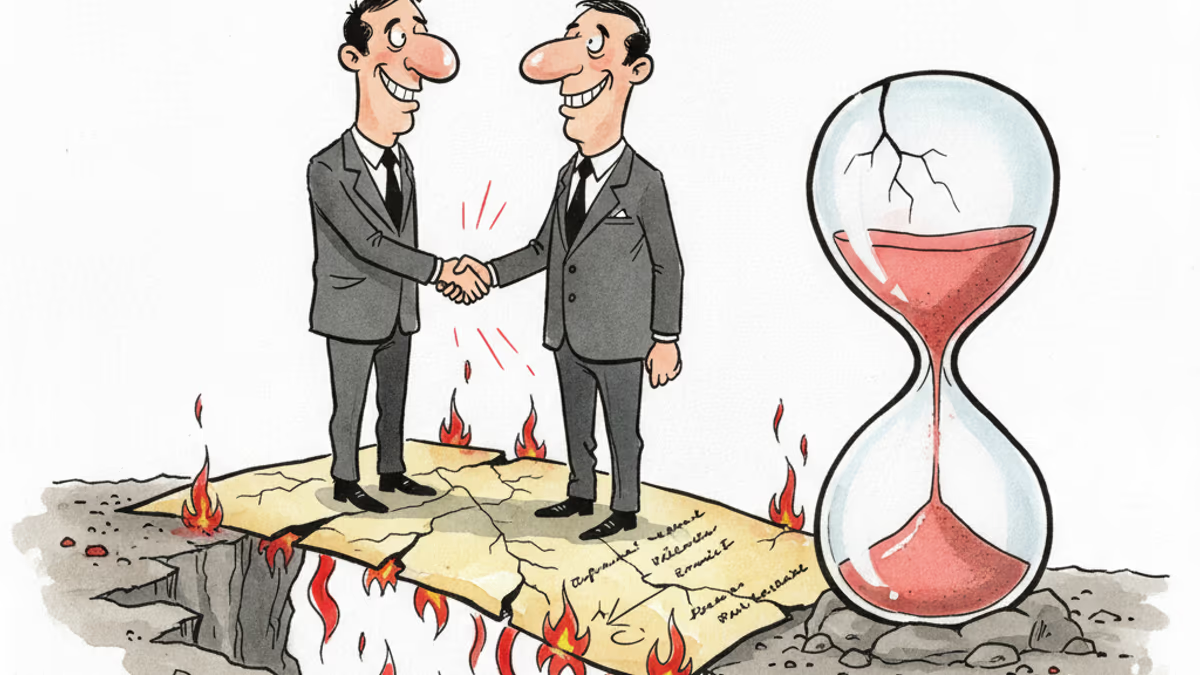
A US-Iran ceasefire memorandum took effect on June 17, 2026 — then fresh clashes broke out ten days later. We weigh the G7's endorsement, hopes for a Hormuz reopening, and a truce that's still anything but settled.
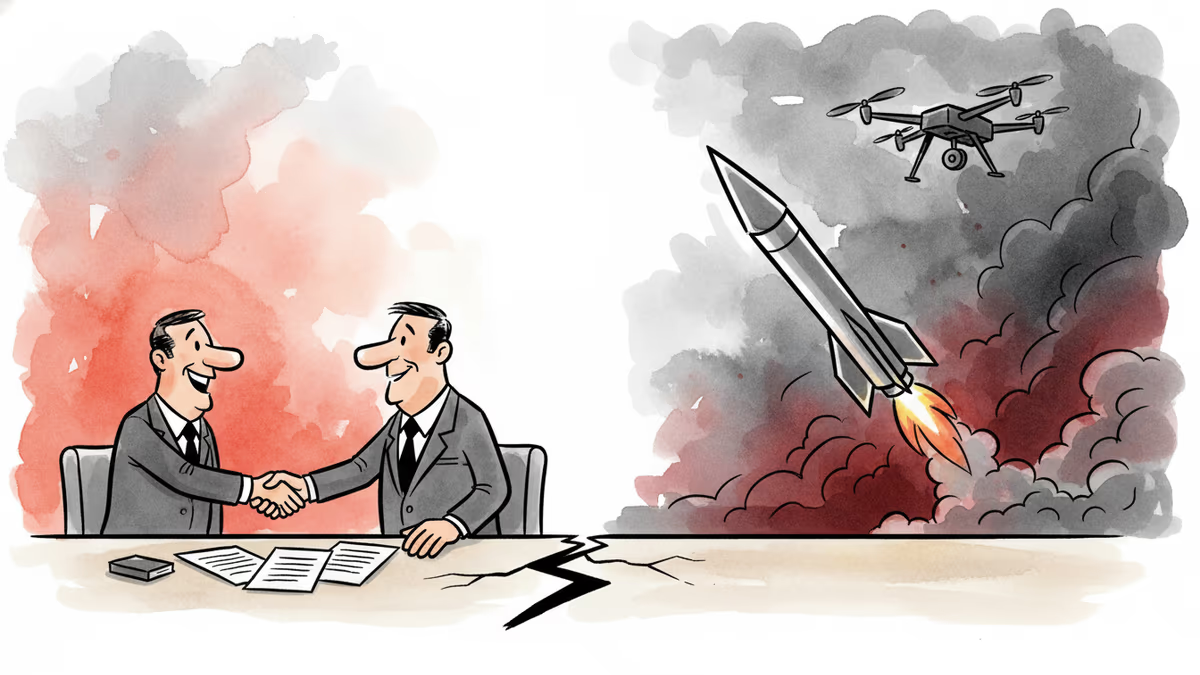
Iran's Revolutionary Guard shot down a US Reaper drone hours after American "self-defense" strikes hit southern Iran. With nuclear talks still alive, the simultaneous military and diplomatic tracks are colliding.

Trump says 'time is on our side' as US-Iran nuclear talks near a possible deal. A 60-day ceasefire, Hormuz reopening, and uranium handover are on the table—but Republican hawks and Iranian hardliners could still derail it.

Trump says a US-Iran nuclear deal is 'largely negotiated.' Iran calls it a 'Persian-style peace.' Both sides claim victory. Here's what's actually at stake.
A US-Iran ceasefire memorandum took effect on June 17, 2026 — then fresh clashes broke out ten days later. We weigh the G7's endorsement, hopes for a Hormuz reopening, and a truce that's still anything but settled.
Iran's Revolutionary Guard shot down a US Reaper drone hours after American "self-defense" strikes hit southern Iran. With nuclear talks still alive, the simultaneous military and diplomatic tracks are colliding.
Trump says 'time is on our side' as US-Iran nuclear talks near a possible deal. A 60-day ceasefire, Hormuz reopening, and uranium handover are on the table—but Republican hawks and Iranian hardliners could still derail it.
Trump says a US-Iran nuclear deal is 'largely negotiated.' Iran calls it a 'Persian-style peace.' Both sides claim victory. Here's what's actually at stake.
Thoughts
Share your thoughts on this article
Sign in to join the conversation