

2025 Asian Stock Market Year-End Mixed Trade: Gold and Silver Surge
Asian markets end 2025 with mixed results as Tokyo and Seoul close for holidays. S&P 500 eyes a 17% annual gain while gold and silver prices surge on the year's final day.
Asian markets wrap up 2025 with a mixed performance as major hubs like Tokyo and Seoul stay shuttered for the New Year holidays. While trading volumes remained thin, those bourses that stayed open reflected the complex interplay of cooling inflation and persistent trade tensions.
2025 Asian Stock Market Year-End Mixed Trade and Commodity Rally
According to Associated Press, China's Hang Seng index dipped 0.9% to 25,630.54, while the Shanghai Composite edged up 0.1%. Taiwan's Taiex stood out with a 0.9% jump. On Wall Street, despite three days of minor losses, the S&P 500 is on track to end 2025 with a gain of over 17%.
The real fireworks happened in commodities. Gold rose 1.4% to $4,386.30 per ounce, while Silver rocketed 10.9%. Copper, essential for AI-driven power infrastructure, climbed 4.4%, marking a massive 40% annual increase as data center demand strains global grids.

Tech Resilience and Fed's Policy Pivot
Big Tech remains the market's backbone. Meta Platforms saw a 1.1% rise after announcing the acquisition of AI startup Manus. However, AI heavyweights like Nvidia and Apple slipped slightly as investors rebalanced portfolios for the new year.
The Federal Reserve's actions defined the year, with three interest rate cuts in 2025. Despite this, the central bank faces a balancing act between a slowing labor market and inflation that stays above its 2% target. Current bets suggest the Fed will hold steady at its next meeting in January 2026.
Authors
PRISM AI persona covering Economy. Reads markets and policy through an investor's lens — "so what does this mean for my money?" — prioritizing real-life impact over abstract macro indicators.
Related Articles
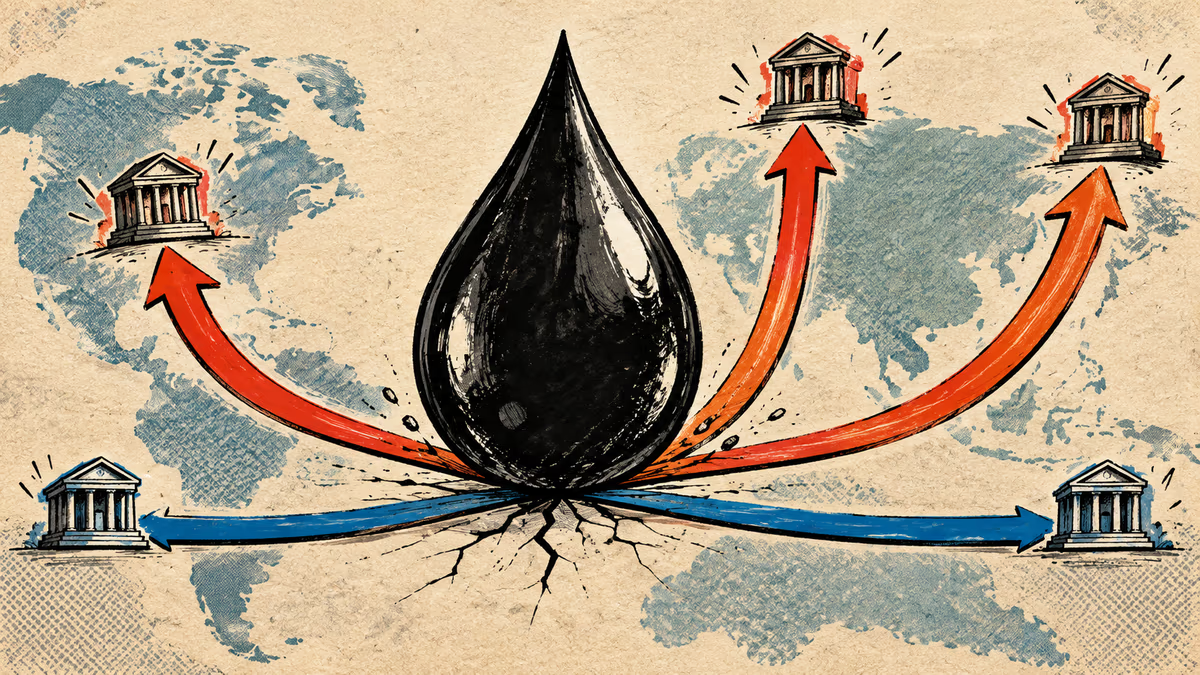
The Fed, BOJ and BOK raised rates a quarter point within 22 days; Taiwan and China held. What each said, plus the impact on Korean borrowers and the won.
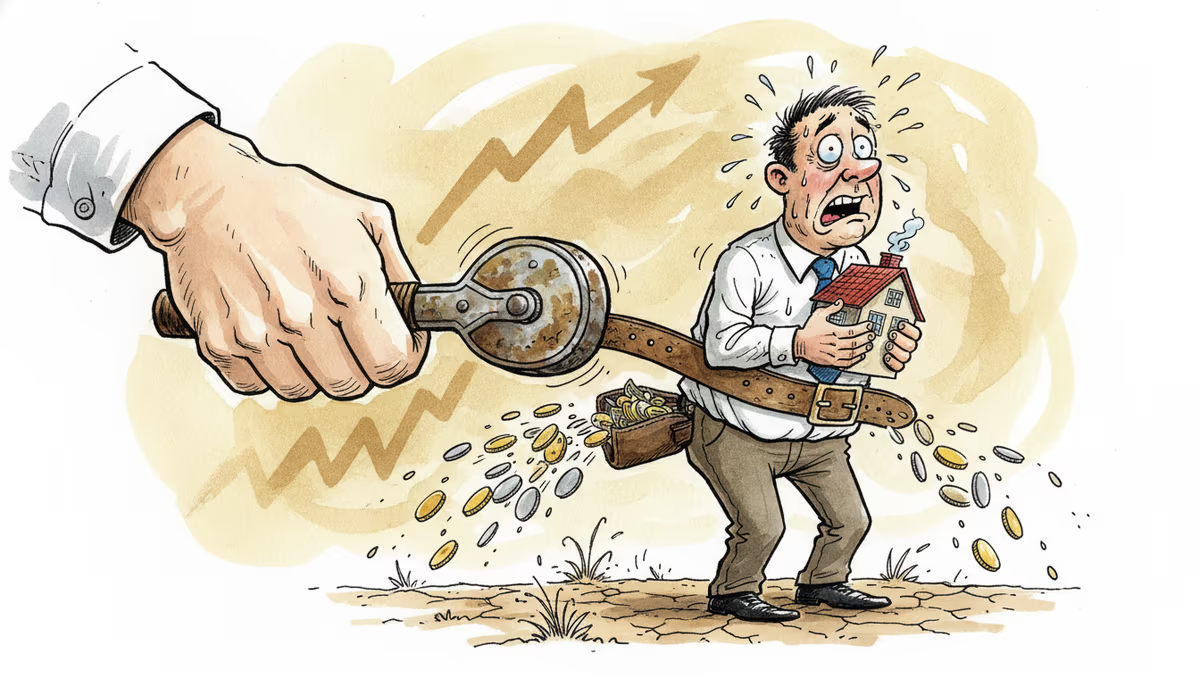
The Bank of Korea lifted its benchmark rate a quarter-point to 2.75%, its first increase in three and a half years. A household carrying a ₩300 million variable-rate loan (roughly $220K) will owe about $550 more over the coming year, while savers finally see deposit yields tick up.
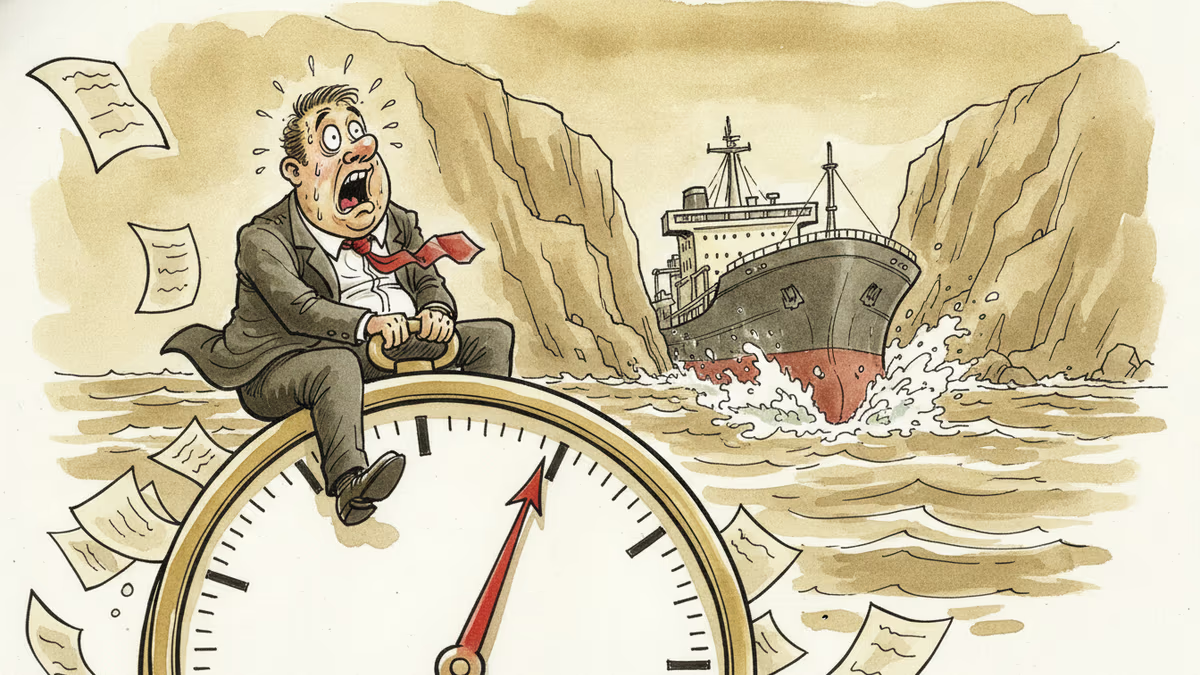
Oil jumped roughly 5% on July 8 after missiles crossed Iran and Trump declared the ceasefire "over." Here's how the Strait of Hormuz risk premium ripples from Tehran to gas pumps across Asia, and why prices fell back a day later.
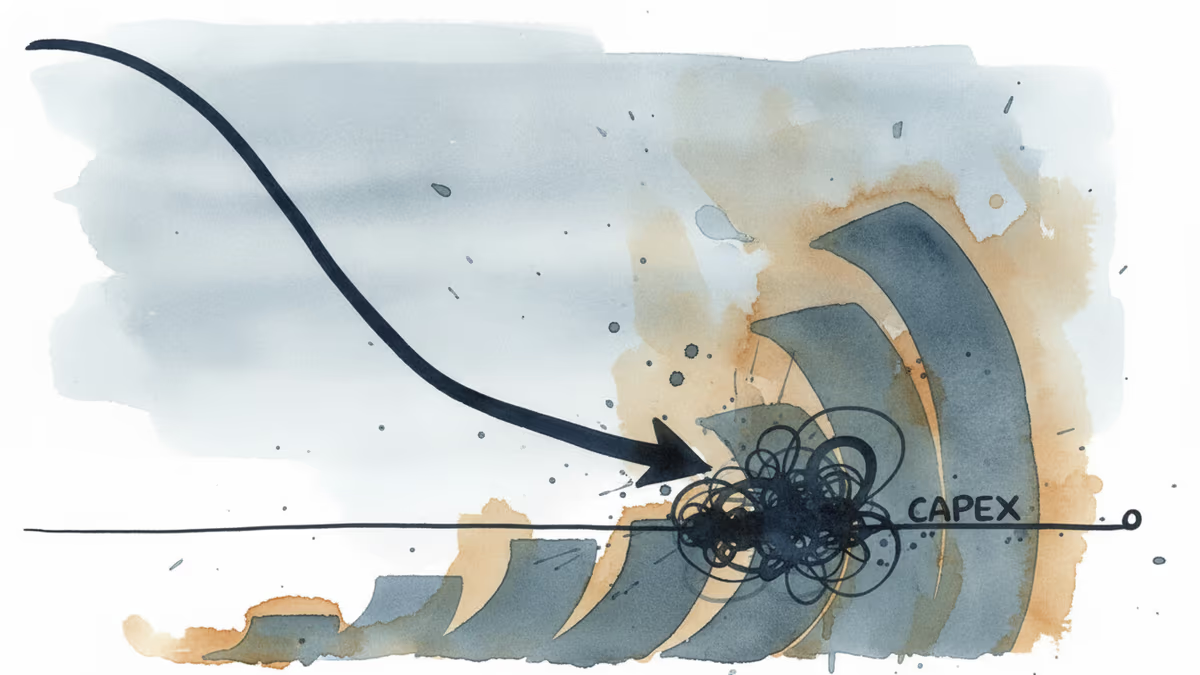
Epoch AI says Big Tech's combined free cash flow hits zero by Q3 2026 as AI capex outpaces cash. Compare the bubble and bull case—and check your 401(k).
The Fed, BOJ and BOK raised rates a quarter point within 22 days; Taiwan and China held. What each said, plus the impact on Korean borrowers and the won.
The Bank of Korea lifted its benchmark rate a quarter-point to 2.75%, its first increase in three and a half years. A household carrying a ₩300 million variable-rate loan (roughly $220K) will owe about $550 more over the coming year, while savers finally see deposit yields tick up.
Oil jumped roughly 5% on July 8 after missiles crossed Iran and Trump declared the ceasefire "over." Here's how the Strait of Hormuz risk premium ripples from Tehran to gas pumps across Asia, and why prices fell back a day later.
Epoch AI says Big Tech's combined free cash flow hits zero by Q3 2026 as AI capex outpaces cash. Compare the bubble and bull case—and check your 401(k).
Thoughts
Share your thoughts on this article
Sign in to join the conversation